• Skip to secondary menu
  • Skip to main content
  • Skip to primary sidebar

Putting The Pretty In Preschool

Finding Beauty In Everyday Early Childhood Experiences

  • Home
  • About Me
  • Winter
  • Chinese New Year
  • Blog
  • Contact Me
  • Black History Month
  • SHOP
  • Valentine’s Day

colors

Color Explosion Science Experiment

January 1, 2021 by Annette Kaminsky Leave a Comment

Tweet
Share
Share
Pin
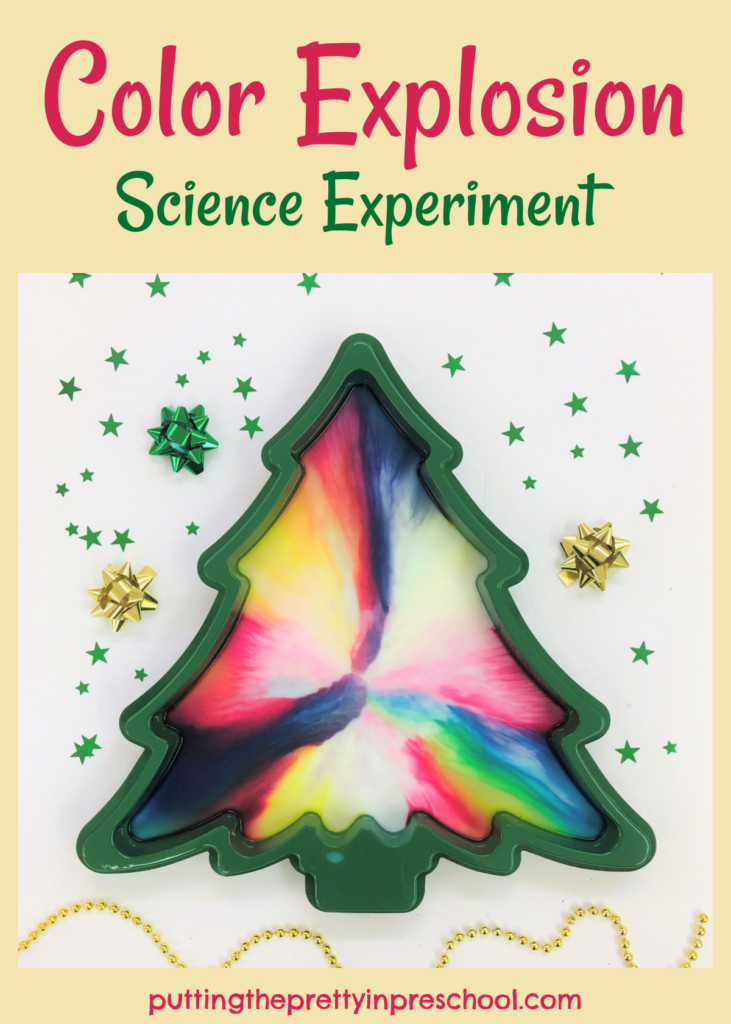
A simple color explosion science experiment with dramatic results. Just three kitchen supplies are needed to carry out this experiment.

_______

This dramatic color explosion science experiment is one of the simplest ones you will find. It uses ingredients you probably have in your home, is easy to set up, and shows stunning, instant results.

_______

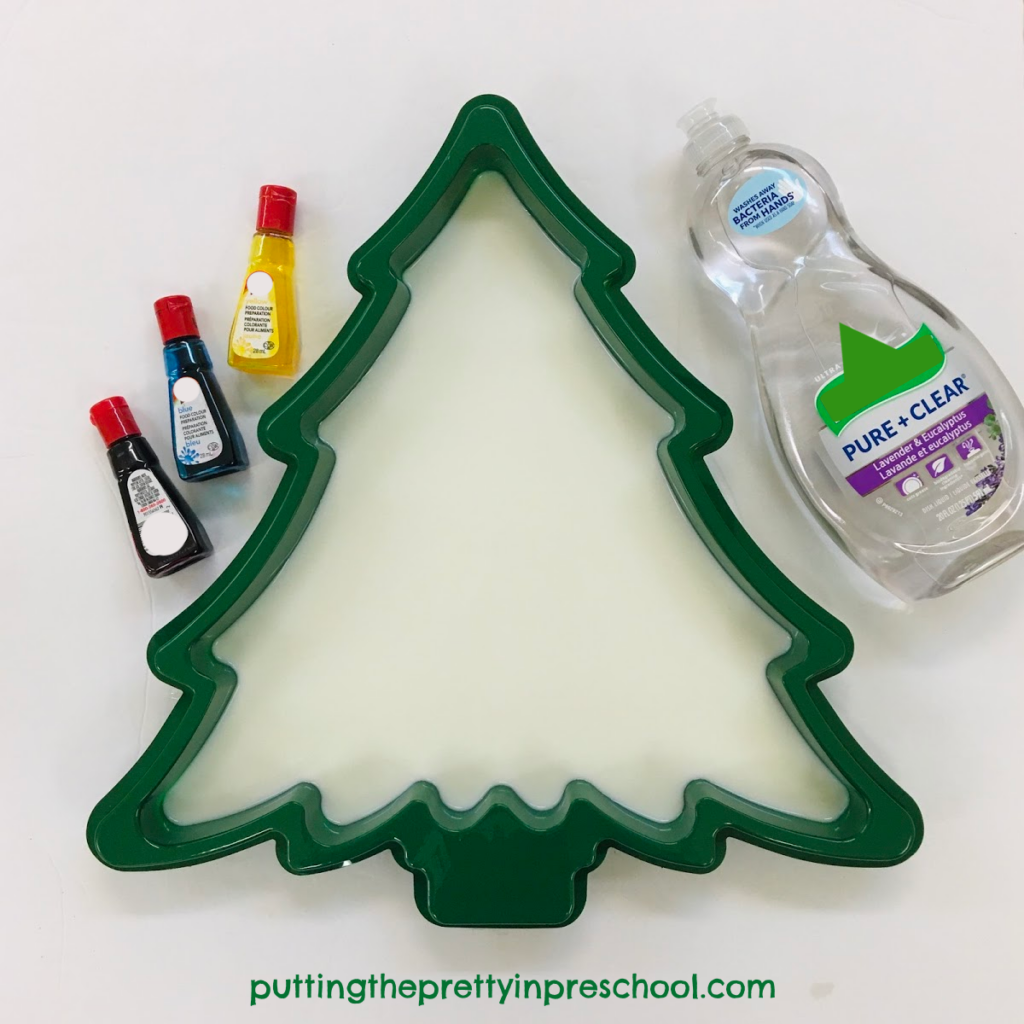
Supplies To Collect

  • serving tray
  • milk
  • food coloring (1 – 4 colors)
  • liquid dish soap
Kitchen supplies to carry out the color explosion milk experiment.

_______

Conducting The Experiment

Pour a thin layer of milk into a serving tray placed on a table. I use an inexpensive 12-inch x 12-inch tree-shaped vegetable tray to add interest to the experiment. About three cups of milk will provide a nice layer in a serving tray this size.

Squeeze drops of food coloring in different parts of the tray. Use one, two, three, or even four colors. Primary colors work well.

Squirt a little dish soap in a few color pools.

_______
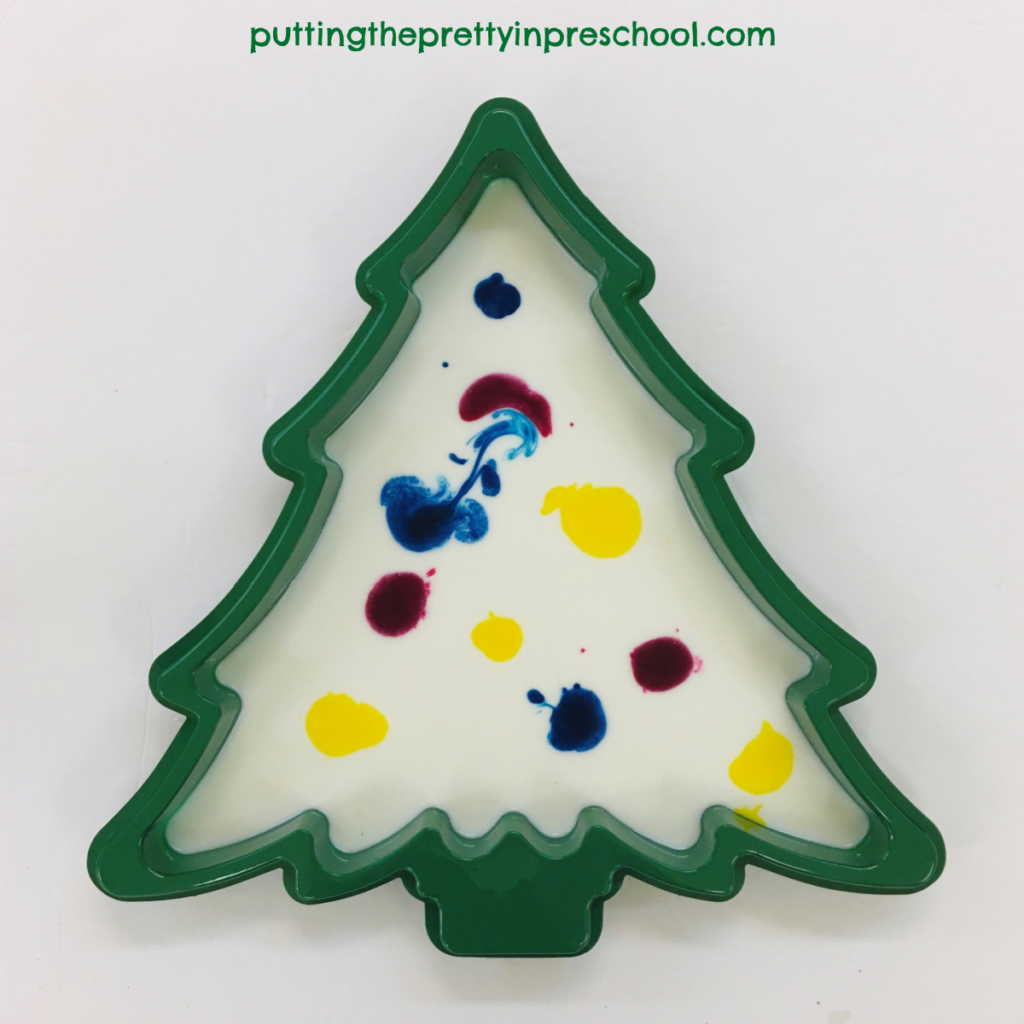
Pools of food coloring in the color explosion milk experiment.

_______

The food coloring immediately explodes to the tray edges, blending and making new colors.

Try adding a bit more food coloring, and one more squirt of dish soap. I add a little more blue, red, and yellow to the bottom right section because most of the color has moved to other areas of the tray. I squirt a tad more soap on top. There isn’t a noticeable change right away. In fact, after the initial color burst, nothing much seems to happen.
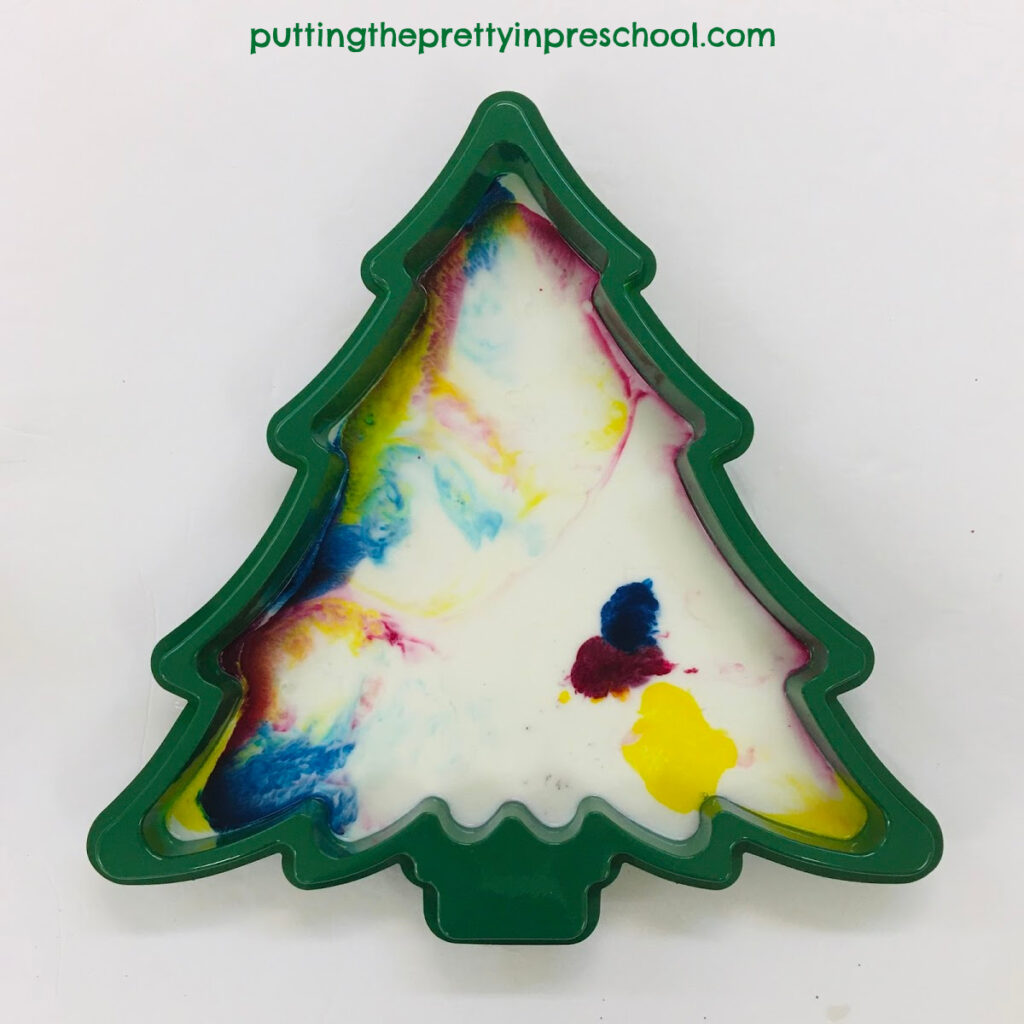
A second dose of food coloring and dish detergent are added in this color explosion milk experiment.

_______

But wait! The experiment doesn’t end here. Leave the tray on the table undisturbed, and check back a few times over the next half-hour. The food coloring slowly moves through the milk and fills the tray.

Each time you look, new color designs are visible on the surface of the milk.
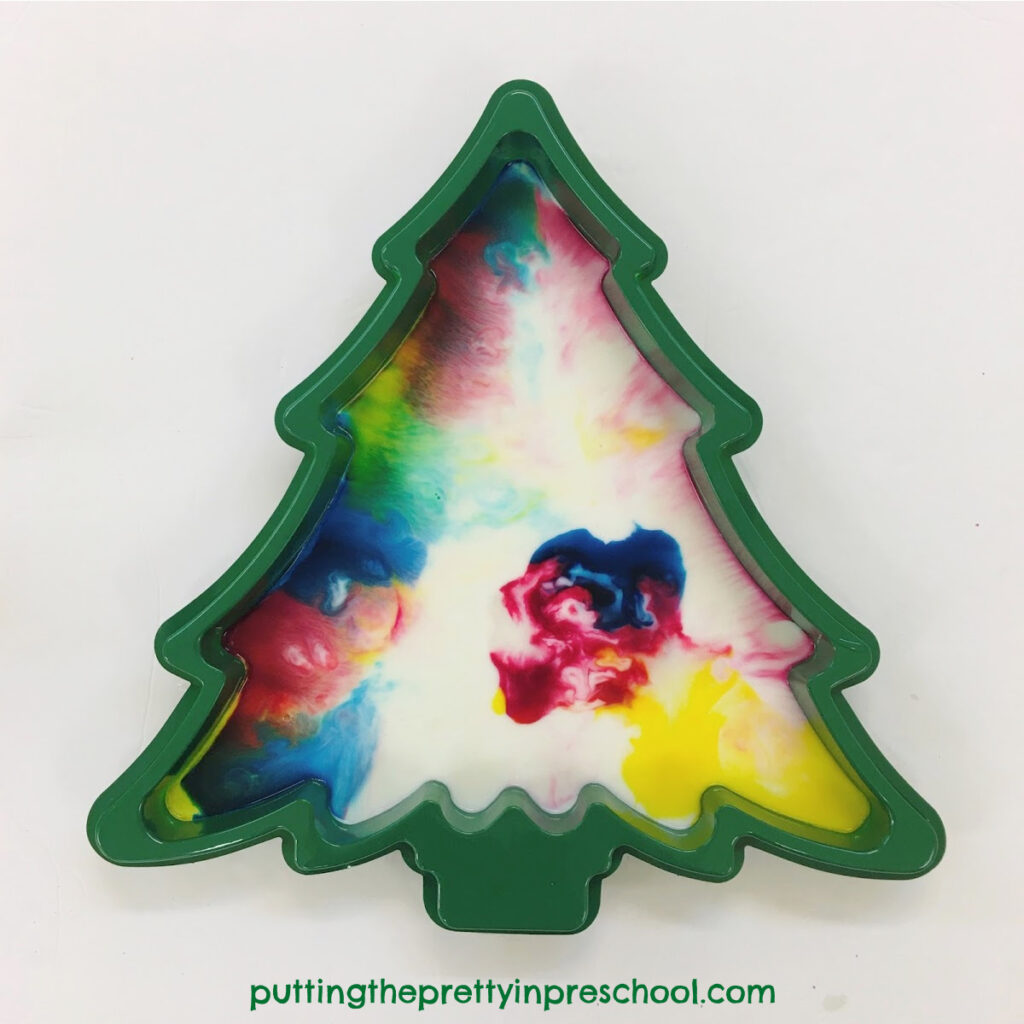
A monster appears in this color explosion milk experiment.

_______

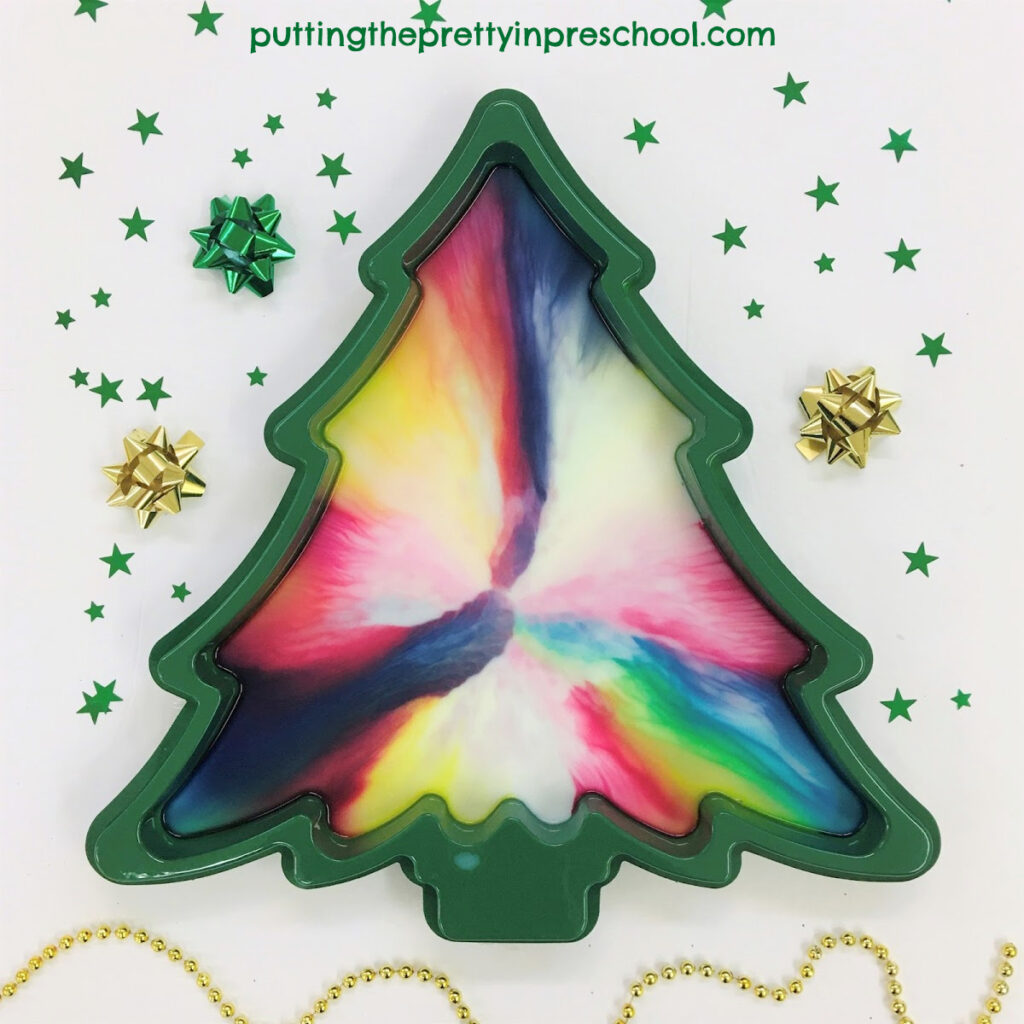
Gradually, the whole tray is color-infused.
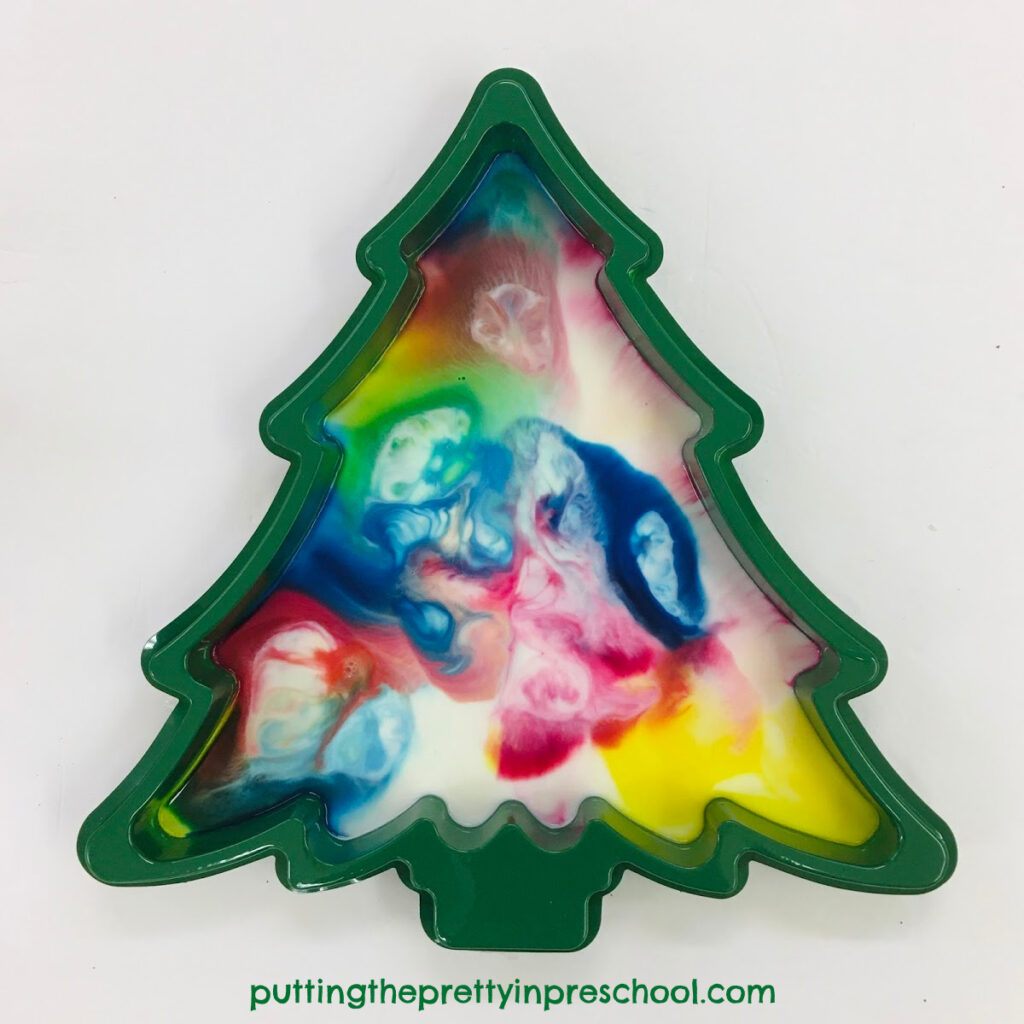
Red, blue, yellow, and green colors fill the tray in this color explosion milk experiment.

_______

This color explosion science experiment is perfect for introducing to a group of early learners. At preschool, I like to set it out just before snack time and have students take a second look at what has happened after they are done eating. Then everyone has another look at the tray just before going home.

_______

Related: Pumpkin Color Changing Milk Experiment

_______

Color Explosion Experiment Take Two

In the above demonstration of the science project, I use 2% milk. Below, I show the results of the same experiment done with 1% milk. This time I add drops of color and a squirt of dish soap only once. The food coloring added is generous.
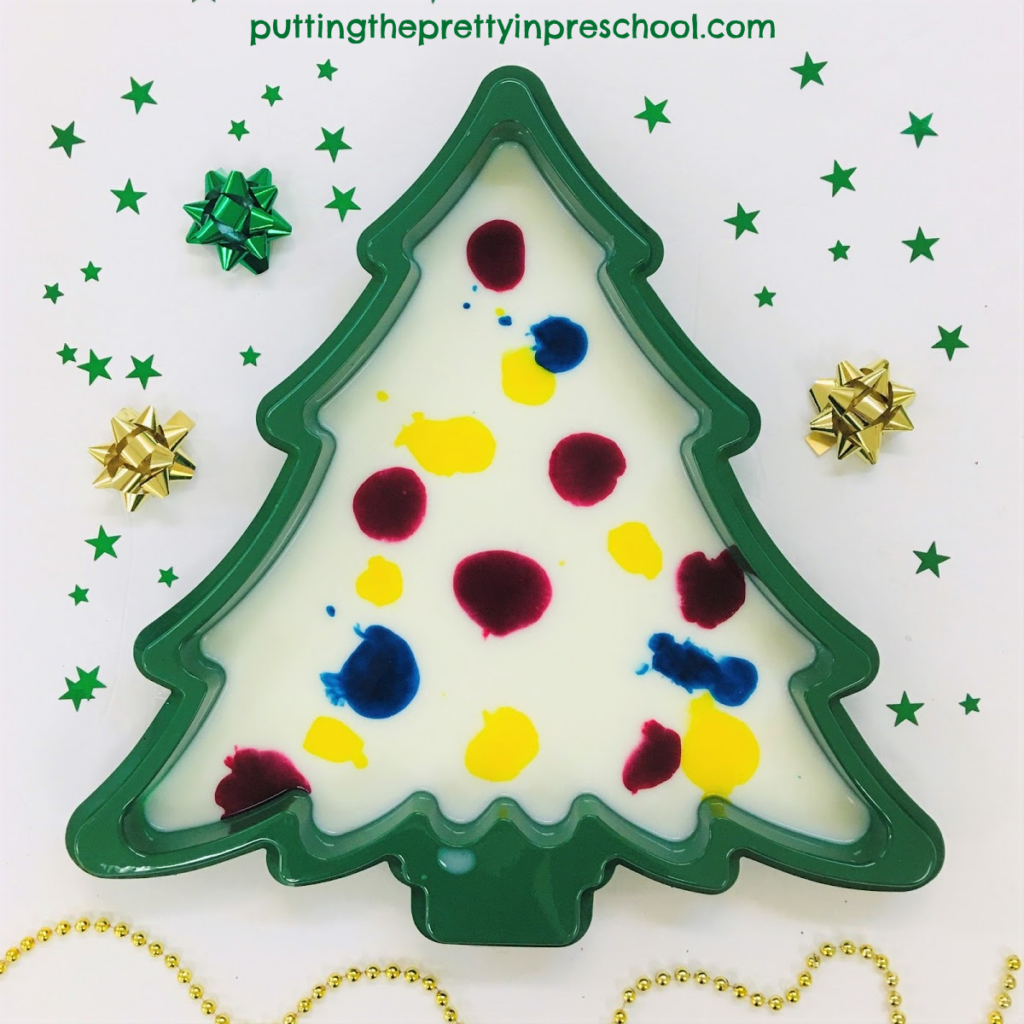
Food coloring pools in the color explosion milk experiment.

_______

In checking back in ten minutes after the initial explosion, the color has moved away from the edge of the tray towards the center.
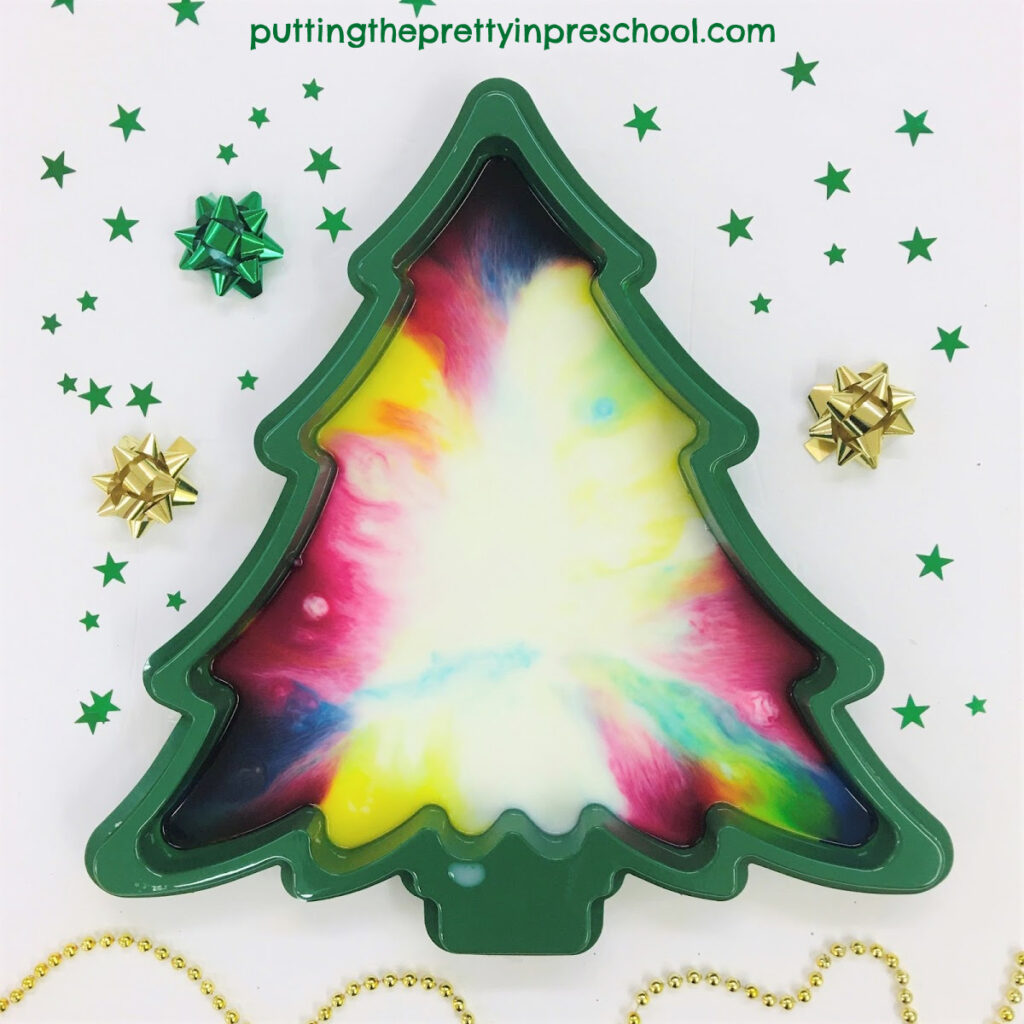
Bright colors start to spread from the edges of the tray in this color explosion milk experiment.

_______

In twenty minutes the tray looks like this:
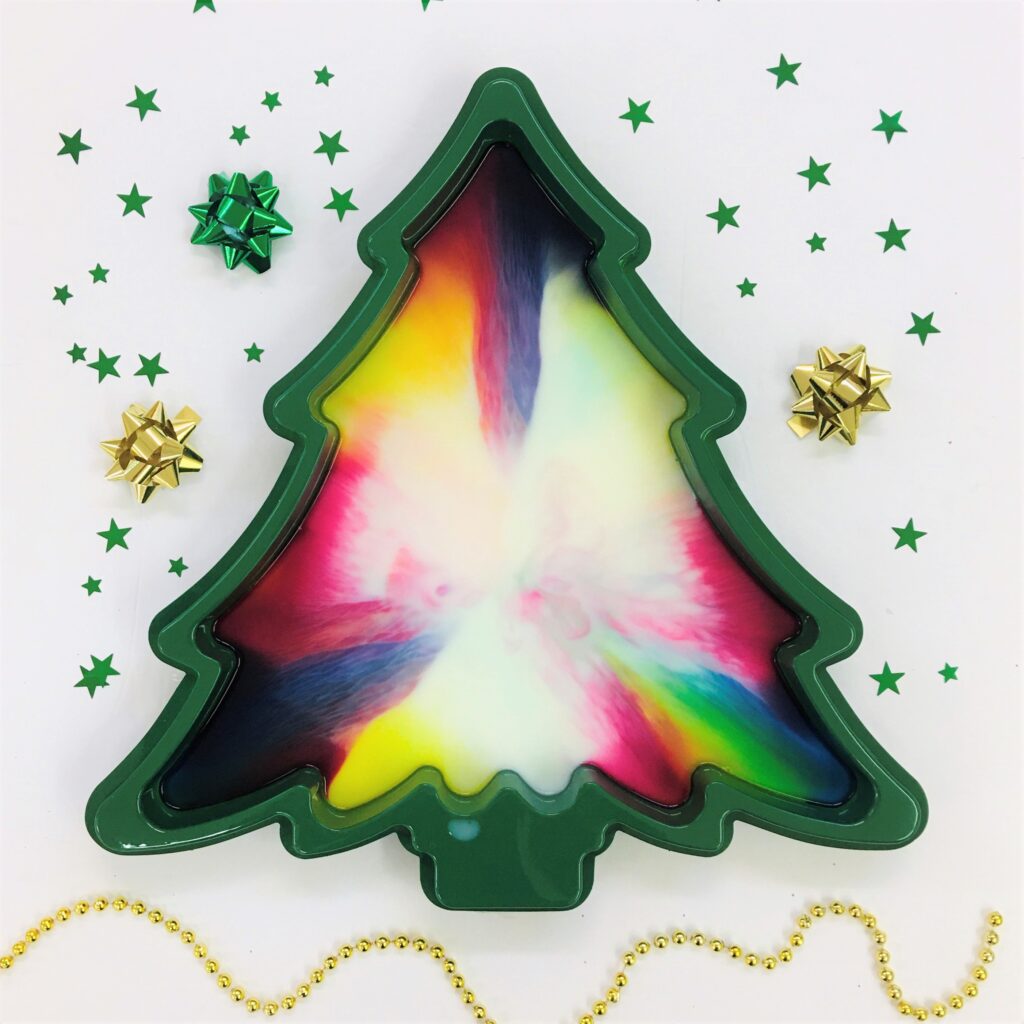
Color spreads on the surface of a milk filled tray after dish detergent and fat molecules bond. The food coloring shows the movement of the molecules.

_______

The colors spread further.

Bright colors take over in this color explosion milk experiment.

_______

Finally, they settle in pastel shades.
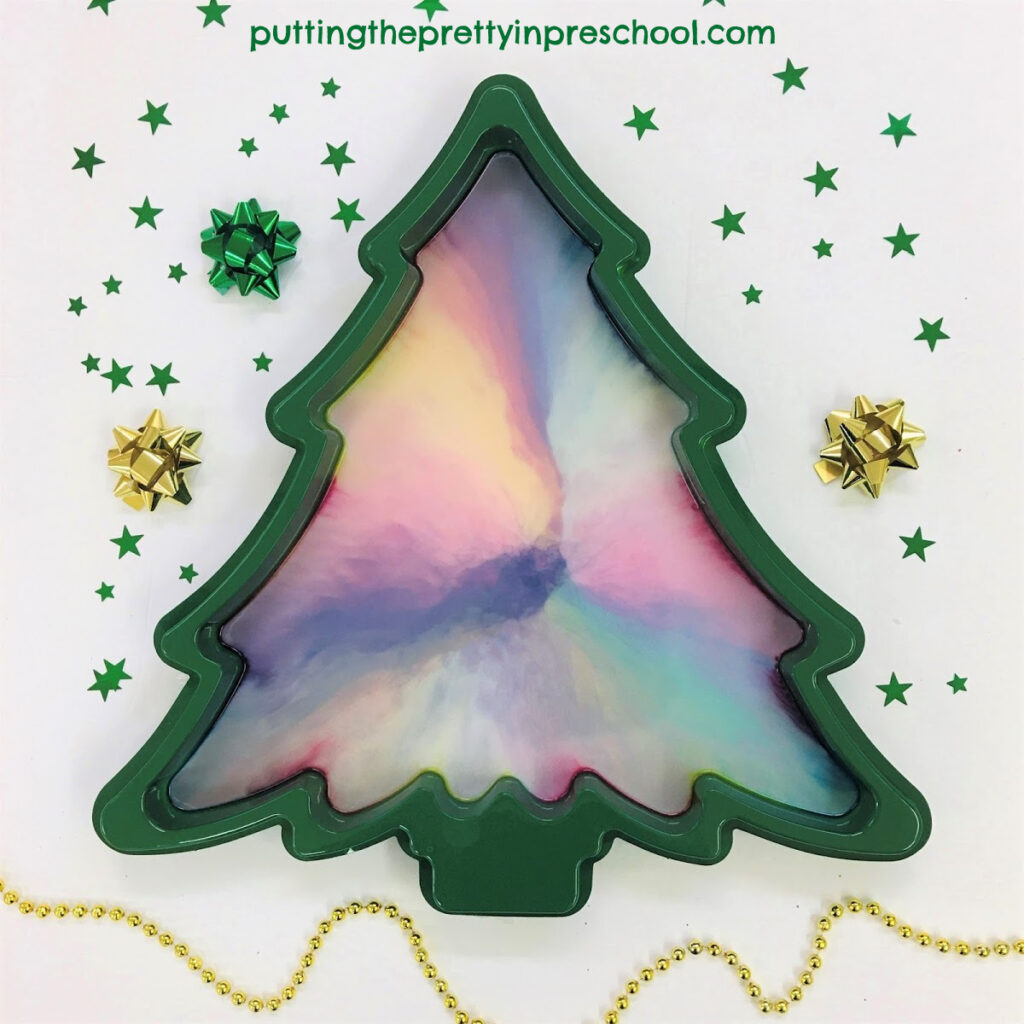
Pastel colors settle in this color explosion milk experiment.

_______

Tip: Save milk that has expired for this experiment. I successfully use milk five weeks past the expiration day for this second demo.

_______

The Science Behind The Color Explosion Experiment

Although milk is made of mostly water, it also contains fat and protein. These are both sensitive to changes in the milk. When dish soap is added to the tray, it breaks up the surface tension of the milk and is attracted to the fat molecules. The fat molecules try to scurry away but end up bonded with the soap molecules. The movement of the food coloring makes this process visible. As more and more soap and fat molecules bond, the color movement slows down and eventually stops.

Since fat content in milk is super important in this experiment, homo milk works the best. But as seen above, 2% and 1% milk (which I had handy) also show stunning results.
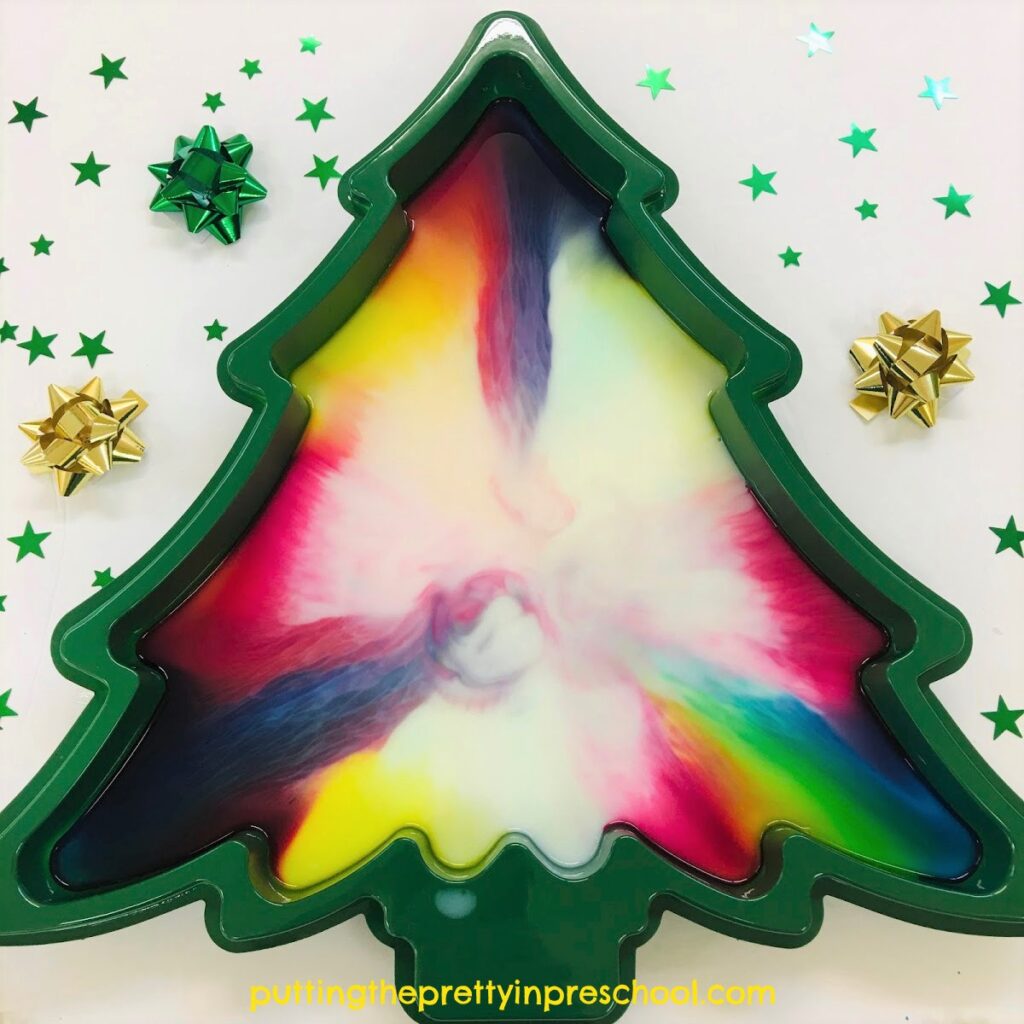
Color-changing experiment using milk, food coloring, and dish detergent.

_______

[Read more…] about Color Explosion Science Experiment
Tweet
Share
Share
Pin

Filed Under: Christmas, preschool, science, sensory, trees Tagged With: colors, experiment, trees

Pumpkin Color Activities

November 23, 2020 by Annette Kaminsky Leave a Comment

Tweet
Share
Share
Pin
Pumpkin facts and color activities. Anatomy, color matching, and art activities.

_______

Although orange pumpkins are traditional, and most grocery stores focus on selling them, these dramatic fruits come in many other hues. Diversely colored pumpkins can be scouted out at farmer’s markets and garden centers in autumn. They are intriguing in pumpkin color activities for little learners.

_______

Pumpkin Display

First, set out pumpkins on a shelf for little ones to view. The contrasting colors make a striking display. Discuss pumpkin color, size, shape, and texture.

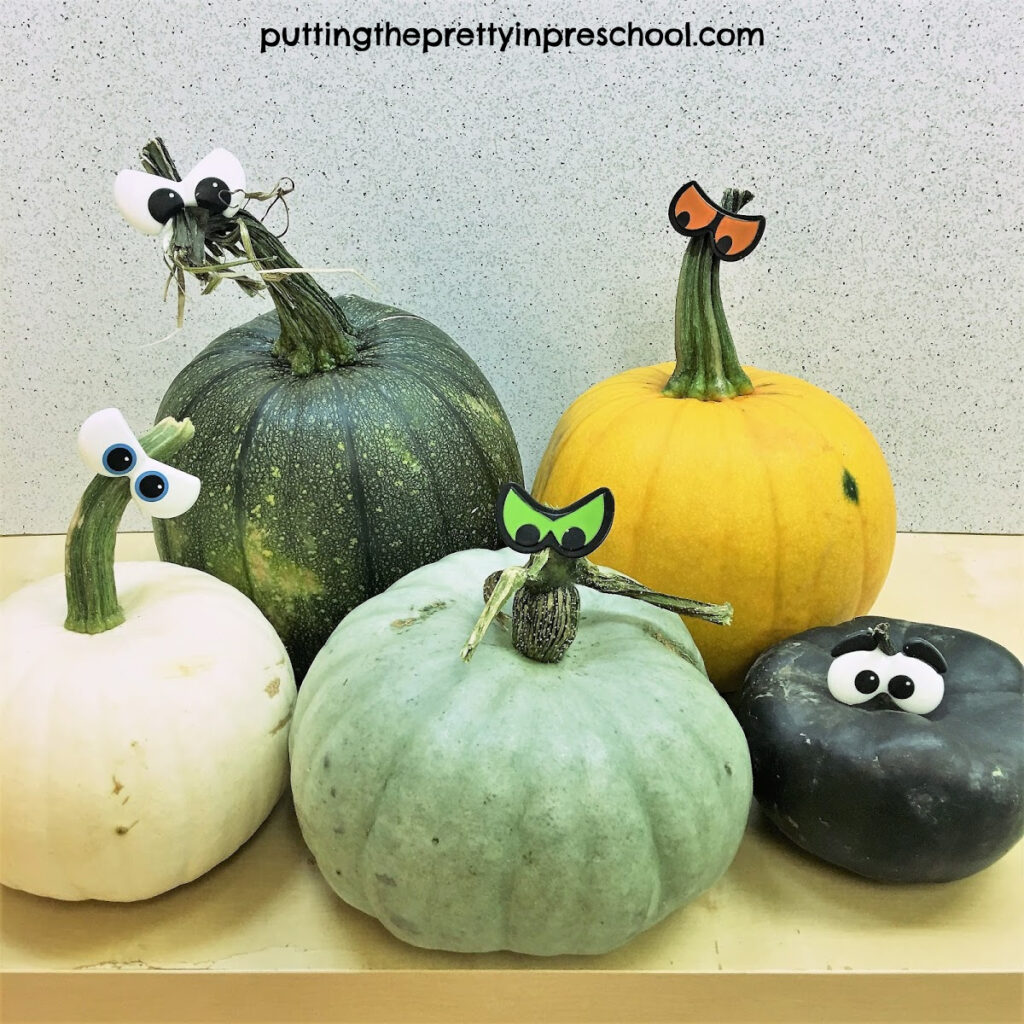
Pumpkins in mint, cream, black, yellow, and green colors.

_______

Color Matching

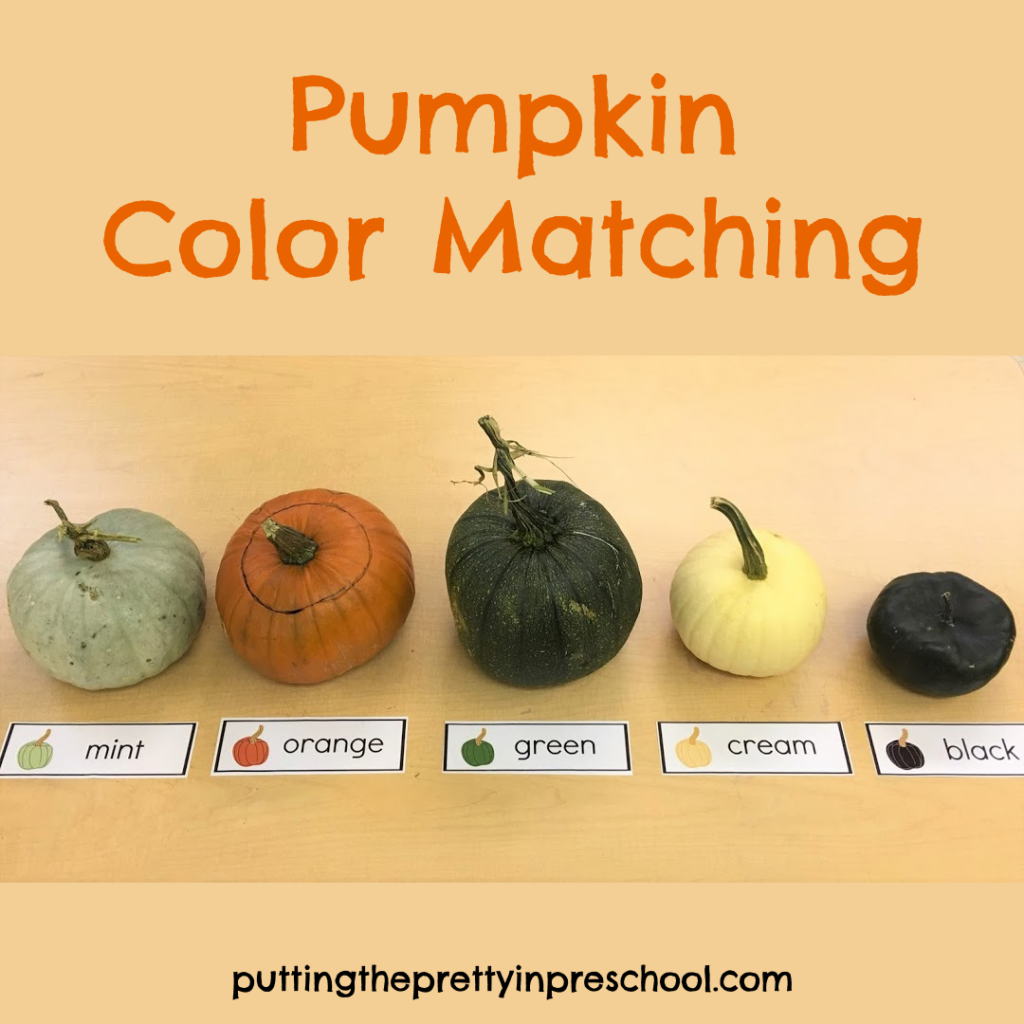
Move the pumpkins to a table and invite early learners to add color words.

Color matching with mint, orange, green, cream, and black pumpkins.

_______

Pumpkin Anatomy

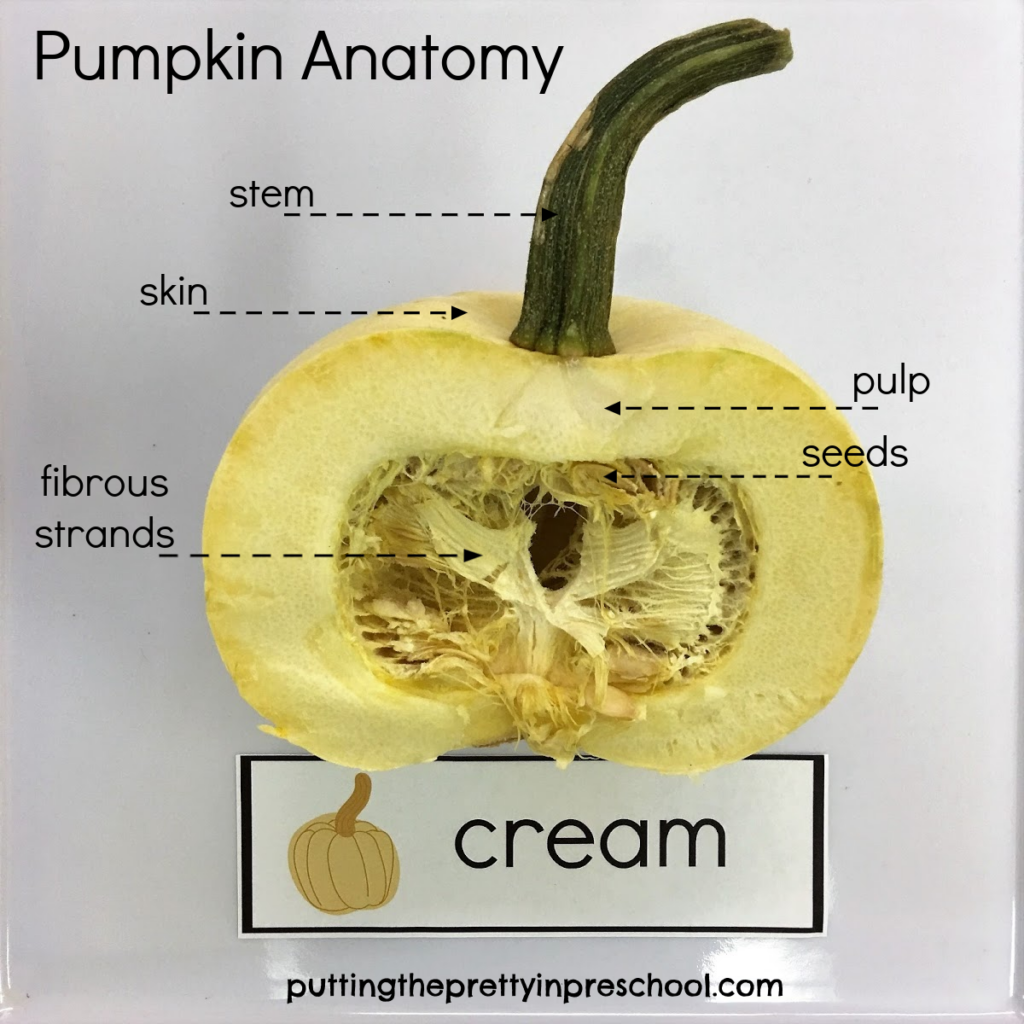
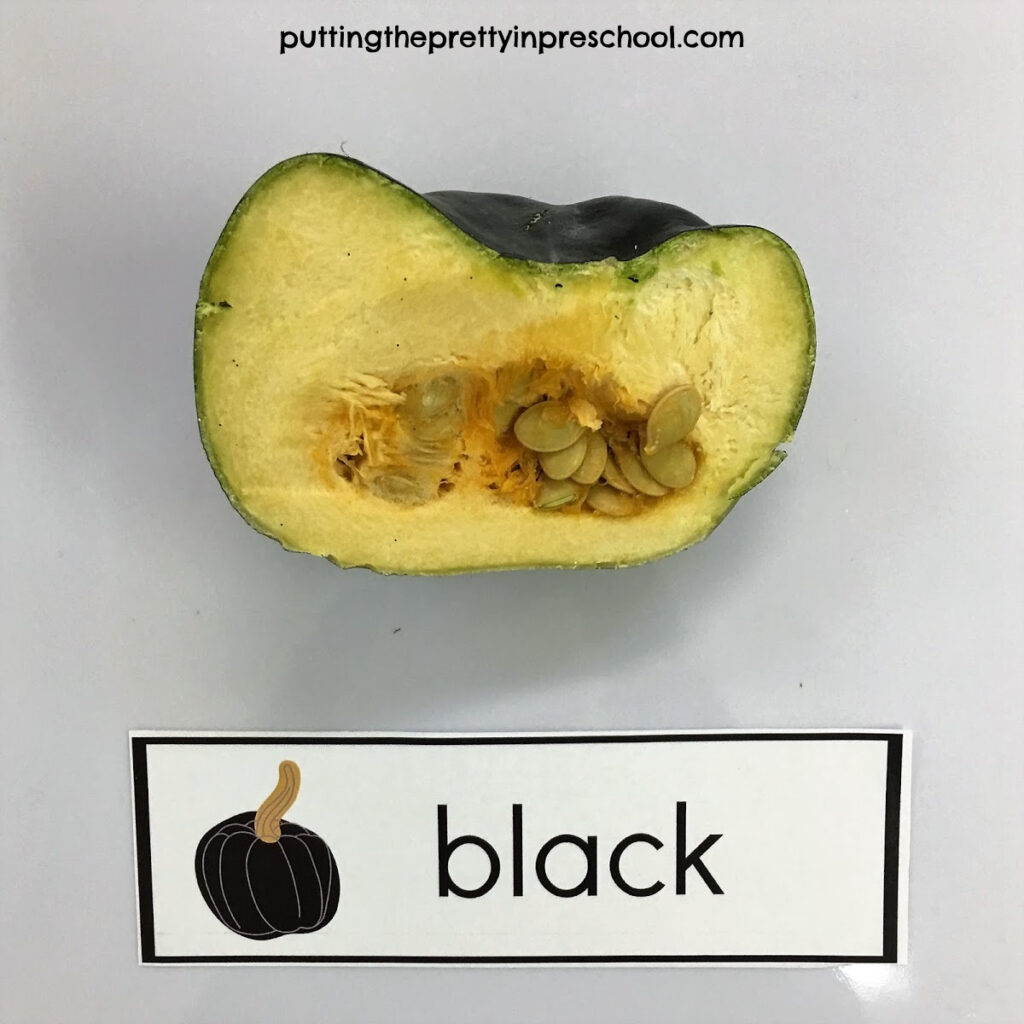
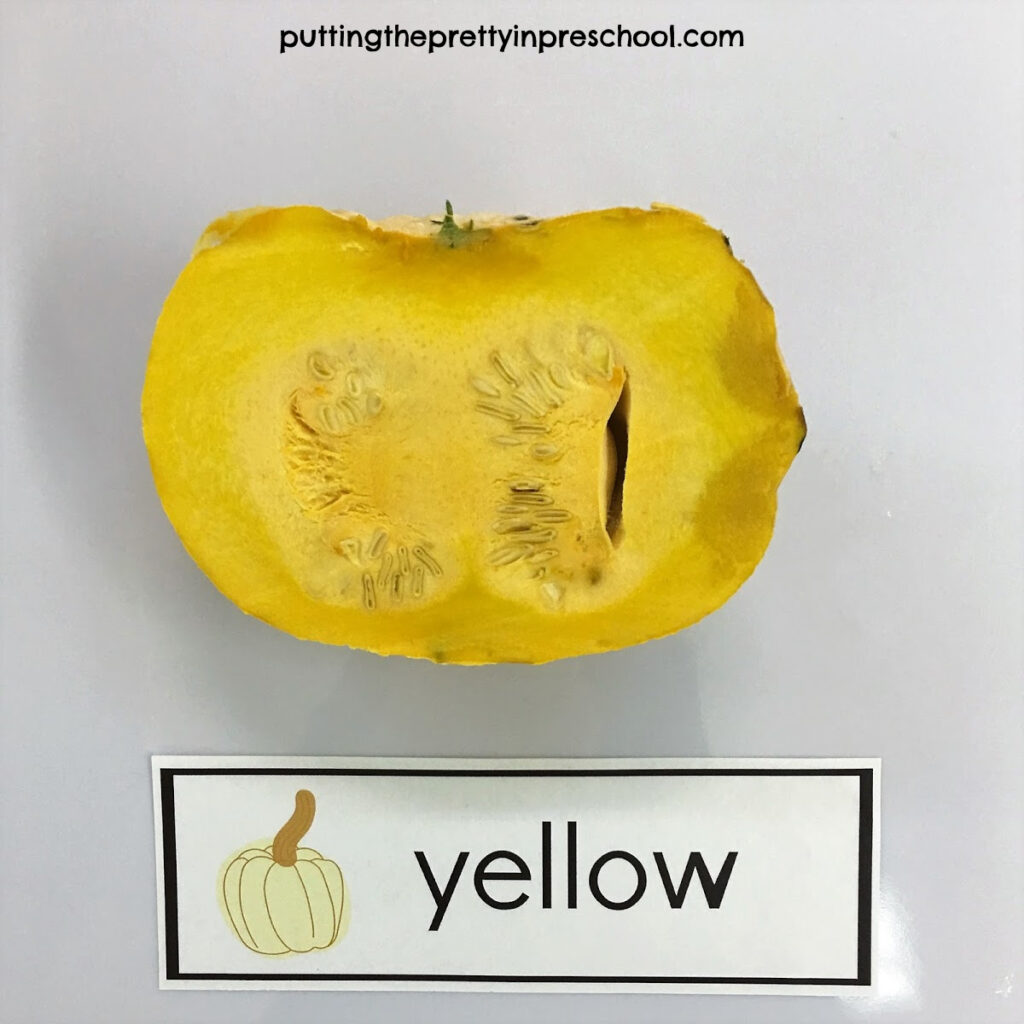
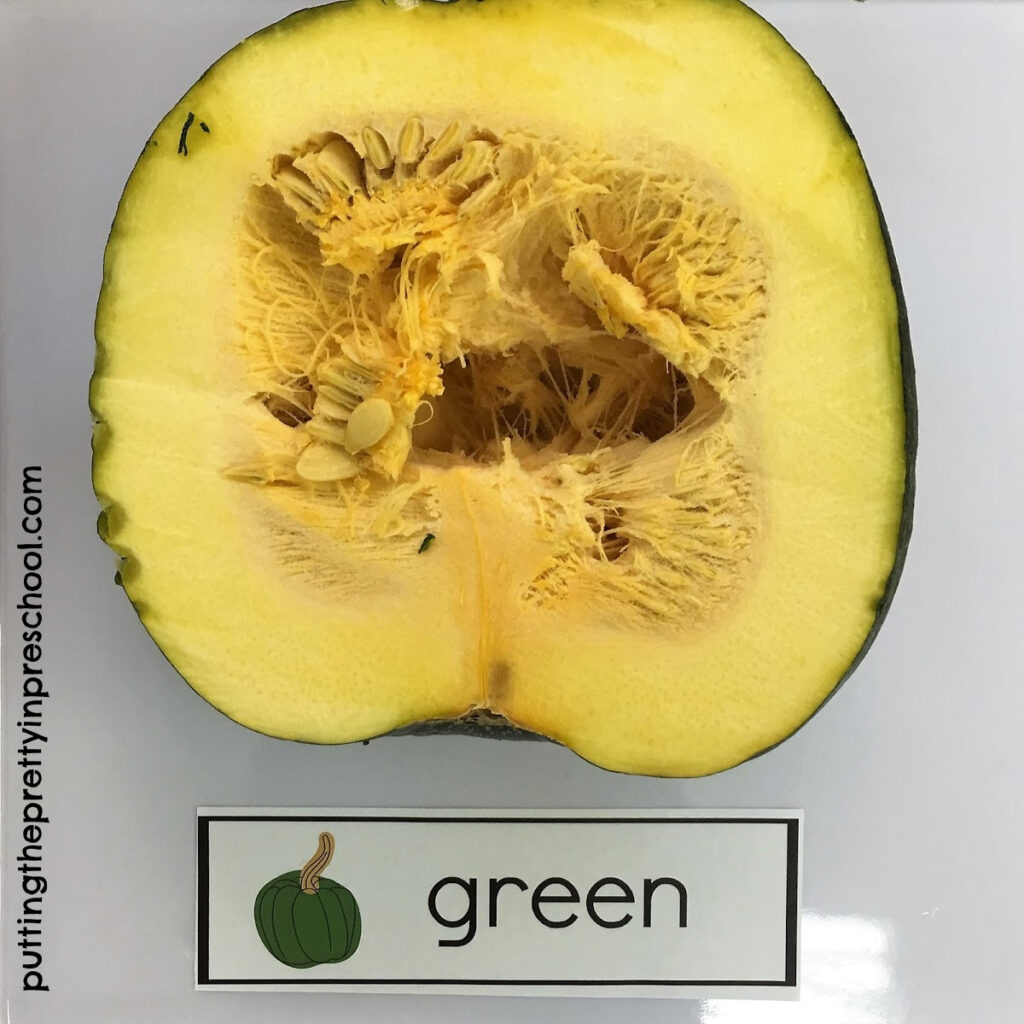
Display a cross-section of each variety collected, and talk about pumpkin anatomy.

Pumpkin anatomy diagram showing the stem, skin, pulp, seeds, and fibrous strands.

_______

Notice that some pumpkins have larger cavities than others, and certain pumpkins contain more seeds. Study flesh colors together, and invite little learners to feel the pumpkin insides.

Black pumpkin cross-section showing pulp and seeds.

_______

Yellow pumpkin showing pulp and seeds.

_______

Green pumpkin showing pulp and seeds.

_______

Spider Web Crayon Rubbings

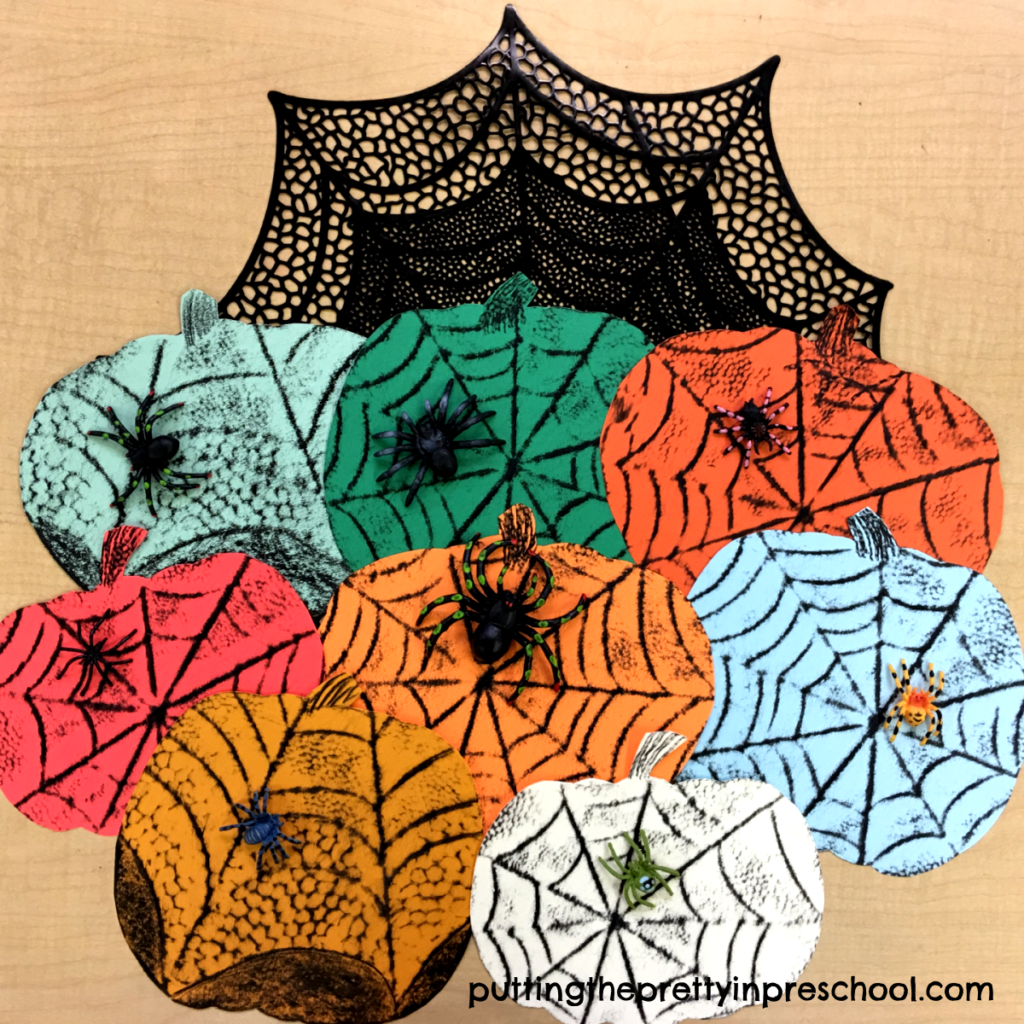
Have children do a spider web crayon rubbing on a uniquely colored paper pumpkin. A few spiders hanging around add excitement to the activity.

Crayon rubbings of spider webs on colored pumpkins. An all-ages art activity.

_______

Pumpkin Painting

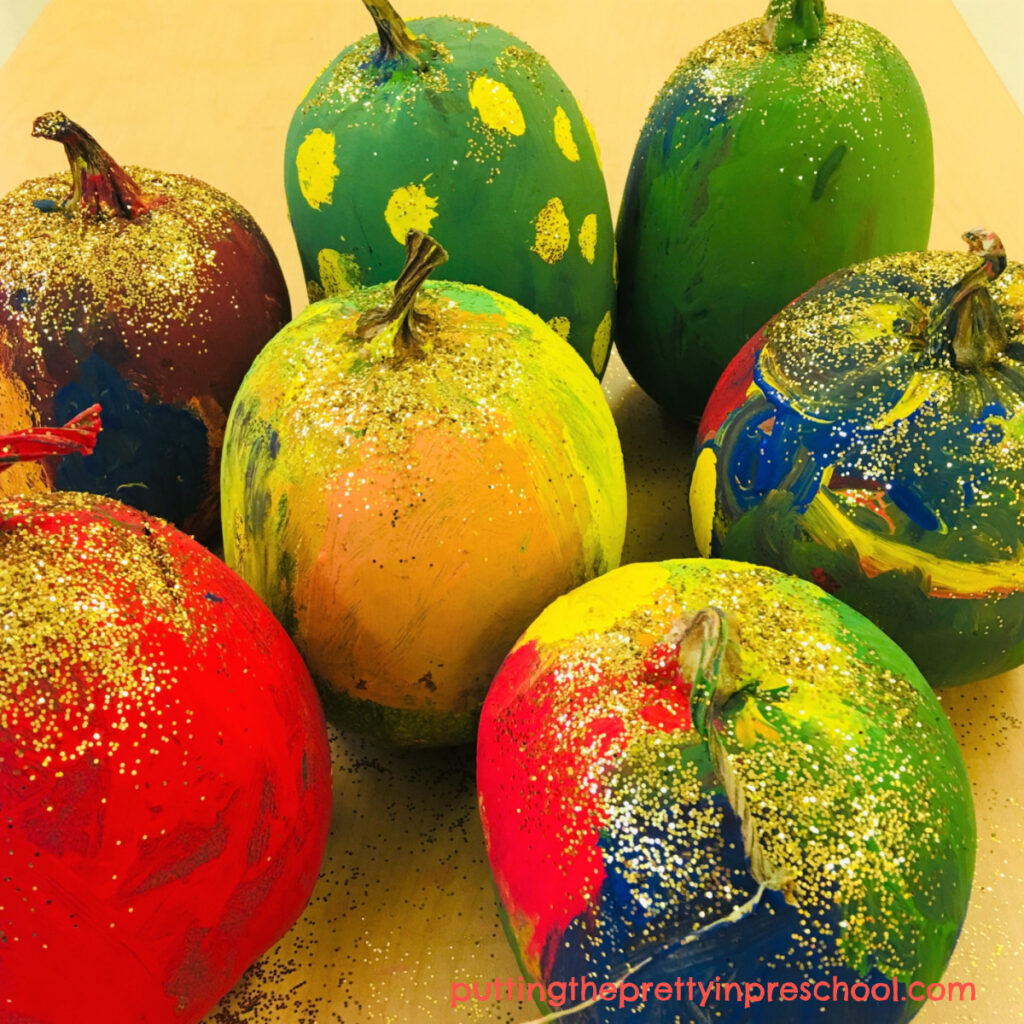
Offer tempera paint for little ones to slather on a small pumpkin. Have everyone generously sprinkle on gold glitter for a finishing touch. The decorated pumpkins make showy take-home art, perfect for displaying on front steps or a porch.

Tempera painted pumpkins sprinkled with gold glitter.

_______

10 Fast Pumpkin Facts

  • Pumpkins are native to Mexico but have been embraced all over the world.
  • Pumpkin harvest season peaks in October.
  • Pumpkins come in various shades of orange, but can also be white, black, deep green, light green, yellow, blue, soft pink, cream, striped, or speckled.
  • Uniquely colored pumpkins have different purposes. White pumpkins are perfect for art projects.
  • Cinderella, Blue Doll, Baby Bear, Crystal Star, and Midnight Black are some of many creative pumpkin names.
  • Some pumpkins are smooth. Others feel rough and may have warts.
  • The world’s heaviest pumpkin weighed 2323 pounds.
  • Water makes up 90% of pumpkins.
  • Pumpkins are treated as a vegetable in many recipes but are actually a fruit.
  • Pumpkins are a source of vitamin A, C, and E, and zinc, folate, potassium, and fiber. They contain antioxidants.

_______

Pumpkin Vocabulary List

Download a list of pumpkin vocabulary words to use with your early learners.

Pumpkin Vocabulary ListDownload

_______

To get more ideas for pumpkin color activities, view a slideshow from Better Homes And Gardens entitled: Types Of Pumpkins.

_______

_______

Thanksgiving Printables

Shop Thanksgiving printables in my Etsy shop “Skills N Smiles“:

_______

_______

More Pumpkin Activities

Eye Dropper Pumpkin Art

Pumpkin Painting Process Art

Pumpkin Tablescape Pretend Play

Edible Playdough Pumpkins

Pumpkin Playdough Activities

Pumpkin Collage Art

_______

[Read more…] about Pumpkin Color Activities
Tweet
Share
Share
Pin

Filed Under: art, autumn, display, fall, literacy, preschool, science, sensory, Thanksgiving Day Tagged With: colors, painting, pumpkins, Thanksgiving Day

  • « Go to Previous Page
  • Page 1
  • Page 2
  • Page 3

Primary Sidebar

Hi, I'm Annette Kaminsky, a preschool teacher who loves sharing learning through play activities for young children. Thanks for visiting my site. Feel free to stay awhile!

Subscribe Via Email

Recent Posts

  • Teacher Appreciation A to Z Alphabet June 21, 2026
  • Expanding Balloon Science Experiment May 18, 2026
  • Earth Day Spin Painting April 21, 2026
  • Easter Bunny Scavenger Hunt April 4, 2026
  • Celebrate Diversity Coloring Pages March 1, 2026
  • Lunar New Year Lantern Craft February 11, 2026
  • Black History Month Positive Affirmations Art January 29, 2026
  • Snowflake Cafe Dramatic Play Set January 19, 2026
  • Pastel Christmas Letterhead and Envelope December 20, 2025
  • December Kindness Activities November 30, 2025

Categories

Topics

apples bunnies butterflies Chinese New Year Christmas Christmas craft color colors dramatic play Easter fall flowers hearts holiday jewelry leaves leprechauns light table loose parts painting paper crafts playdough pretend play printables printmaking process art pumpkins rice bin scented playdough science experiment scissor skills sensory bin sensory play sensory tray shamrocks skeletons snakes snowflakes spiders spring St. Patrick's Day sunflowers tablescapes Valentine's Day water play

Copyright © 2026 · Lifestyle Pro on Genesis Framework · WordPress · Log in