• Skip to secondary menu
  • Skip to main content
  • Skip to primary sidebar

Putting The Pretty In Preschool

Finding Beauty In Everyday Early Childhood Experiences

  • Home
  • About Me
  • Winter
  • Chinese New Year
  • Blog
  • Contact Me
  • Black History Month
  • SHOP
  • Valentine’s Day

Celery Science Experiment

October 14, 2020 by Annette Kaminsky 2 Comments

Tweet
Share
Share
Pin
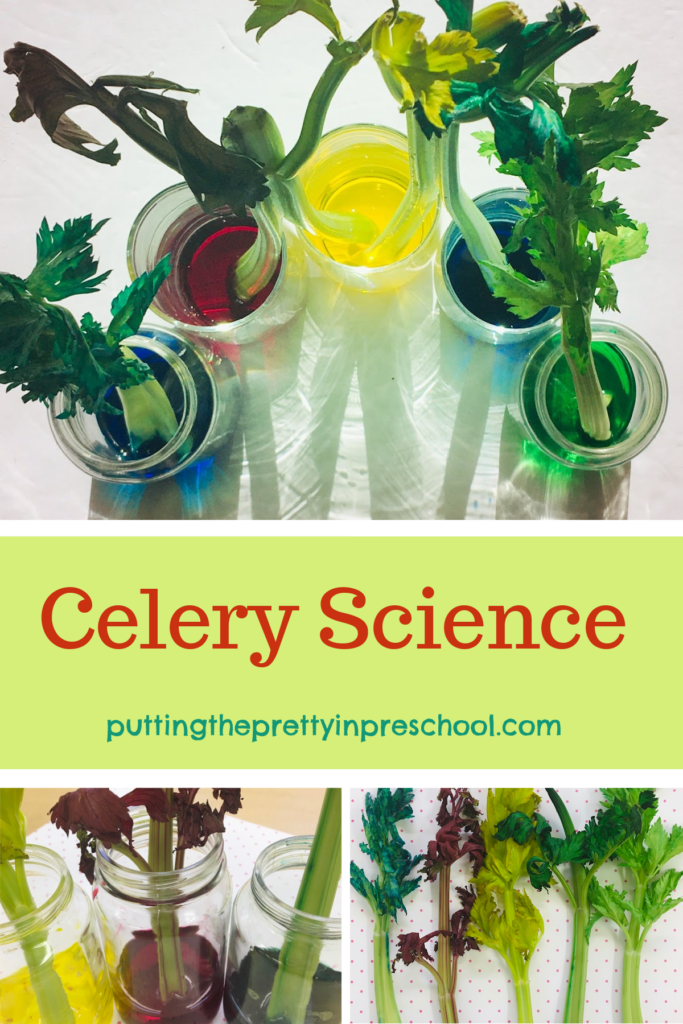
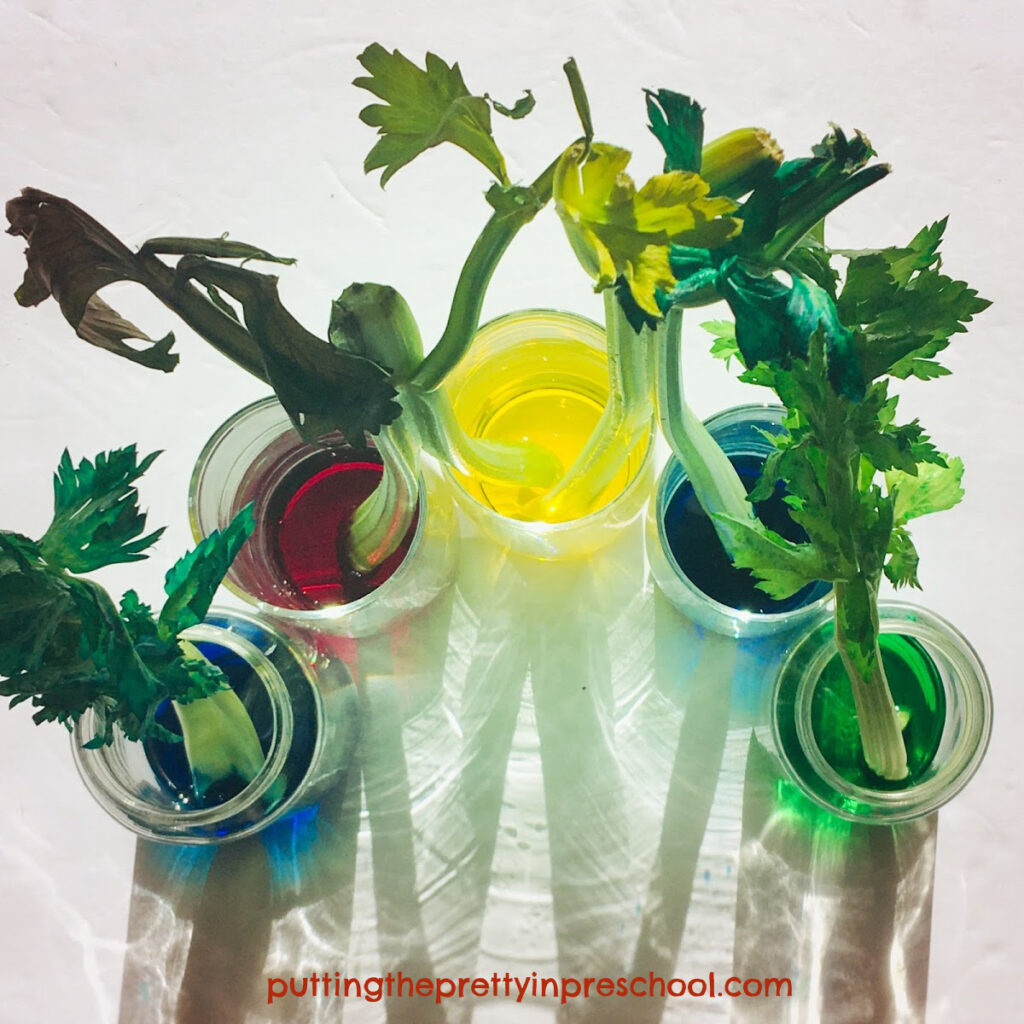
Celery and food coloring science experiment.

_______

This classic and colorful celery science experiment is easy to do and has quick results. It works well as a “color-changing celery tree” activity in autumn but is awesome to perform at any time of the year. Your early learner will be thrilled with the speedy and dramatic results of the experiment.

_______

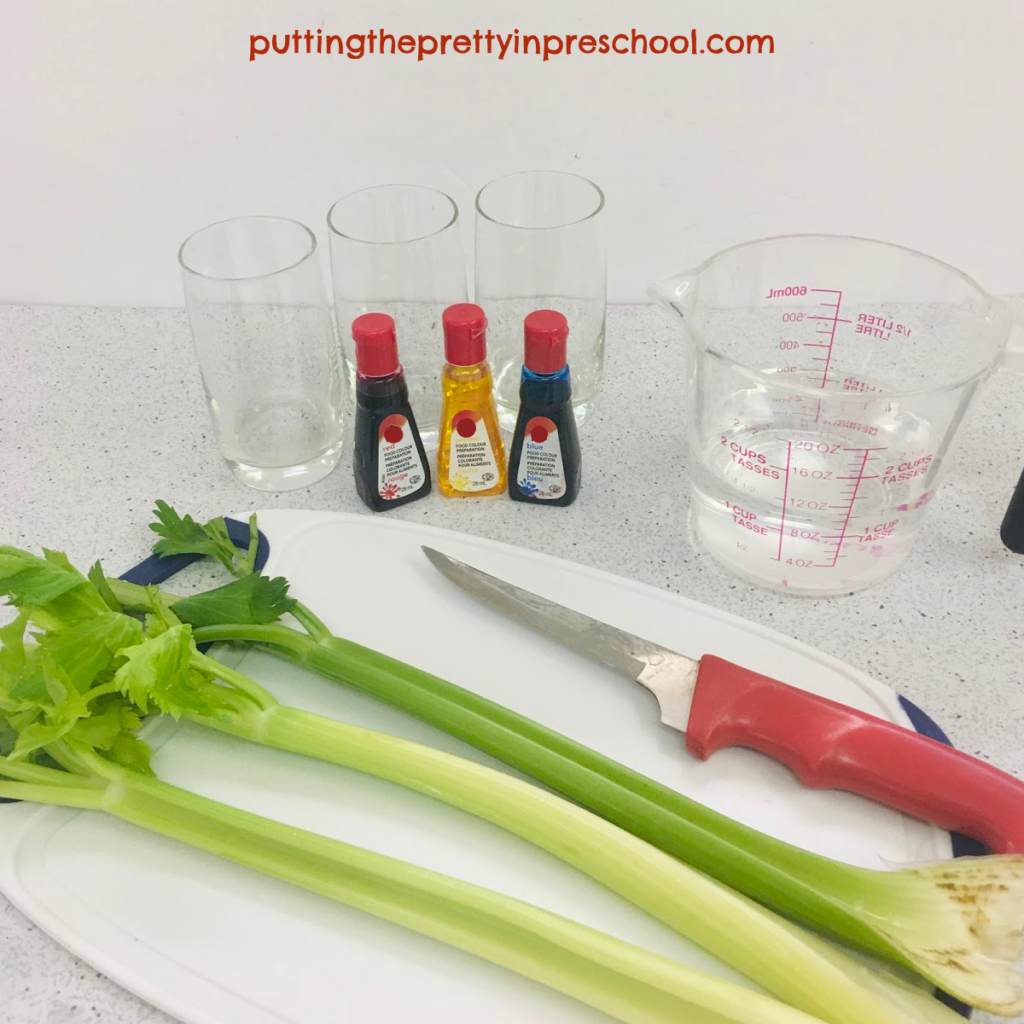
Supplies To Collect

  • leafy celery stalks
  • glasses or jars
  • food coloring hues
  • pitcher with water
  • knife
  • cutting board
Celery and food coloring experiment supplies.

_______

Procedure

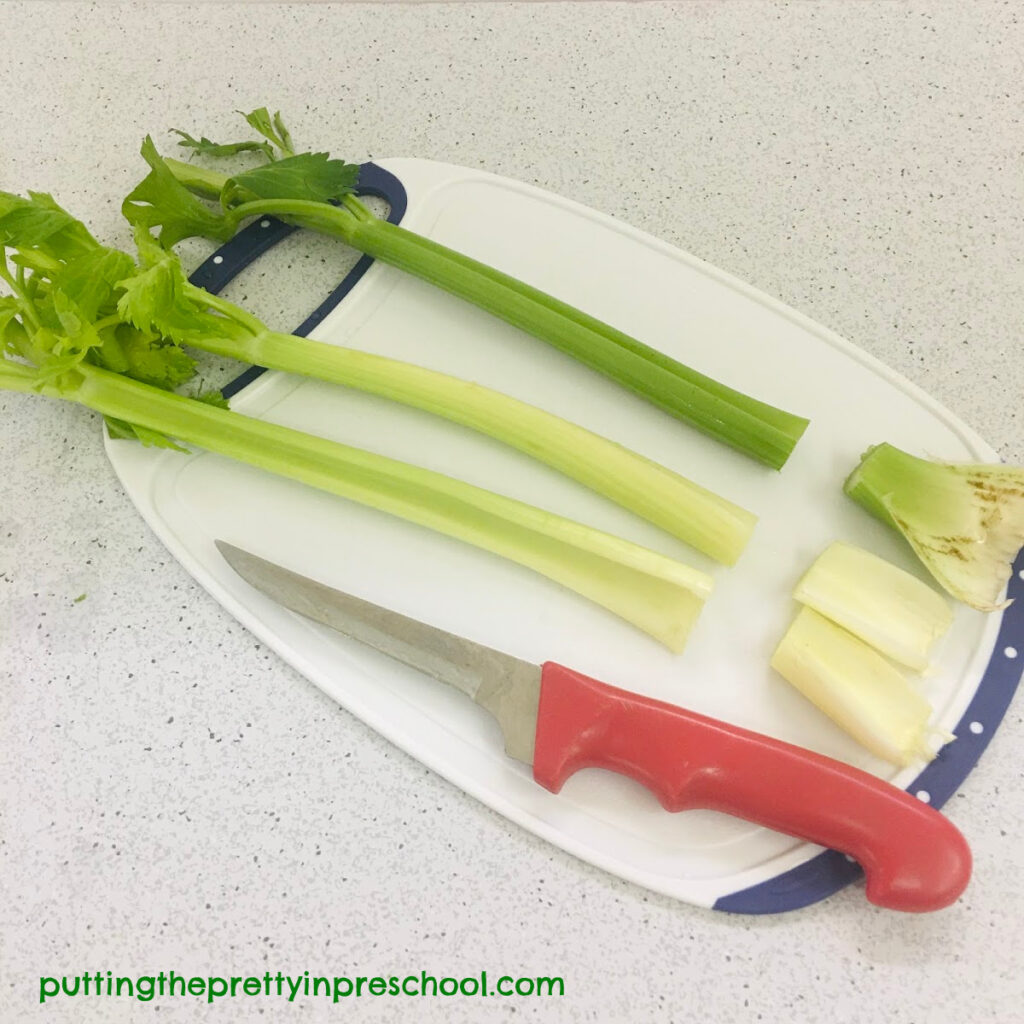
Cut the bottoms from celery stalks.

Invite your early learner to generously squirt food coloring hues into glasses or jars, and add about 4 centimeters of water to each one.

Have your child place a celery stalk in each container, and use it to stir the liquids.  

Set the jars or glasses with celery on a table or windowsill.

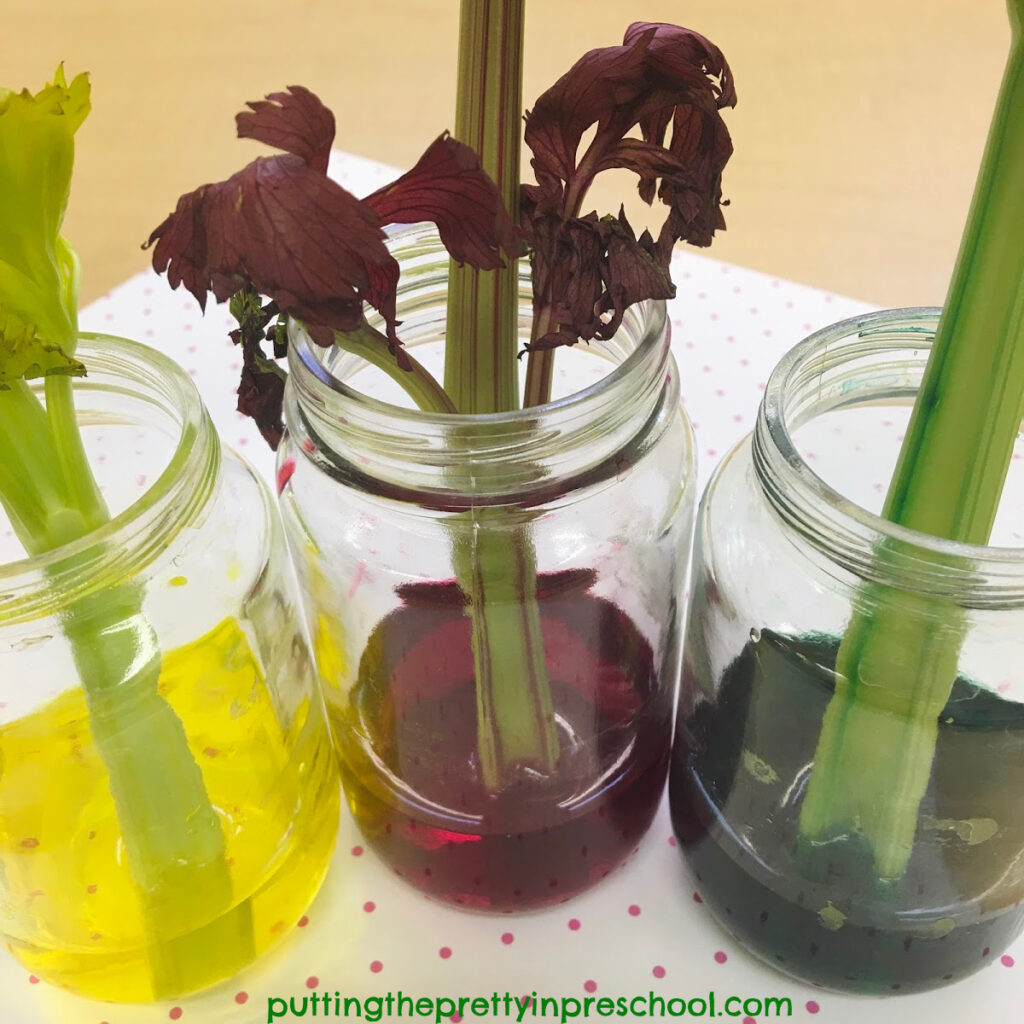
Celery xylem are clearly visible in this closeup photo.

_______

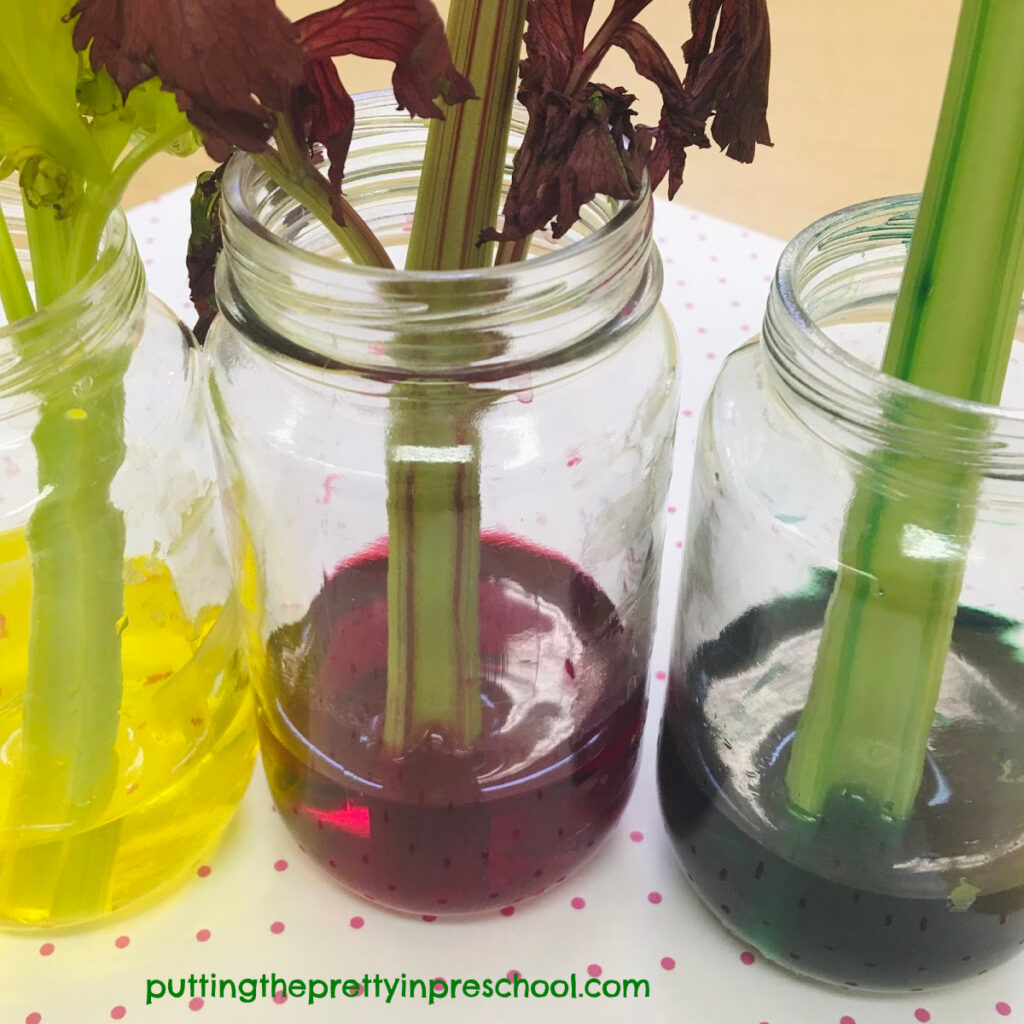
Invite your little learner to look at the celery after a couple of hours. There will be a noticeable change in celery stalk and leaf colors.

Observe the celery with your child the following day. The leaves will be a darker shade of the water hue their stalk was set in than the day before. Colored lines running from the bottom of the stalks to the leaf tips will be clearly visible.

Add a little more water to each container if needed. Study the celery together a day or two later. The leaves and lines on the stalks will be a deeper color still.

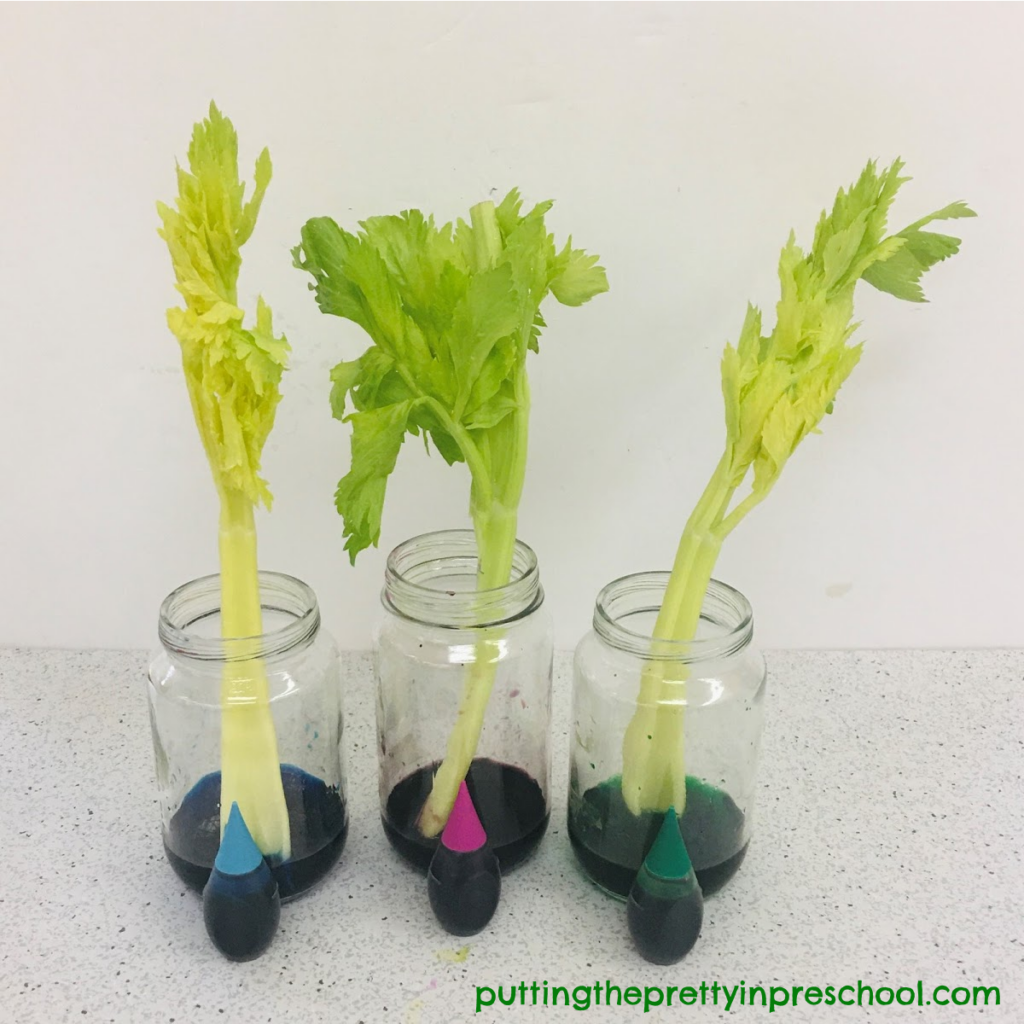
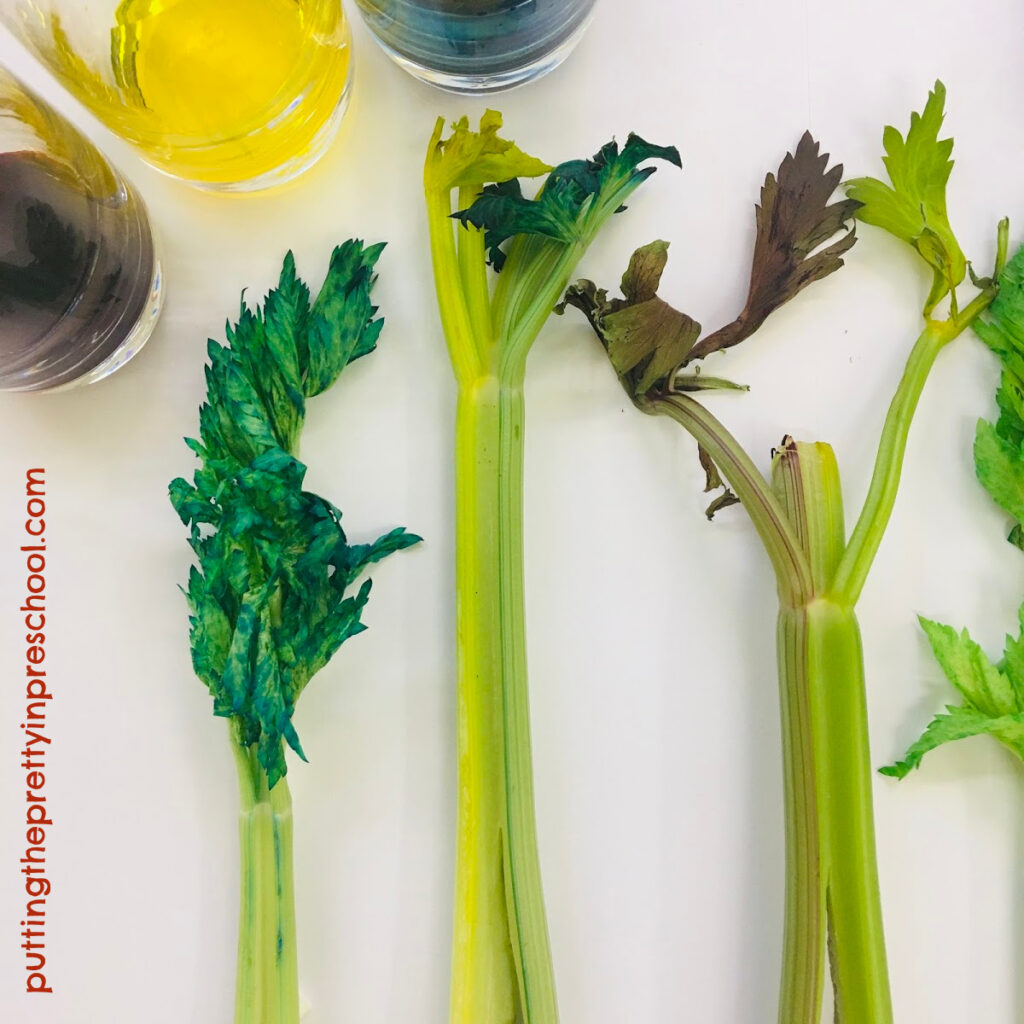
Try the experiment with other food coloring hues. The leafy inner stalks below are dipped in turquoise, purple, and green-colored water.

Celery and food coloring experiment using turquoise, fuschia, and green colored water.

_______

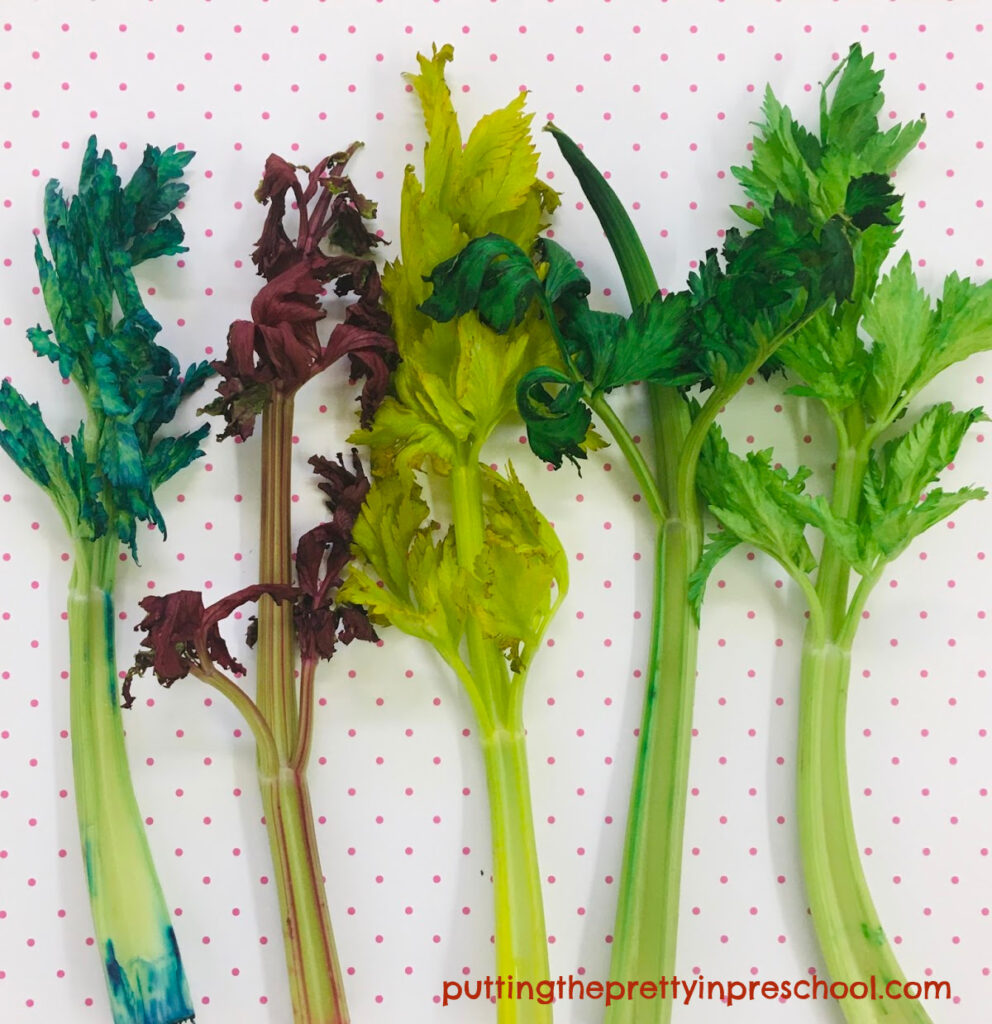
Admire the transformed celery.

Color change in celery as a result of adding food coloring to the water.

_______

Variation Of The Celery Science Experiment

Cut off the ends of celery stalks, and split the bottom half of the stalks into two parts.

Celery stalks with ends cut off.

_______

Invite your child to squirt blue, yellow, and red food coloring into glasses or jars, and mix each hue with a bit of water.

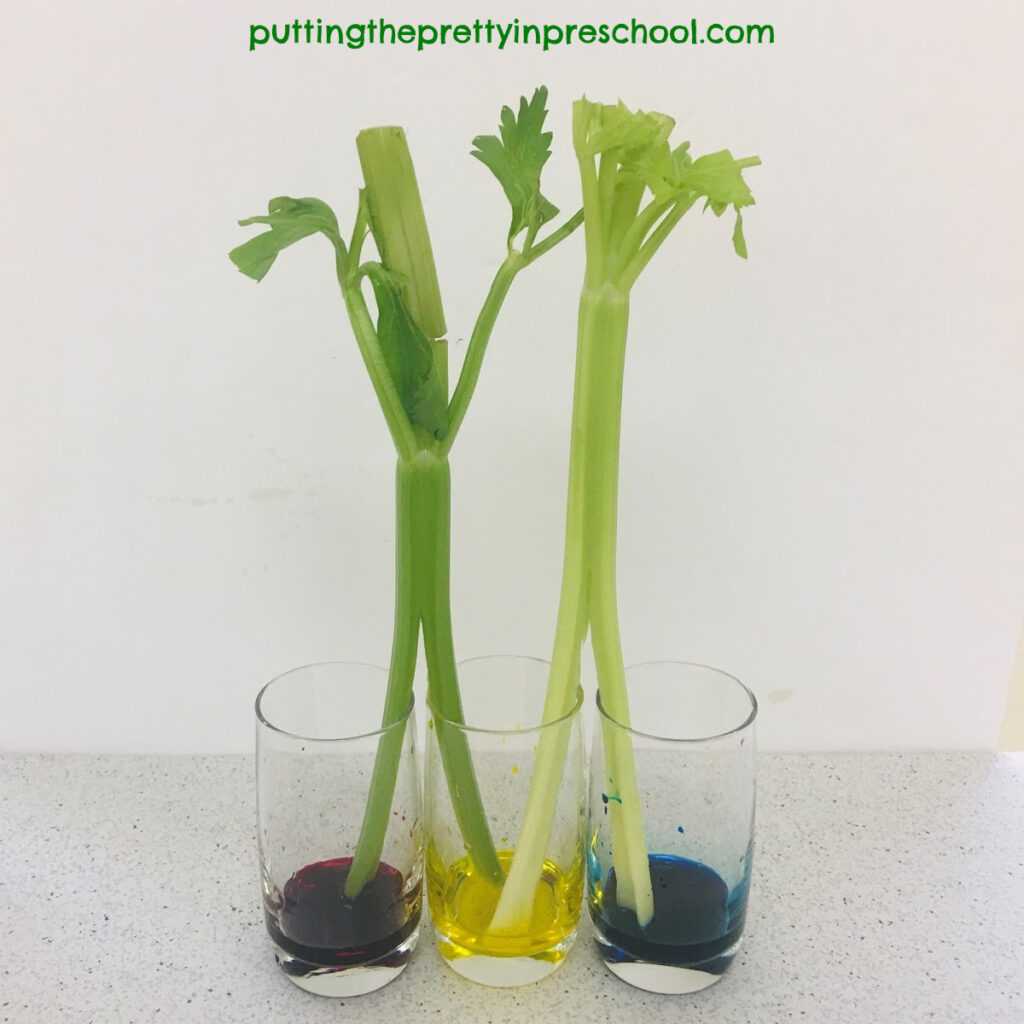
Carefully place a section of one split celery stalk in red water, and the other in yellow. Put the bottom halves of another split celery stalk into yellow and blue water.

Celery stalks placed in two different jars of colored water.

_______

Observe the celery with your little one after a couple of hours, the next day, and two days later.

You will see colored lines that extend from the bottoms of the celery stalks to the leaves. Each stalk will have lines and leaves in two different colors.

Color change in celery as a result of adding food coloring to the water.

_______

The Science Behind The Celery Color Change Experiment

Celery stalks lose water through their leaves. More water gets pulled up from their roots to thirsty leaf tips through a network of hollow tubes called xylem.

The normally invisible process of water transport becomes visible when water accessible to celery stalks is colored.

Color change in celery as a result of adding food coloring to the water.

_______

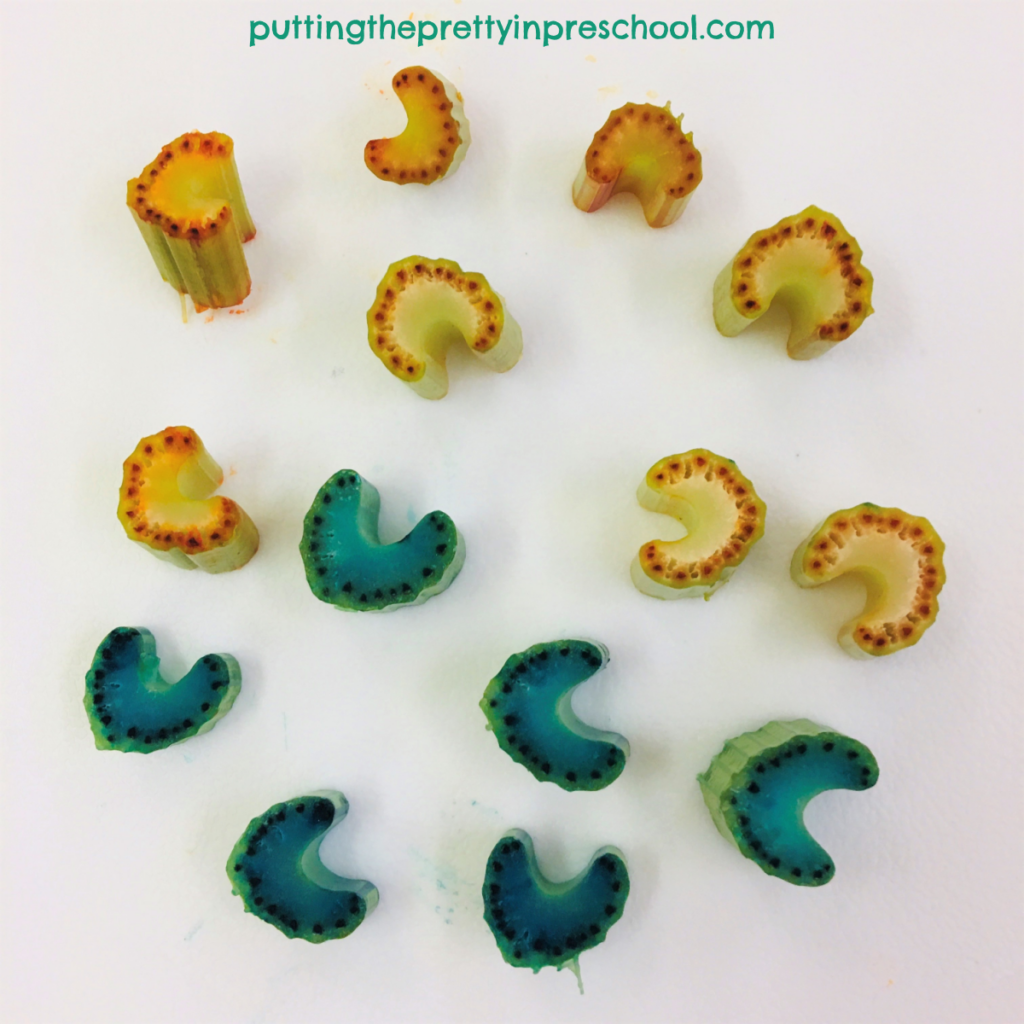
The little dots on these celery slices are xylem tubes.

The colored dots on these celery slices are xylem tubes that transport water.

_______

Color change in celery as a result of adding food coloring to the water.

_______

[Read more…] about Celery Science Experiment

Filed Under: autumn, gardening, science, sensory, trees Tagged With: celery, color, experiment

Horse Chestnut Leaf Art Activities

October 12, 2020 by Annette Kaminsky Leave a Comment

Tweet
Share
Share
Pin
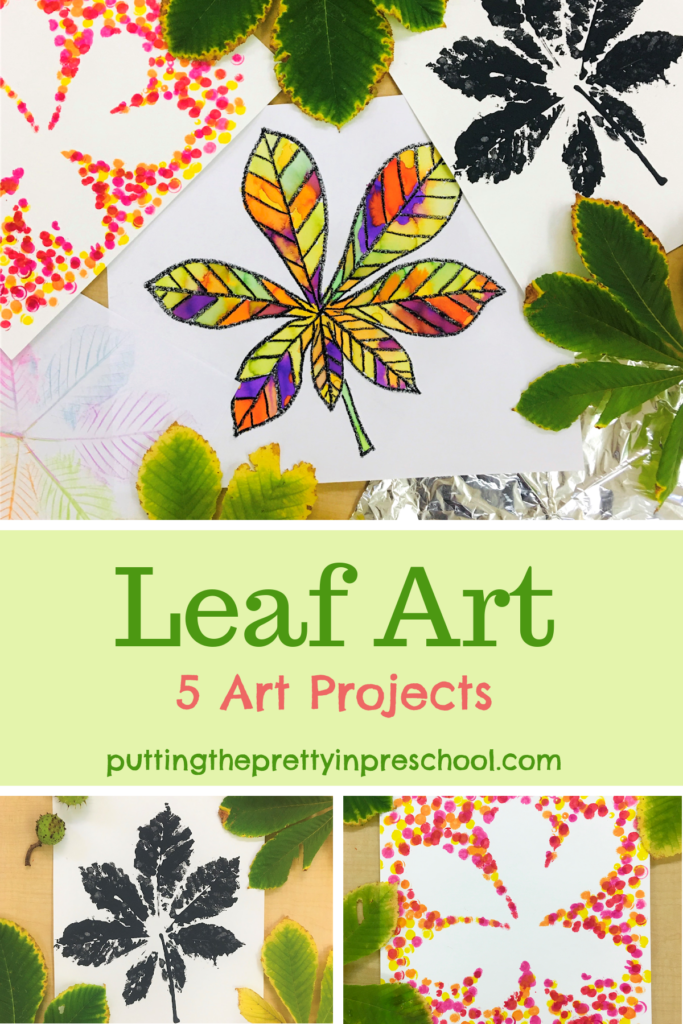
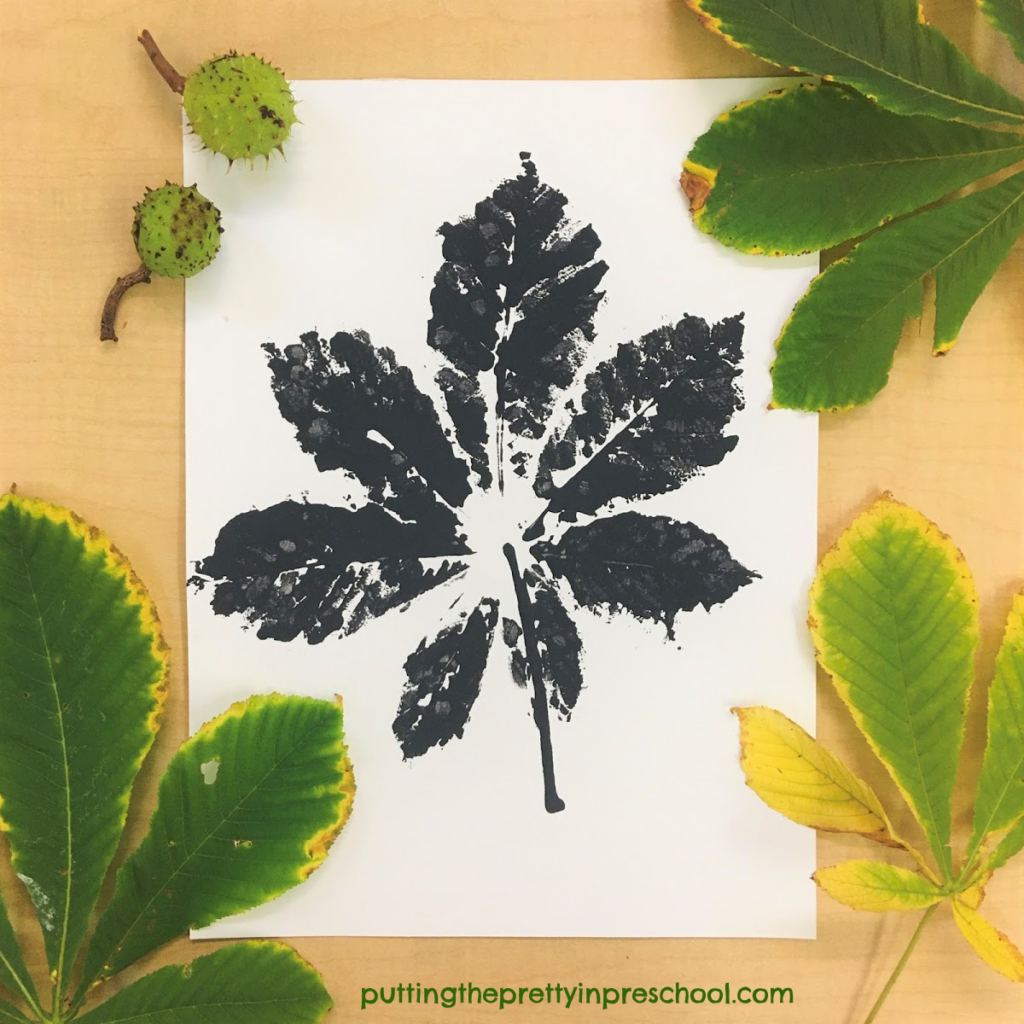
A horse chestnut leaf featured in five easy to do art projects that are suitable for all ages.

_______

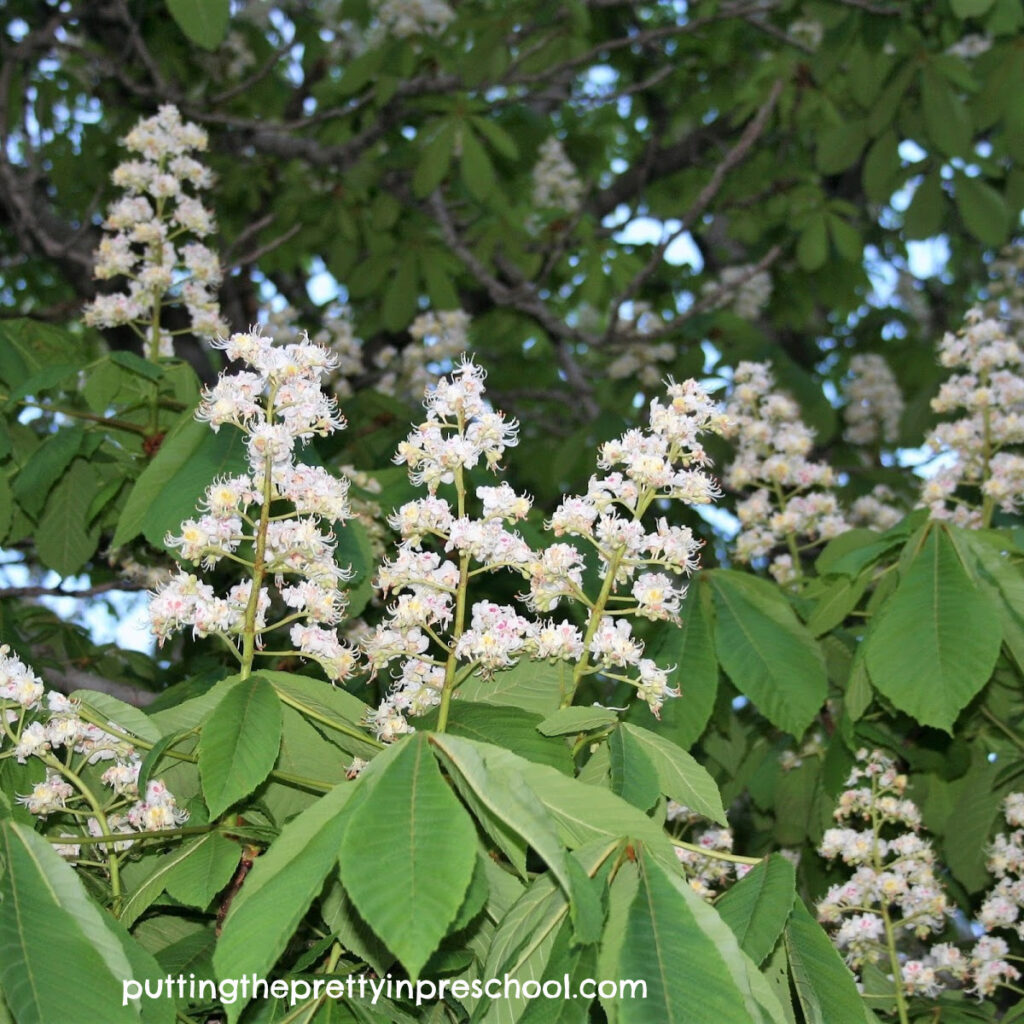
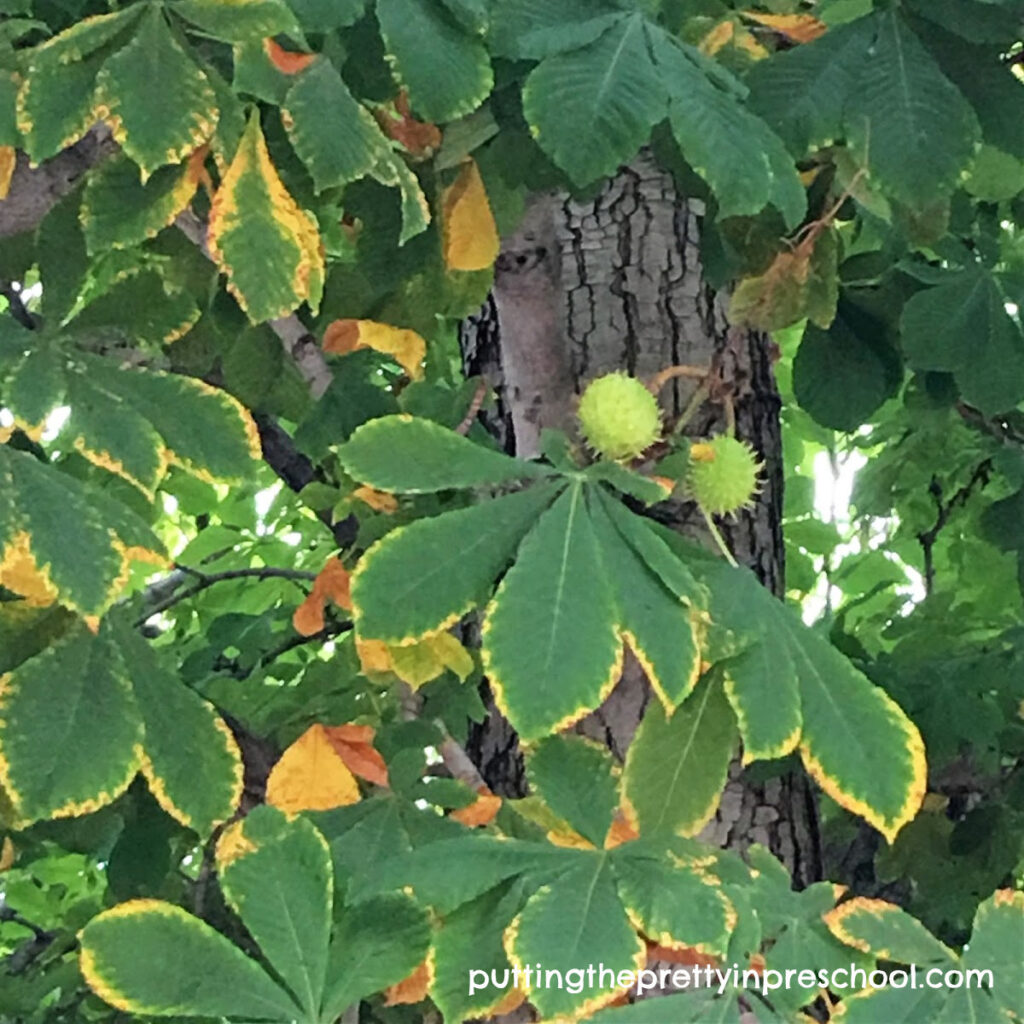
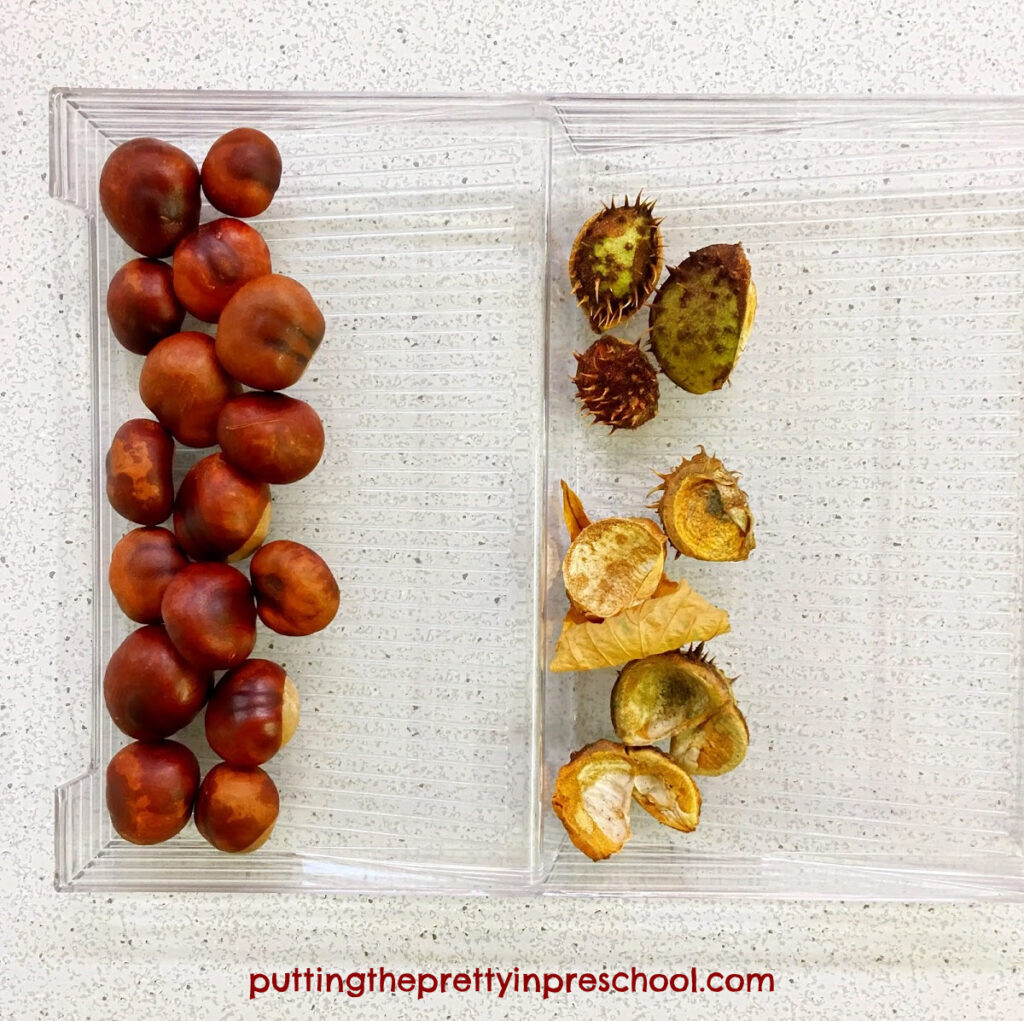
Horse chestnut tree leaves are sizable and showy and have that “wow” factor.  They are deep green compound leaves with five to seven leaflets that live on a tree that is beautiful throughout the seasons. The palmate leaves are showcased along with large, spiked flowers in spring. They turn golden yellow in autumn and are accompanied by dramatic, prickly lime green fruits that are coverings for ultra-smooth nut-like seeds called conkers. The leaves are a spectacular subject for art. Featured in this post are five horse chestnut leaf art activities that are easy to do with your early learners.

_______

Horse chestnut tree flowers in spring.
Flowers in spring.

_______

Horse chestnut tree with fruit in autumn.
Leaves and fruit in autumn.

_______

Horse chestnut tree conkers on the left, and broken fruit casings on the right.
Conkers and empty fruit casings.

_______

Horse Chestnut Leaf Art Activities

Leaf Print

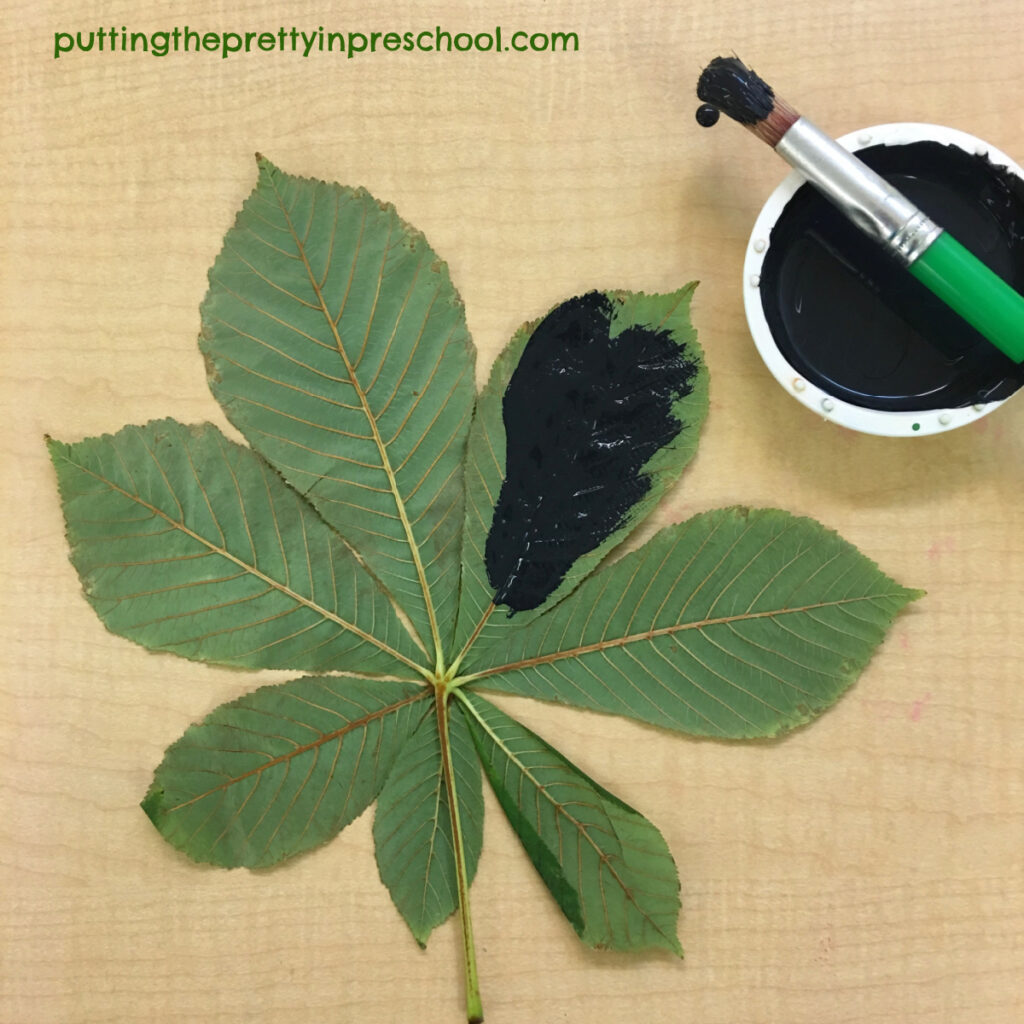
Set a horse chestnut leaf face down on a table with a paintbrush and tempera paint. Invite your child to paint the leaf, turn it over, and press it down on a sturdy piece of art paper.

Horse chestnut leaf paint print invitation.

_______

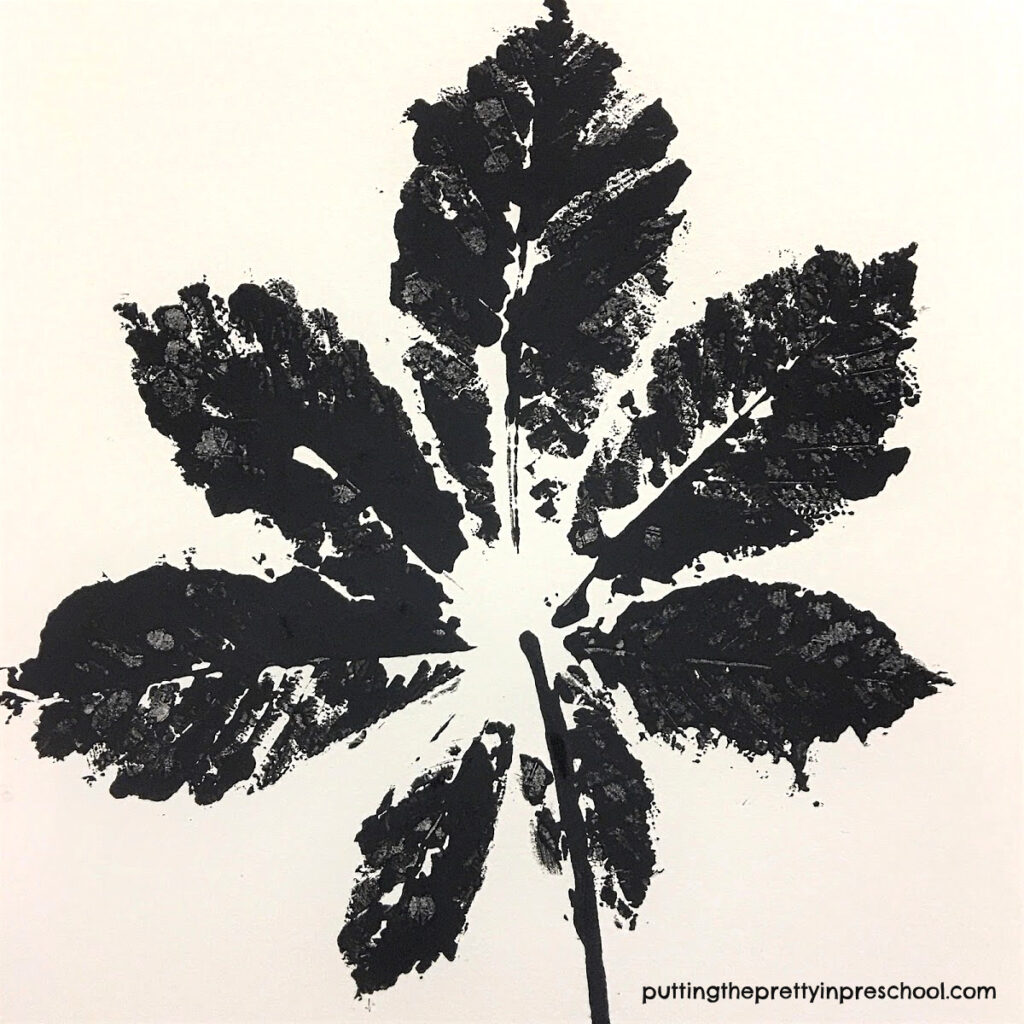
Have your little one rub all over the painted leaf carefully, and remove it from the paper.

Horse chestnut leaf paint print in a black and white color scheme.

_______

A blackish paint produces an unexpected, striking black and white color scheme.

Horse chestnut leaf paint print in a black and white color scheme.

_______

Leaf Dot Art

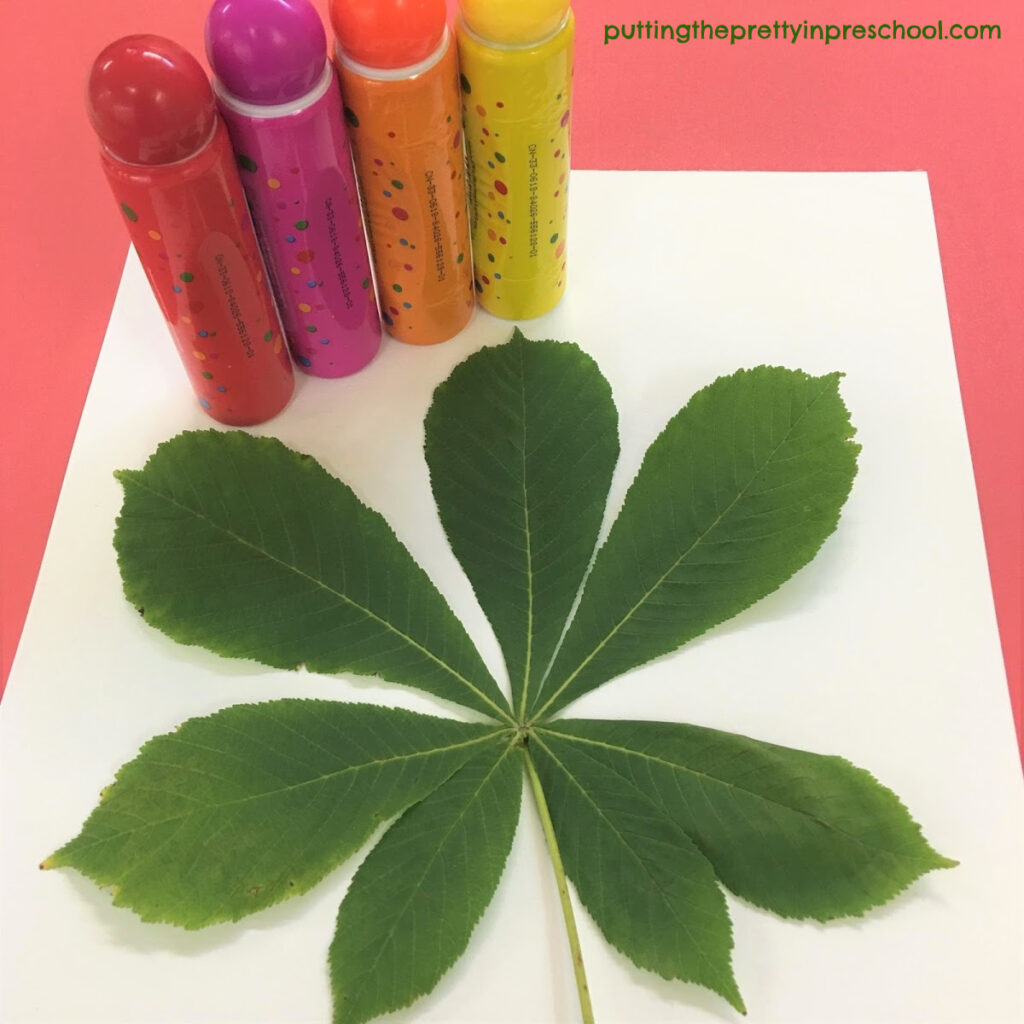
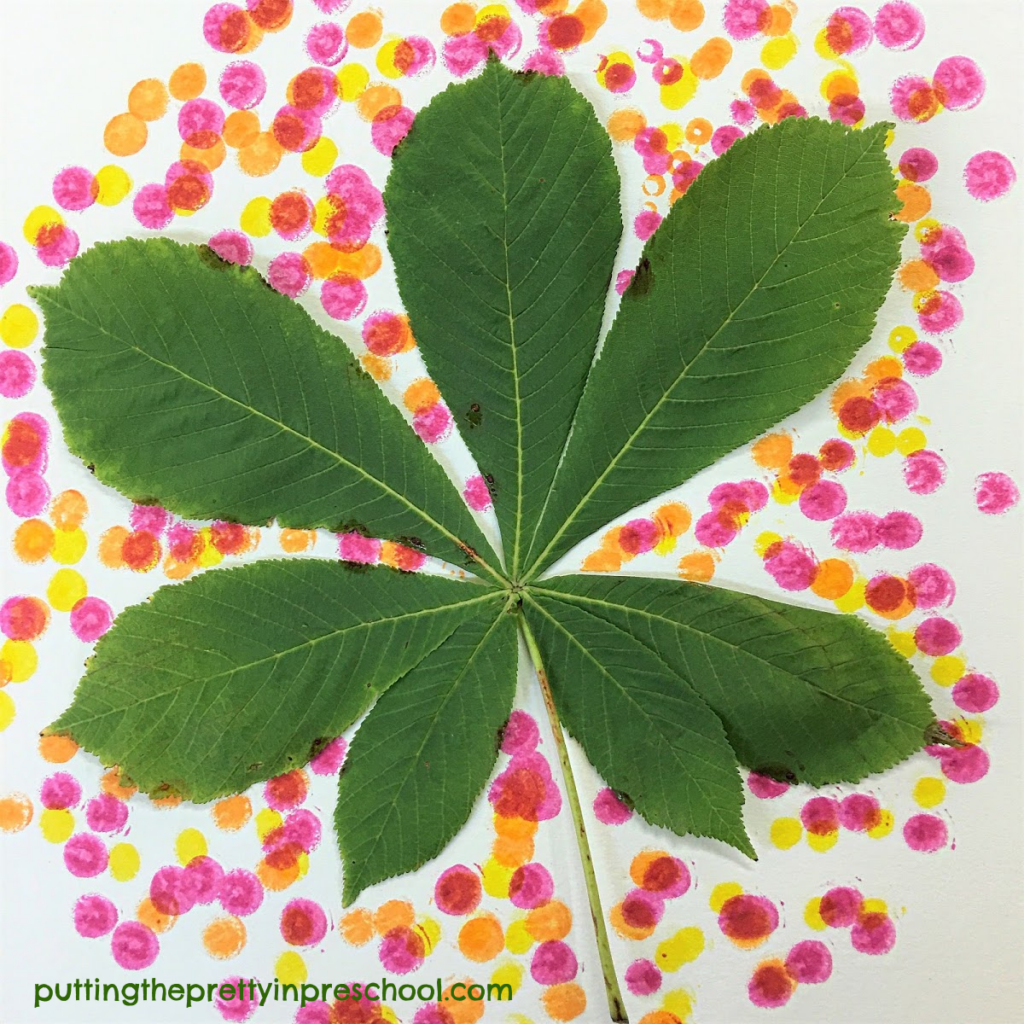
Invite your little learner to place a large horse chestnut leaf on a piece of paper, and decorate the area around it with dot markers.

Dot marker art with a horse chestnut leaf.

_______

Horse chestnut leaves are perfect for dot marker art.

_______

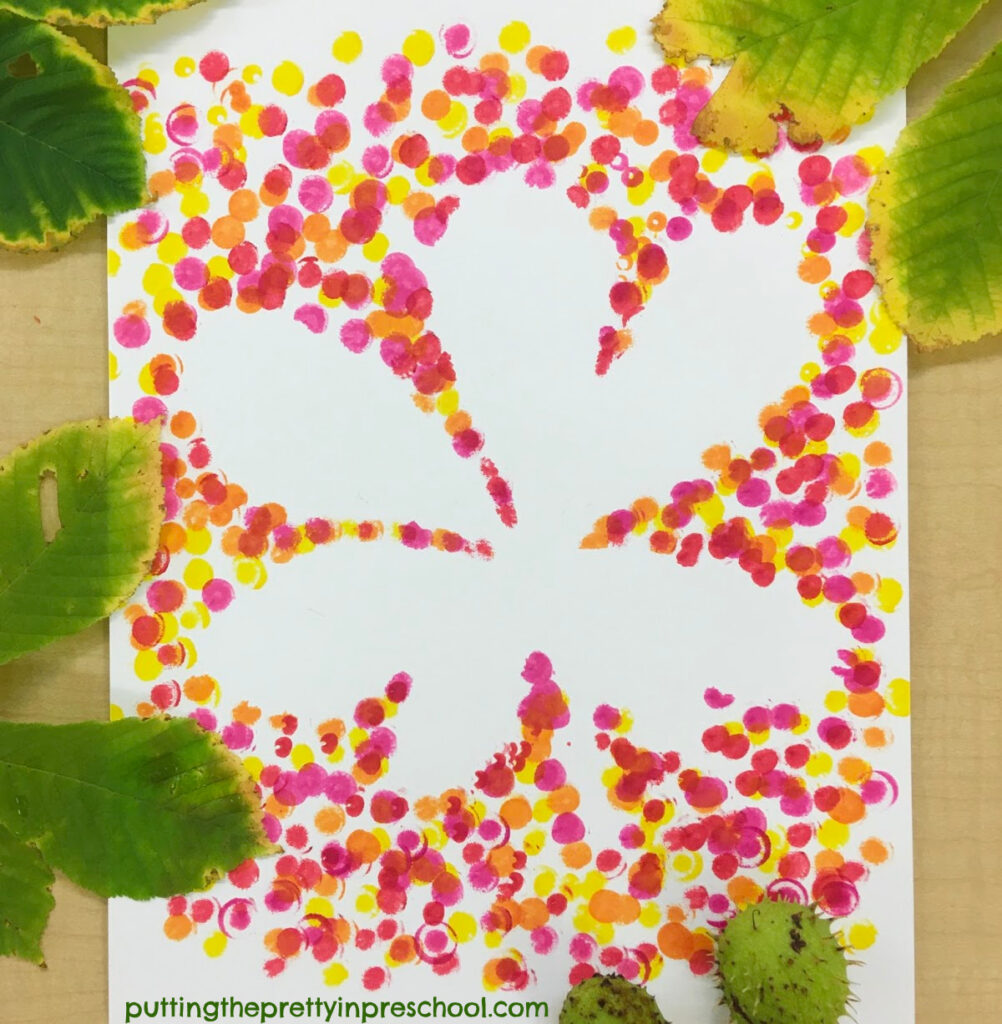
Removing the leaf reveals a white silhouette.

Horse chestnut leaf dot marker art.

_______

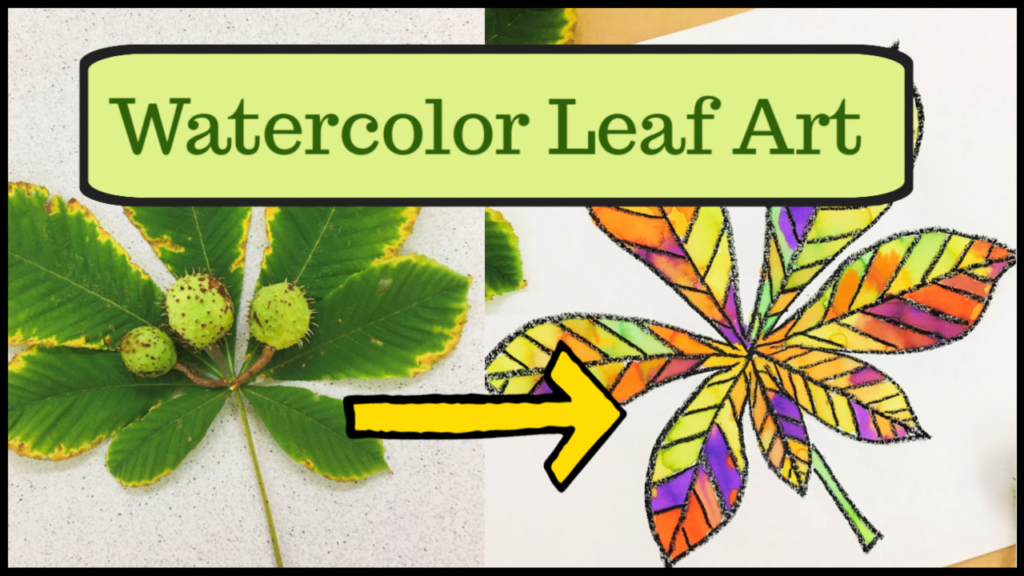
Watercolor Resist Leaf

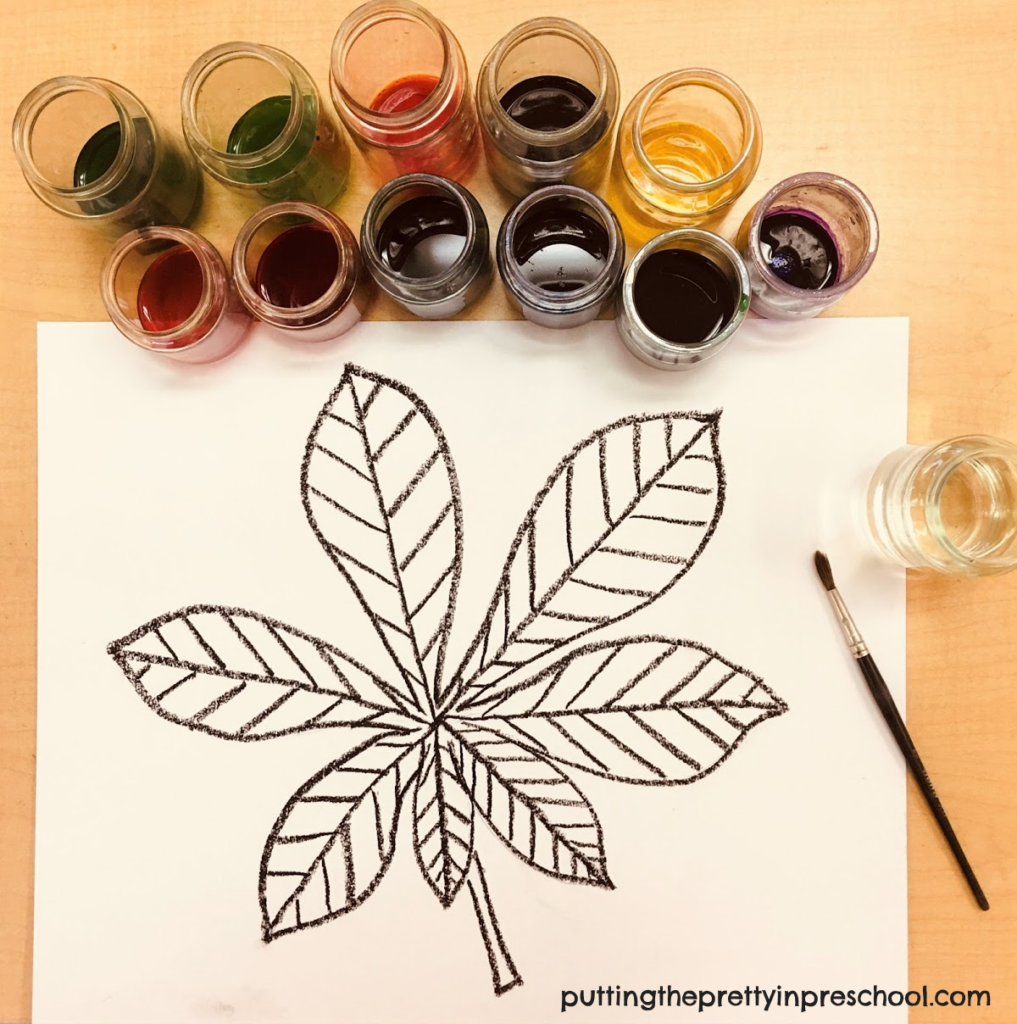
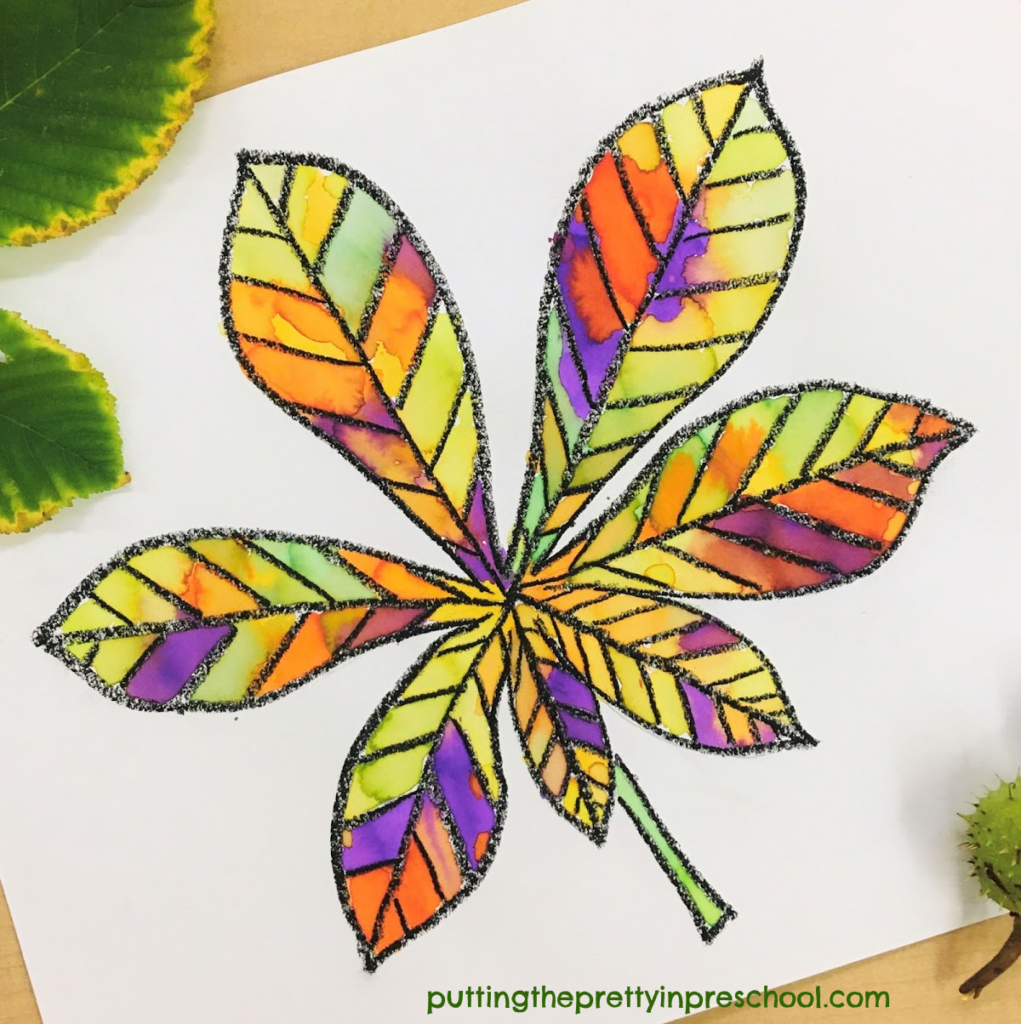
On a large, sturdy piece of paper, help your child trace around a horse chestnut leaf with a black pastel crayon. Carefully remove the leaf, and encourage your little one to add a midrib and veins to the leaflets. Offer a paintbrush and containers of liquid watercolors for painting the drawing. Food coloring hues mixed with small amounts of water can also be used.

Horse chestnut leaf watercolor resist art project set up.

_______

Horse chestnut leaf watercolor resist art project.

_______

View a video tutorial of this watercolor resist leaf art project.

Watercolor resist leaf art video tutorial.

_______

Crayon Relief Leaf

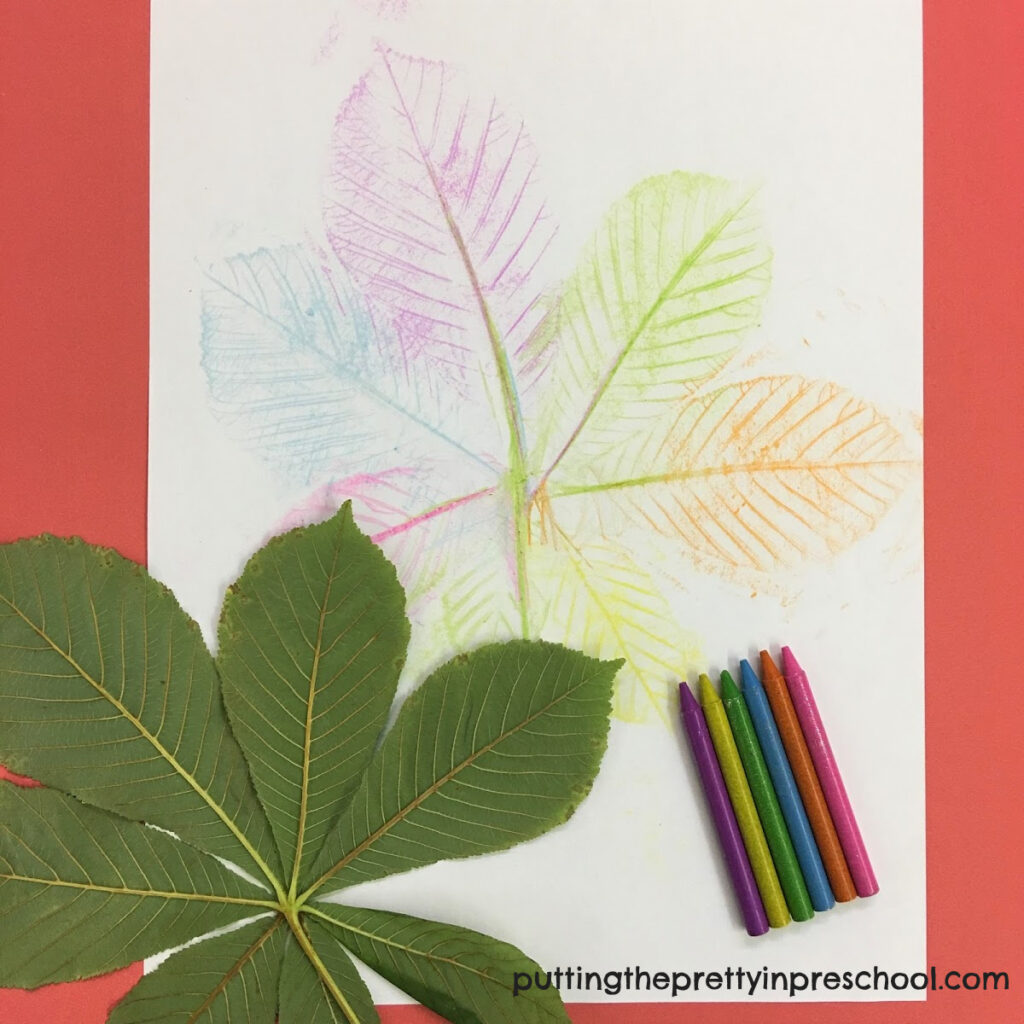
Ask your early learner to place the compound leaf under a piece of thin paper. Offer a selection of peeled crayons.  Have your little one rub over the leaf with crayons held upright or laid flat.

A pastel rainbow color scheme adds softness to this art project.

Horse chestnut leaf rubbing with crayons.

_______

Foil Leaf Rubbing

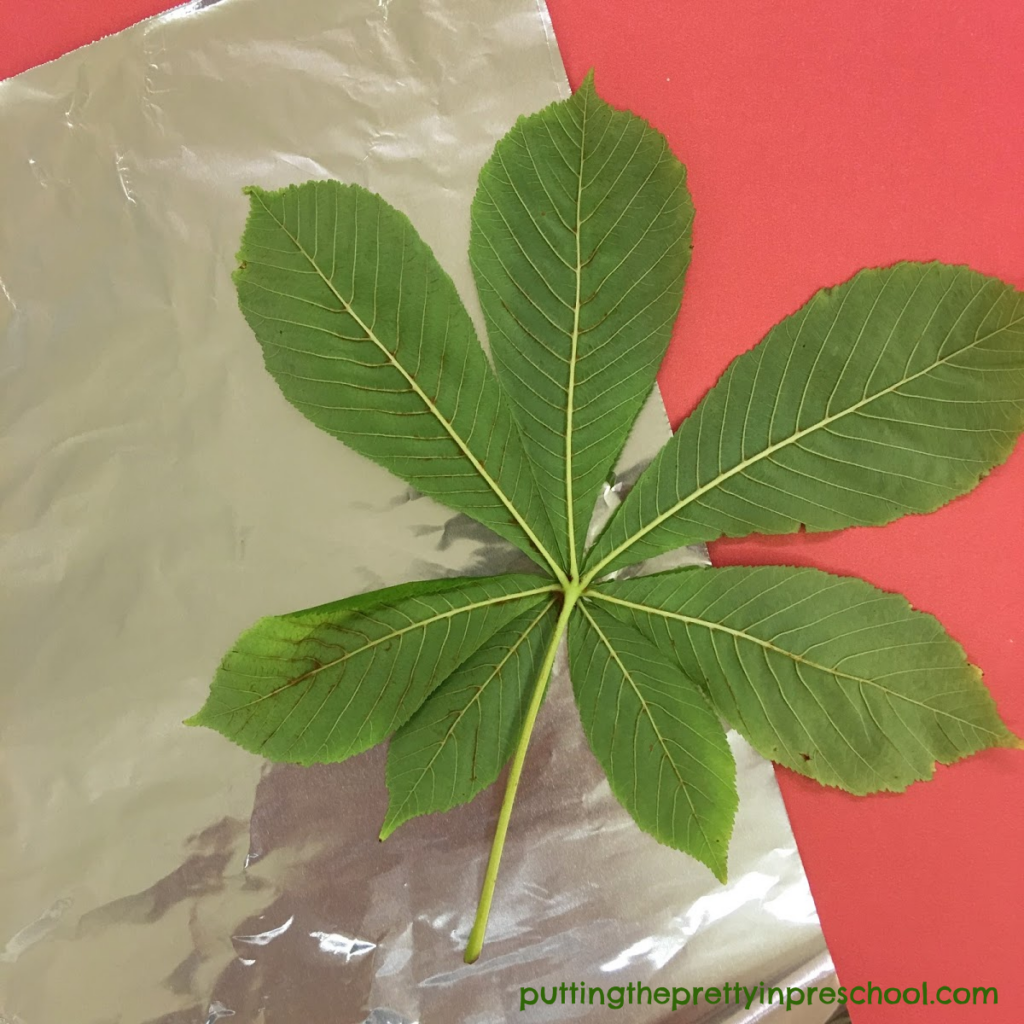
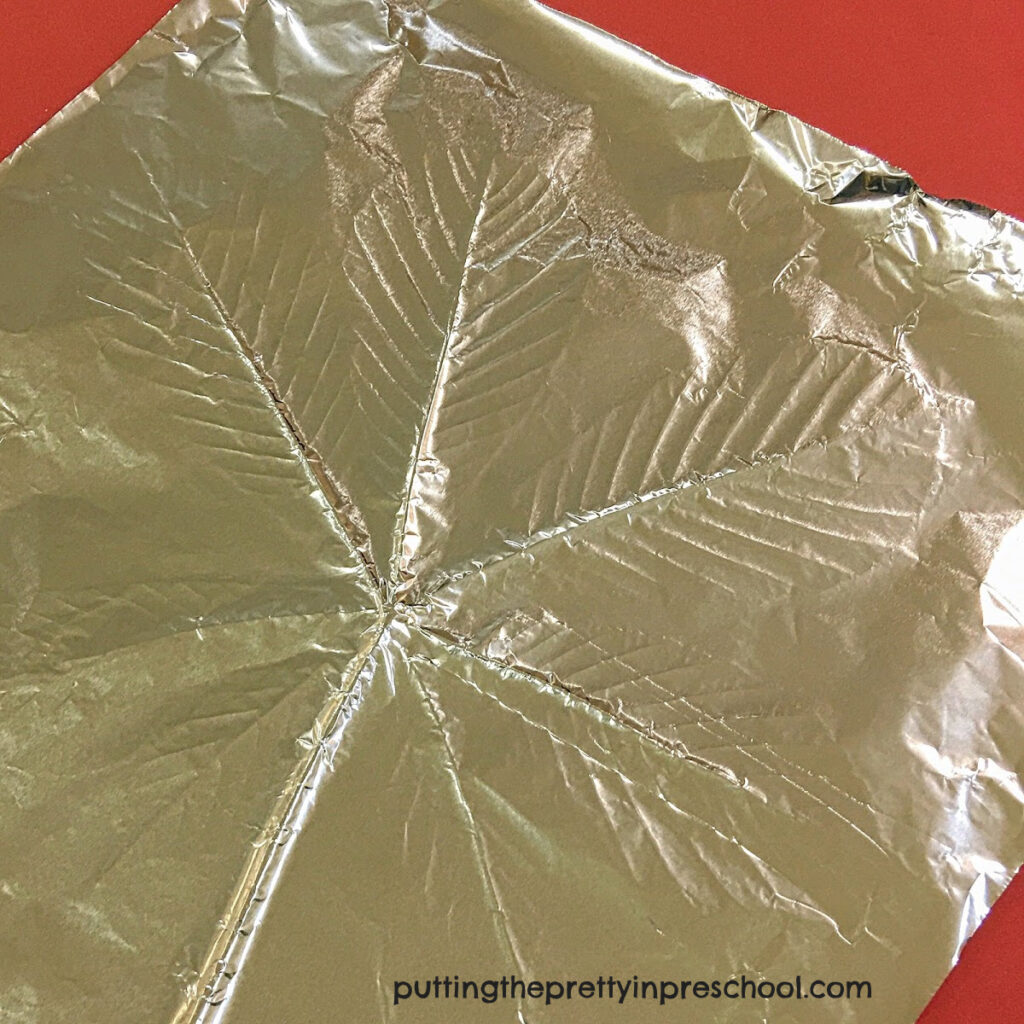
Place a horse chestnut leaf face down on a table. Lay a slightly larger piece of aluminum foil over it. Help your child gently press the foil over and around the midribs, veins, petiole, and edges of the leaf.

Horse chestnut leaf aluminum foil rubbing set up.

_______

Horse chestnut leaf aluminum foil rubbing.

_______

If you are lucky enough to have a horse chestnut tree close to where you live, it can be fabulous to study and photograph throughout the seasons. And horse chestnut leaf art activities add ambiance to home or classroom decor from spring to autumn.

_______

Do you have a favorite horse chestnut leaf art activity or a preferred leaf for art? I’d love to hear about it in the comment section below.

_______

_______

Related: Fall Leaf Crown Paper Crafts

Make a gorgeous leaf crown craft with one of these leaf crown printables.

_______

[Read more…] about Horse Chestnut Leaf Art Activities

Filed Under: art, autumn, preschool, spring Tagged With: horse chestnut trees, leaves, nature art, tree art

Turkey Sensory Tubes

October 3, 2020 by Annette Kaminsky Leave a Comment

Tweet
Share
Share
Pin
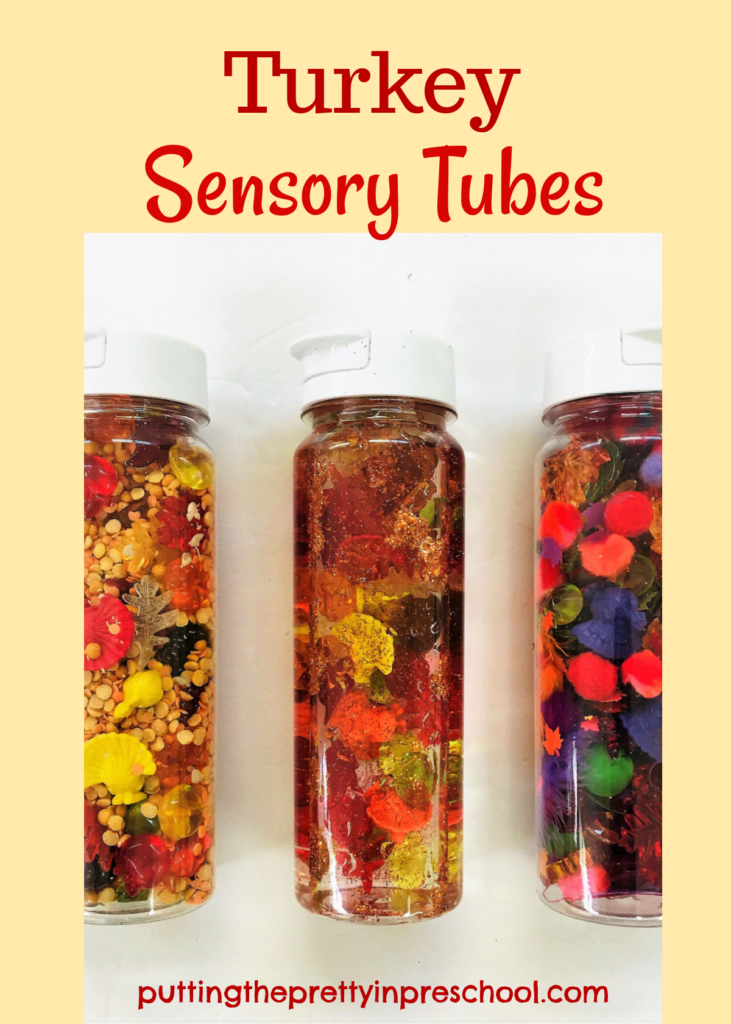
"Spot The Turkey" sensory tubes. Split pea and lentil base, glitter water base, and craft material base sensory tube ideas.

_______

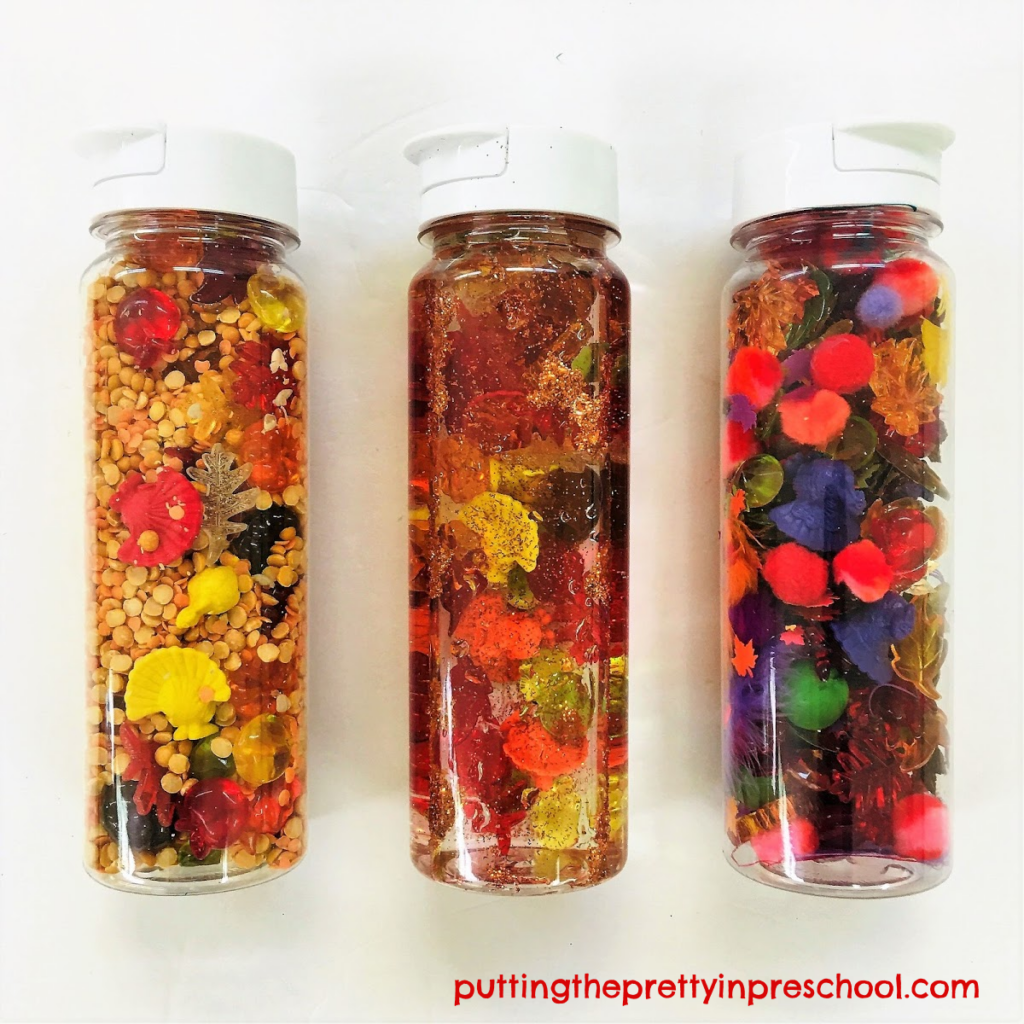
Here are three quick and inviting turkey sensory tubes to put together for a Thanksgiving, fall, or farm theme.  I used large water bottles with wide mouths purchased at a dollar store for these activities. Offer the tubes to little learners and have them “spot the turkeys.”

_______

Three "Spot The Turkey" sensory tubes. Split pea and lentil base, glitter water base, and craft material base sensory tube ideas.

_______

Split Pea And Lentil Based Sensory Tube

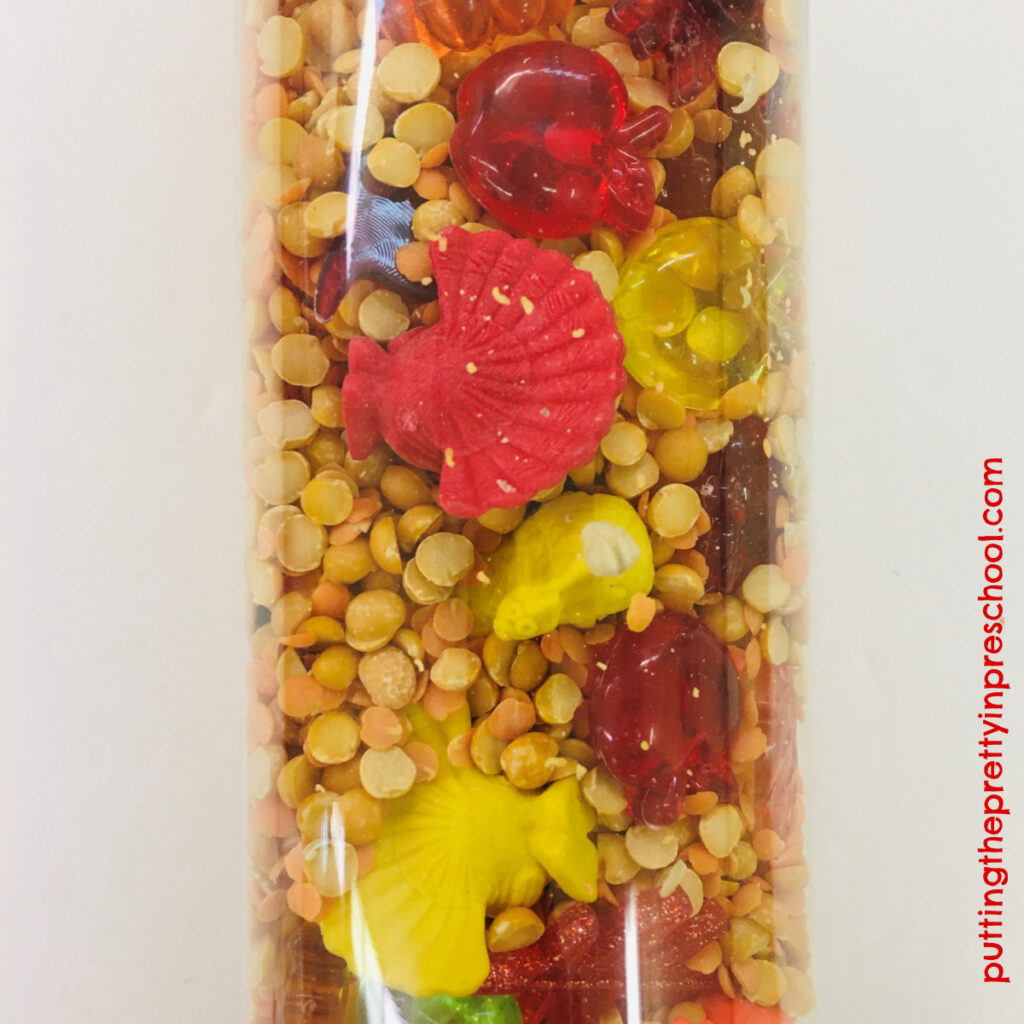
Split pea and lentil-based turkey sensory tube with turkey counters, and leaf, pumpkin, and apple gems.

_______

This calming turkey sensory tube features a red split lentil and yellow split pea base. Also included are:

  • red, orange, and yellow rubber turkey counters
  • pumpkin and apple gems
  • fall round and leaf gems

_______

Glitter Water Sensory Tube

Glitter water sensory tube with turkey counters, and leaf, pumpkin, and apple gems.

_______

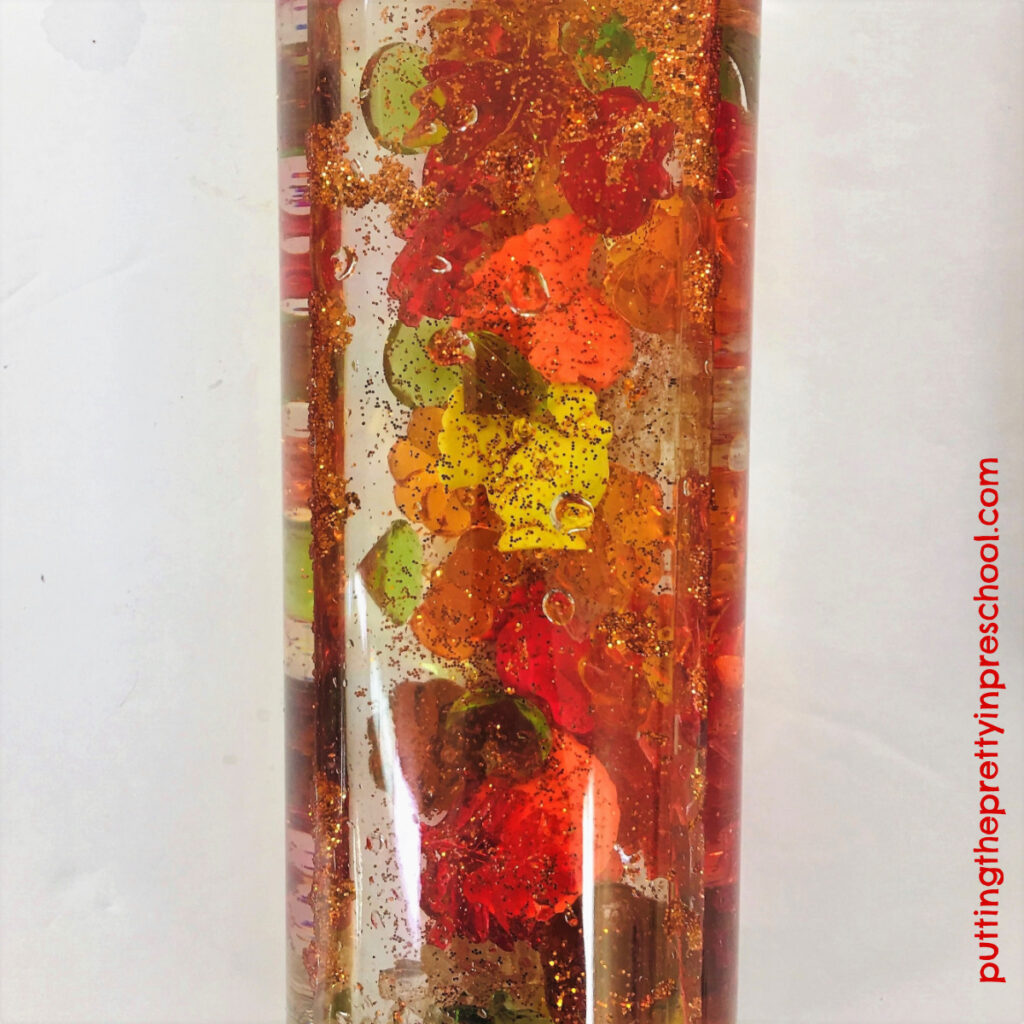
Water sprinkled with a little orange glitter is the base for this glitzy sensory tube. Red, orange, and yellow turkey counters and apple, pumpkin, leaf, and round gems complete the tube.

_______

Craft Supply And Gem Sensory Tube
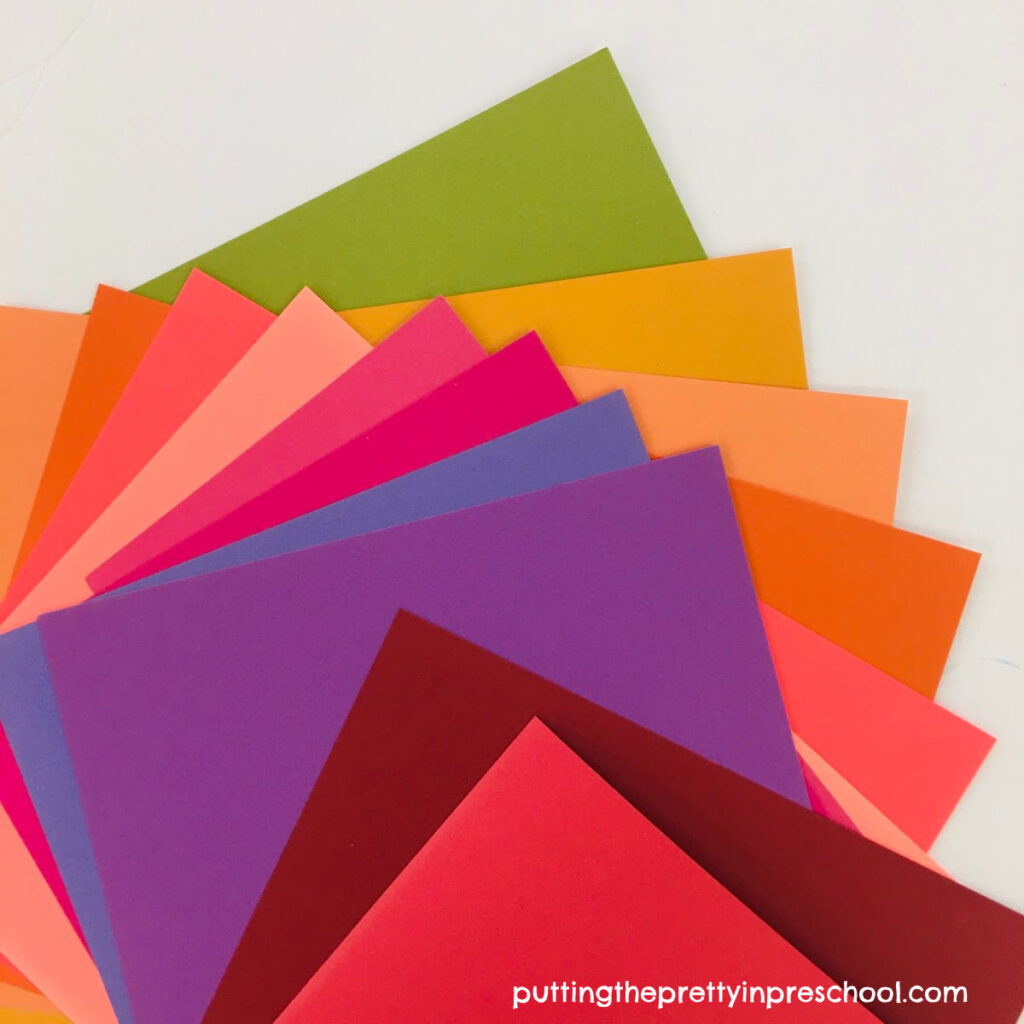
Cardstock paper in an array of fall hues is the color guide for this cheery turkey sensory tube.

_______

The color guide for a Frozen 2 inspired sensory bin.

_______

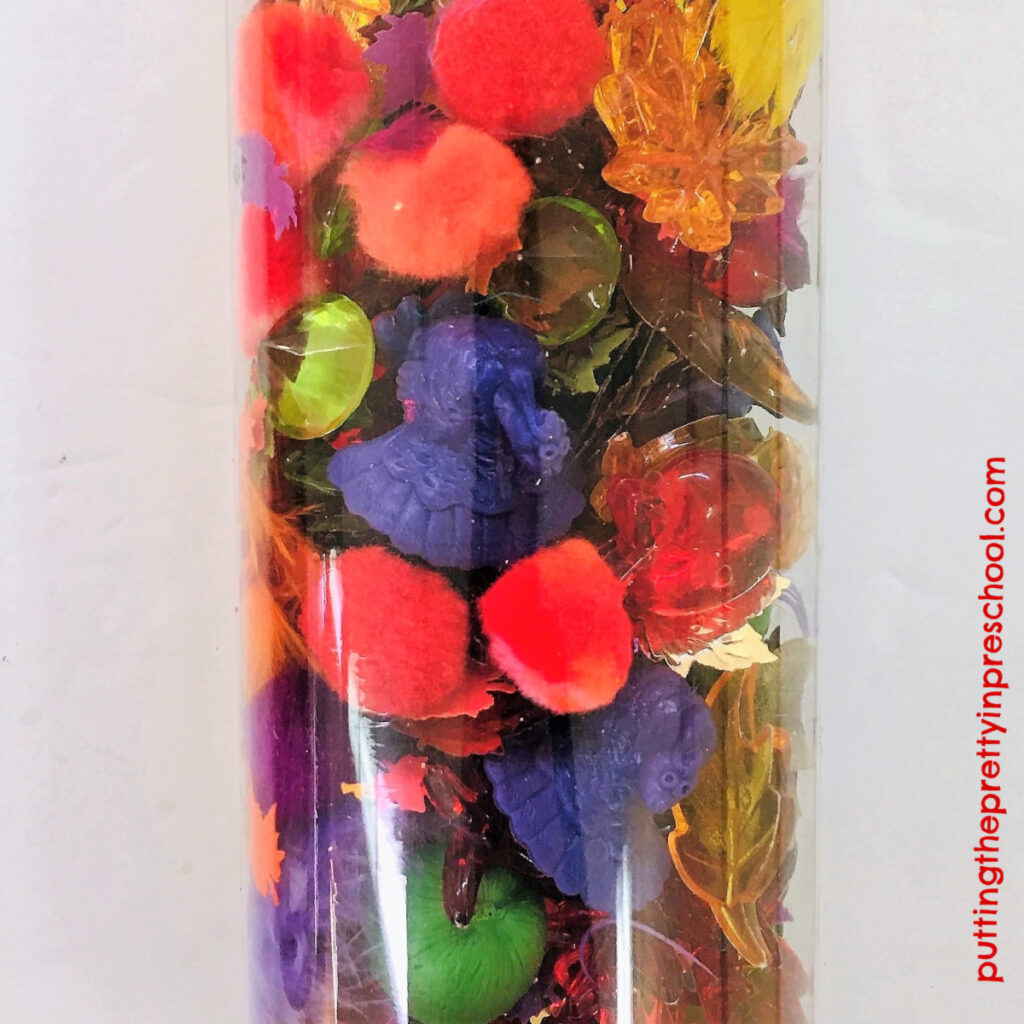
Added to the tube are:

  • purple turkey counters
  • red, orange, and purple feathers and pompoms
  • gold, red, and orange foil leaves
  • pumpkin, apple, leaf, and round gems
  • green apple counters

Glitter water sensory tube with turkey counters, and leaf, pumpkin, diamond, and apple gems.

_______

The turkeys can be exchanged for Frozen II figurines to go along with the heartwarming storybook “We’ll Always Have Each Other” by John Edwards. Read about a Frozen II inspired sensory bin here:

Frozen II Inspired Sensory Bin

_______

Fall-colored loose parts are featured in these three turkey sensory tubes. But the color theme can be changed to fit any season the tubes are offered in.

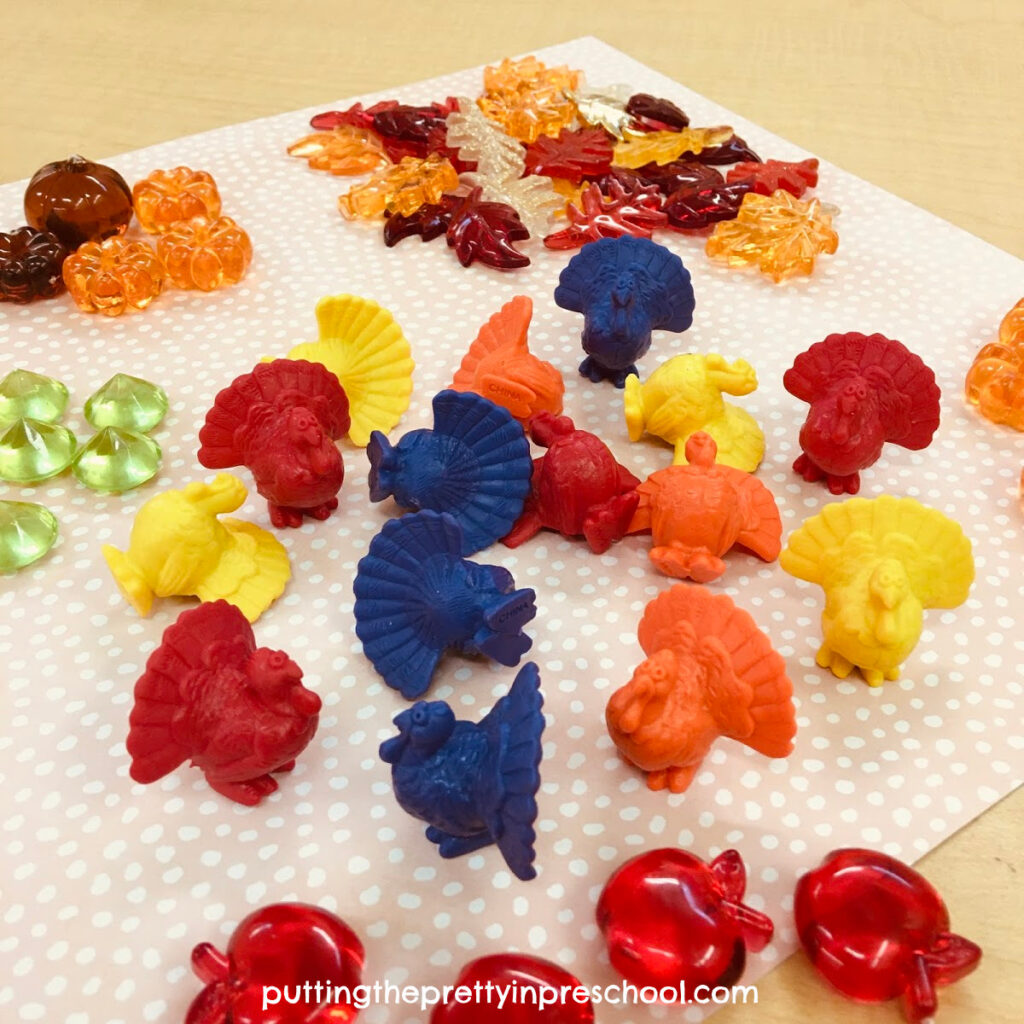
Turkey math counters and fall-themed loose parts.
Turkey Counters And Fall-Themed Loose Parts

_______

Three "Spot The Turkey" sensory tubes. Split pea and lentil base, glitter water base, and craft material base sensory tube ideas.

_______

What do you think?

_______

Thanksgiving Printables

Shop Thanksgiving printables in my Etsy shop “Skills N Smiles“:

_______

__

[Read more…] about Turkey Sensory Tubes

Filed Under: apples, autumn, fall, preschool, sensory, Thanksgiving Day Tagged With: apples, leaves, pumpkins, turkeys

Corn Theme Activities

September 6, 2020 by Annette Kaminsky Leave a Comment

Tweet
Share
Share
Pin
Corn theme activities perfect for autumn. Sensory and art setups inspired by a corn maze.

_______

Corn is a symbol of autumn and a garden plant with so many uses. We love it in foods, but it is also found in products such as oil, glue, hand soaps, cosmetics, and varnish. And corn cobs in an array of hues are showstoppers in fall décor. The versatile vegetable can be enjoyed by children in the corn theme activities below.

Corn Maze Visit

A corn maze visit is a farm-infused adventure everyone should have. Aside from the obvious nature challenge of finding one’s way through a giant corn maze, the experience offers so much more.

At my 2019 visit to a local site called the Edmonton Corn Maze, I saw children and adults embracing wholesome activities everywhere I turned. The outdoor venue offers:

The theme for the 2020 Edmonton Corn Maze.

_______

  • a corn maze with a pattern that can be viewed from up in the air. The 2020 theme is “Stronger Together.”
  • large motor opportunities such as hay bales to climb, wagons to pull, huge inflatable pillows to bounce on, and pedal carts to ride.
  • farm animals to admire up close. The “Goat Gang” pen was my favorite.
  • learning opportunities such as stations with facts about corn and farm animals, information panels about ecobuffers, and “Cornumdrum” questions to solve.
  • panels with “Funny Farmer” jokes.
  • play areas with small mazes and board games.
  • a toy-filled, sizable corn bin for young children to immerse themselves in.
  • a “U Pick” Sunflower Patch.
  • photo opportunities.
  • picnic areas.

_______

Corn Theme Activities

Follow up a trip to a corn maze or vegetable department in a grocery store by offering early learners hands-on activities with corn. Here are some options:

Corn Cob Exploration

Give little ones a chance to explore corn cobs. Talk about the parts of the cob: the soft silks, lime green husk, golden kernels, and shank. Allow them to remove the silks and husk from a cob of corn.

Corn Cobs

_______

A cob of corn with silks and peeled husk.

_______

Corn-Based Sensory Tray

Offer early learners a corn kernel and split pea-based sensory tray. Safari Toob farm animals, farmer, tractor and wagon, carrots, and sunflowers are the perfect size for this tray.

Farm sensory tray with a corn kernel and split pea base.

_______

Corn And Pig Sensory Tube

Set out a farm-themed sensory tube. This one is a clear plastic water bottle filled with pig figurines, gems, and corn cobs and kernels. You’ll find the pigs are super good at hiding!

Corn kernel, pig, and corn cob sensory tube.

_______

Corn Cob Paintings

Offer corn cobs in three unique painting experiences.

Activity Number One

Invite little ones to drip paint on a large piece of paper placed in a rectangular box, and then drop in a corn cob.  Ask them to tilt the box gently from side to side. The cob will move the paint around.

Invitation to make a rolled corn cob painting.

_______

Rolled corn cob painting.

_______

Activity Number Two

Another technique is to ask children to paint the corn cob with one or more colors of tempera paint, and lay the cob in a box lined with sturdy paper. Invite them to tip the box from side to side so the cob “paints the paper.”

Invitation to paint corn for rolled corn painting.

_______

Corn cob painting.

_______

The pictures below feature Indian corn-inspired painting.

Corn cob painted in Indian corn colors.

_______

Corn cob painting inspired by Indian corn.

_______

Painted cobs of corn.

_______

Activity Number Three

A third way is to slice a cob in half with a sharp knife. Invite early learners to dip the halves in different colors of paint and press them on paper to make corn cob prints. The corn can be washed or wiped down with a napkin between colors.

Invitation to make paint prints with sliced corn cobs.

_______

Printmaking with corn cob halves.

_______

Now back to what most people do with corn…eat it! If you are looking for inspiration for cooking with corn, check out the post “40 Fresh Corn Recipes“ on The Food Network. You are bound to find new ways for your family to savor it.

Related:

Cauliflower Theme Activities

Beet Science and Sensory Activities

Pumpkin Color Activities

_______

[Read more…] about Corn Theme Activities

Filed Under: art, gardening, sensory Tagged With: corn, corn maze

Carrot Theme Activities

August 18, 2020 by Annette Kaminsky Leave a Comment

Tweet
Share
Share
Pin

One of the easiest vegetables to grow in an indoor or outdoor garden is carrots. This makes carrot activities ideal for hands-on nature experiences with young children.

_______

Carrot theme sensory, art, and baking activities.

_______

We usually think of carrots as orange, but did you know that they come in a variety of colors? You can purchase a rainbow bunch, which has purple, red, orange, yellow, and white carrots. Being a lover of all things colorful, I chose rainbow carrots for some of the carrot theme activities.

_______

Carrot Washing Station

A carrot washing station, set up outdoors or in a sensory tub indoors, offers early learners a farm day experience.

Rainbow carrot sensory tub to simulate a carrot washing station.

_______

Save the tops of the carrots for your little ones to use with a mortar and pestle. View the post by Fairy Dust Teaching called “SMASH, CRUSH, DESTROY! How To Use A Mortar And Pestle In Your Sensory Play” for more information about introducing these implements in early learning activities.

Carrot tops with mortar and pestle for early learners to explore.

_______

Curled Carrot Hair Portraits

Curled carrots make statement hairdos! On a sturdy piece of paper using felt pens, draw a face. Or have your little learners draw one. Invite them to add carrot hair to the face. Since natural human hair is made up of an array of colors, rainbow carrots work fabulously in this challenge.

Curled carrot hair portrait.

_______

If the carrot curls straighten, they still make striking hair.

Rainbow carrot hair portrait. An all-ages art activity.

_______

Carrot Contour Drawings

Contour carrot drawings are the perfect follow-up activity to reading a storybook such as “The Carrot Seed” by Ruth Krauss. And carrots make a superb subject for guided drawing.

Start by showing early learners a large carrot (with a green carrot top.) Hold up the carrot in one hand. Ask them to follow along with their eyes as you air trace around the outside with your other hand. Discuss the long, thin, triangular shape of the carrot, and the delicate lines in the carrot top. Afterward, offer green and orange felt pens and large pieces of paper for little learners to create one.  

Below are drawings preschoolers have made.

Carrot drawings completed by preschoolers.

_______

Carrot And Bunny Sensory Trays

Little learners love sensory trays with scooping, pouring, sifting, and counting opportunities. Below are two garden-themed trays. They prominently feature carrots and bunnies…a natural pairing!

The first tray has a green split pea base and is simple to put together. It includes:

  • plastic carrot cup with lid
  • rubber bunny woolies
  • ladle
  • wooden numbers
Split pea-based sensory tub with bunny woolies, numbers, ladle, and carrot cup with a lid.

_______

This second sensory tray is brimming with bunnies, carrots, numbers, and gems. Green split peas and black beans are the base ingredients.

Carrot and bunny-themed sensory tray.

_______

Carrot Measurement

A rectangular piece of sturdy cardboard, measuring tape, and washed carrots are all that is needed to give early learners practice in measuring the length of these crunchy vegetables.

_______

Along with offering carrots in early learning activities, include them in snacks too. And this Roasted Rainbow Carrot recipe from the Food Network Kitchen makes a colorful and appetizing addition to any meal.

Do you have a favorite carrot activity?  Share in a comment below.

_______

Related: Jumbo Carrot Paint Prints Video

_______

Printmaking with jumbo carrots. The paint colors used are inspired by rainbow carrots. This is an all-ages art activity.

_______

[Read more…] about Carrot Theme Activities

Filed Under: art, gardening, Math, preschool Tagged With: bunnies, carrots, counting activity, measurement

  • « Go to Previous Page
  • Page 1
  • Interim pages omitted …
  • Page 65
  • Page 66
  • Page 67
  • Page 68
  • Page 69
  • Interim pages omitted …
  • Page 77
  • Go to Next Page »

Primary Sidebar

Hi, I'm Annette Kaminsky, a preschool teacher who loves sharing learning through play activities for young children. Thanks for visiting my site. Feel free to stay awhile!

Subscribe Via Email

Recent Posts

  • Earth Day Spin Painting April 21, 2026
  • Easter Bunny Scavenger Hunt April 4, 2026
  • Celebrate Diversity Coloring Pages March 1, 2026
  • Lunar New Year Lantern Craft February 11, 2026
  • Black History Month Positive Affirmations Art January 29, 2026
  • Snowflake Cafe Dramatic Play Set January 19, 2026
  • Pastel Christmas Letterhead and Envelope December 20, 2025
  • December Kindness Activities November 30, 2025
  • Fall Forest Sensory Bin November 30, 2025
  • DIY Turkey Bowling Game November 25, 2025

Categories

Topics

apples bunnies butterflies Chinese New Year Christmas Christmas craft color colors dramatic play Easter fall flowers hearts holiday jewelry leaves leprechauns light table loose parts painting paper crafts playdough pretend play printables printmaking process art pumpkins rice bin scented playdough science experiment scissor skills sensory bin sensory play sensory tray shamrocks skeletons snakes snowflakes spiders spring St. Patrick's Day sunflowers tablescapes Valentine's Day water play
Copyright © 2026 · Lifestyle Pro on Genesis Framework · WordPress · Log in