• Skip to secondary menu
  • Skip to main content
  • Skip to primary sidebar

Putting The Pretty In Preschool

Finding Beauty In Everyday Early Childhood Experiences

  • Home
  • About Me
  • Winter
  • Chinese New Year
  • Blog
  • Contact Me
  • Black History Month
  • SHOP
  • Valentine’s Day

painting

Neon Finger Paint Tree Art

October 19, 2022 by Annette Kaminsky Leave a Comment

Tweet
Share
Share
Pin
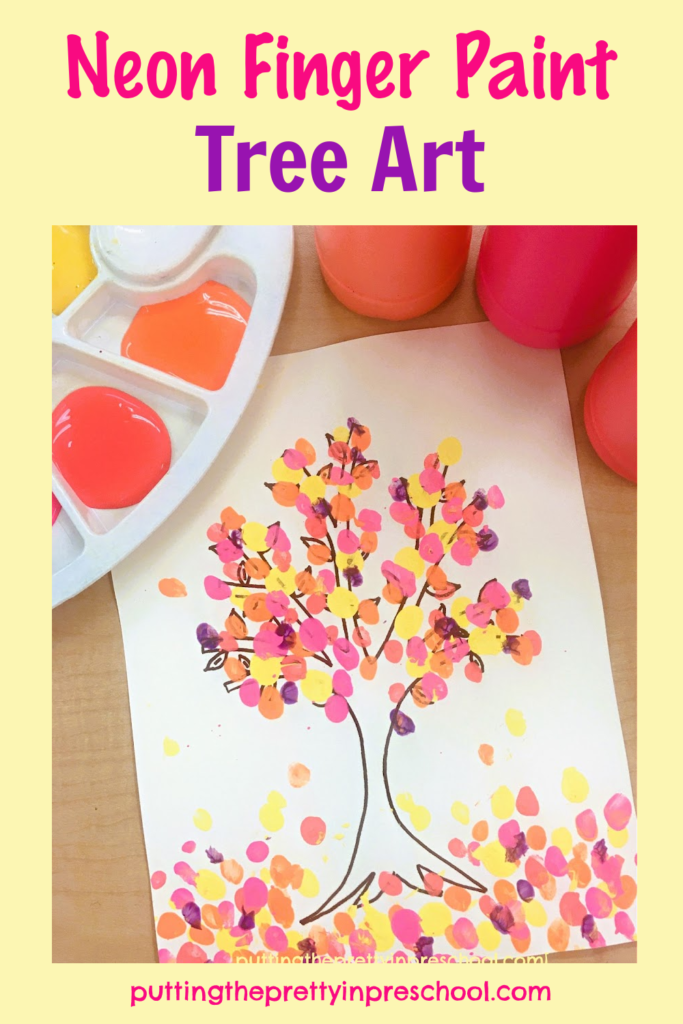
Gorgeous neon finger paint tree art inspired by the picture book "The Tree In Me" by Corinna Luyken. An all-ages, easy-to-do art activity. A free tree template is included.

_______

After reading the poetic book “The Tree In Me” by Corinna Luyken, I especially fell in love with the exquisite, gorgeous illustrations. The beautiful artwork is the inspiration for this neon finger paint tree art activity.

Neon colors, especially pink, balanced by soft yellow hues and touches of grey, are used often in the story. Author/illustrator Luyken states that she picked these radiant colors because she has a soft spot for neon, and wanted to give the story a more universal feel. I know that little learners will love using neon colors in tree art too.
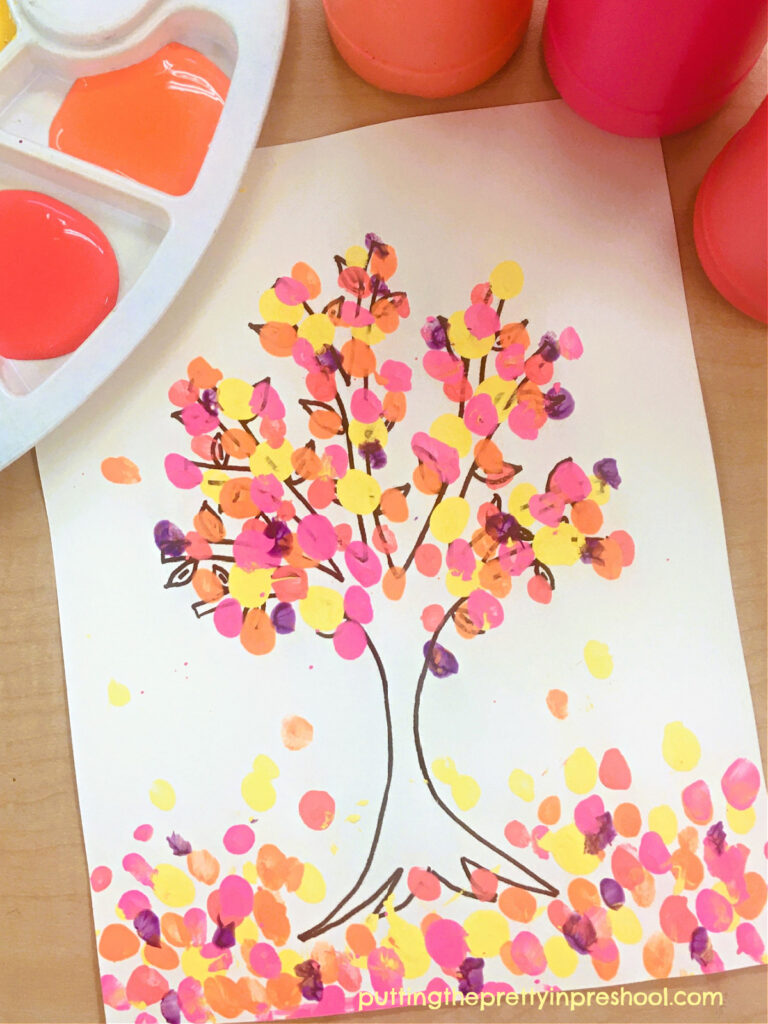
A beautiful, picture-book-inspired neon fingerpaint tree art project the whole family can do. A free tree template is available to download.

_______

Follow me on Pinterest for more early learning ideas.

_______

Supplies To Collect

For this cheery tree art activity, only a few supplies need to be gathered:

  • neon pink, red, orange, and purple finger paint or tempera paint
  • yellow finger paint or tempera paint
  • paint tray
  • white or cream 8 ½ x 11-inch cardstock
  • tree template

_______

The Neon Finger Paint Tree Process
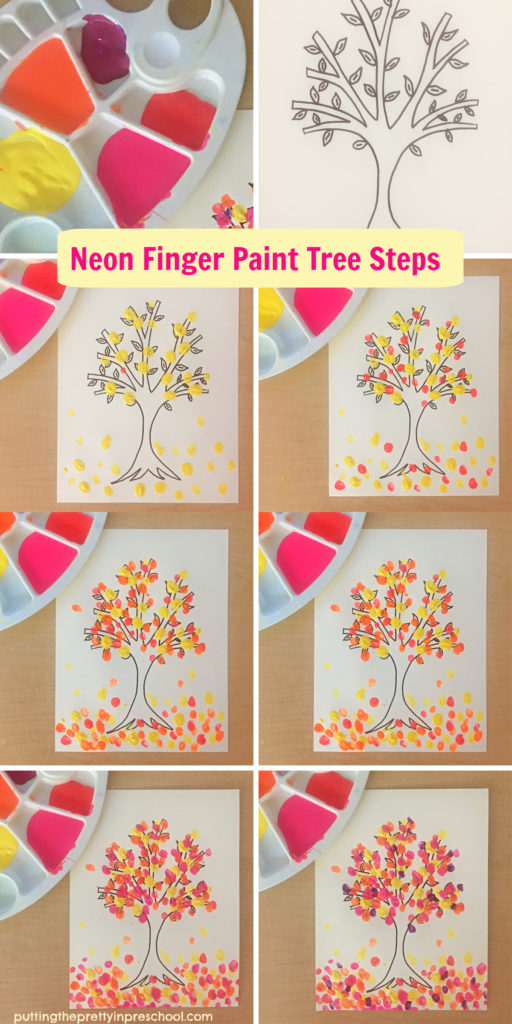
Steps to create beautiful neon finger paint tree art. A picture-book-inspired art project that is easy to do. A free template is included.

_______

This painting activity is easy to set up and do, and early learners will get excited about having the chance to finger paint.

Before starting the art project, read the storybook “The Tree In Me,” or view a video version of the story. Discuss the colors used for the illustrations, along with the many tree-related activities the children in the story participate in.

Next, set out a paint tray with neon finger paints or tempera paints. I feature neon pink, red, and orange tempera paints in this art project. I didn’t have neon yellow paint, but bright yellow paint works fine with neon colors.

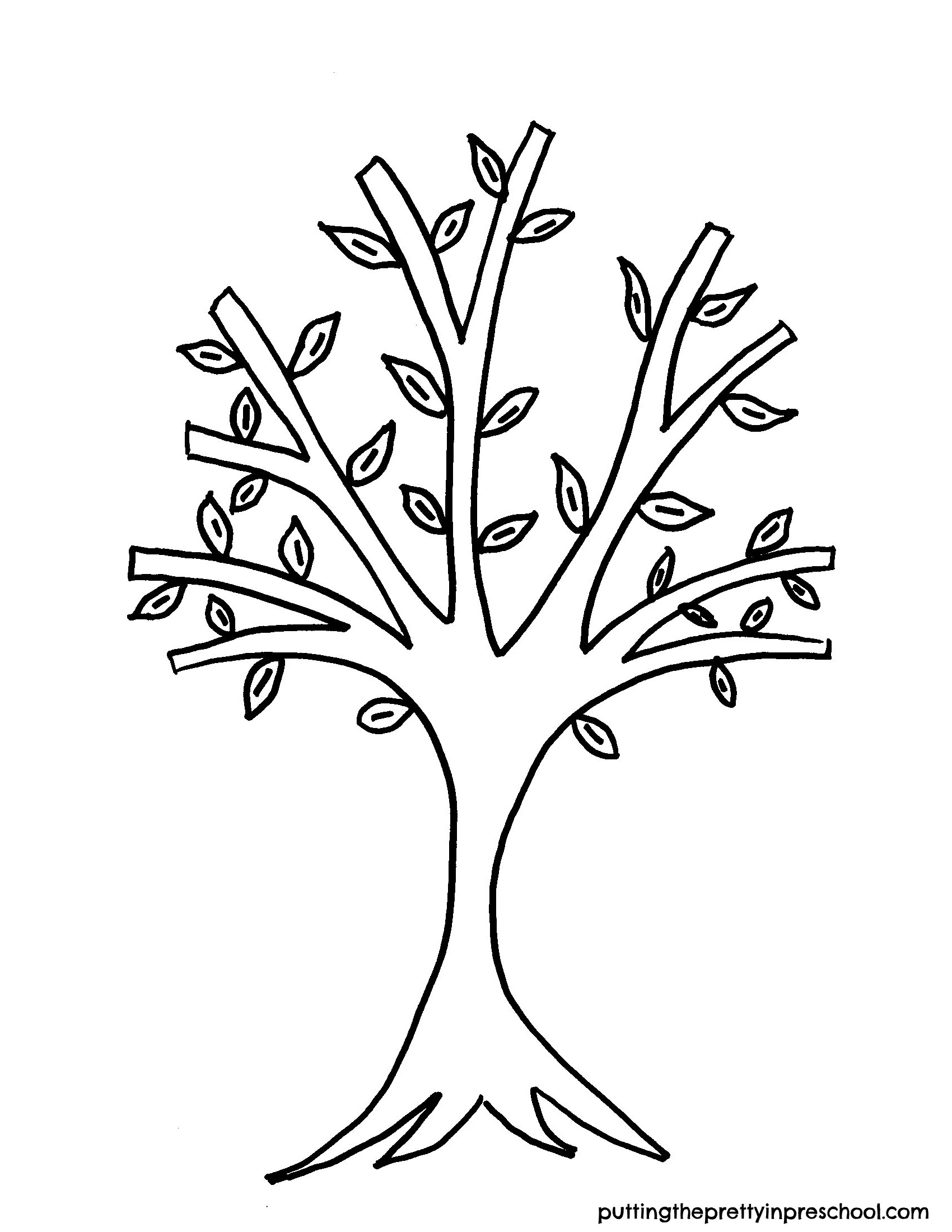
Afterward, select a tree template to use for the art. Feel free to download this template for the painting activity.
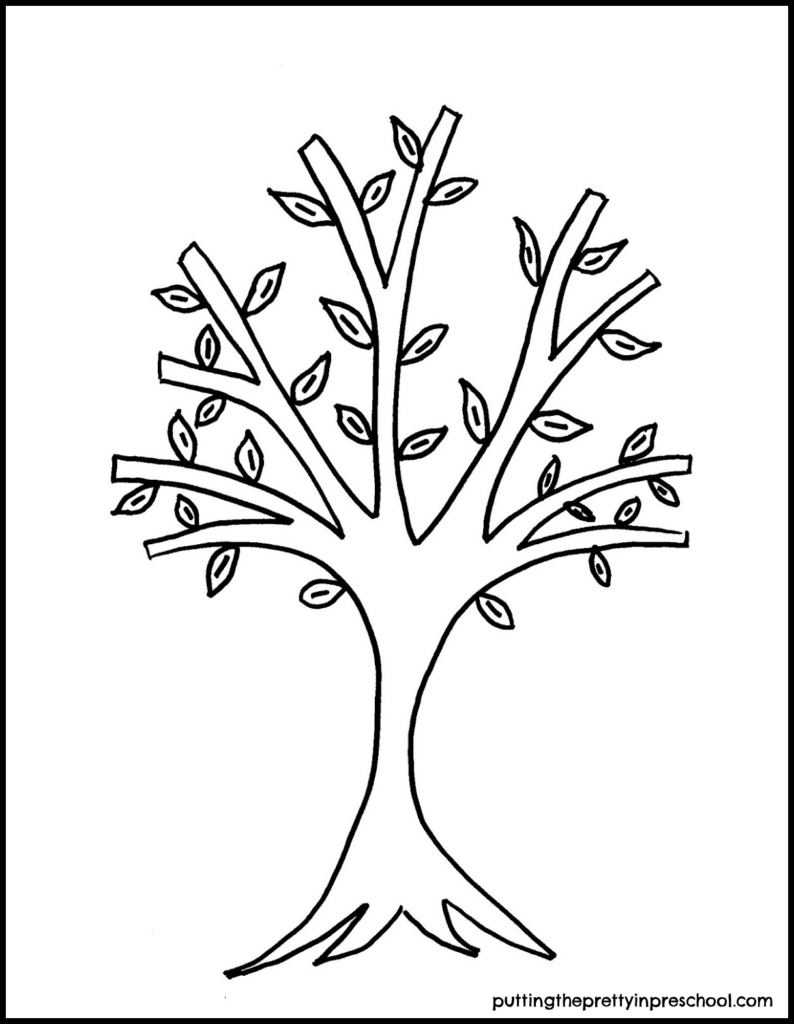
A free tree template to download for art and craft activities.

_______

Tree Printable

This printable is for individual or one classroom use only.

_______

Invite early learners to dip a fingertip into the paint colors and finger paint their tree template. While they are working, talk about the colors of paint available and the ones they choose to use.
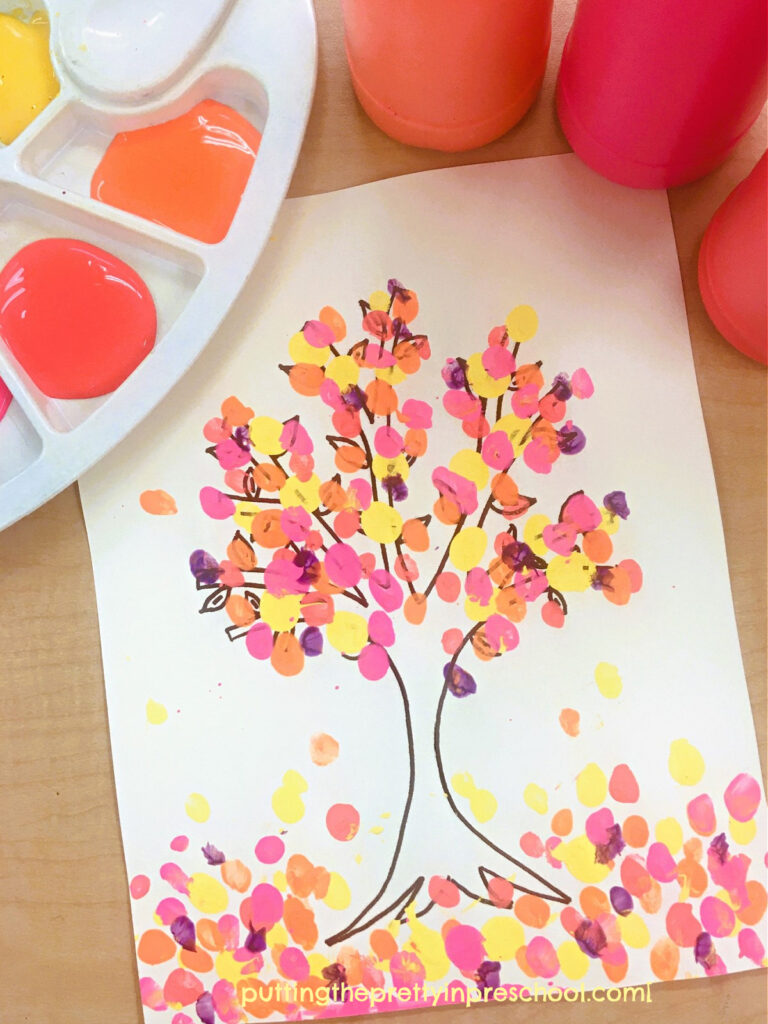
A beautiful, picture-book-inspired neon fingerpaint tree art project the whole family can do. A free tree template is available to download.

_______

Finger Paint Tree Art Benefits

Aside from facilitating language development, this finger paint tree art improves eye-hand coordination and develops fine motor skills. And it offers children a chance to create with unique, dynamic paint colors.

The artwork in “The Tree In Me” is joyful and whimsical, and complements the heartwarming text. Neon finger paint tree art is a terrific follow-up activity to reading the story.
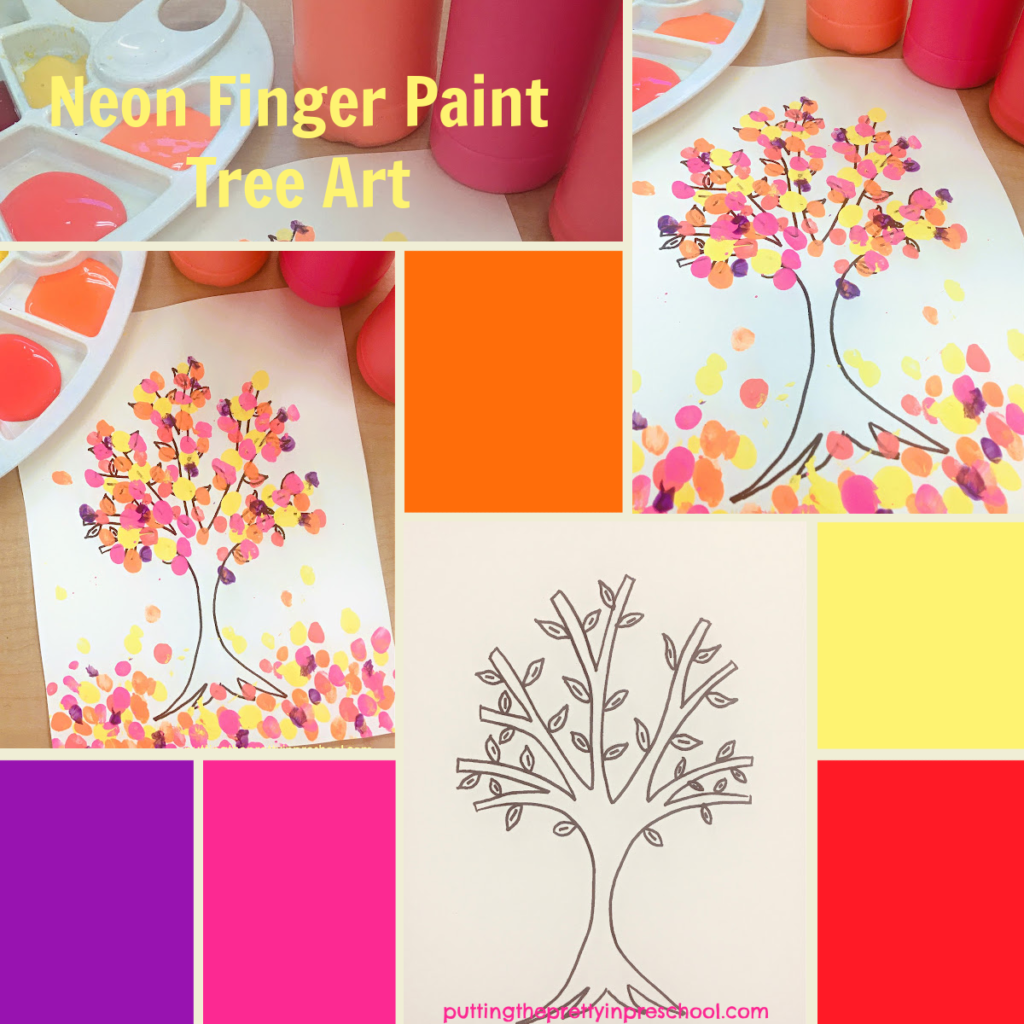
Gorgeous neon finger paint tree art inspired by the picture book "The Tree In Me" by Corinna Luyken. An all-ages, easy-to-do art activity. A free template is included.

_______

Related: Book-inspired Tree Art

_______

[Read more…] about Neon Finger Paint Tree Art
Tweet
Share
Share
Pin

Filed Under: art, autumn, fall, preschool, sensory, trees Tagged With: finger painting, neon colors, painting, picture books

Bubble Wand Painting Activity

August 22, 2022 by Annette Kaminsky Leave a Comment

Tweet
Share
Share
Pin
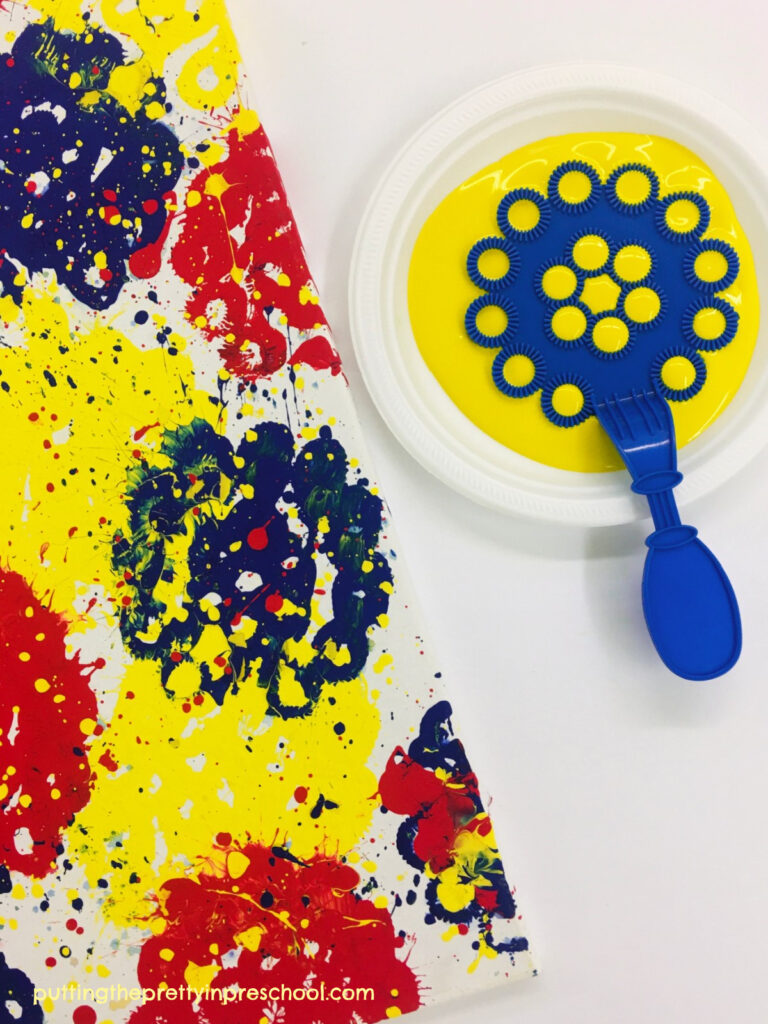
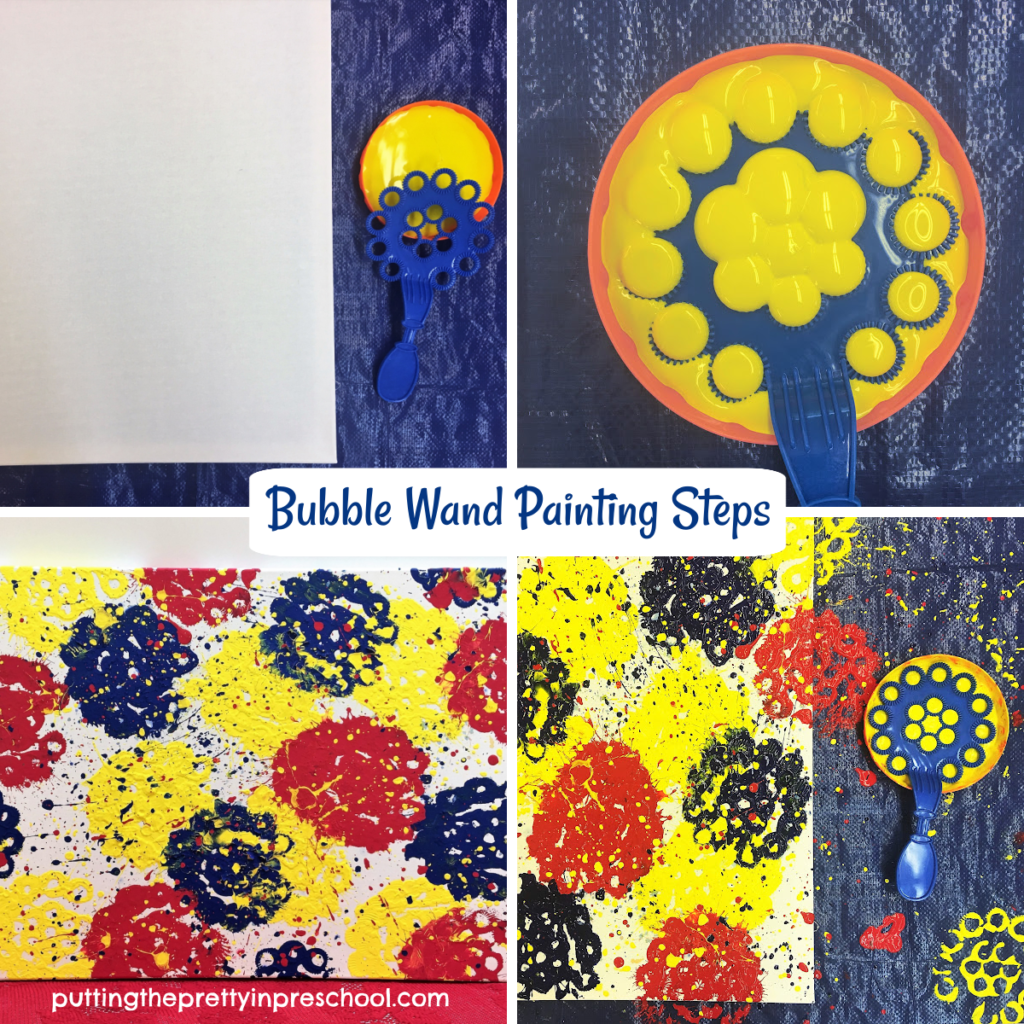
This bubble wand painting activity gives early learners a fun new way to spread paint on paper or canvas. It is process art at its best!

_______

Variety is the spice of life, and this is so true with painting activities. Although paintbrushes are most commonly used to spread paint on canvasses, little learners delight in experimenting with other tools. Offering this bubble wand painting activity gives them an exciting new way to do just that!

_______

Supplies To Collect

Gather the following supplies for this super fun art activity:

  • jumbo bubble wands and trays
  • tempera paint colors of choice
  • 12-inch x 18-inch art paper or canvas
  • plastic tarp or table cover

_______

Follow me on Pinterest for more early learning ideas.

_______

The Bubble Wand Painting Process

Painting with bubble wands is a fun way to experiment with unique tools for spreading paint. Follow these steps for the process art activity.

_______

For this activity, pour tempera paint into bubble wand trays, or use trays that are just larger than the wands.

Tip: Tempera paint can be a little dark when used straight from the bottle. Lighten and brighten hues by mixing in a little white and/or yellow paint.

Next, cover a large table with a plastic table cover or tarp.

Then set out big sheets of art paper or canvasses, along with the paint trays. For this project, I feature a budget-friendly stretched canvas purchased at a dollar store.

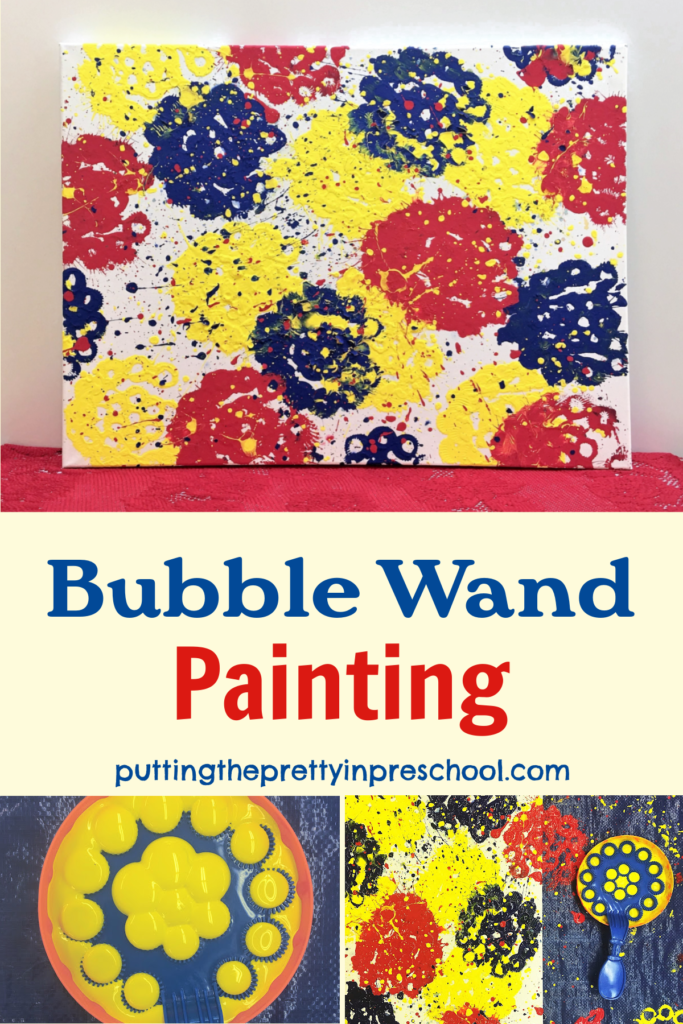
Have each participant dip a bubble wand in paint, and press it onto the canvas. If the wand is used as a fly swatter, the paint will splatter, adding to the fun.

Repeat the process using additional bubble wands, trays, and paint colors.

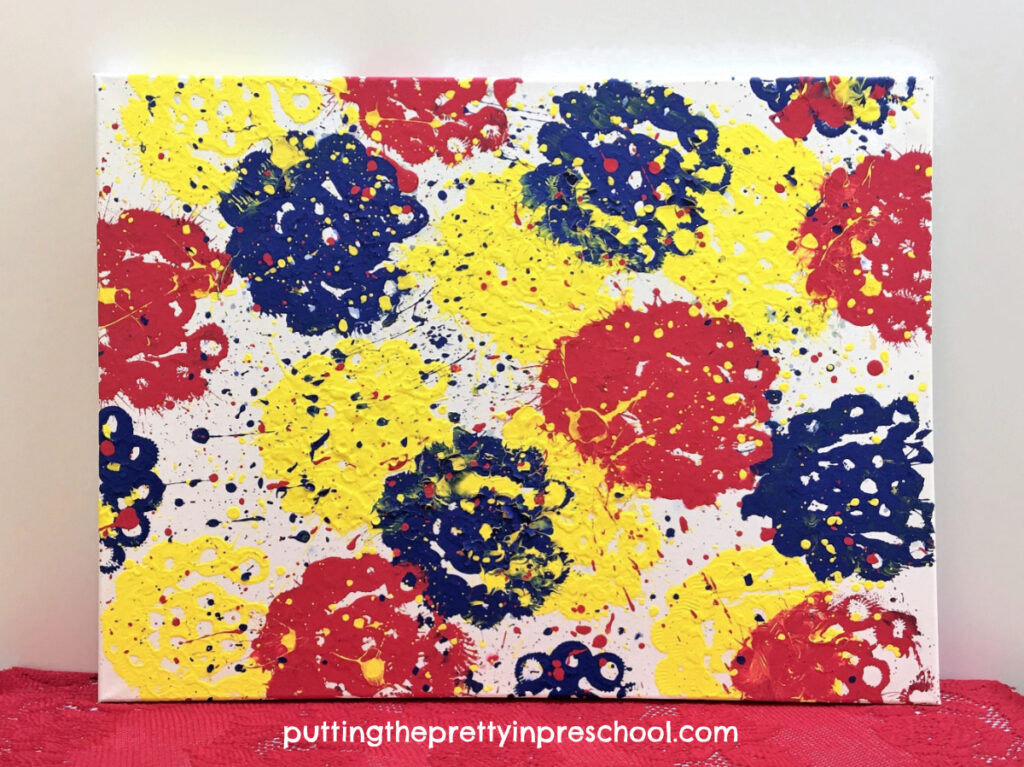
It's easy to fill a canvas with a bubble wand painting technique. Give this all-ages super fun art project a try!

_______

Note: This is a messy activity! Make sure participants wear play clothes and a painting apron, and that your art station can accommodate splattering paint. As an alternative, offer the painting activity outside.

If only a few bubble wand sets are available, have little learners take turns doing this painting activity. Wash the bubble wands and trays before adding each new color.

Big sheets of paper or canvases can seem overwhelming to little learners, but the jumbo bubble wands make painting on a large canvas easy to do.

It's easy to fill a canvas with a bubble wand painting technique. Give this all-ages super fun art project. a try!

_______

Related: Printmaking With Apples

_______

[Read more…] about Bubble Wand Painting Activity
Tweet
Share
Share
Pin

Filed Under: art, preschool, summer Tagged With: bubble wand painting, painting, process art

Watercolor Planets With Markers

August 17, 2022 by Annette Kaminsky Leave a Comment

Tweet
Share
Share
Pin
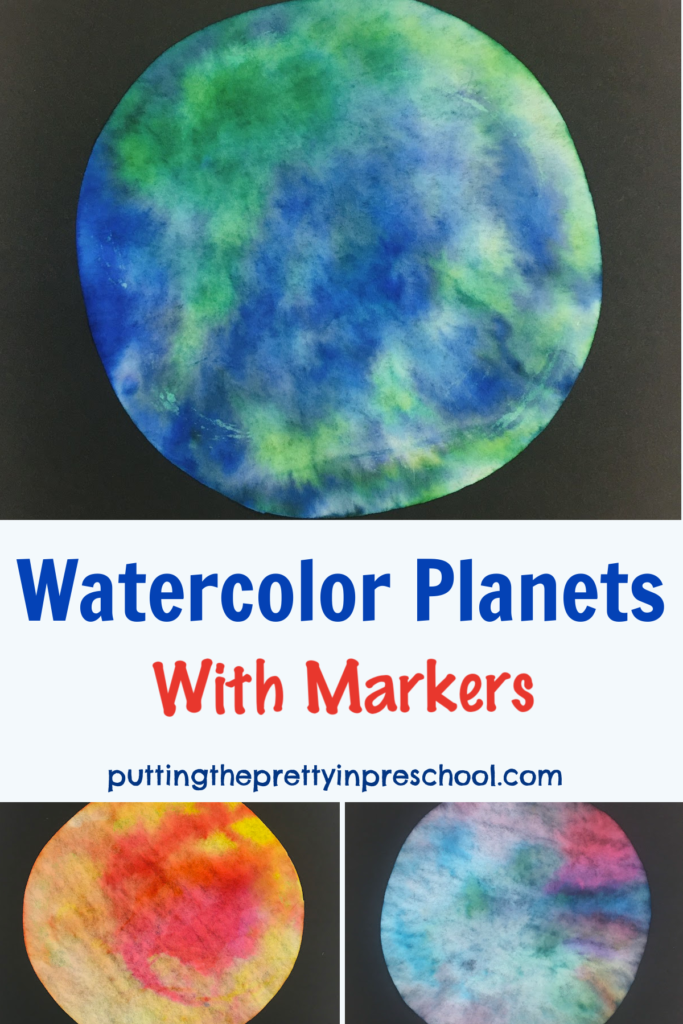
This stunning "watercolor planets with markers" art project is a must-try. It's an all-ages process art activity that displays well.

_______

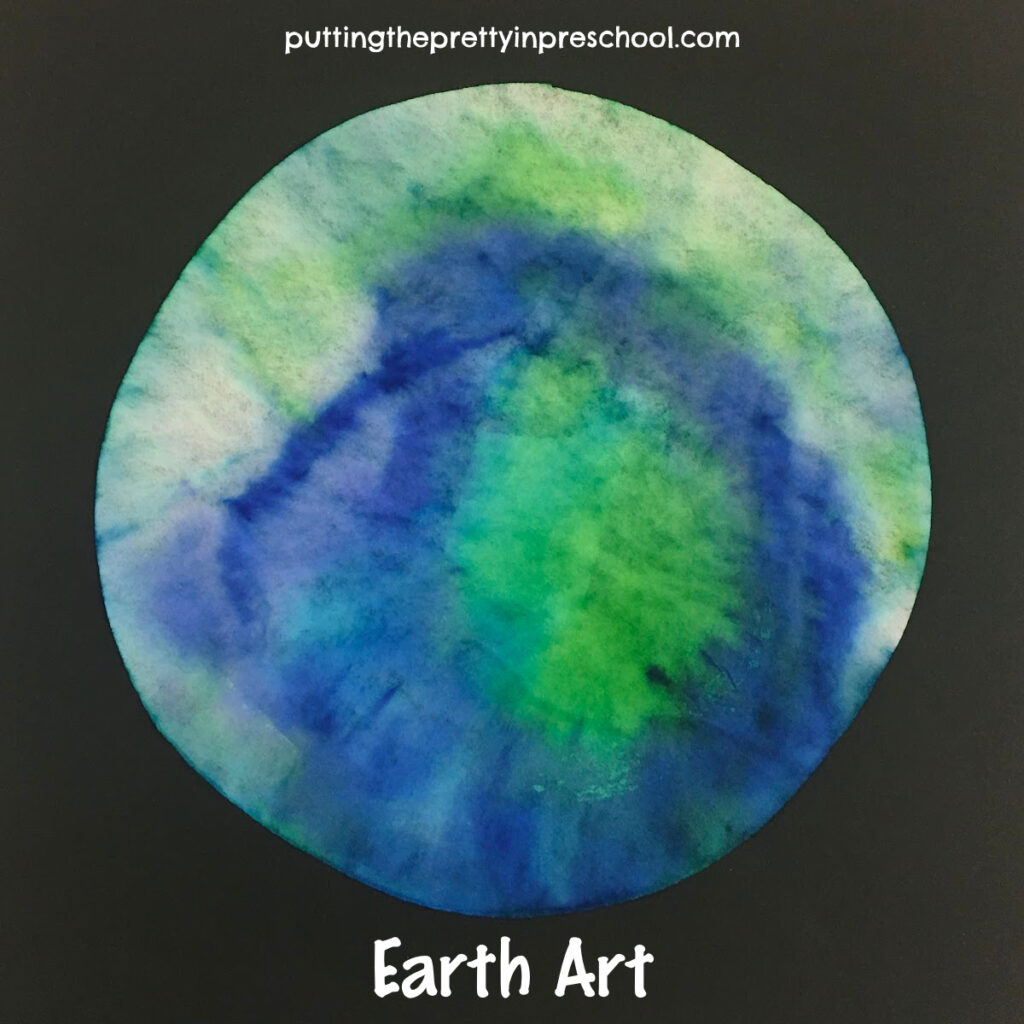
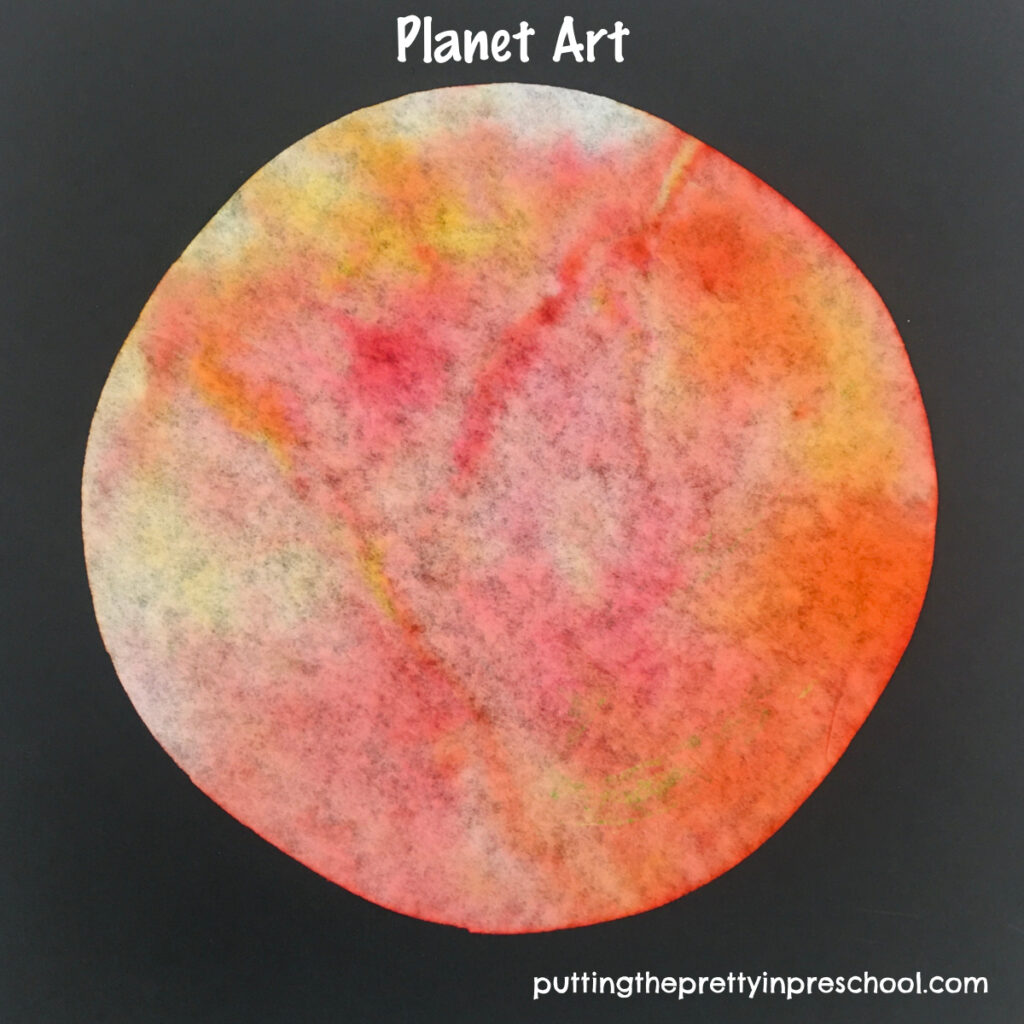
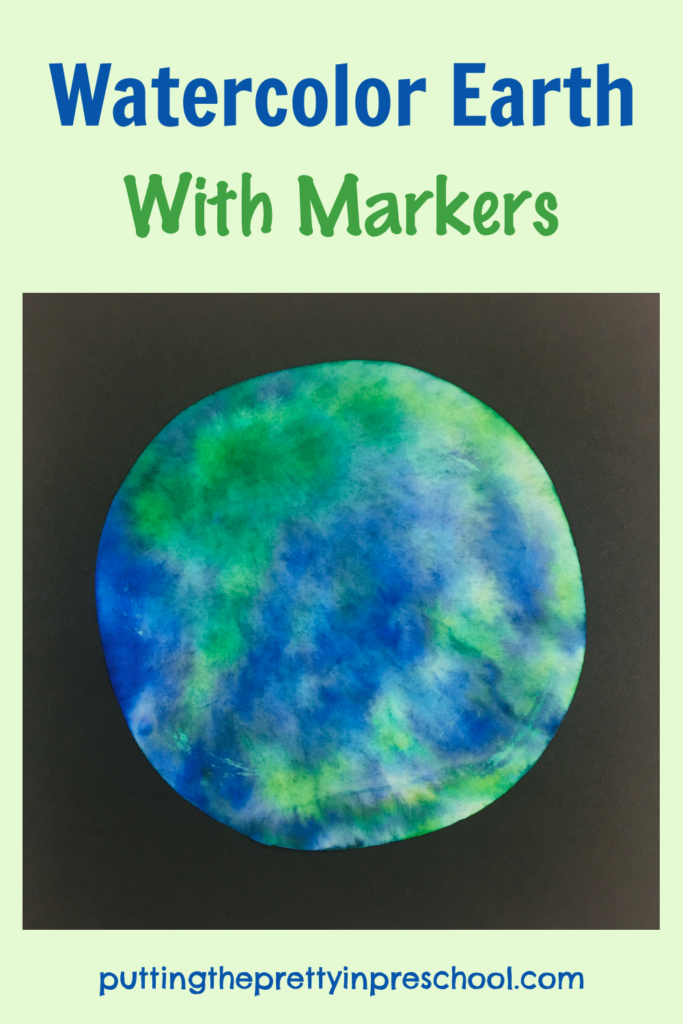
Creating watercolor planets with markers is an easy and satisfying process art activity with stunning results. Your little learners will absolutely love doing it. And if you need a quick, beautiful bulletin board or wall display, this project checks that box.

_______

Supplies To Collect

Gather the following supplies for this art activity:

  • 8-inch diameter paper basket coffee filters
  • water-based markers
  • 12-inch x 12-inch black cardstock paper
  • spray bottle
  • plastic tub
  • hot glue gun

_______

Follow me on Pinterest for more early learning ideas.

_______

Creating Watercolor Planets With Markers

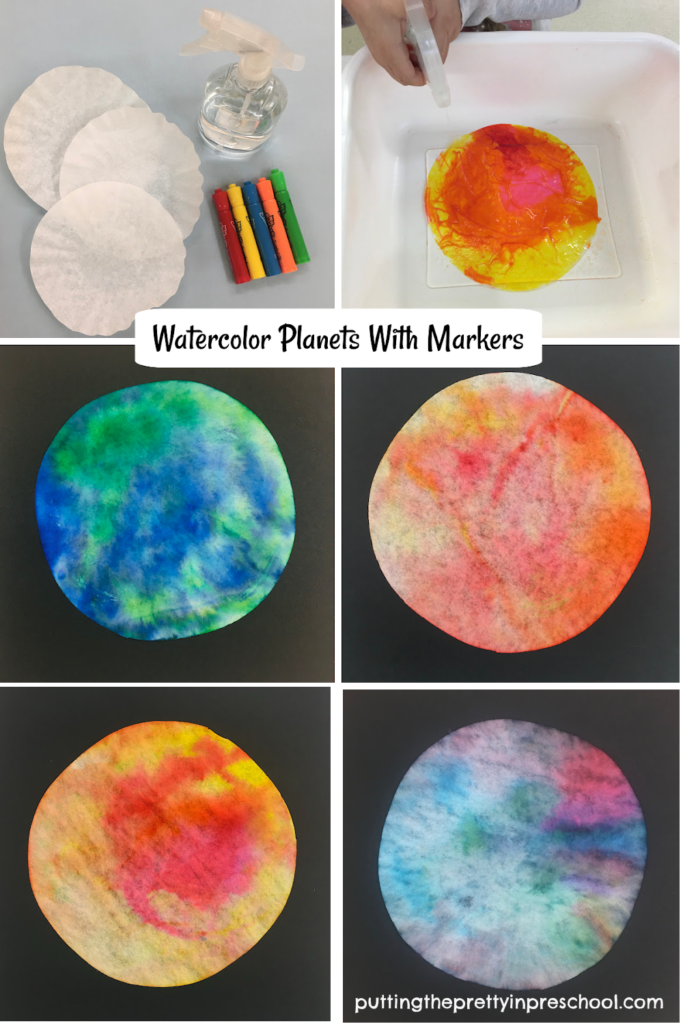
First, flatten basket-shaped coffee filters, and set them on a table with water-based markers.

Invite little learners to decorate their paper circles any way they wish.

Steps to create stunning watercolor planets with markers. This all-ages process art looks beautiful displayed together.

_______

Tip: Offer analogous colors, which are groups of three colors positioned next to each other on the color wheel. Because these colors complement each other, they work well in process art projects.

Create watercolor earth art with just markers and water. A quick and easy process art project everyone will love.
Planet Earth With Blue and Green Markers

_______

Create watercolor planet Jupiter art with just markers and water. A quick and easy process art project everyone will love.
Planet Jupiter With Red, Orange, and Yellow Markers

_______

Afterward, have everyone take turns wetting their project with a spray bottle filled with water. When doing this, place the decorated circles in a small tub to be sprayed.

Tip: Your little charges may want to soak their circular canvas with lots of water, but just giving the colorful coffee filters a few squirts results in nice art pieces for display.

Next, dry the paper circles on a flat surface covered with a plastic tablecloth or tarp.

Finally, mount the round planets on a 12-inch x 12-inch square piece of black cardstock, or sturdy paper that is 8 ½ x 11 inches in size. Using a hot glue gun works well.

This process art project looks amazing displayed in a group.

_______

Create watercolor earth art with just markers and water. A quick and easy process art project everyone will love.

_______

More Watercolor Planet Process Art

Because little learners love the spraying water part of this art activity, invite them to make more colorful planets without restrictions. They may spray the color right out of the circles after decorating them, but they enjoy doing this soooo much. Have them try black or dark green markers. Early learners are sure to be excited about the new colors that will be revealed.

_______

More Space Theme Activities

Earth Day Heart Art

Scented Moon Playdough

Salt and Glue Moon Art

Outer Space Pretend Play

Space Theme Loose Parts Play

Starry Sky Sensory Bin

Moon Colors Art Project

Space Restaurant Dramatic Play

Space Father’s Day Craft

Earth Day Bead Craft

_______

[Read more…] about Watercolor Planets With Markers
Tweet
Share
Share
Pin

Filed Under: art, display, Earth Day, preschool, space Tagged With: earth craft, Earth Day, painting, planets, process art, space

Painting Striped And Spotted Sharks

August 1, 2022 by Annette Kaminsky Leave a Comment

Tweet
Share
Share
Pin

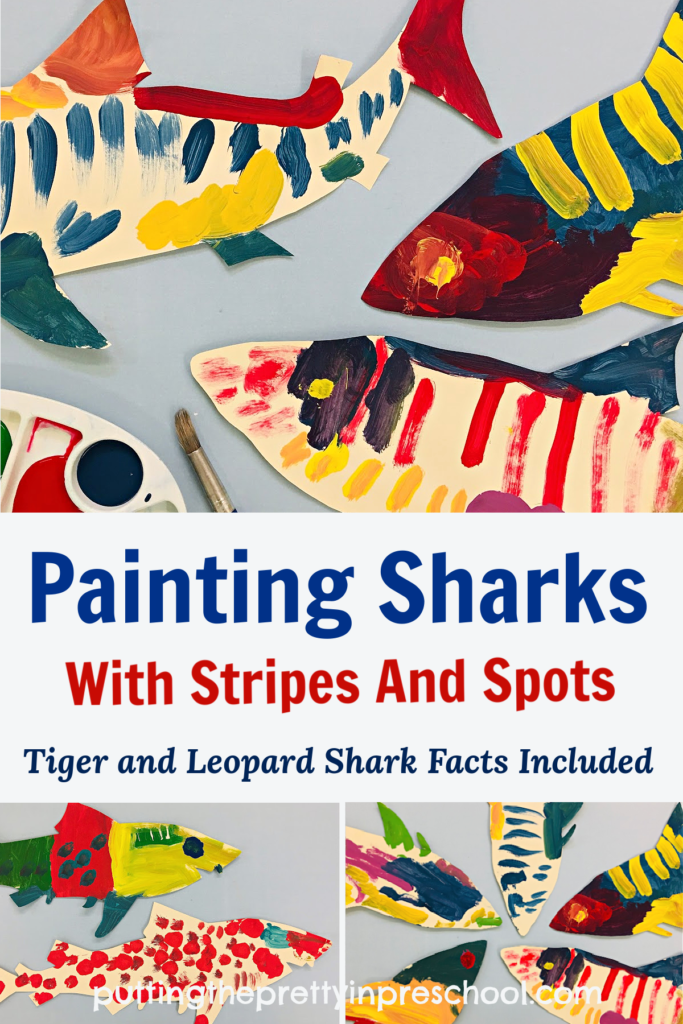
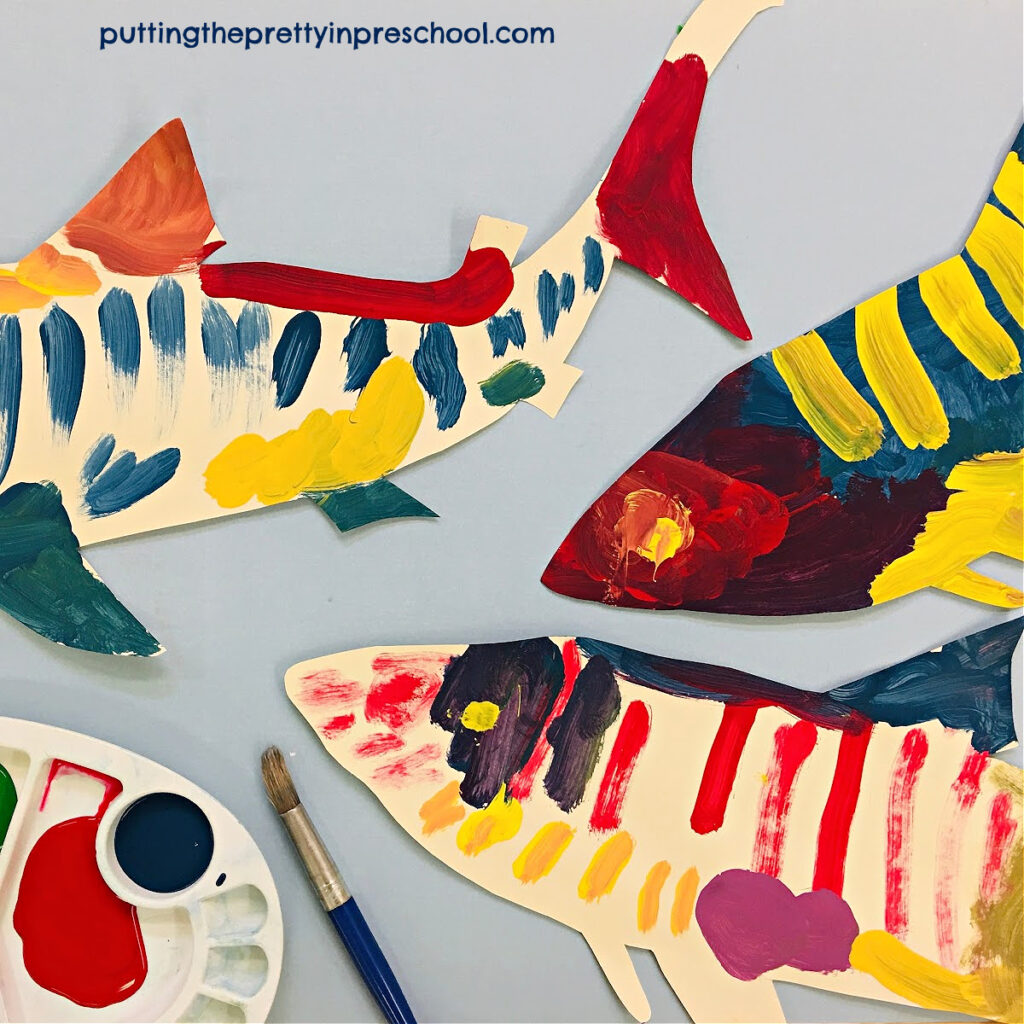
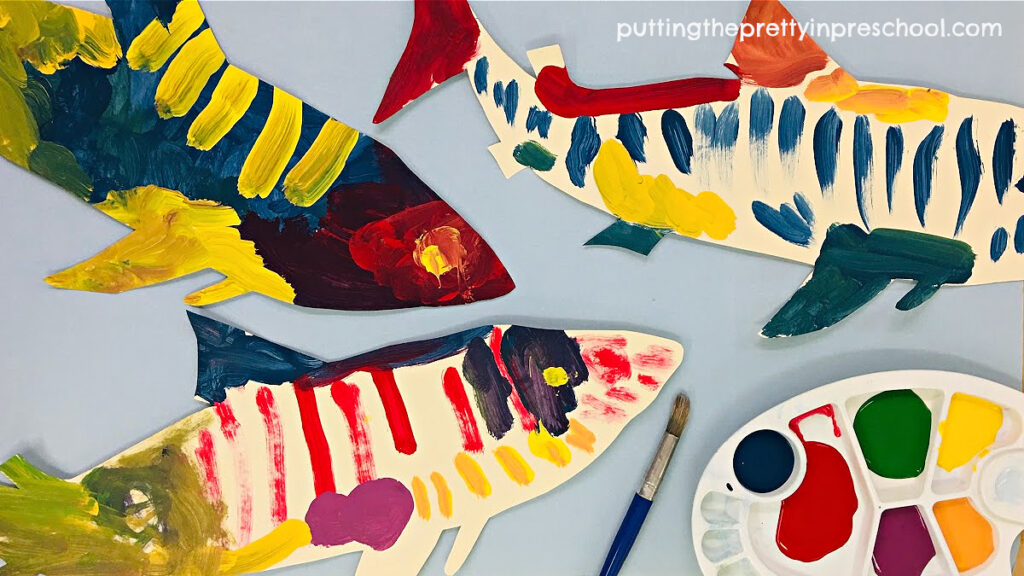
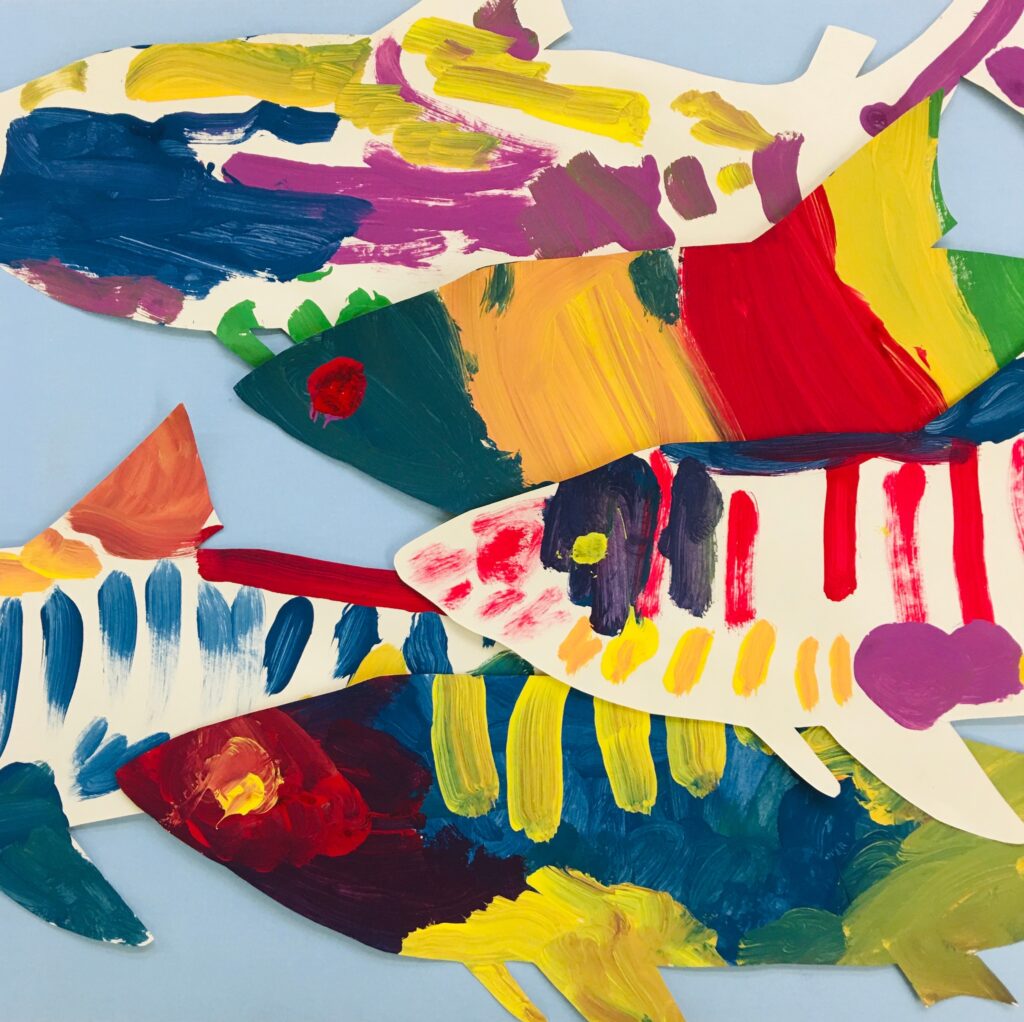
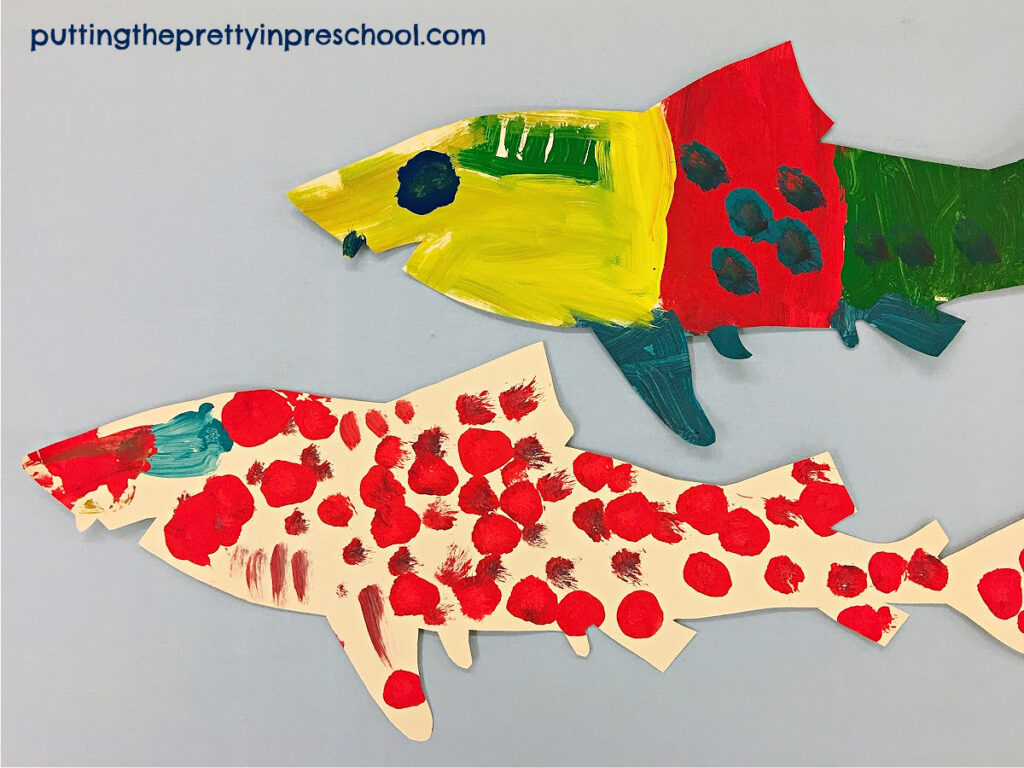
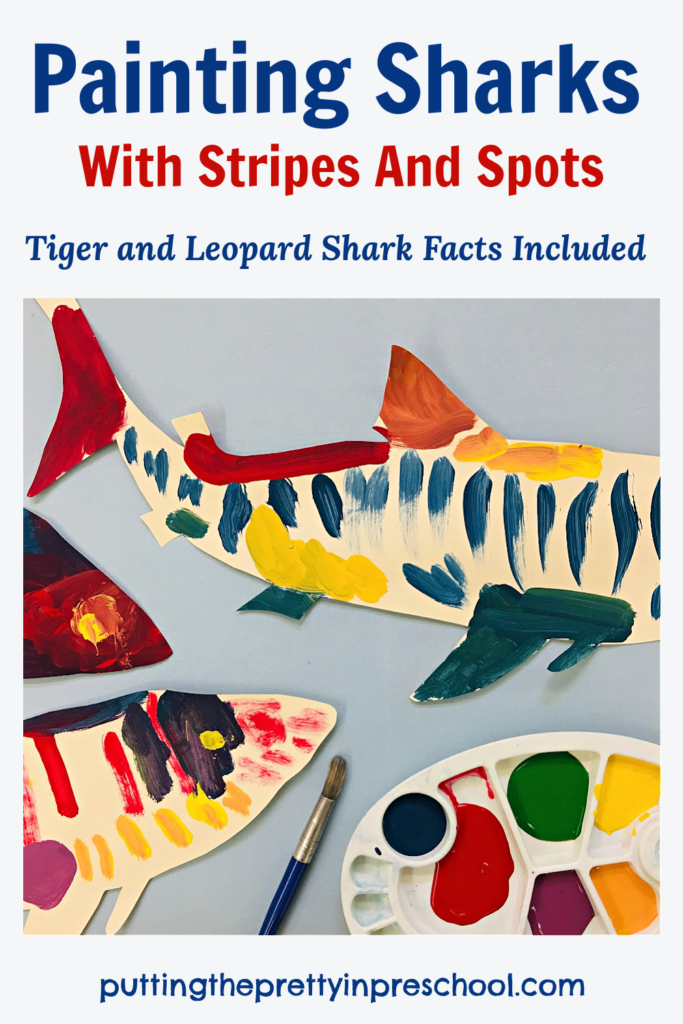
Painting striped and spotted sharks is an effective way for young children to incorporate simple design elements into the art process. And tiger and leopard sharks are the perfect subjects to encourage early learners to paint stripes and spots. These sharks are especially interesting because of their unique coloring.

Painting striped and spotted sharks are an easy way for early learners to incorporate simple design elements into the art process. Tiger and leopard shark facts are included.

_______

It is common knowledge that early learners just love, love, love to mix colors when painting. They never seem to tire of mixing paints.  Oh so quickly, they will swirl paint around to make a mediocre brown or another dull hue, and be left with muddied paints to work with.

As they get a little older, I like to encourage children to try something a little more challenging. I say, “Try this challenge on your first painting. Then on your next ones you can paint any which way you like.” This is usually effective. Sometimes little learners choose to make a second or even a third painted piece. Other times they are ready to move on to another activity in the classroom after the first one.

With these shark painting activities, children are challenged to keep colors somewhat separate and add stripes and spots to their paintings.

_______

Painting Striped Tiger Sharks

Tiger sharks provide inspiration for painting stripes on fish art projects.

_______

To prepare for the art activity, draw and cut large tiger sharks from 12 x 18-inch paper. Manila or construction paper works well.

Then set out tempera paint colors of choice. The paint palette can feature a variety of colors, or monochromatic ones, such as black, gray, and white.

Next, add a paintbrush and paper towel section to each participant’s station.

To introduce the painting activity, read a picture book featuring different kinds of sharks. 

Next, focus on tiger sharks. Show pictures of them from books and/or online sources, and share interesting facts. The information further on in this post may be helpful.

Invite early learners to decorate their sharks, making sure to add some stripes to them. Encourage them to dab excess paint on a paper towel when switching paint colors.

Ten fun facts about tiger sharks. These fascinating sharks inspire little artists to paint stripes.

_______

10 Tiger Shark Facts

  • Tiger sharks are the fourth largest shark. Only the whale shark, basking shark, and great white shark are bigger.
  • These striking sharks have spots and vertical lines on the sides of their bodies, similar to the stripes on land tigers. The markings fade over time.
  • Their striped grey coloring camouflages the sneaky sharks in the water.
  • Preferring warmer waters, the large sharks live near coasts in tropical and subtropical areas around the world.
  • Tiger sharks have excellent eyesight and hearing and are slow-moving swimmers.
  • Not fussy about prey, the nocturnal hunters will eat almost anything whole, even garbage!
  • The food they commonly eat is invertebrates, other fish, dolphins, sea turtles, and seals.
  • Their broad jaws and strong, sharp, serrated teeth help them cut through their prey.
  • The orca whale is the only predator of tiger sharks.
  • Being very curious, these sharks will come close to humans and occasionally bite them.
  • Shark babies, called pups, hatch from individual eggs inside the mother’s body and are born live. There is an average of 30 – 35 pups per litter.

_______

Tiger sharks provide inspiration for painting stripes on fish art projects.

_______

Painting Spotted Leopard Sharks

With this second painting activity, draw and cut out leopard sharks from oversized sheets of sturdy paper.

Introduce little learners to the spotted sharks by showing pictures of them and sharing facts. Interesting leopard facts are listed below.

Invite participants to paint their sharks, adding spots to them.

Leopard sharks provide inspiration for painting spots on fish art projects.

_______

10 Leopard Shark Facts

  • Leopard sharks are smaller than tiger sharks, but also live near the shore.
  • The sharks live year-round in the Pacific Ocean from Oregon to the Gulf Of California.
  • The dark spots on their backs have a likeness to those of real leopards.
  • The narrow-headed mid-sized sharks have three pointed teeth that are good for smashing food.
  • The spotted sharks hunt on the bottom of the ocean at night.
  • Favorite prey is crabs, fish eggs, shrimp, clams, octopus, and fish. The sharks sometimes eat other small sharks.
  • Leopard sharks are active, strong swimmers, but will sink when not moving.
  • Being shy and skittish, they often hide before humans can spot them.
  • Like tiger sharks, leopard shark pups are born live after hatching from egg capsules in the mother’s uterus.
  • Loss of habitat is the biggest threat to leopard sharks.

_______

Painting stripes and spots on sharks are an easy way for early learners to incorporate simple design elements into the art process. Tiger and leopard shark facts are included.

_______

Follow me on Pinterest for more early learning ideas.

_______

More Ways To Create With Spots

In addition to brush-painted spots, eye-catching spots can be added to an art piece by:

  • fingerpainting
  • using dot markers
  • adhering circle stickers
  • gluing on paper circles

_______

Artist Yayoi Kusama

A famous artist who often uses circles/spots in her art is Yayoi Kusama. Her “obliteration room” collaborative projects are especially amazing!

_______

Related: Watermelon-Inspired Banner Craft

_______

[Read more…] about Painting Striped And Spotted Sharks
Tweet
Share
Share
Pin

Filed Under: art, ocean, preschool, science Tagged With: painting, sharks

Spin Painting Maple Leaf Art

June 29, 2022 by Annette Kaminsky Leave a Comment

Tweet
Share
Share
Pin
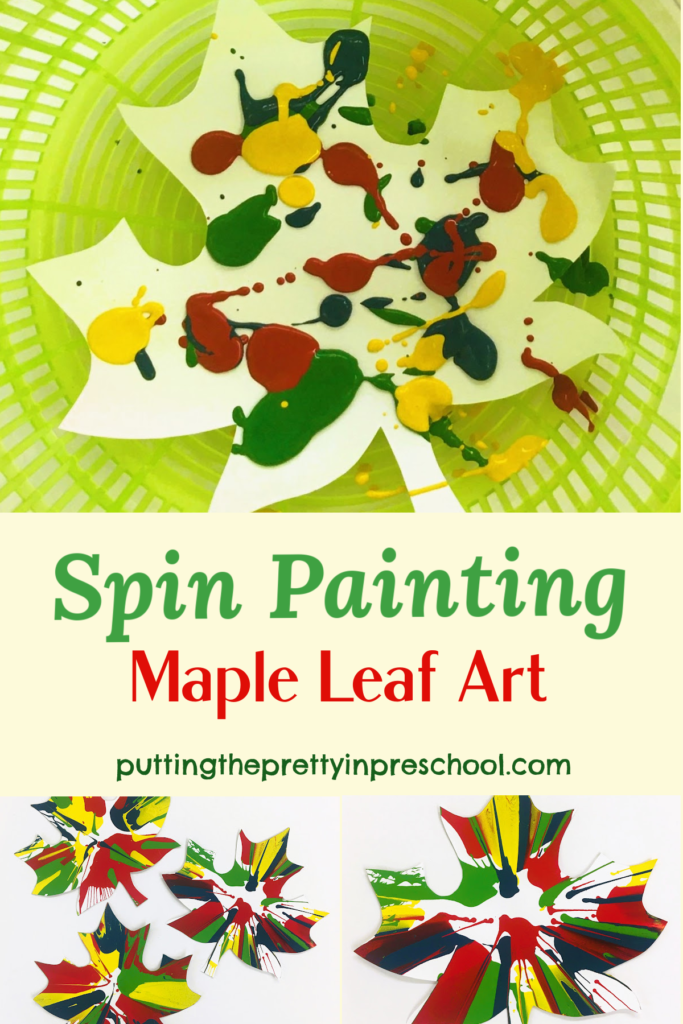
Try this gorgeous spin painting maple leaf process art project today! It's a simple and satisfying activity the whole family will love to do!

_______

This spin painting maple leaf art activity is perfect for Canada Day, fall, or any time of the year. Early learners will LOVE using a salad spinner to make it! You will not find a simpler or more satisfying process art project.

Salad spinner art brings back memories of going to our local fair in the summer when I was young. There would always be a station with spin art, and it was my favorite activity to try.

_______

Follow me on Pinterest for more early learning ideas.

_______

Supplies To Collect

For this easy and stunning spin painting art project, gather the following supplies:

  • salad spinner
  • white cardstock paper
  • tempera paint
  • paint pots
  • teaspoons
  • maple leaf tracer
  • pencil
  • scissors

_______

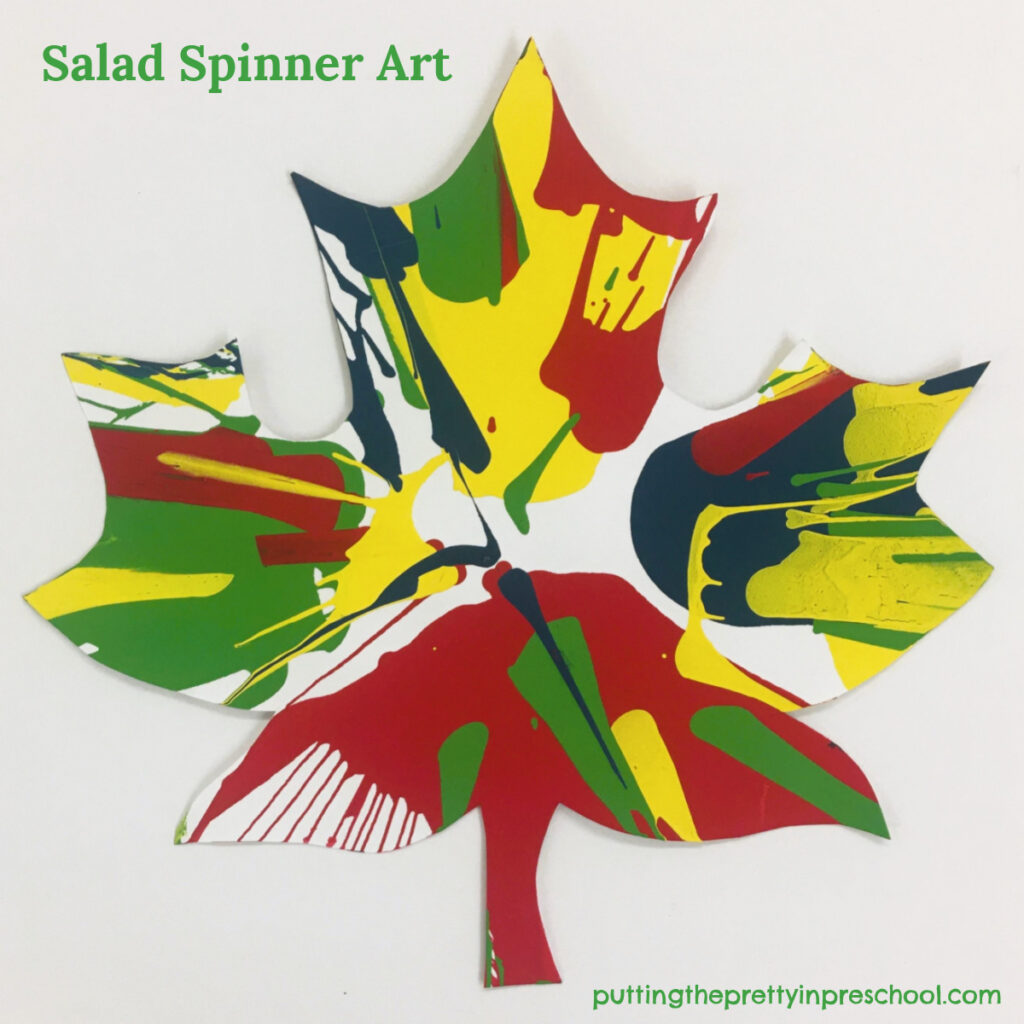
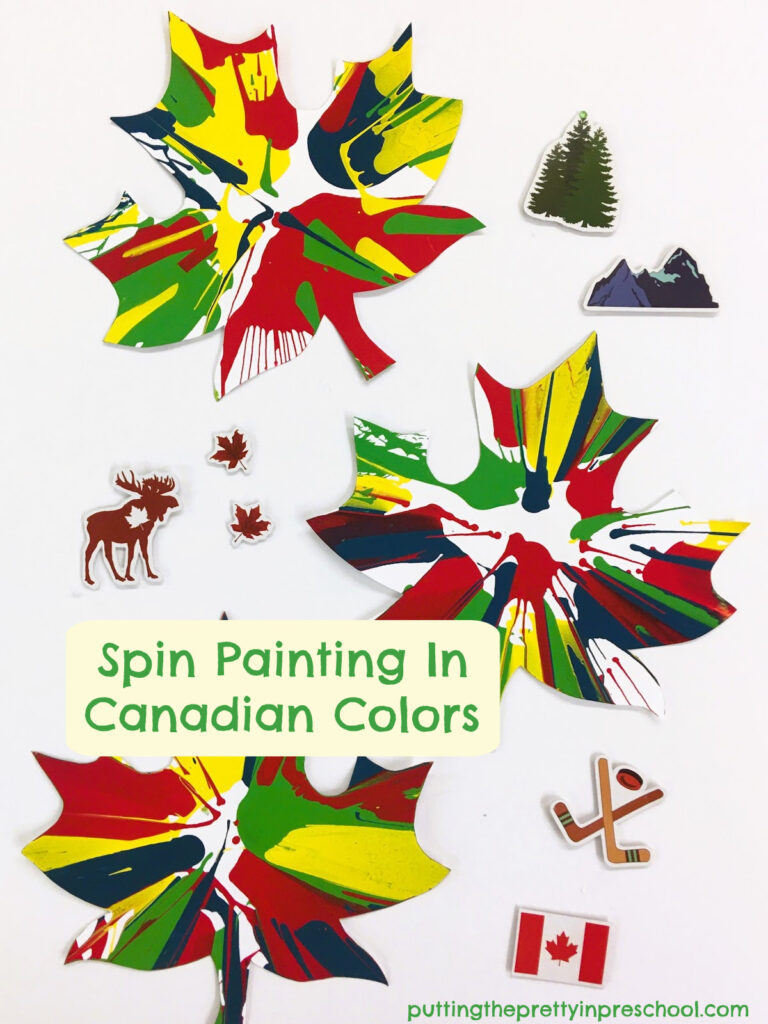
Salad spinner process art maple leaf! It features colors seen in Canadian landscapes and decor.

_______

Creating Spin Painting Maple Leaves

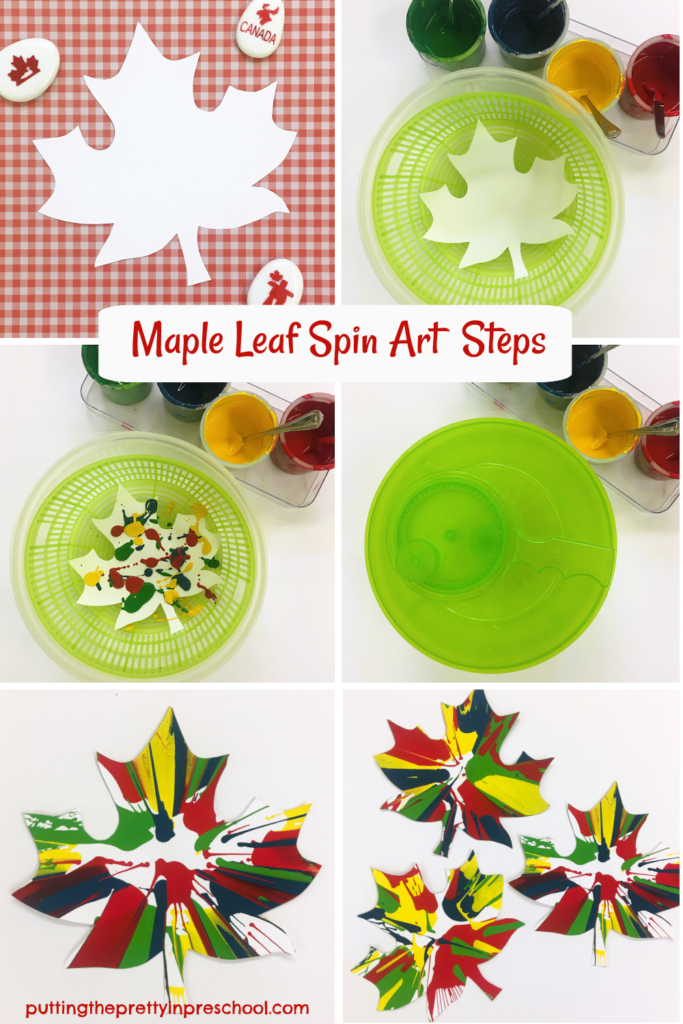
Steps to make gorgeous maple leaf spin art. A simple and satisfying activity the whole family will love to do!

_______

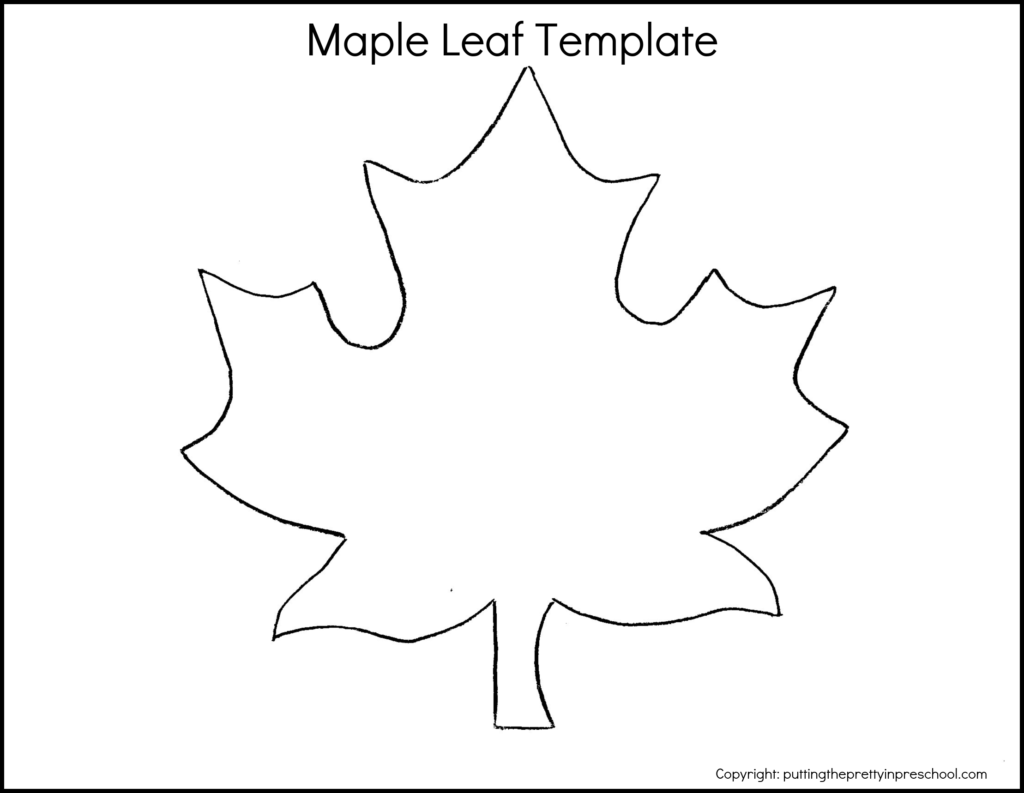
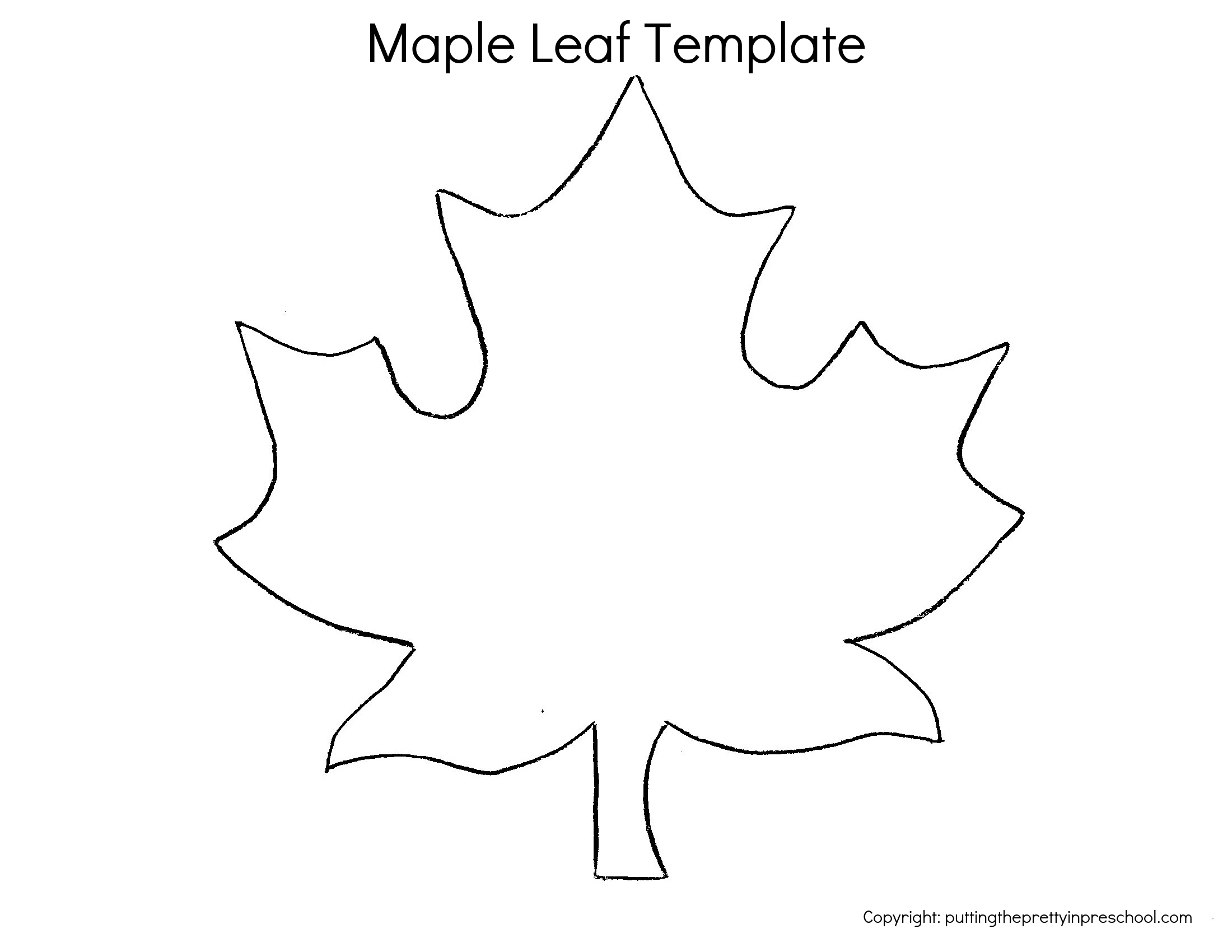
To offer this process art project, trace and cut maple leaves from cardstock. Make them just big enough to fit in the bottom of the salad spinner you are using. Feel free to download this template to use as a tracer.

Download this free maple leaf template for art and craft activities.

_______

Maple Leaf PrintableDownload

_______

Set a cut leaf in the bottom of the salad spinner. I purchased an economical one just for art. But a salad spinner you have handy in your kitchen works just fine. The paint washes out surprisingly easily.

Next, place the cut maple leaf inside the spinner and cover it with the lid.

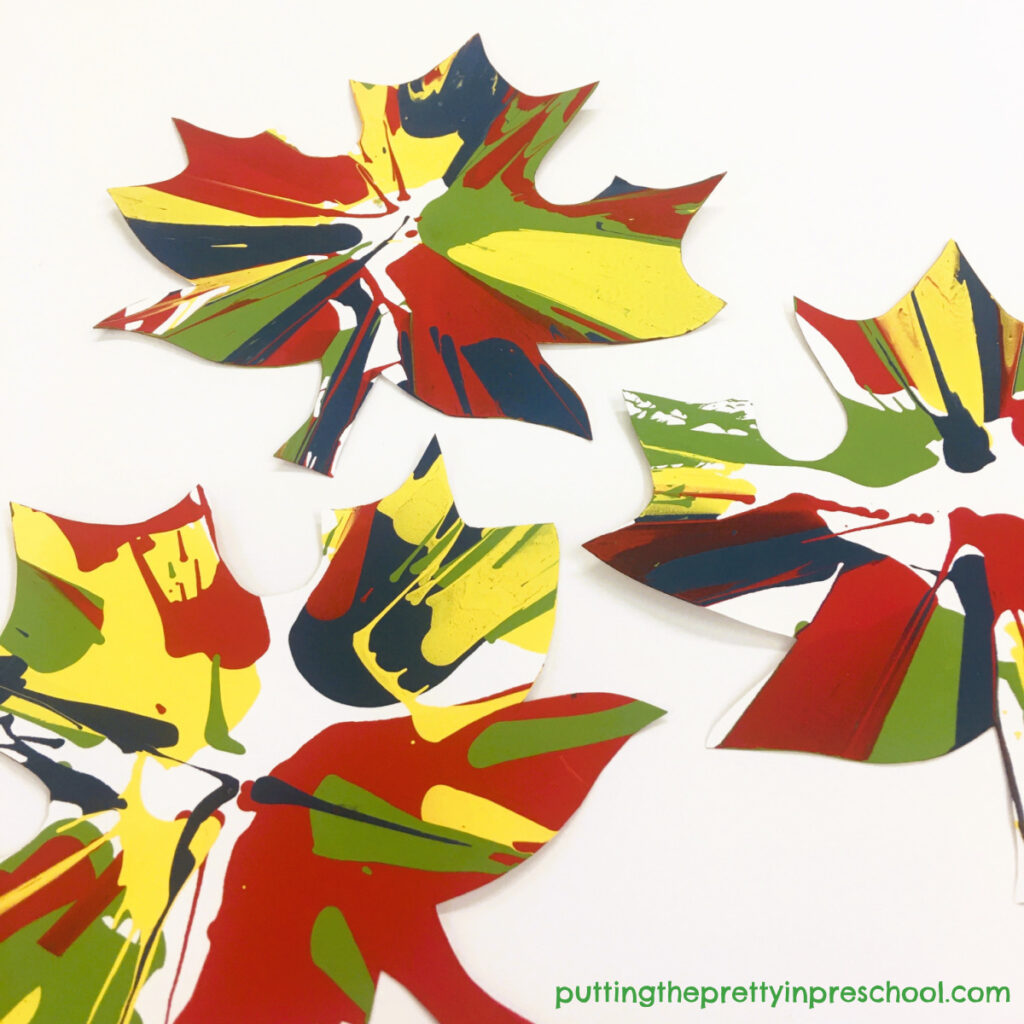
Using tempera paints in paint pots, invite your early learner to generously drip paint in colors of choice onto the leaf. I feature paint colors commonly found in our Canadian landscape and home décor. Red and white paints would work well for Canada Day. And of course, tempera paints in fall colors would look beautiful.

Try this gorgeous spin painting maple leaf process art project today. Using colors featured in Canadian landscapes and decor, it is perfect for Canada Day or any time of the year.

_______

Invite your little learner to spin the salad spinner for at least ten seconds.

Take off the lid and admire the beautiful result together.

After the first project, your little learner will want to make a few more. And the whole family may wish to get in on this gorgeous spin painting maple leaf art activity!

_______

Try this gorgeous salad spinner maple leaf art project today. Using colors seen in Canadian landscapes and decor, it is perfect for Canada Day or any time of the year.

_______

Related:  Valentine’s Day Process Art

_______

[Read more…] about Spin Painting Maple Leaf Art
Tweet
Share
Share
Pin

Filed Under: art, autumn, Canada Day, fall, preschool, trees Tagged With: leaves, maple leaves, painting, spin art

  • « Go to Previous Page
  • Page 1
  • Interim pages omitted …
  • Page 5
  • Page 6
  • Page 7
  • Page 8
  • Page 9
  • Interim pages omitted …
  • Page 11
  • Go to Next Page »

Primary Sidebar

Hi, I'm Annette Kaminsky, a preschool teacher who loves sharing learning through play activities for young children. Thanks for visiting my site. Feel free to stay awhile!

Subscribe Via Email

Recent Posts

  • Earth Day Spin Painting April 21, 2026
  • Easter Bunny Scavenger Hunt April 4, 2026
  • Celebrate Diversity Coloring Pages March 1, 2026
  • Lunar New Year Lantern Craft February 11, 2026
  • Black History Month Positive Affirmations Art January 29, 2026
  • Snowflake Cafe Dramatic Play Set January 19, 2026
  • Pastel Christmas Letterhead and Envelope December 20, 2025
  • December Kindness Activities November 30, 2025
  • Fall Forest Sensory Bin November 30, 2025
  • DIY Turkey Bowling Game November 25, 2025

Categories

Topics

apples bunnies butterflies Chinese New Year Christmas Christmas craft color colors dramatic play Easter fall flowers hearts holiday jewelry leaves leprechauns light table loose parts painting paper crafts playdough pretend play printables printmaking process art pumpkins rice bin scented playdough science experiment scissor skills sensory bin sensory play sensory tray shamrocks skeletons snakes snowflakes spiders spring St. Patrick's Day sunflowers tablescapes Valentine's Day water play

Copyright © 2026 · Lifestyle Pro on Genesis Framework · WordPress · Log in