• Skip to secondary menu
  • Skip to main content
  • Skip to primary sidebar

Putting The Pretty In Preschool

Finding Beauty In Everyday Early Childhood Experiences

  • Home
  • About Me
  • Gingerbread Theme
  • Christmas
  • Winter
  • Chinese New Year
  • Blog
  • Contact Me
  • SHOP

summer

Chalk Paint Cave Art

August 16, 2025 by Annette Kaminsky Leave a Comment

Tweet
Share
Share
Pin

_______

Chalk paint is easy to make and oh so fun to use. It is a superb choice for a chalk paint cave art project, as it dries with a powdery finish that looks a lot like the natural pigments used in real caves.

Cave art was created by people who lived long ago. Deep inside caves on walls and ceilings, our ancestors made pictographs and etchings of wild animals such as deer, horses, bears, mammoths, and rhinos. They also created symbols, geometric patterns, handprints, and people.

_______

Follow me on Pinterest for more early learning activities.

_______

Creating Cave Drawings

_______

Before introducing the chalk paint cave art project, an optional activity is to show children pictures of ancient cave art and explain that people long ago made pigments from natural materials like minerals, charcoal, and finely ground clay. Then set out pastels and chunky crayons along with a sheet of brown Kraft paper, and invite participants to create cave drawings.

_______

Introducing Chalk Paint

After children are familiar with cave art and have participated in the drawing activity, mix chalk paint colors in paint pots or a tempera cake tray. Since cave artists often used the hues black, white, yellow, red, and brown, these are paint colors in my tray.

Find the chalk paint recipe here: Homemade Sidewalk Chalk Paint

Then place a large sheet of brown cardboard on the ground, along with the chalk paints and brushes. Or position the large cardboard sheet against an outside wall or fence to simulate cave painting. Invite children to do a collaborative art project using the paints.

_______

With these bold colors, the chalk paint looks super bright at first. As the paint dries, it transforms into earth tones with a soft, matte finish. The chalk-like look resembles some of the materials used by Earth’s earliest artists.

_______

_______

Chalk Paint Cave Art Follow-up Activity

Our ancestors did not have the paints and paintbrushes we have access to today. Aside from creating paints from natural materials, they used sticks, leaves, feathers, and animal hair to apply the paints. As a next activity, invite children to design paintbrushes from these materials and use them with the chalk paint.

______

[Read more…] about Chalk Paint Cave Art
Tweet
Share
Share
Pin

Filed Under: art, preschool, science, summer Tagged With: chalk, painting, process art

Homemade Sidewalk Chalk Paint

August 12, 2025 by Annette Kaminsky Leave a Comment

Tweet
Share
Share
Pin

_______

For quite some time now, it has been on my list to make homemade sidewalk chalk paint. I’ve seen people rave about it online, so I was eager to give it a try. My version is slightly different from recipes I’ve seen, but it has equally stunning results.

_______

Homemade Sidewalk Chalk Paint Supplies

For this bright sidewalk chalk paint, gather the following supplies:

  • tempera paint in a variety of colors
  • cornstarch
  • water
  • paint pots
  • tempera cake trays (optional)
  • paintbrushes
  • paper towel sheets

_______

_______

Follow me on Pinterest for more early learning ideas.

_______

Making the Sidewalk Chalk

There are only two ingredients, in addition to water, needed for this simple sidewalk chalk paint. So easy!

To start, pour a layer of tempera paint in different colors into paint pots. My paints are black, white, orange, yellow, red, and brown. I chose the bold hues so I could also use them in a cave art activity.

Note: Food coloring or liquid watercolors are typically used in chalk paint recipes. Tempera paint is a fine substitute and was perfect for my color choices.

_______

Next, add water to fill the pots about half full and mix well.

Then spoon a few tablespoons of cornstarch into the colored liquid and stir well again. Aim for a thickened liquid that doesn’t turn into oobleck. Add a little more cornstarch or water if needed to make the proper consistency.

Invite children to help make the paints…they’ll love the opportunity to participate.

_______

The Sidewalk Chalk Paint Art Process

When the paints are mixed, add paintbrushes to the paint pots. Or pour the paints into tempera cake trays for an attractive presentation.

When the homemade sidewalk chalk paint colors are mixed, add paintbrushes to the paint pots. Or pour the paints into tempera cake trays for an attractive presentation.

_______

Invite participants to paint a section of a sidewalk. If using tempera cake trays, have them wipe their brush on a section of paper towel between colors to keep the hues bright.

The paint goes on thick and bright, offering a satisfying result. The paint colors look chalky when they dry.

When the painting activity is complete, simply spray down the decorated sidewalk areas with a garden hose. Or leave the artwork as is to fade away over time.

_______

_______

_______

More Process Art Activities

Recycled Cardboard Process Art

Pump Bottle Watercolor Art

String Painting Snake Art

Pumpkin Painting Process Art

Valentine’s Day Process Art

_______

[Read more…] about Homemade Sidewalk Chalk Paint
Tweet
Share
Share
Pin

Filed Under: art, preschool, science, summer Tagged With: chalk, painting

Flower Potion Sensory Tray

August 10, 2025 by Annette Kaminsky Leave a Comment

Tweet
Share
Share
Pin

_______

If you’ve been following my blog for a while, you know I love flowers and enjoy incorporating them in early learning activities. This flower potion sensory tray features vibrant flowers from my yard, colored water, and glitter for eye-appealing and super fun sensory play.

_______

Flower Potion Sensory Tray Supplies

Gather the following for this gorgeous sensory tray:

  • large sensory tray
  • squirt bottles
  • bowls and spoons
  • eye droppers or pipettes
  • mortar and pestle sets
  • pitchers
  • serving trays
  • liquid food coloring
  • glitter
  • shaving cream
  • leaves and flowers
  • small rocks

_______

_______

Follow me on Pinterest for more early learning activities.

_______

The Flower Potion Sensory Tray

An active world tray easily holds all the supplies for making potions.

Potions can be mixed in white bowls and wooden mortar and pestle sets. Pitchers of water provide the base for the concoctions.

_______

Squirt bottles with food coloring added to water allow for vibrant colors.

Small rocks and a selection of leaves and flowers are the natural materials included.

_______

Gold glitter adds a sparkly touch to the potions.

_______

Shaving cream adds a fluffy, foamy texture.

_______

Inserting large, clear cups gives more potion-making opportunities.

_______

Have you tried a flower potion sensory tray? Share in a comment below.

_______

_______

More Activities With Flowers

Flower Treasure Blocks

Balloon Painting Flower Art

Bee and Sunflower Sensory Bin

Contact Paper Flower Art

Flower Stand Dramatic Play Center

_______

[Read more…] about Flower Potion Sensory Tray
Tweet
Share
Share
Pin

Filed Under: flowers, sensory, spring, summer Tagged With: color experiment, flowers, nature, sensory bin, sensory tray

Rhubarb Sauce Snack Tray

August 9, 2025 by Annette Kaminsky Leave a Comment

Tweet
Share
Share
Pin

_______

As a teacher, I am always on the lookout for hands-on activities that are economical and have educational value. This rhubarb sauce snack tray activity offers a valuable sensory and cooking component, and is easy on the pocketbook.

_______

Rhubarb thrives in cooler climates and is plentiful in temperate, northern locations of the world. The hardy plant is technically a vegetable, but is classified as a fruit when used in cooking. Its thick, edible stalks are either red, green, or a combination of the two colors. The large, spinach-like leaves are toxic when consumed in large quantities, so they should not be eaten.

_______

Follow me on Pinterest for more early learning activities.

_______

Rhubarb Sauce Supplies

It’s easy to make a simple sauce with just rhubarb stalks and a sweetener such as sugar or honey. To give the children more to do in the activity and to add taste and nutrition to the sauce, this recipe includes strawberries and a banana in the mix.

Ingredients to gather are:

  • 2 cups rhubarb
  • 2/3 cup strawberries
  • 1 ripe banana
  • 3 tablespoons honey

Food preparation supplies to gather are:

  • cutting boards
  • disposable knives
  • measuring cups
  • tablespoon
  • crockpot
  • stirring spoon
  • whisk
  • hand blender (optional)

_______

Rhubarb is fun to explore in a sensory activity on its own. Before preparing the sauce together, show children a picture of a rhubarb patch. Bring samples of washed rhubarb stalks with leaves attached. Invite children to describe the size and color of the leaves. Explain that they contain a toxin and should not be eaten.

_______

Next. cut the leaves off and discuss the color and thickness of the stalks. Give each participant a cutting board and a child-friendly knife. Allow children to explore the fruit by peeling off the skin, cutting the stalks into pieces, and smelling and tasting as they go.

_______

Making the Rhubarb Sauce

To make the rhubarb sauce, invite each participant to use a child-friendly knife to slice the stalks on a cutting board, aiming for small pieces.

Next, measure two cups of cut rhubarb into a crock pot. A small pot will work fine for this recipe.

Afterward, give each child a few washed strawberries to slice up, enough for 2/3 cup. If leaves are attached, have them cut them off first.

Then give a few children a peeled banana section to slice.

Have children take turns adding strawberries and the sliced banana to the pot, along with three tablespoons of honey.

Next, allow everyone to stir the mixture.

Then put the lid on the crockpot and heat it on low or medium for three or more hours.

_______

After the rhubarb is cooked, invite participants to blend the cooked ingredients with a whisk. For a smoother consistency, use a hand blender.

Taste the cooked sauce and add more honey or a little sugar if desired.

_______

The Rhubarb Sauce Snack Tray

Rhubarb is tasty served warm or cold. It is delicious spooned over ice cream or custard, or offered as a dipping sauce on a snack tray. A rhubarb sauce snack tray is superb for children who have never tried rhubarb before, as they can sample it in small amounts with familiar foods.

_______

Along with inviting children to help prepare it, attractively offering a new food encourages them to try it. This sun-shaped serving tray and these pretty disposable plates are great for presentation. On the tray, a bowl of rhubarb sauce is surrounded by mini toasts and semi-sweet cookies.

_______

Invite children to spoon a little rhubarb sauce on a plate and dip cookies and crackers into it for a delightful snacking activity.

What do you think?

_______

_______

More Activities With Food

Cauliflower Theme Activities

Green Bean Theme Activities

Beet Science and Sensory Activities

Fun Ways to Serve Watermelon

_______

[Read more…] about Rhubarb Sauce Snack Tray
Tweet
Share
Share
Pin

Filed Under: autumn, desserts, Food, gardening, preschool, sensory, summer Tagged With: cooking, fall, sensory tray, snacks

Flower Treasure Blocks

June 21, 2025 by Annette Kaminsky Leave a Comment

Tweet
Share
Share
Pin

_______

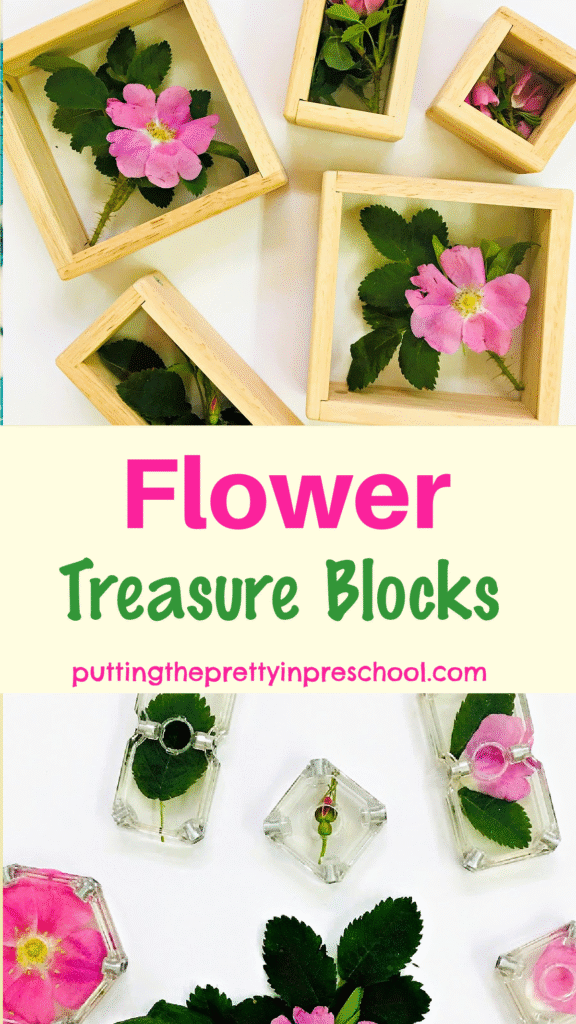
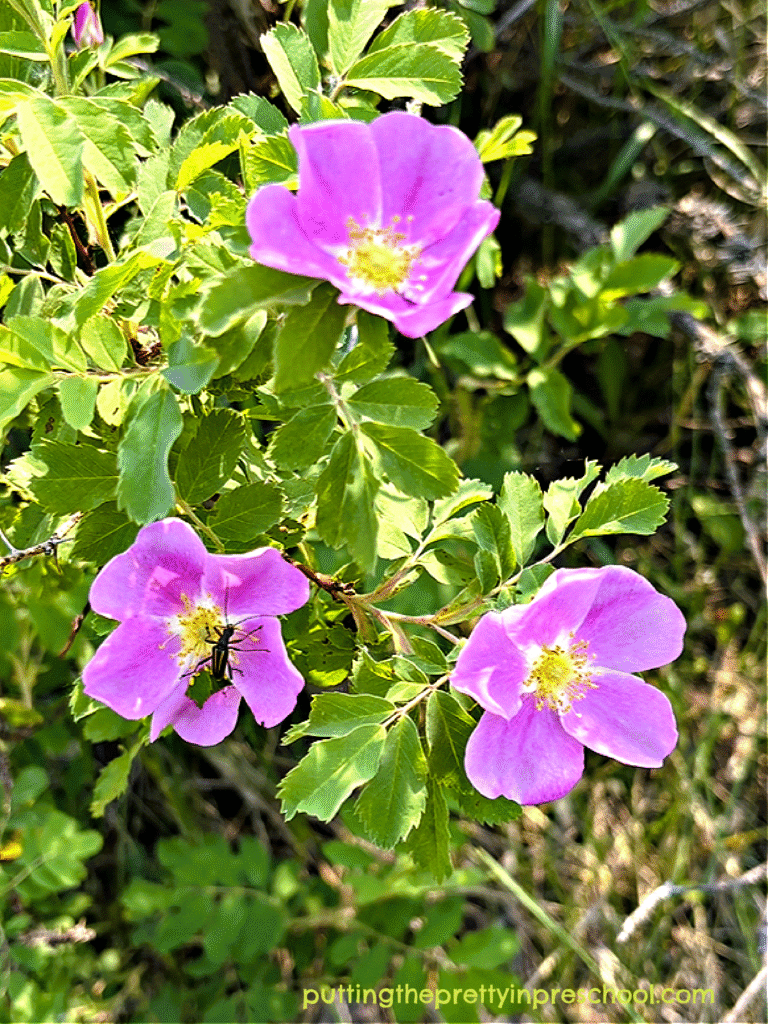
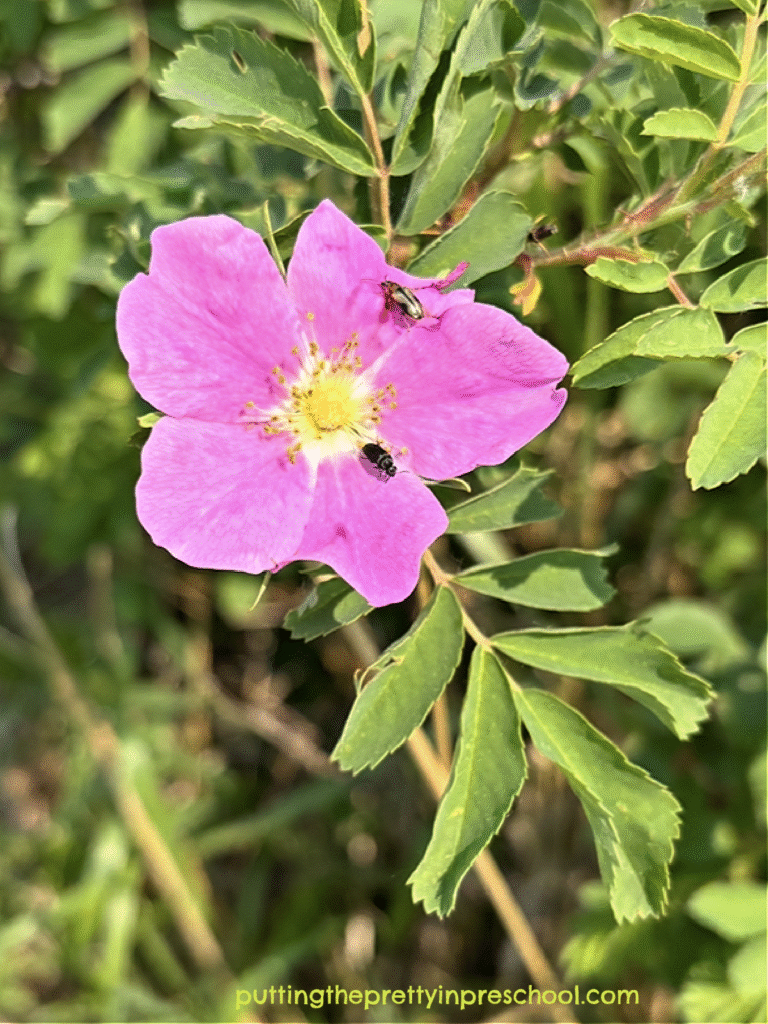
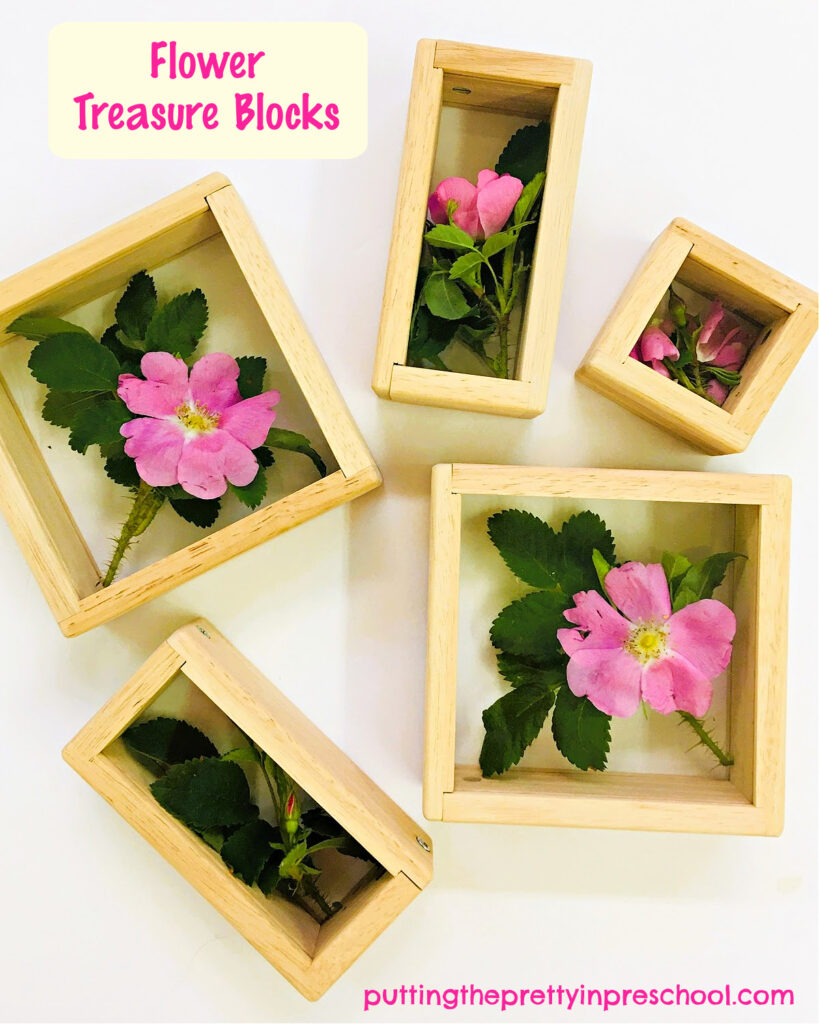
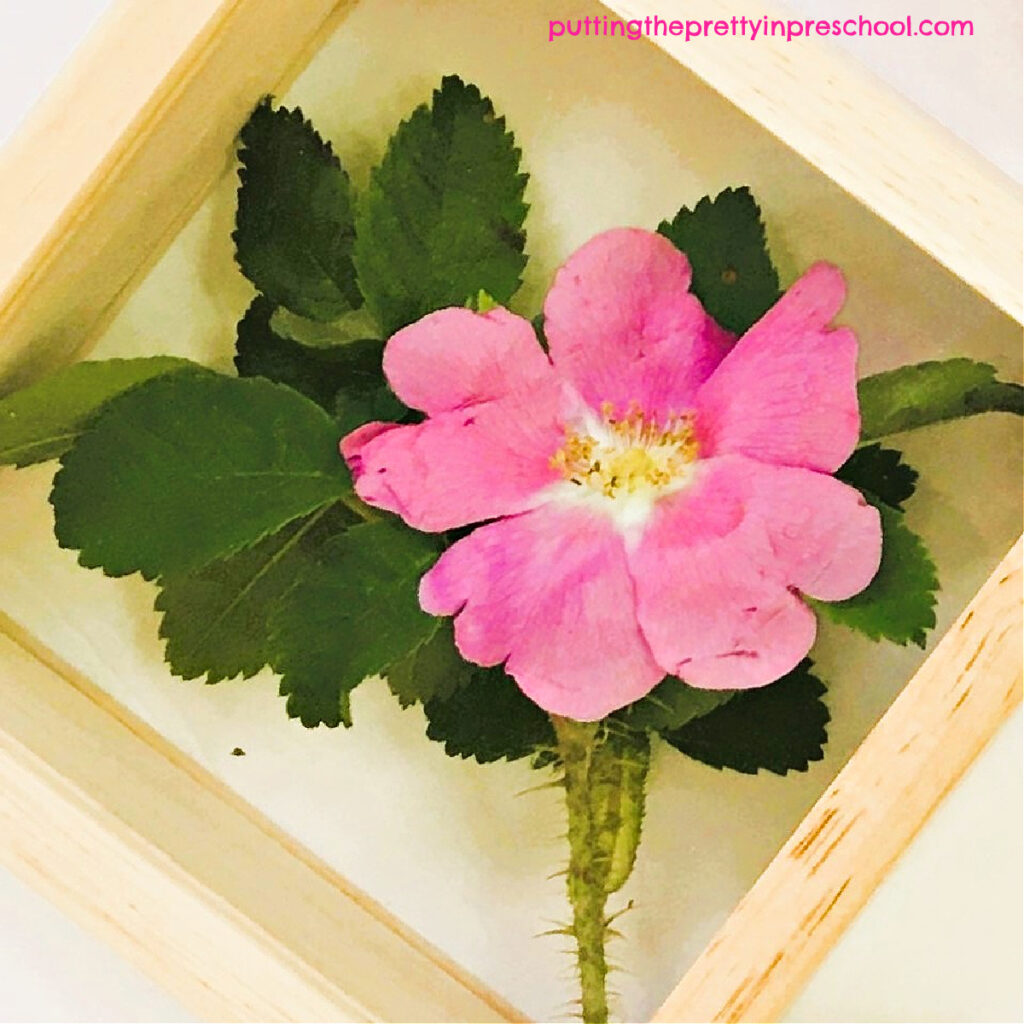
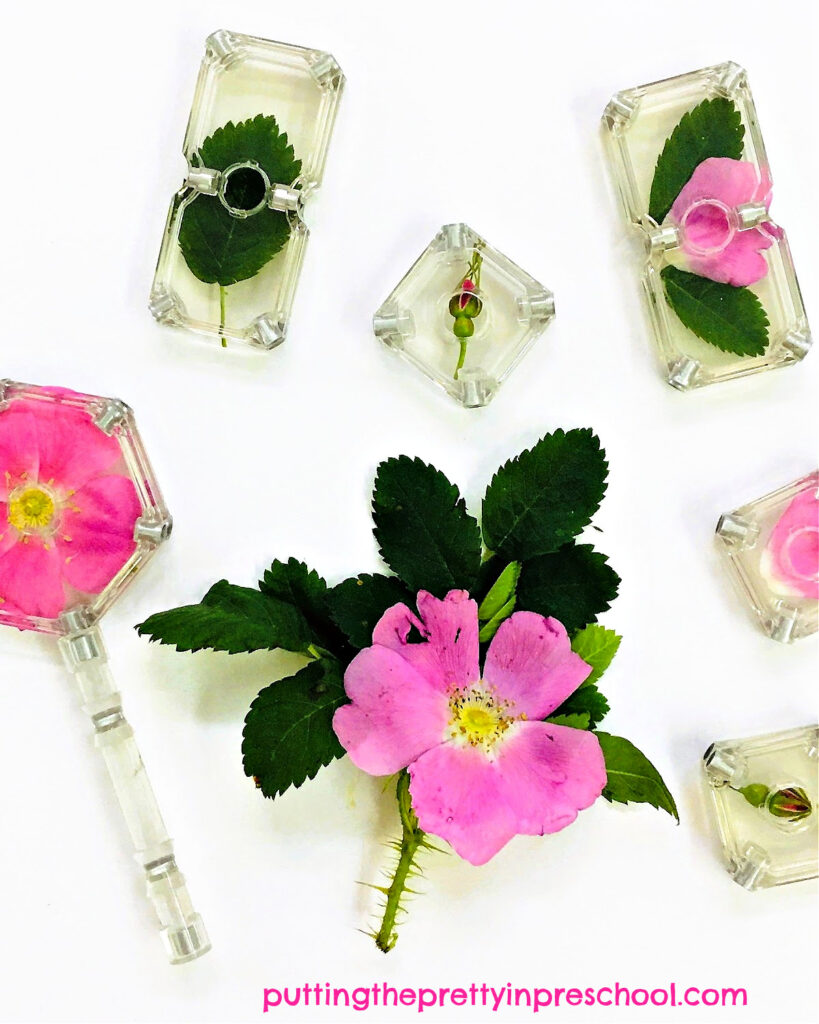
Flowers can be delicate and fierce simultaneously, making it hard for children to get up close to study them. The Alberta Wild Rose, with its fragile rosy-pink flowers and thick thorny stems, is one such flower. Rather than having children handle the prickly-stemmed blooms, flower treasure blocks are a good way to introduce the prickly rose.

_______

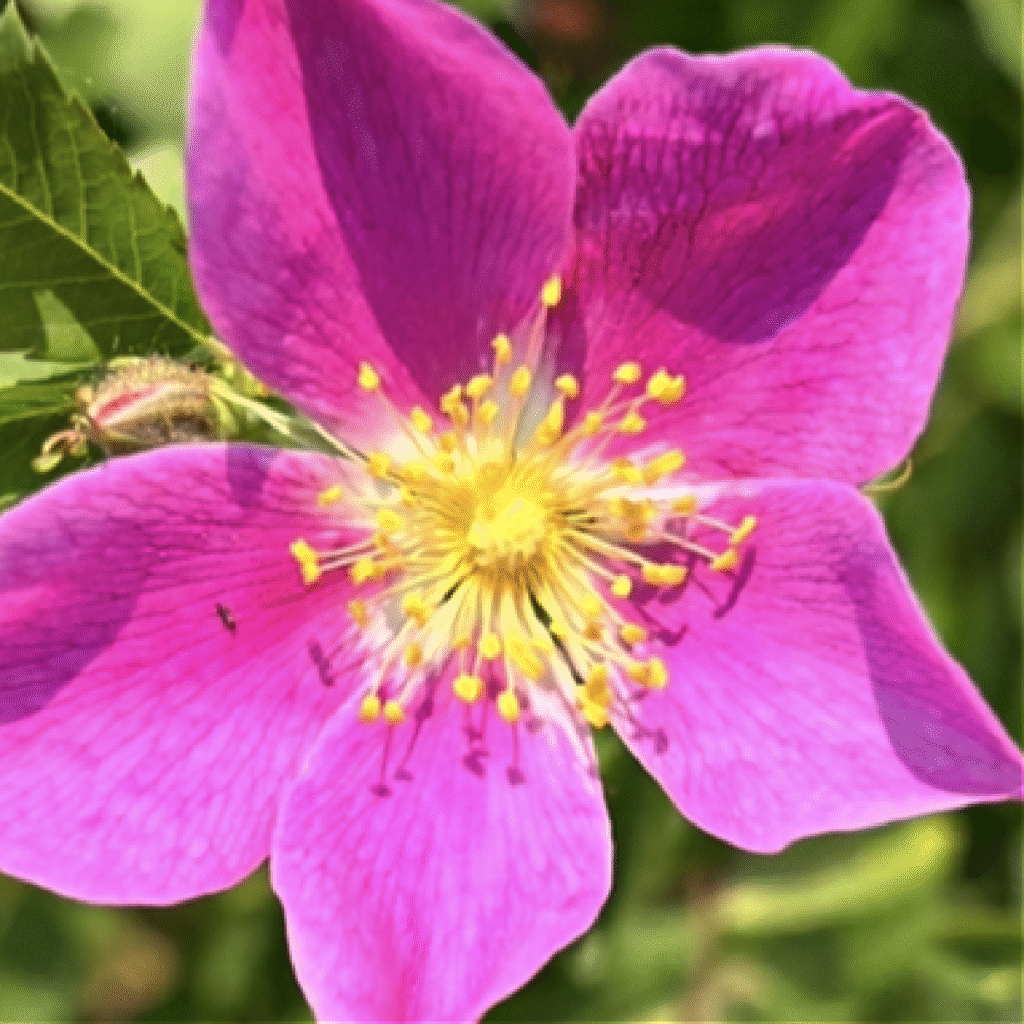
The Alberta Wild Rose is a hardy, bushy shrub that grows in sunny spots in the wild all over temperate regions in Canada. It is a low-maintenance plant that is drought-tolerant and fire-resistant. The plant is non-toxic, and the leaves and fruits are edible. The beautiful, five-petaled flowers with yellow stamens are easy to spot at this time of year.

_______

_______

Supplies to Collect

Gather the following supplies for this flower-themed science and sensory activity:

  • fillable treasure blocks
  • flowers, petals, leaves, and stems

_______

Follow me on Pinterest for more early learning ideas.

_______

Introducing Flower Treasure Blocks

Fillable treasure blocks, also called window blocks, generally have wooden frames and clear panels. One side of each block is removable, so loose parts like buttons, beads, gems, or natural items such as flowers, leaves, pine cones, and twigs can be placed inside. The see-through blocks are a valuable resource for the home or classroom.

_______

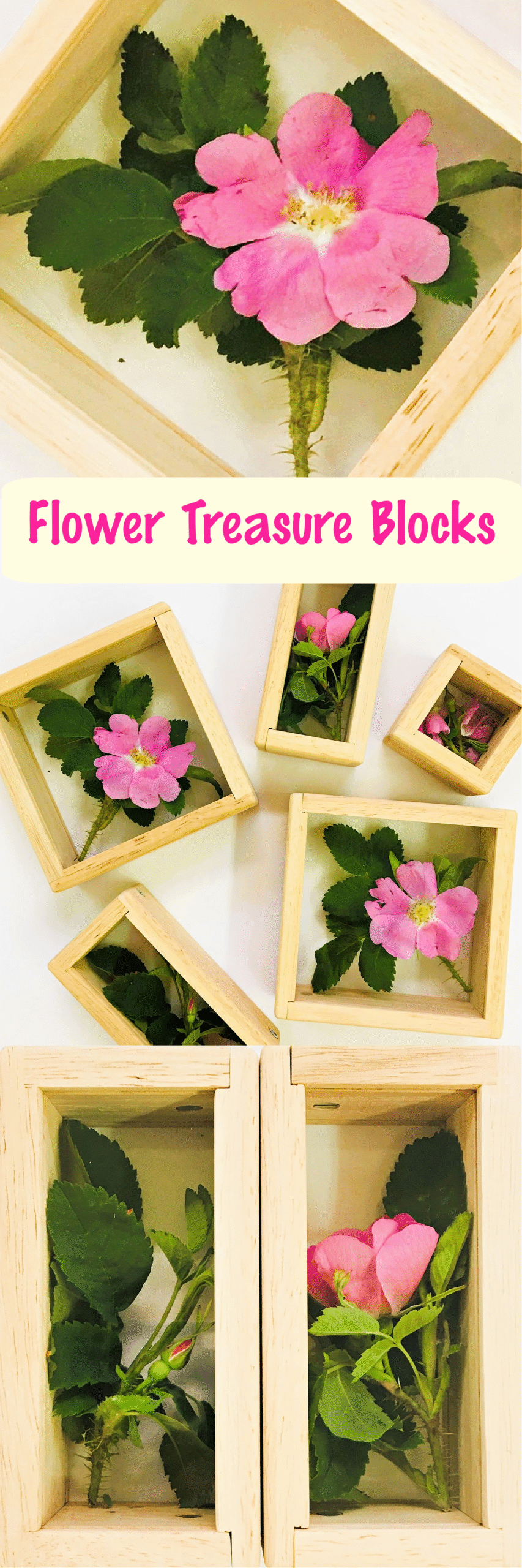
Unscrew one side of each block and add flowers such as the Alberta Wild Rose or your favorite flowers to the blocks. Include the blooms, buds, leaves, and stems. Then screw the panels back on.

_______

Set the flower-filled blocks in a display corner or on a light table for children to observe. Or place them in a block corner with a variety of other blocks. Your little charges will be delighted to handle the see-through blocks and study what’s inside.

_______

Another Way to Display Flower Parts

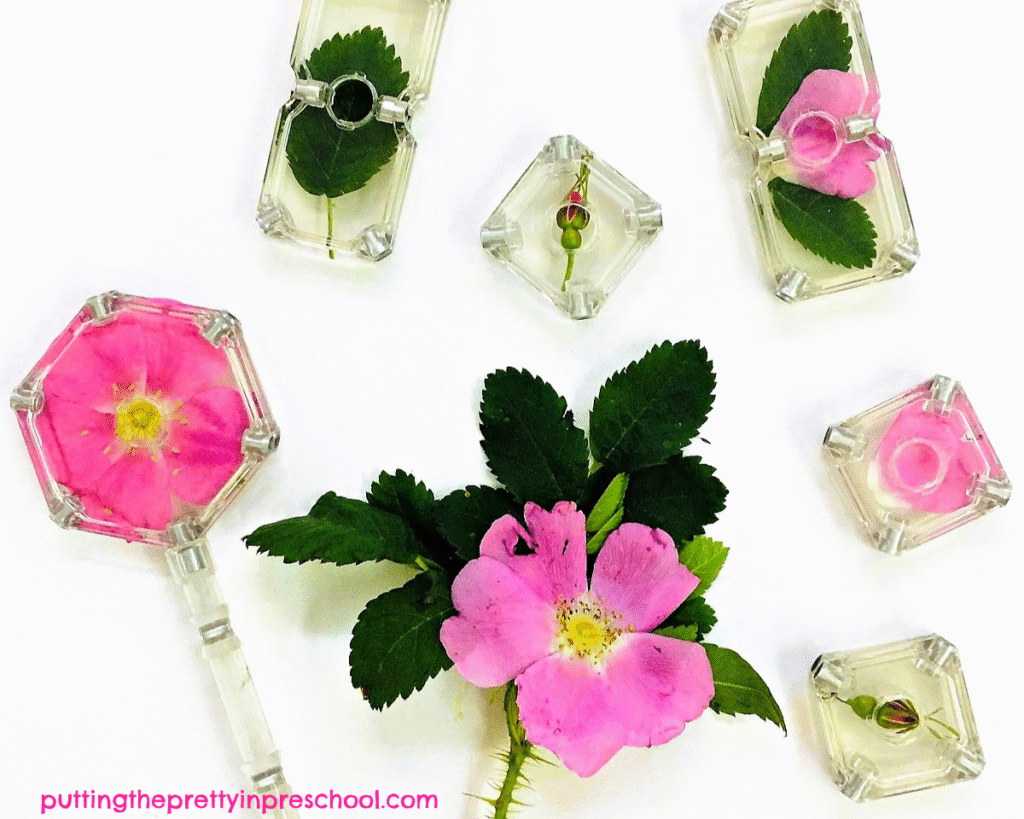
Instead of using treasure blocks to display flowers, gently place their parts between two clear magnetic tiles.

_______

The Alberta Wild Rose showcases brilliantly between the tiles, and the flowers look gorgeous. I skipped adding the spiky stems since the magnetic tiles are easy to take apart.

_______

_______

Related:

Skeleton Treasure Blocks

Christmas Treasure Blocks

Winter Treasure Blocks

Valentine’s Day Treasure Blocks

St. Patrick’s Day Treasure Blocks

_______

[Read more…] about Flower Treasure Blocks
Tweet
Share
Share
Pin

Filed Under: display, flowers, gardening, preschool, science, sensory, spring, summer Tagged With: AB Wild Rose, flowers, nature, sensory play, treasure blocks

  • Page 1
  • Page 2
  • Page 3
  • Interim pages omitted …
  • Page 7
  • Go to Next Page »

Primary Sidebar

Hi, I'm Annette Kaminsky, a preschool teacher who loves sharing learning through play activities for young children. Thanks for visiting my site. Feel free to stay awhile!

Subscribe Via Email

Recent Posts

  • December Kindness Activities November 30, 2025
  • Fall Forest Sensory Bin November 30, 2025
  • DIY Turkey Bowling Game November 25, 2025
  • Fall Leaf Crown Paper Crafts November 23, 2025
  • Colors of Fall Sensory Bin October 13, 2025
  • Apple Theme Sensory Tray October 11, 2025
  • Three Dinosaur Sensory Bins September 7, 2025
  • Castle Theme Pretend Play August 26, 2025
  • Castle Theme Light Table Activity August 25, 2025
  • Castle Theme Playdough Tray August 24, 2025

Categories

Topics

apples block play bunnies butterflies Chinese New Year Christmas Christmas craft color colors dramatic play Easter fall flowers hearts holiday jewelry leaves leprechauns light table loose parts painting paper crafts playdough pretend play printables printmaking process art pumpkins rice bin scented playdough science experiment scissor skills sensory bin sensory play sensory tray shamrocks skeletons snakes spiders spring St. Patrick's Day sunflowers tablescapes Valentine's Day water play

Copyright © 2025 · Lifestyle Pro on Genesis Framework · WordPress · Log in