• Skip to secondary menu
  • Skip to main content
  • Skip to primary sidebar

Putting The Pretty In Preschool

Finding Beauty In Everyday Early Childhood Experiences

  • Home
  • About Me
  • Winter
  • Chinese New Year
  • Blog
  • Contact Me
  • Black History Month
  • SHOP
  • Valentine’s Day

preschool

Painting Striped And Spotted Sharks

August 1, 2022 by Annette Kaminsky Leave a Comment

Tweet
Share
Share
Pin

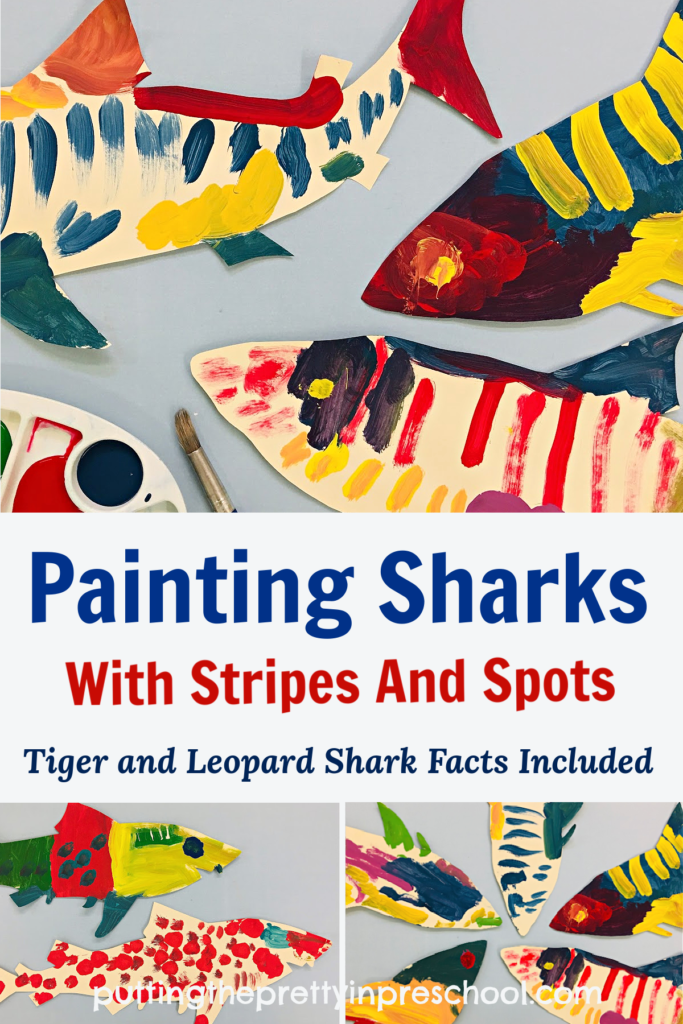
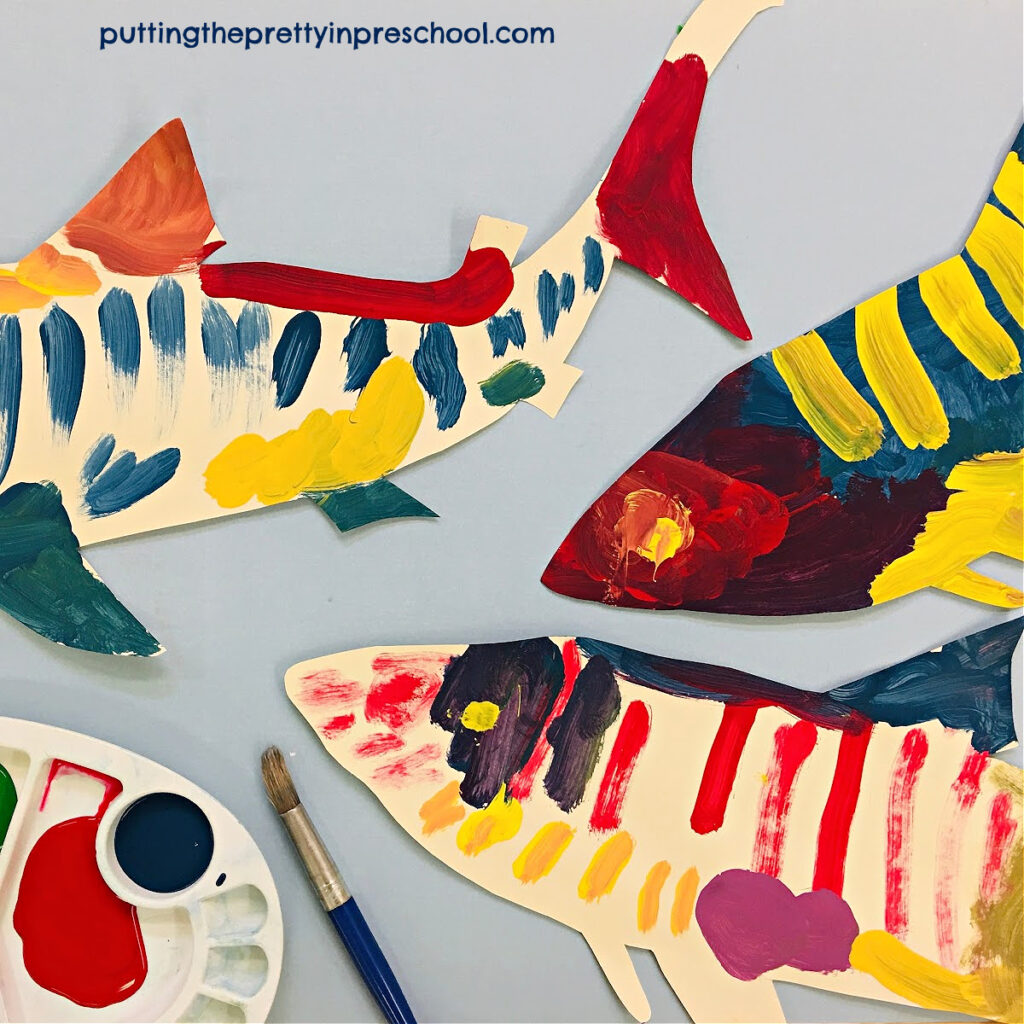
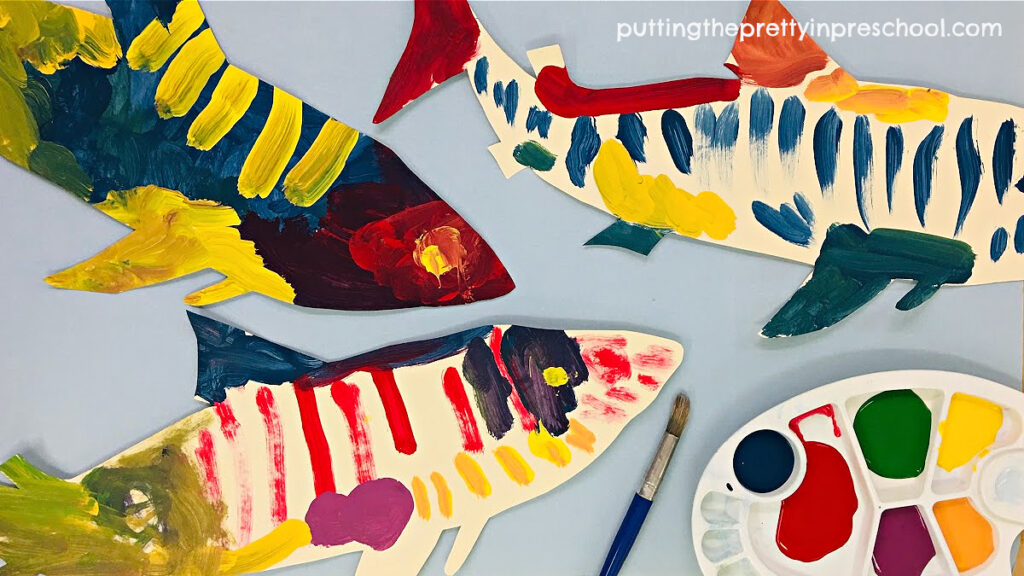
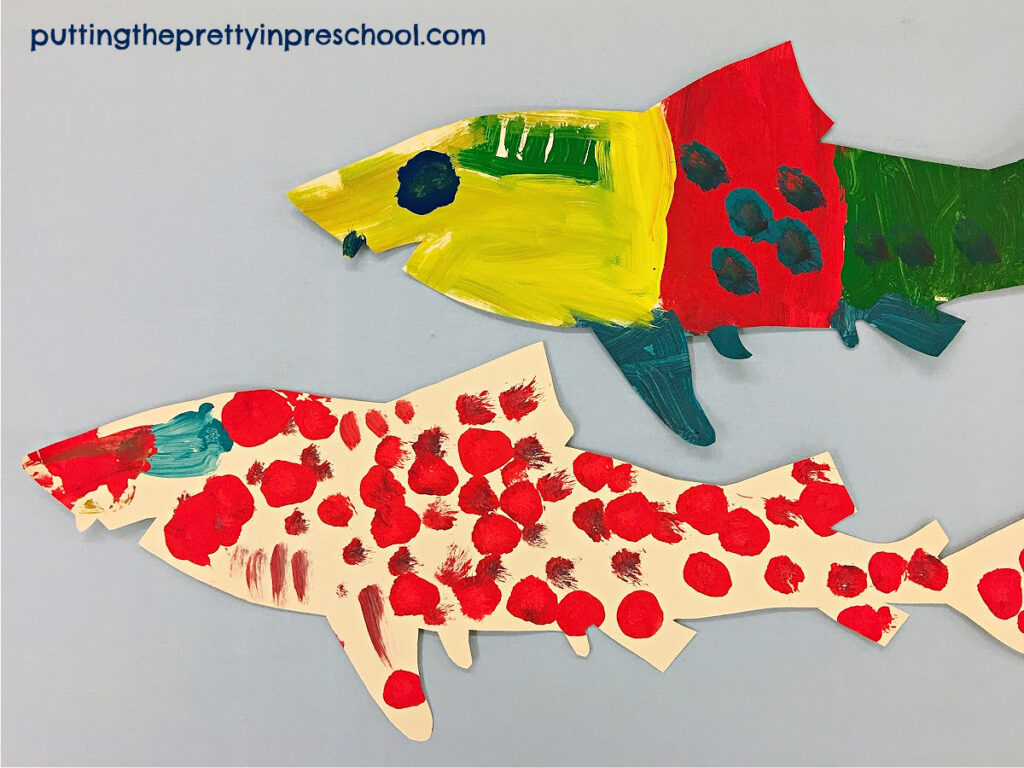
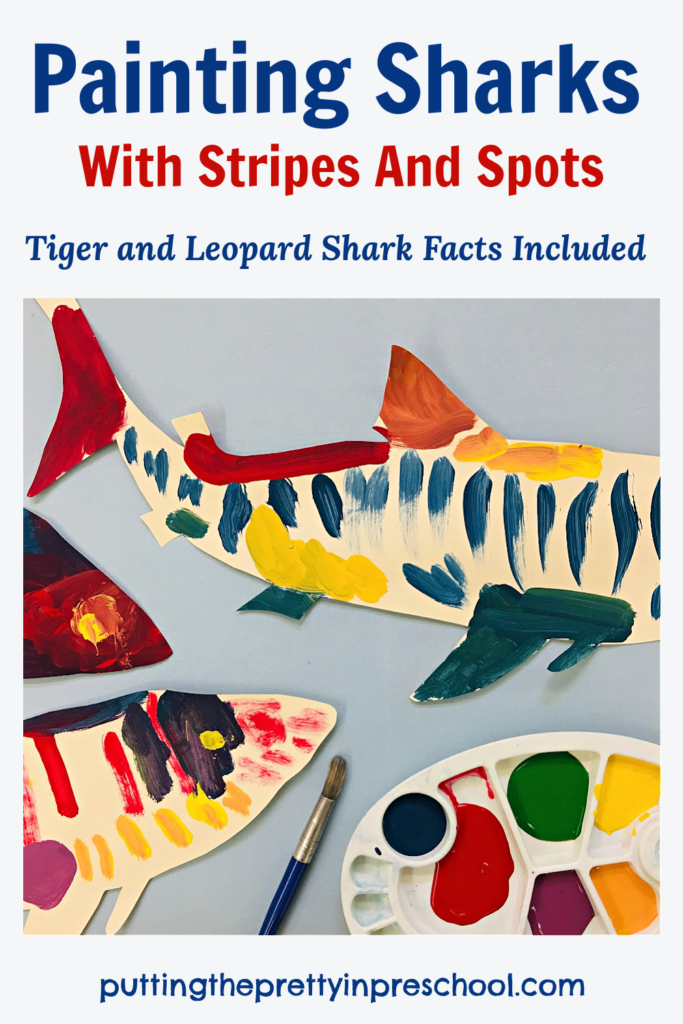
Painting striped and spotted sharks is an effective way for young children to incorporate simple design elements into the art process. And tiger and leopard sharks are the perfect subjects to encourage early learners to paint stripes and spots. These sharks are especially interesting because of their unique coloring.

Painting striped and spotted sharks are an easy way for early learners to incorporate simple design elements into the art process. Tiger and leopard shark facts are included.

_______

It is common knowledge that early learners just love, love, love to mix colors when painting. They never seem to tire of mixing paints.  Oh so quickly, they will swirl paint around to make a mediocre brown or another dull hue, and be left with muddied paints to work with.

As they get a little older, I like to encourage children to try something a little more challenging. I say, “Try this challenge on your first painting. Then on your next ones you can paint any which way you like.” This is usually effective. Sometimes little learners choose to make a second or even a third painted piece. Other times they are ready to move on to another activity in the classroom after the first one.

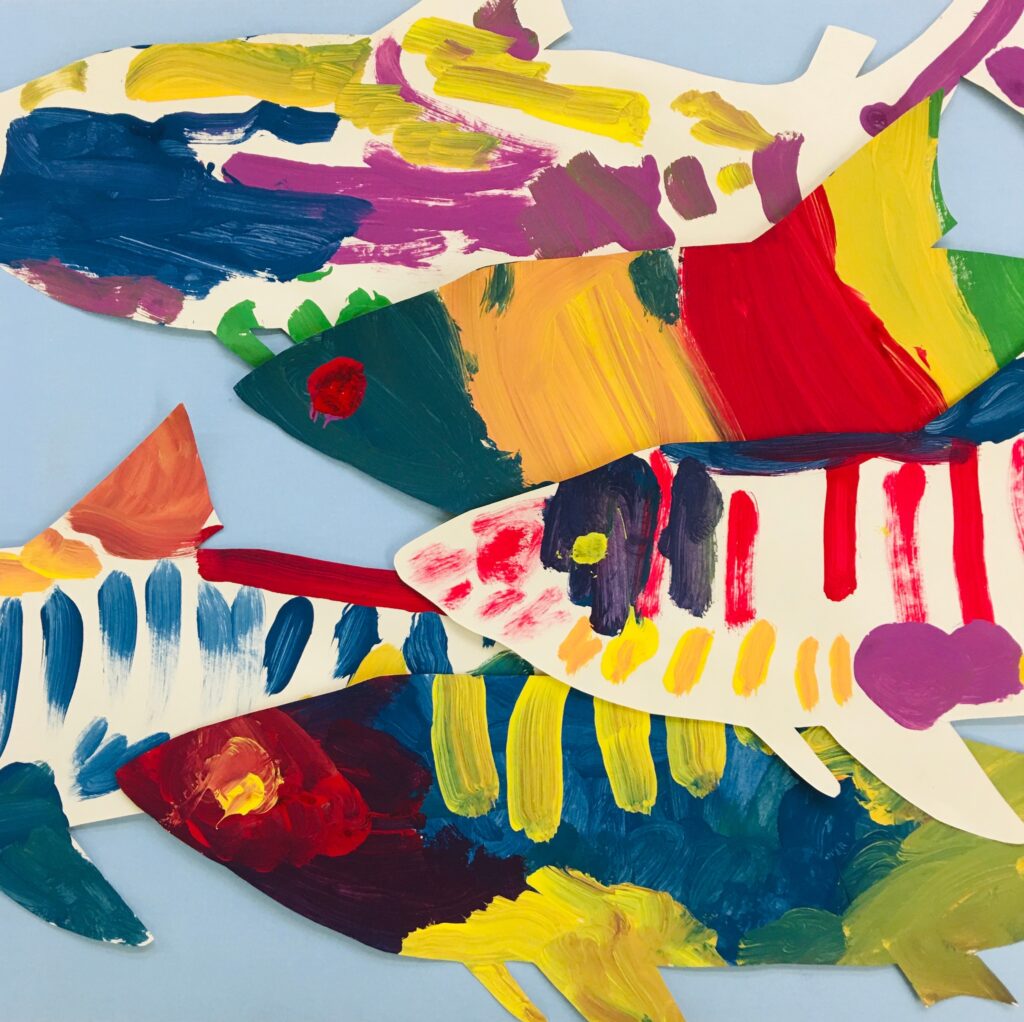
With these shark painting activities, children are challenged to keep colors somewhat separate and add stripes and spots to their paintings.

_______

Painting Striped Tiger Sharks

Tiger sharks provide inspiration for painting stripes on fish art projects.

_______

To prepare for the art activity, draw and cut large tiger sharks from 12 x 18-inch paper. Manila or construction paper works well.

Then set out tempera paint colors of choice. The paint palette can feature a variety of colors, or monochromatic ones, such as black, gray, and white.

Next, add a paintbrush and paper towel section to each participant’s station.

To introduce the painting activity, read a picture book featuring different kinds of sharks. 

Next, focus on tiger sharks. Show pictures of them from books and/or online sources, and share interesting facts. The information further on in this post may be helpful.

Invite early learners to decorate their sharks, making sure to add some stripes to them. Encourage them to dab excess paint on a paper towel when switching paint colors.

Ten fun facts about tiger sharks. These fascinating sharks inspire little artists to paint stripes.

_______

10 Tiger Shark Facts

  • Tiger sharks are the fourth largest shark. Only the whale shark, basking shark, and great white shark are bigger.
  • These striking sharks have spots and vertical lines on the sides of their bodies, similar to the stripes on land tigers. The markings fade over time.
  • Their striped grey coloring camouflages the sneaky sharks in the water.
  • Preferring warmer waters, the large sharks live near coasts in tropical and subtropical areas around the world.
  • Tiger sharks have excellent eyesight and hearing and are slow-moving swimmers.
  • Not fussy about prey, the nocturnal hunters will eat almost anything whole, even garbage!
  • The food they commonly eat is invertebrates, other fish, dolphins, sea turtles, and seals.
  • Their broad jaws and strong, sharp, serrated teeth help them cut through their prey.
  • The orca whale is the only predator of tiger sharks.
  • Being very curious, these sharks will come close to humans and occasionally bite them.
  • Shark babies, called pups, hatch from individual eggs inside the mother’s body and are born live. There is an average of 30 – 35 pups per litter.

_______

Tiger sharks provide inspiration for painting stripes on fish art projects.

_______

Painting Spotted Leopard Sharks

With this second painting activity, draw and cut out leopard sharks from oversized sheets of sturdy paper.

Introduce little learners to the spotted sharks by showing pictures of them and sharing facts. Interesting leopard facts are listed below.

Invite participants to paint their sharks, adding spots to them.

Leopard sharks provide inspiration for painting spots on fish art projects.

_______

10 Leopard Shark Facts

  • Leopard sharks are smaller than tiger sharks, but also live near the shore.
  • The sharks live year-round in the Pacific Ocean from Oregon to the Gulf Of California.
  • The dark spots on their backs have a likeness to those of real leopards.
  • The narrow-headed mid-sized sharks have three pointed teeth that are good for smashing food.
  • The spotted sharks hunt on the bottom of the ocean at night.
  • Favorite prey is crabs, fish eggs, shrimp, clams, octopus, and fish. The sharks sometimes eat other small sharks.
  • Leopard sharks are active, strong swimmers, but will sink when not moving.
  • Being shy and skittish, they often hide before humans can spot them.
  • Like tiger sharks, leopard shark pups are born live after hatching from egg capsules in the mother’s uterus.
  • Loss of habitat is the biggest threat to leopard sharks.

_______

Painting stripes and spots on sharks are an easy way for early learners to incorporate simple design elements into the art process. Tiger and leopard shark facts are included.

_______

Follow me on Pinterest for more early learning ideas.

_______

More Ways To Create With Spots

In addition to brush-painted spots, eye-catching spots can be added to an art piece by:

  • fingerpainting
  • using dot markers
  • adhering circle stickers
  • gluing on paper circles

_______

Artist Yayoi Kusama

A famous artist who often uses circles/spots in her art is Yayoi Kusama. Her “obliteration room” collaborative projects are especially amazing!

_______

Related: Watermelon-Inspired Banner Craft

_______

[Read more…] about Painting Striped And Spotted Sharks
Tweet
Share
Share
Pin

Filed Under: art, ocean, preschool, science Tagged With: painting, sharks

Watermelon-Inspired Banner Craft

July 31, 2022 by Annette Kaminsky Leave a Comment

Tweet
Share
Share
Pin
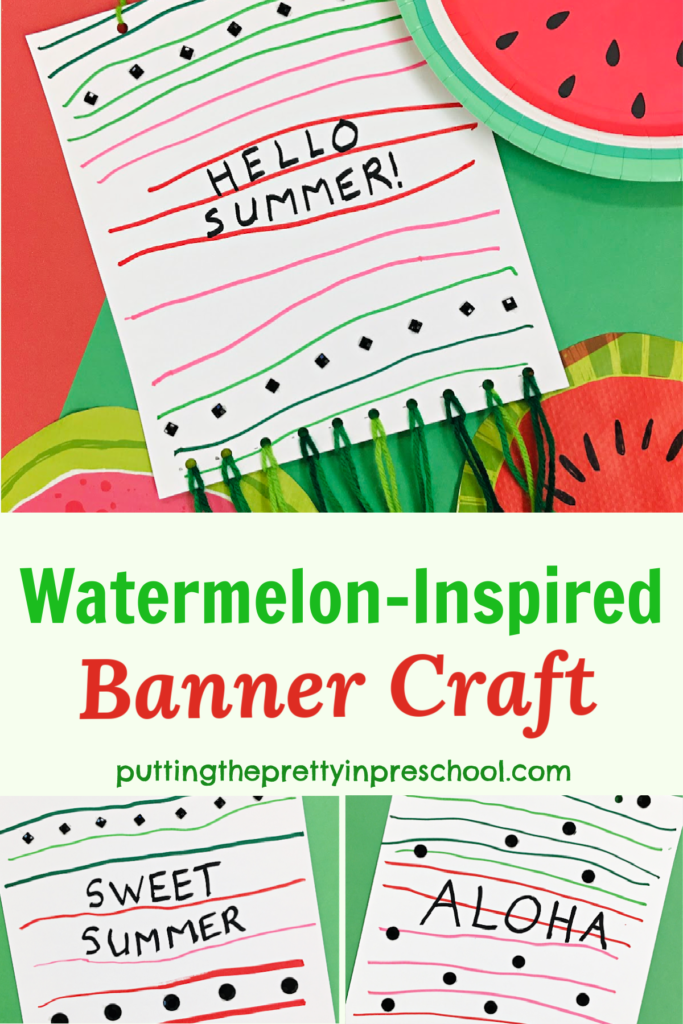
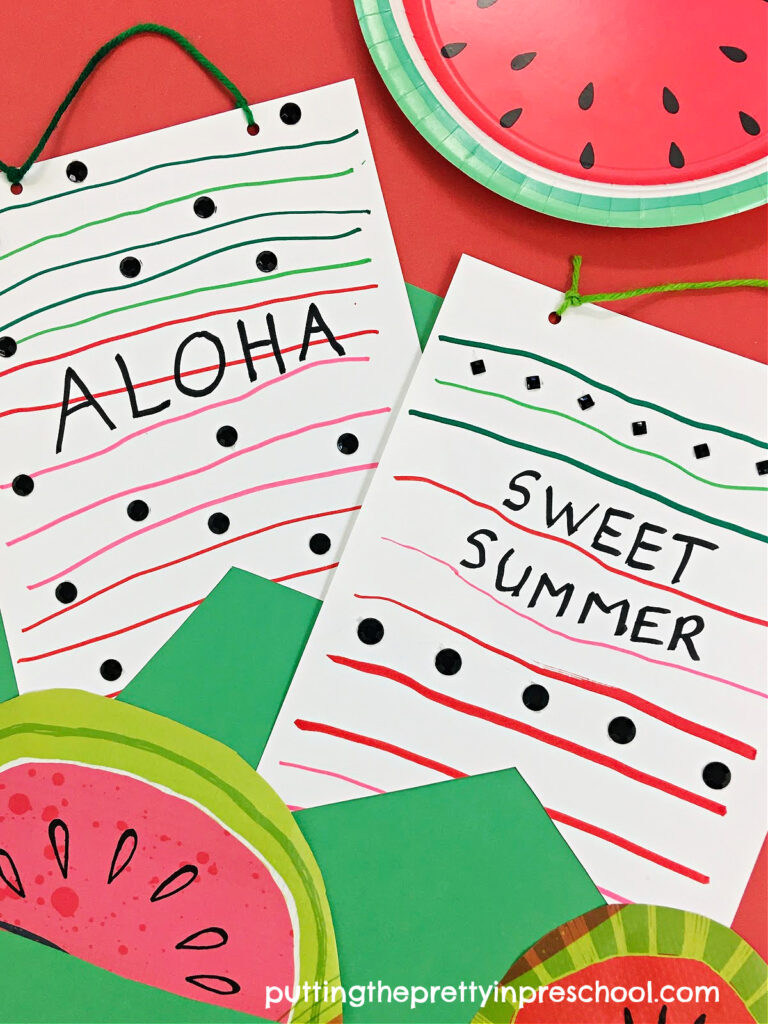
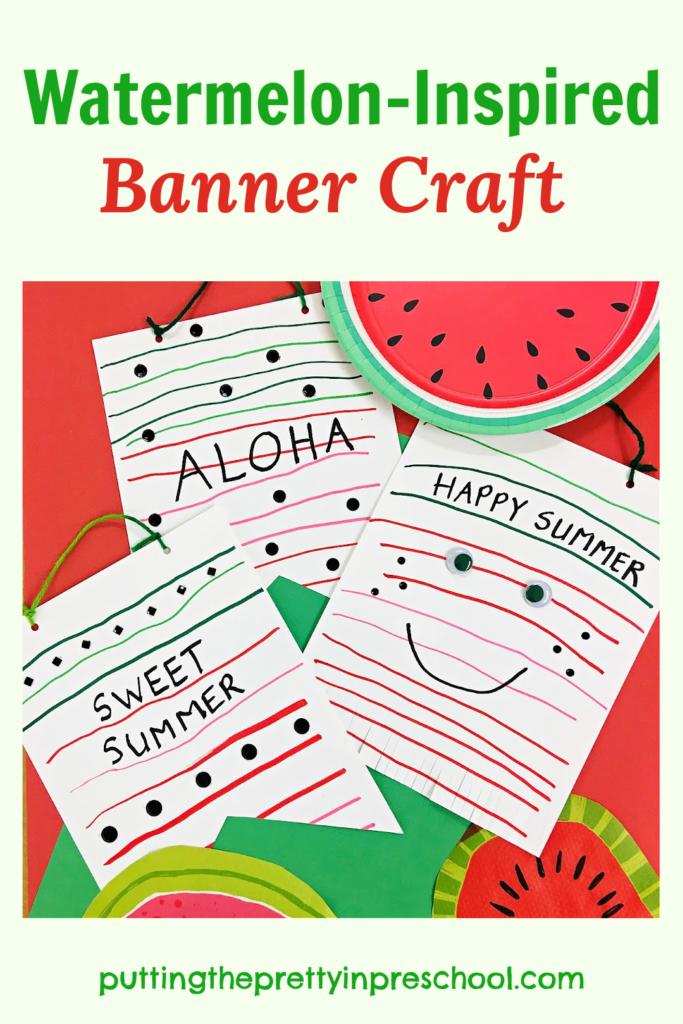
Make this easy watermelon-inspired banner craft today! A perfect summer craft for a day you are short on preparation time.

_______

Summers are short in our part of the world! And so at this time of the year, we savor every moment of the season. This watermelon-inspired banner craft loaded with stripes expresses an appreciation of warm summer days perfectly. It is easy for little learners to create, and requires very little preparation time.

Stripes always make a statement, whether in art, fashion, or home décor. Early learners get practice drawing horizontal ones in this fruit-inspired craft.

_______

Follow me on Pinterest for more early learning ideas.

_______

Supplies To Collect

Gather the following supplies for the watermelon-inspired banner:

  • broad line markers in shades of green, red, pink, and black
  • 8 ½ x 11-inch white cardstock paper
  • black adhesive gems
  • green yarn
  • wiggly eyes
  • scissors
  • ruler
  • single hole punch
  • white glue
  • glue paddle

_______

Making The Watermelon-Inspired Banner Craft

Celebrate the summer season with a low prep, easy-to-make watermelon-inspired banner craft. This is an all-ages papercraft.

_______

This watermelon-inspired banner requires minimal preparation. The craft is great to introduce on a day you are short on time.

Just give each child participating a sheet of 8 1/2 x 11-inch white cardstock paper and broad line markers in shades of green, red, and pink.

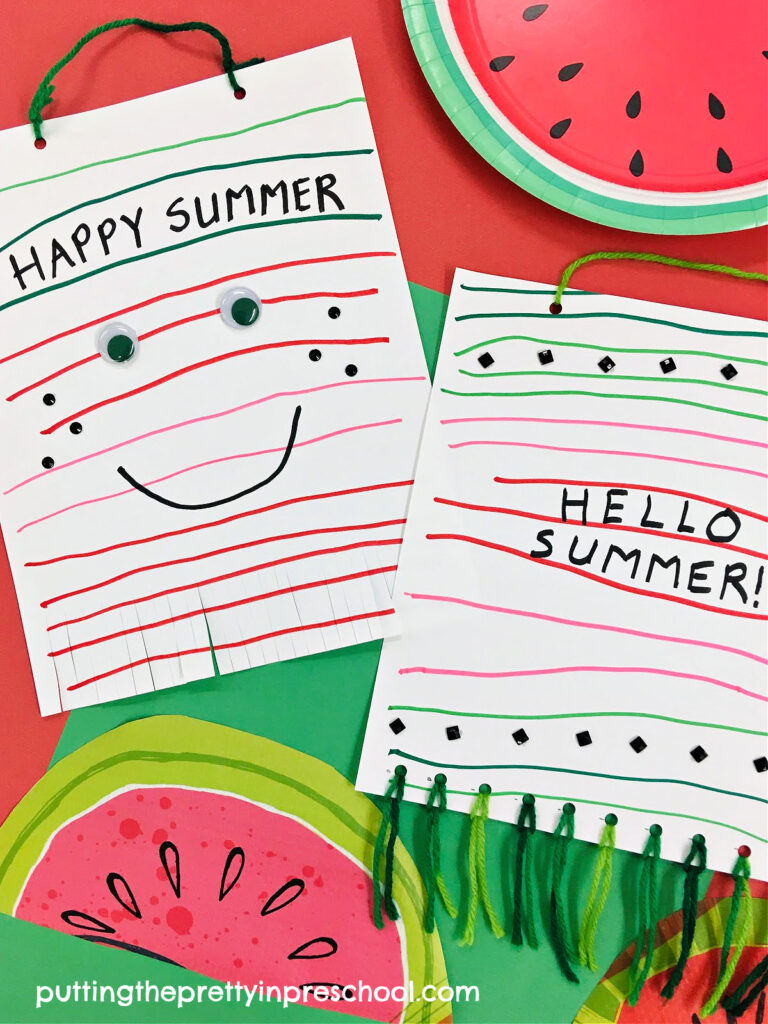
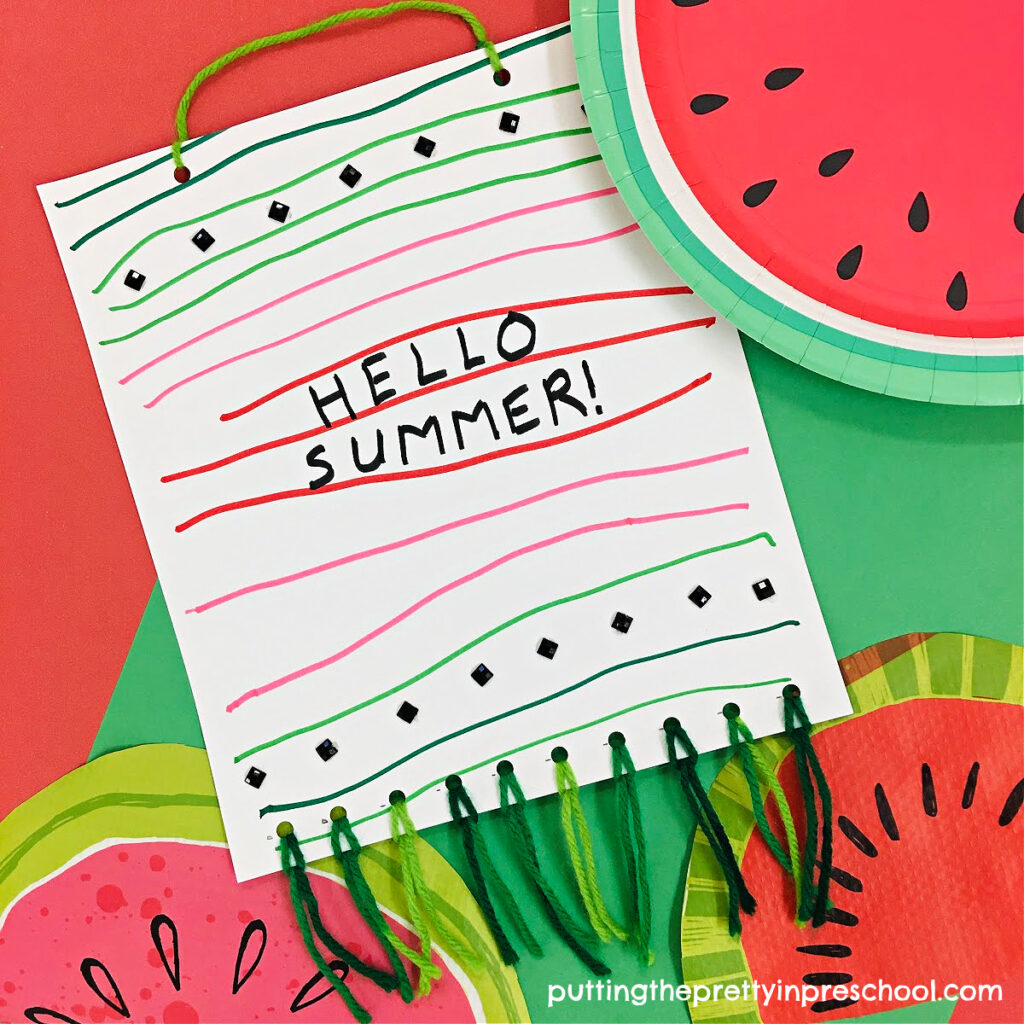
Then, demonstrate how to draw horizontal stripes in green hues on the top of the paper, and red and pink ones on the rest. The lines do not need to be perfectly straight.

Celebrate the summer season with a low prep, easy-to-make watermelon-inspired banner craft. This is an all-ages papercraft.

_______

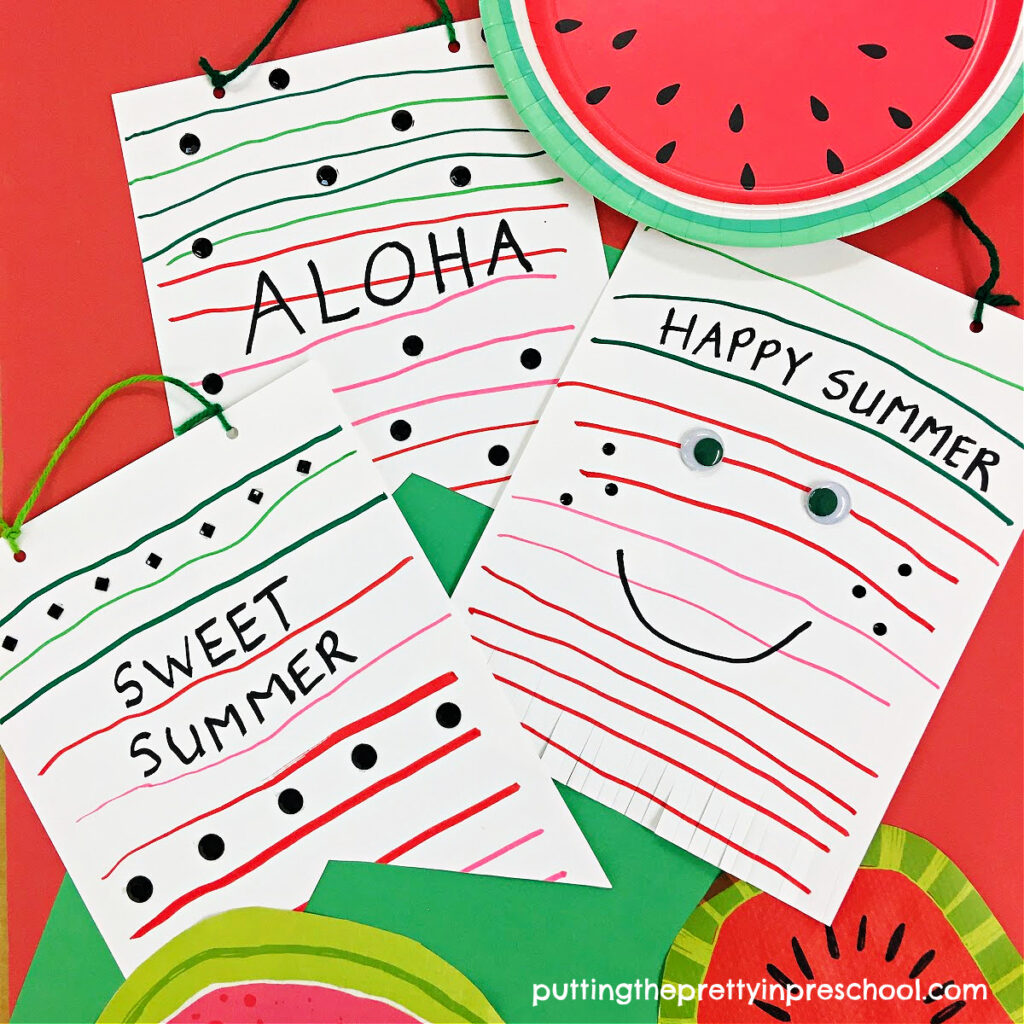
After everyone has added stripes to their paper base, write a word or saying on each piece of art using a black felt pen. Word choices on the featured art projects are:

  • Hello Summer
  • Sweet Summer
  • Happy Summer
  • Aloha

_______

Choose one of the following three ways to finish the bottom of the hanging banner craft:

  • Have children cut a triangle shape from the bottom edge to make a pennant design.
  • Have children cut a fringe on the bottom using scissors.
  • Help children punch holes on the bottom and thread through a green yarn fringe.

As a finishing touch, invite little learners to add adhesive gem “watermelon seeds” to their craft.

Embrace the summer season with this low prep, easy-to-make watermelon-inspired banner craft. This is an all-ages papercraft.

_______

Happy Summer Banner Craft

For the “Happy Summer” banner theme, invite early learners to add two wiggly eyes with white craft glue after drawing the stripes. Then have them draw on a smile with a black broad line marker. A few black adhesive gems can be added afterward.

Embrace the summer season with this low prep, easy-to-make watermelon-inspired banner craft. This is an all-ages papercraft.

_______

This striped watermelon-inspired banner craft adds color and style to any area when displayed, and makes a celebratory summer decoration.

_______

Make this easy watermelon-inspired banner craft today! A perfect summer craft for a day you are short on preparation time.

_______

Related:  Three Black History Month Crafts

_______

[Read more…] about Watermelon-Inspired Banner Craft
Tweet
Share
Share
Pin

Filed Under: art, crafts, preschool, summer Tagged With: papercrafts, watermelon

Pool Noodle Building Blocks

July 30, 2022 by Annette Kaminsky Leave a Comment

Tweet
Share
Share
Pin

_______

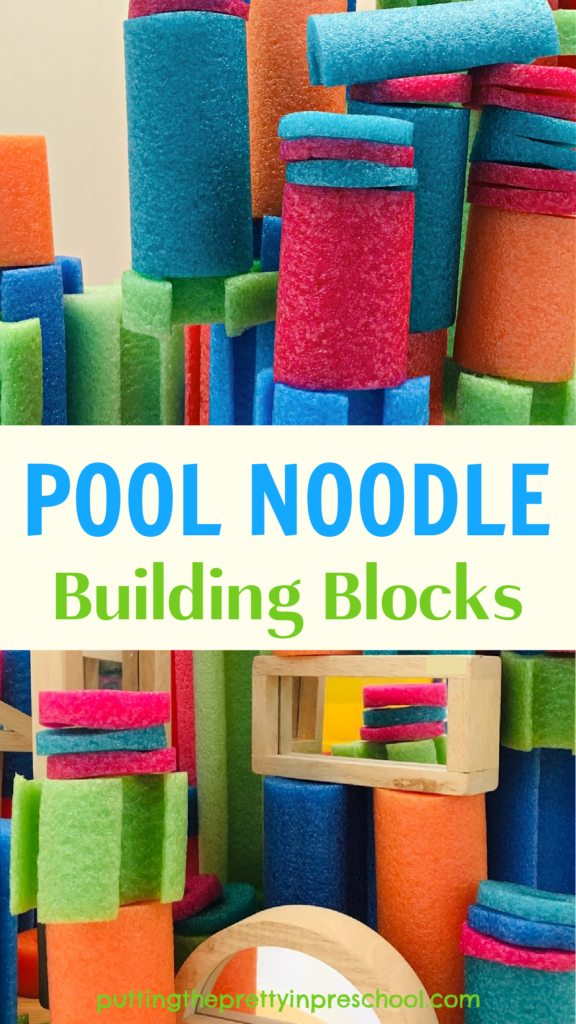
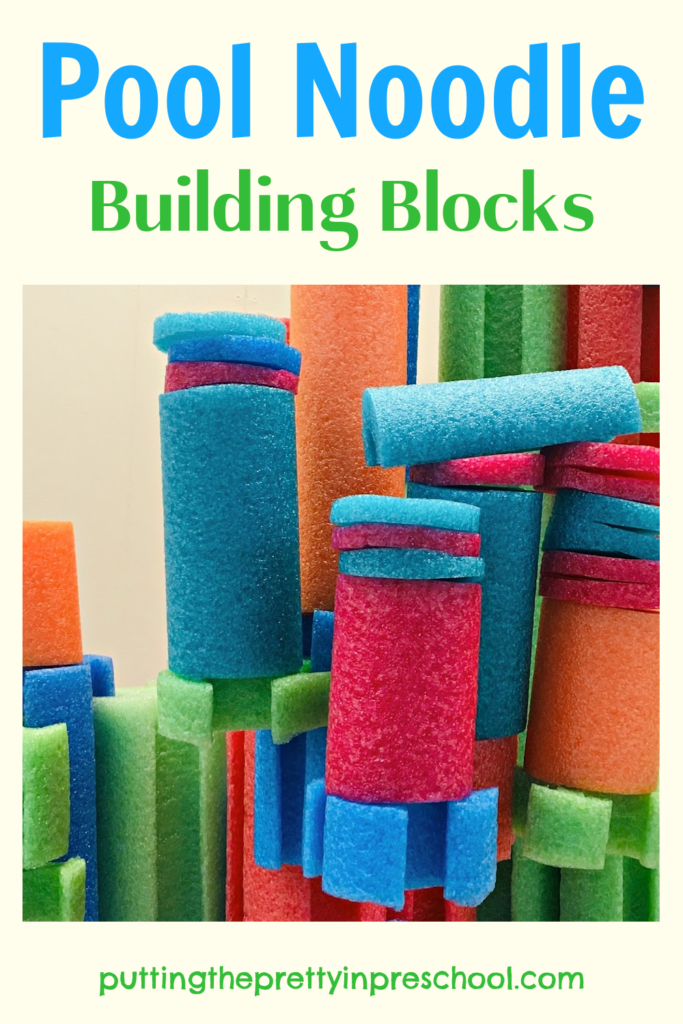
Over a year ago, I purchased interlocking foam pool noodles, planning to pull them out one day as a boredom buster. This year they finally made their debut, as pool noodle building blocks!

Pool noodle building blocks are fantastic in the block corner or as loose parts. This is a STEAM activity you will want to try.

_______

Before introducing the pool noodles, I trimmed them into various lengths with a sharp knife on a cutting board. The cut pieces ranged from thin slices to much longer ones. A few sections were sliced in half lengthwise.

Then I loaded the connectable foam noodle loose parts into large bins and set them out in a block corner. I wasn’t sure how early learners would react to them. Would they find them interesting to build with? Would the novelty of the construction activity wear off after a few days?

_______

Follow me on Pinterest for more early learning ideas.

_______

Pool Noodle Block Play

The first day the cut swim noodles were out I demonstrated how to slide them together. Children responded well and began creating structures.

The light, flexible blocks far surpassed my expectations as a building toy. Every day, early learners regularly picked them up and made something new. Here are some things they created with the noodles:

  • large sculptures
  • barricades
  • spaceships
  • an elevator
  • a castle

The hollow foam blocks stayed out for a few months. Over time, I added a few other types and colors of noodles to the play area in order to provide more choice. The new pieces were not interlocking but added interest, and early learners used them to enhance the creations they made.

Pool noodle building blocks are fantastic in the block corner or as loose parts. This is a STEAM activity you will want to try.

_______

More Play With Pool Noodle Building Blocks

To my delight, children repurposed the different kinds of pool noodles in other play activities. They used individual pieces as:

  • candles on a table in a play restaurant
  • a bun for a sausage
  • food fried up in a pan
  • a telescope

And at times, other classroom building materials were added to pool noodle structures.

Set out these light, transportable, foam noodle building blocks for your early learners to build with and add to for STEAM fun.

_______

As loose parts, the pool noodles were used innovatively and creatively by early learners. I loved seeing the inventions made, and always responded enthusiastically.

_______

Pool noodles are inexpensive, light, and easy to move around and store. They work fabulously as creative building pieces and loose parts for construction and dramatic play centers.

_______

Related: Build A Christmas Tree STEAM Activity

_______

[Read more…] about Pool Noodle Building Blocks
Tweet
Share
Share
Pin

Filed Under: block play, dramatic play, preschool, pretend play, science Tagged With: block play, dramatic play, pool noodles, pretend play

Scented Moon Playdough

July 29, 2022 by Annette Kaminsky Leave a Comment

Tweet
Share
Share
Pin
Try this easy-to-scented moon playdough recipe. Find out which simple ingredients make the moon rock color in this homemade dough.

_______

This scented moon playdough is the result of a color and flavor mixing science experiment with jello powder. Can you guess which flavors of jello were used?

_______

The Scented Moon Playdough Recipe

Your child will love to explore space with this moon playdough tray. The homemade playdough is amazing!

_______

To make a big batch of this steely gray playdough that matches the color of the moon, gather the following supplies:

  • 3 cups flour
  • 1 ½ cups salt
  • 6 teaspoons cream of tartar
  • 1 85-gram package of lime jello powder
  • 2 85-gram packages of grape jello powder
  • 3 cups water
  • 3 tablespoons oil

Add the first three ingredients to a sturdy pot and mix them together.

Boil the water and stir in all three packages of jello powder.

Then stir in two tablespoons of oil.

Add the liquid to the dry ingredients and combine.

Heat the pot on the stove on medium heat.

Stirring frequently, cook the mixture until it is no longer glossy and the dough forms a ball.

Scoop the dough onto a cutting board.

Knead when cool, adding one tablespoon more oil.

Store the playdough in a sealed plastic bag.

Note: The liquid in the pot is very black at first, but when mixed thoroughly with the dry ingredients, the result is gray playdough!

_______

Scented Moon Playdough Invitation

Your child will love to explore space with this moon playdough tray. The homemade playdough is amazing!

_______

Set out the moon playdough in a compartment tray with the following supplies:

  • star-shaped reusable ice cubes and cookie cutters
  • glow in the dark moon, stars, and stones
  • gray and tan gems and rocks
  • loose parts such as baby bottle collars, buttons, hair ties, and wooden circles
  • space vehicles and lunar rovers
  • astronaut figurines

After the playdough has been used a time or two, sprinkle silver glitter and/or foil stars on the dough to extend interest in the play invitation.

This super fun moon playdough is perfect for your space exploration theme. Children participate in a science experiment when they help make the homemade dough.

_______

Note: This gray scented playdough has a blended grape and lime scent. When I introduced the dough to my preschoolers, I wasn’t sure what they would think. Overall the children felt it smelled pretty nice.

_______

Colored Light And Moon Playdough

Our moon is mostly hued in lighter and darker grays. But from the earth, we see the moon shine due to reflected sunlight. To us, it often looks bright yellow.

The full moon, which we see once a month, can appear in different colors and sizes. This is due to its position in the sky, the particles in the atmosphere, the amount of air pollution, and the current season.

To see the full moon in a variety of colors, check out a post titled “Colors Of The Moon” by Nasa Science. It features an amazing photo showing different colors our rocky satellite has been viewed and photographed by one astrologer in Italy.

In the home or classroom, a color-changing light is fun to use to illuminate the moon playdough so that it shines in different hues.

Add colored light to the moon playdough invitation as you discuss the colors the moon shines as it reflects light from the sun.

_______

My featured light shines red, green, purple, blue, and white. Since the moon has been photographed in tones of red, blue, and purple, this lighting isn’t a stretch. Green is a popular color for depicting aliens, and some moon rocks with a green tinge have been discovered. And so the green lighting works too!

_______

Playdough Dwarf Planets

This scented grey playdough also works as a follow-up activity to a discussion about dwarf planets. These small planets are far away, super icy, and take many years to orbit the sun. Some dwarf planets are:

  • Pluto: Recently reclassified, it shines red and grey in space and has one big moon named Charon.
  • Ceres: This dwarf planet is grey and dotted with craters.
  • Haumea:  A grey and egg-shaped dwarf planet with two moons.
  • Eris: This round dwarf planet takes a half-century to orbit the sun. it is far, far away and has one tiny moon.

_______

Try this easy-to-scented moon playdough recipe. Find out which simple ingredients make the moon rock color in this homemade dough.

_______

Follow me on Pinterest for more early learning ideas.

_______

_______

More Space-themed Activities

Earth Day Heart Art

Space Father’s Day Craft

An easy-to-make space Father's Day craft. A glittery spaceship and pompom planets are the highlights of the craft.

_______

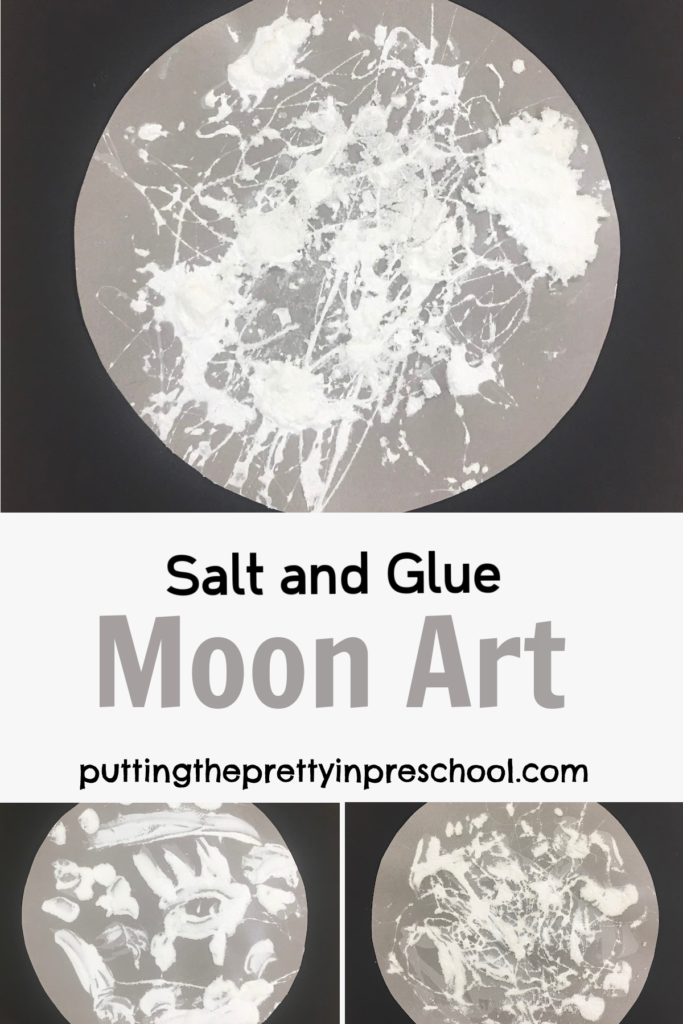
Salt and Glue Moon Art

Outer Space Pretend Play

Space Theme Light Table

_______

Space Theme Loose Parts Play

Starry Sky Sensory Bin

Moon Colors Art Project

_______

Space Restaurant Dramatic Play

Earth Day Bead Craft

Stunning, super easy beaded earth day craft. This piece is framed and ready for display.

_______

[Read more…] about Scented Moon Playdough
Tweet
Share
Share
Pin

Filed Under: playdough, preschool, science, space Tagged With: astronauts, playdough, scented playdough, sensory tray, spaceships

Strawberry Lemonade Sensory Bin

July 19, 2022 by Annette Kaminsky Leave a Comment

Tweet
Share
Share
Pin
A refreshing, taste-safe strawberry lemonade sensory bin featured three different ways. A perfect sensory activity any time of the year.

_______

This taste-safe strawberry lemonade sensory bin is refreshing in the heat of the summer and would brighten up a cool fall or icy winter day. Any time of the year, it is bound to be a huge hit with your little learners. They’ll especially love the lemonade ice cubes in the bin!

_______

Follow me on Pinterest for more early learning ideas.

_______

Supplies To Collect

Gather the following for this colorful and tasty sensory bin:

  • tray or tub
  • lemons
  • strawberries
  • can of frozen lemonade
  • ice cube trays
  • red and yellow food coloring
  • plastic glass and bowl
  • large spoon
  • kitchen tongs
  • knife
  • cutting board
  • plastic tablecloth

_______

Preparing The Strawberry Lemonade Sensory Bin

Steps to easily put together a colorful, refreshing strawberry lemonade sensory bin.

_______

To prepare this oh-so-easy lemonade sensory bin, do the following:

First, mix a container of frozen lemonade with water according to the package directions.

Next, pour lemonade into a variety of ice cube trays and freeze overnight.

Just before playtime, wash the lemons and strawberries. Cut strawberries into halves and slices, and lemons into halves, quarters, and slices.

Then cover the table the sensory bin will be set on with a plastic tablecloth.

Pour a layer of cool water into a container the size of a food service tub. A smaller tub or tray will work fine for one child to play in.

Note: If more than one child is participating in the activity, offer an individual lemonade sensory bin to each child.

Next, set in a non-breakable cup and bowl, kitchen tongs, and a large spoon.

A refreshing, taste-safe strawberry lemonade sensory bin featured three different ways. A perfect sensory activity any time of the year.

_______

Afterward, sprinkle in cut lemons and strawberries.

Lastly, add lemonade ice cubes in a variety of sizes and shapes.

Note: Smaller ice cubes are easier and safer for little learners to taste. Larger ones are easier to see in the bin.

_______

Strawberry Lemonade Sensory Bin Exploration

You may wish to offer this bin with just lemon slices and lemonade ice cubes first.

Lemons and lemonade ice cubes are the highlight of this easy-to-put-together taste-safe sensory tray.

_______

Strawberries can be sprinkled into the bin at the start, or put in a little later to add interest and sensory exploration possibilities.

Turning the water into a shade of coral by squirting in a few drops of red and yellow food coloring further adds to the learning through play experience.

Coral water brightens up this cheery, taste-safe strawberry lemonade sensory tray.

_______

Benefits Of The Lemonade Sensory Play

Your little learners have the opportunity to use all of their senses in this taste-safe bin. They can…

  • taste sweet and sour foods
  • feel cold, sticky, and smooth food parts
  • smell the refreshing scent of strawberries and lemons
  • hear the foods splash into cups and be stirred into bowls
  • see the colorful lemons and strawberries, and subtle ice cubes

Lots of interesting conversation naturally occurs while children explore their lemonade sensory bin, enhancing language.

Developing eye-hand coordination while scooping and pouring and exercising fine motor control by squeezing lemons and using kitchen tongs are also benefits. And when the color of the water is changed, little learners experience science!

Coral water brightens up this cheery, taste-safe strawberry lemonade sensory tray.

_______

Lemonade Recipes

Interested in trying some new lemonade recipes, or discovering more additives for a lemonade sensory bin? Check out this excellent post “The Twelve Best Lemonade Recipes” by gypsyplate.com.

_______

Related: Strawberry Hot Chocolate Sensory Bin

_______

[Read more…] about Strawberry Lemonade Sensory Bin
Tweet
Share
Share
Pin

Filed Under: preschool, pretend play, sensory, summer Tagged With: lemonade, lemons, sensory bin, sensory tray, strawberries

  • « Go to Previous Page
  • Page 1
  • Interim pages omitted …
  • Page 37
  • Page 38
  • Page 39
  • Page 40
  • Page 41
  • Interim pages omitted …
  • Page 69
  • Go to Next Page »

Primary Sidebar

Hi, I'm Annette Kaminsky, a preschool teacher who loves sharing learning through play activities for young children. Thanks for visiting my site. Feel free to stay awhile!

Subscribe Via Email

Recent Posts

  • Earth Day Spin Painting April 21, 2026
  • Easter Bunny Scavenger Hunt April 4, 2026
  • Celebrate Diversity Coloring Pages March 1, 2026
  • Lunar New Year Lantern Craft February 11, 2026
  • Black History Month Positive Affirmations Art January 29, 2026
  • Snowflake Cafe Dramatic Play Set January 19, 2026
  • Pastel Christmas Letterhead and Envelope December 20, 2025
  • December Kindness Activities November 30, 2025
  • Fall Forest Sensory Bin November 30, 2025
  • DIY Turkey Bowling Game November 25, 2025

Categories

Topics

apples bunnies butterflies Chinese New Year Christmas Christmas craft color colors dramatic play Easter fall flowers hearts holiday jewelry leaves leprechauns light table loose parts painting paper crafts playdough pretend play printables printmaking process art pumpkins rice bin scented playdough science experiment scissor skills sensory bin sensory play sensory tray shamrocks skeletons snakes snowflakes spiders spring St. Patrick's Day sunflowers tablescapes Valentine's Day water play

Copyright © 2026 · Lifestyle Pro on Genesis Framework · WordPress · Log in