• Skip to secondary menu
  • Skip to main content
  • Skip to primary sidebar

Putting The Pretty In Preschool

Finding Beauty In Everyday Early Childhood Experiences

  • Home
  • About Me
  • Gingerbread Theme
  • Christmas
  • Winter
  • Chinese New Year
  • Blog
  • Contact Me
  • SHOP

science

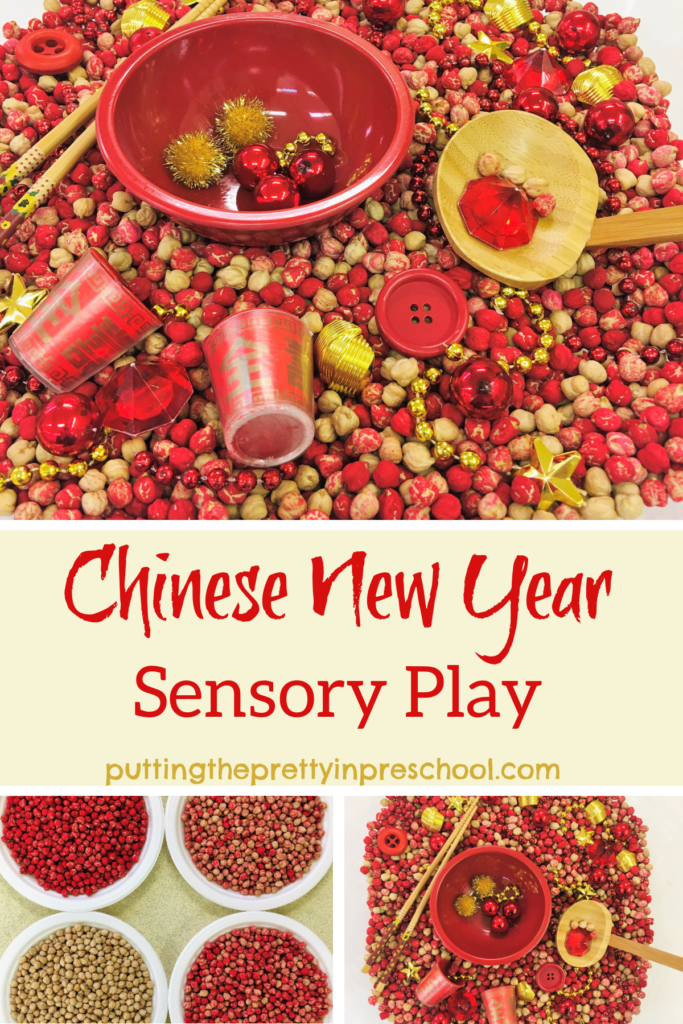
Chinese New Year Sensory Play

January 14, 2021 by Annette Kaminsky Leave a Comment

Tweet
Share
Share
Pin
Chinese New Year sensory tub with red and gold accessories in a dyed chickpea base.

_______

Have you ever dyed chickpeas? I finally gave it a try, and it is soooo addicting! I made the first batch red to use for Chinese New Year sensory play.

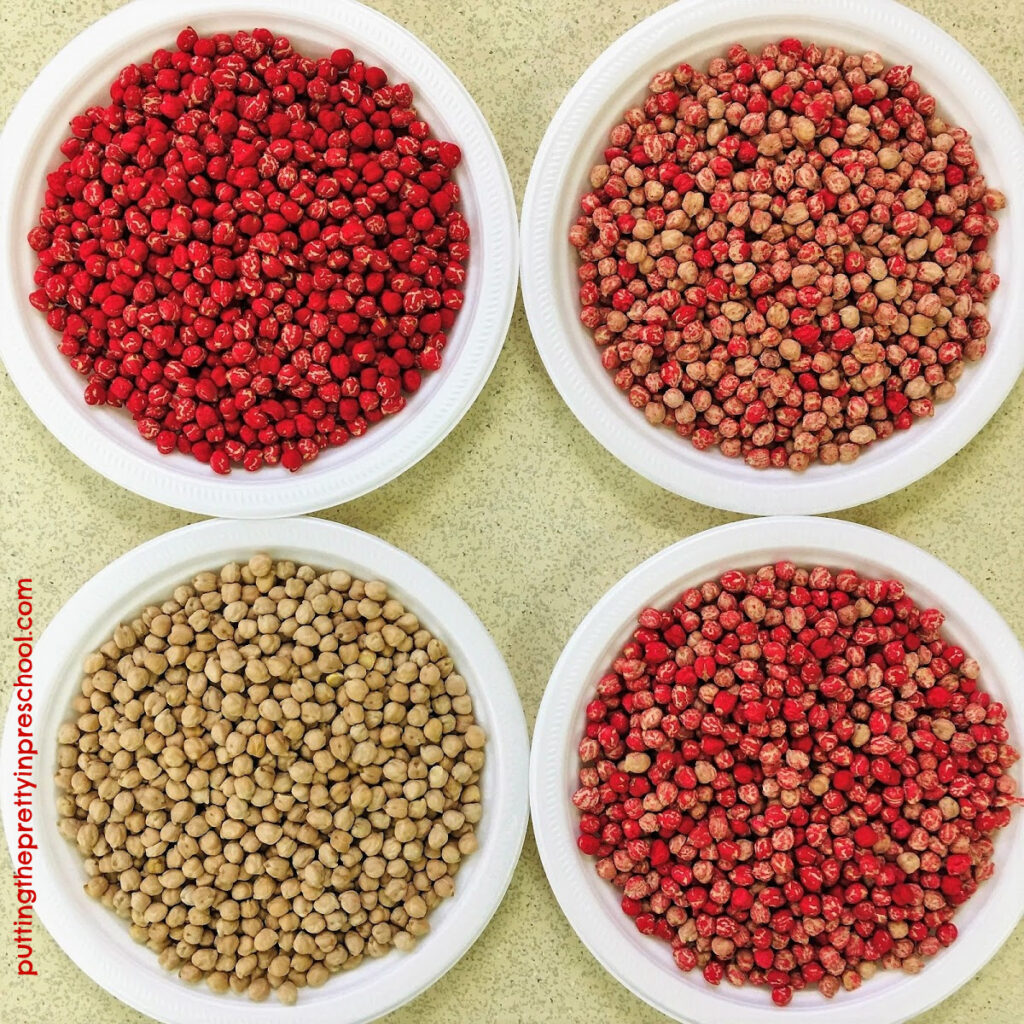
In experimenting, I thought the chickpeas looked nice in a combination of dark red, speckled red, and natural hues. All deep red chickpeas seemed overpowering in the sensory tub.

Chickpeas dyed with varying amounts of red acrylic paint.

_______

How To Dye Chickpeas

A quick and easy way to dye chickpeas is with acrylic craft paint.

Supplies to collect:

  • large bag of chickpeas
  • red acrylic craft paint
  • measuring cup
  • tablespoon
  • large sandwich bags
  • plates or trays

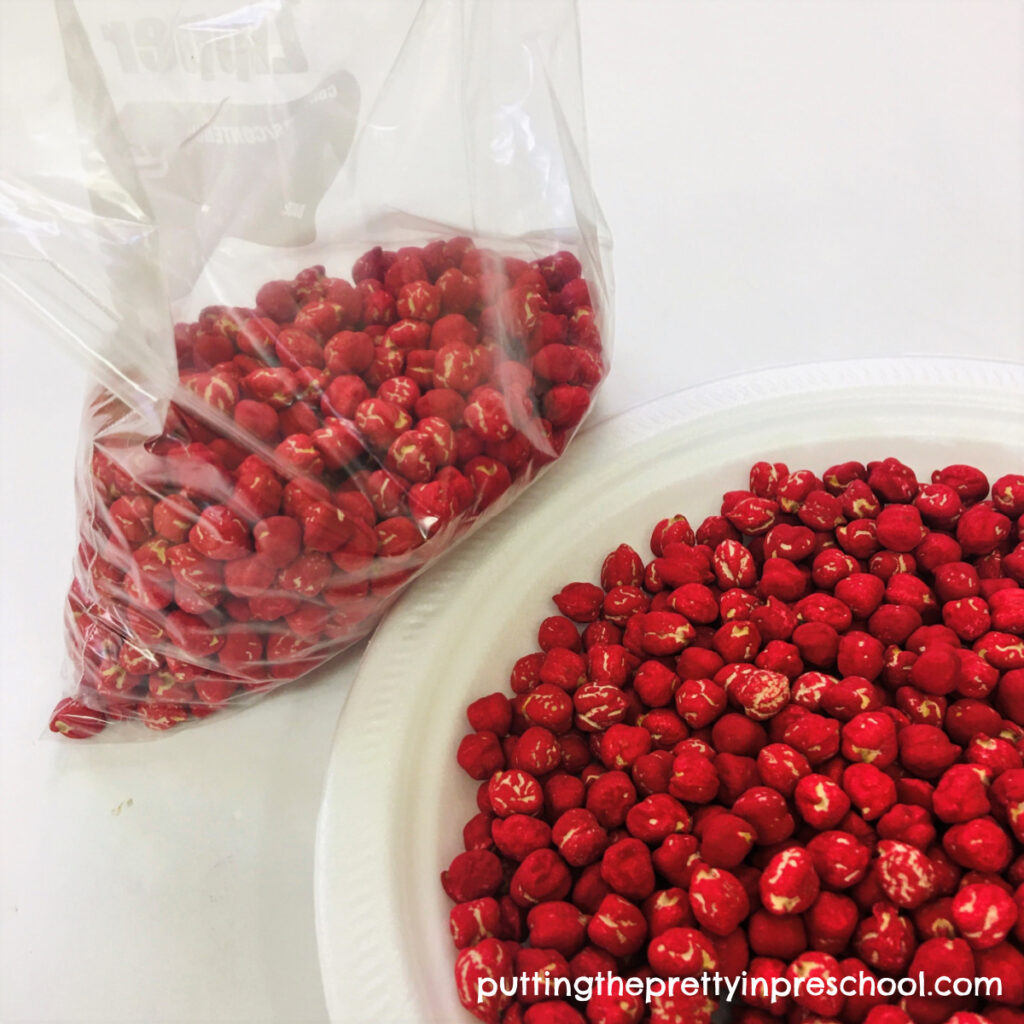
Scoop one cup of chickpeas into a large sandwich bag. Add a tablespoon of red acrylic craft paint. Seal the bag well and knead the chickpeas for a few minutes until they are covered in paint.

Open the bag and set it on a table. After ten minutes, pour the chickpeas onto a tray or plate. They will be completely dry in another ten minutes.

Chickpeas dyed with red acrylic paint for sensory play.

_______

To get a speckled paint look, add half a tablespoon of paint to one cup of bagged chickpeas and knead well. Repeat the drying process.

Then color a cup of chickpeas with one-quarter tablespoon paint.

Leave some chickpeas undyed. This will give you four color varieties to add to a tub or bin for Chinese New Year sensory play.

To have enough chickpeas for a group sensory tub, dye more of them!

Note: Acrylic paint washes off hands, tables, dishware, and cutlery easily. If it spatters onto your clothes, wipe the paint off with a wet cloth before washing.

_______

Chinese New Year Sensory Tub

The tub for this sensory activity is a tulip-shaped punch bowl! Up to four children can gather around it to explore the contents. But a bin in any shape will work fine.

You can add undyed chickpeas, all red chickpeas, or chickpeas dyed with different amounts of red paint to the tub. Then look for gold and red items to include.

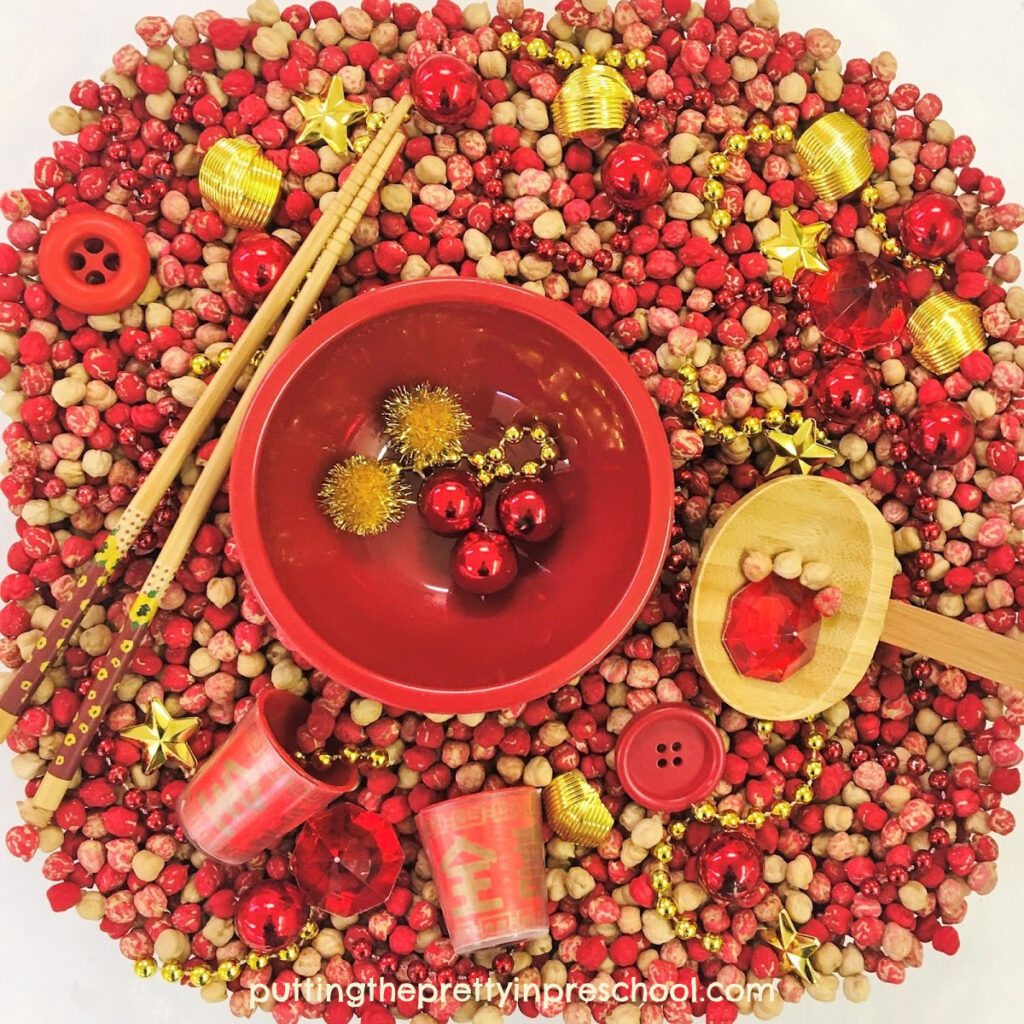
Red and gold accessories complement this chickpea-based Chinese New Year sensory tub.

_______

This tulip-shaped, chickpea-based tub holds:

  • chickpeas infused with varying amounts of red paint
  • red and gold buttons
  • gold stars
  • metallic gold pompoms
  • gold and red bead garland strips
  • red diamond acrylic gems
  • wooden ladle
  • red bowl
  • chopsticks
  • small cups with Chinese calligraphy
A chickpea-based Chinese New Year sensory bin.

_______

Your early learners will love scooping, pouring, and manipulating the red and gold pieces in this Chinese New Year sensory play invitation.

Dyed chickpeas in a tulip-shaped punch bowl with red and gold accessories.

_______

[Read more…] about Chinese New Year Sensory Play
Tweet
Share
Share
Pin

Filed Under: Chinese New Year, preschool, science, sensory Tagged With: chickpeas, Chinese New Year, sensory bin

Color Explosion Science Experiment
January 1, 2021 by Annette Kaminsky Leave a Comment

Tweet
Share
Share
Pin
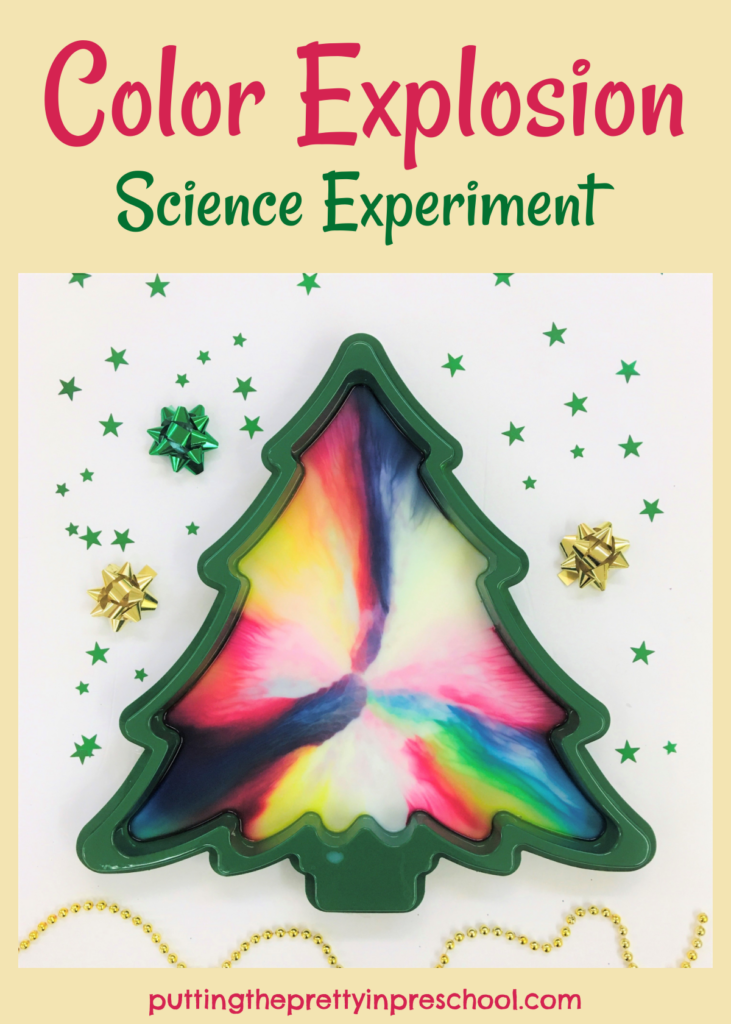
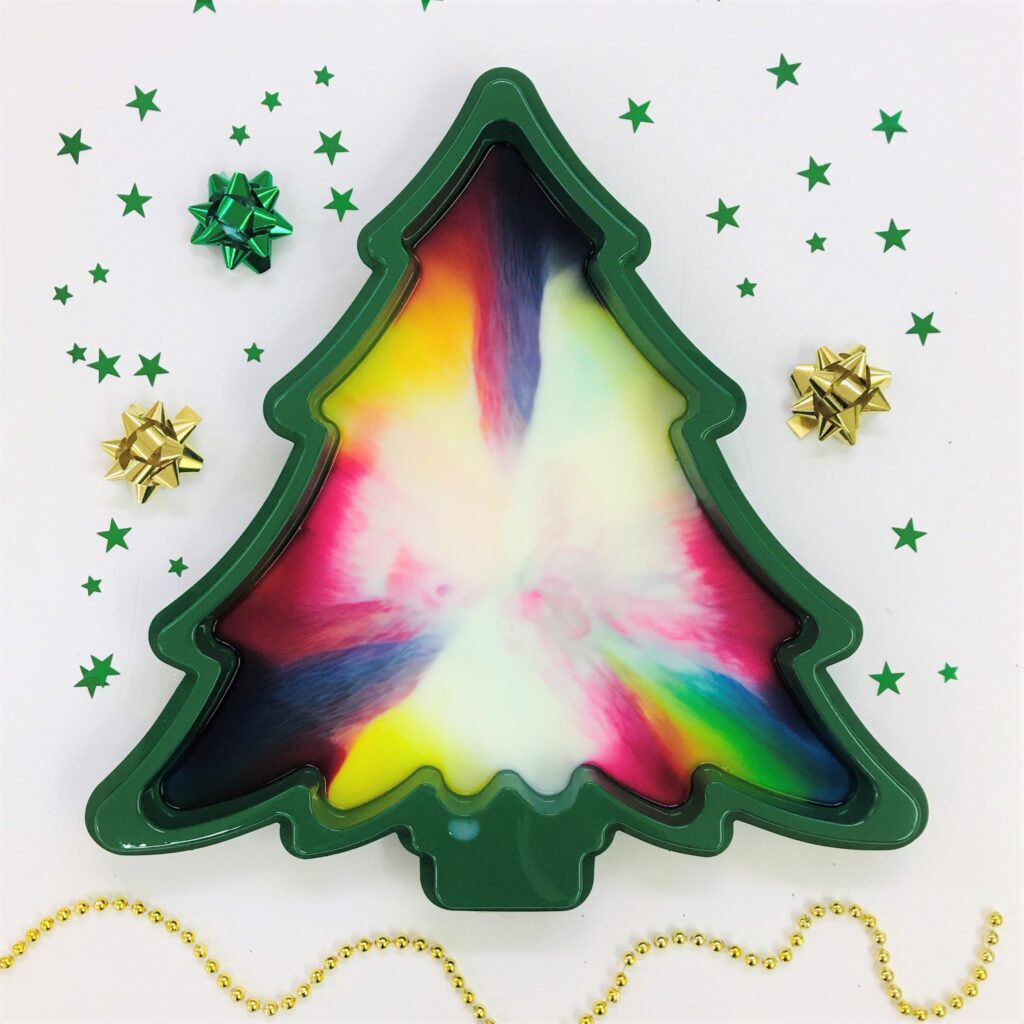
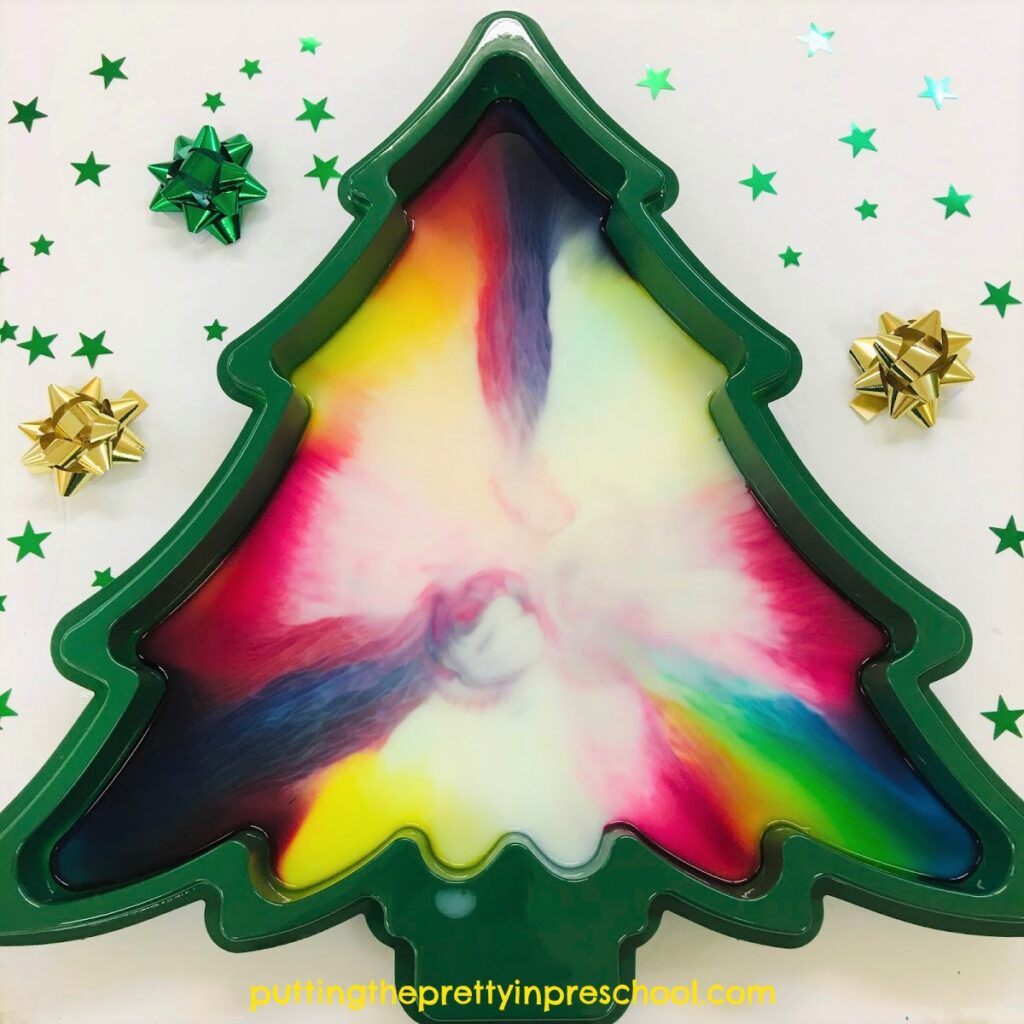
A simple color explosion science experiment with dramatic results. Just three kitchen supplies are needed to carry out this experiment.

_______

This dramatic color explosion science experiment is one of the simplest ones you will find. It uses ingredients you probably have in your home, is easy to set up, and shows stunning, instant results.

_______

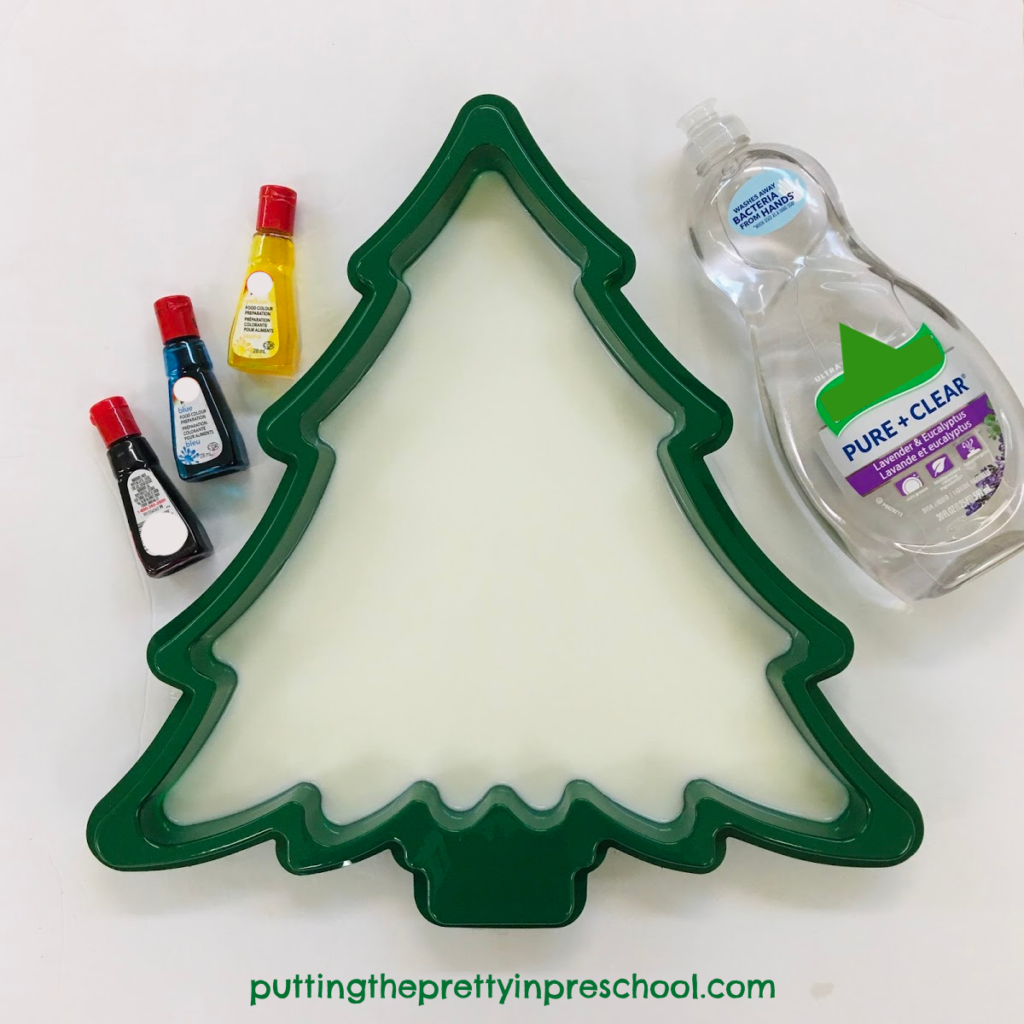
Supplies To Collect

  • serving tray
  • milk
  • food coloring (1 – 4 colors)
  • liquid dish soap
Kitchen supplies to carry out the color explosion milk experiment.

_______

Conducting The Experiment
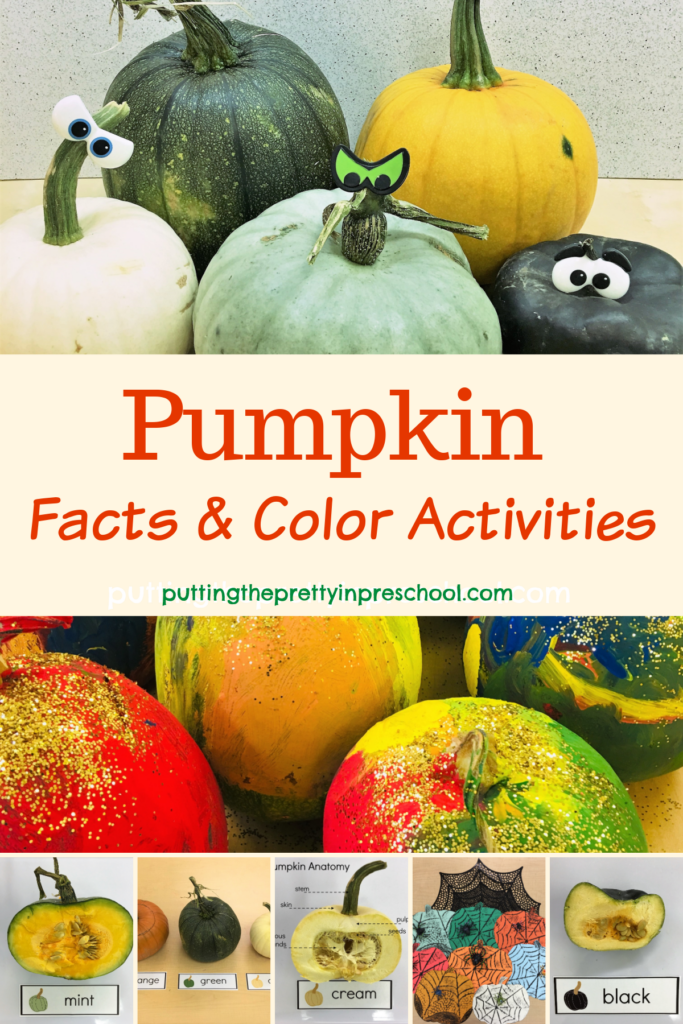
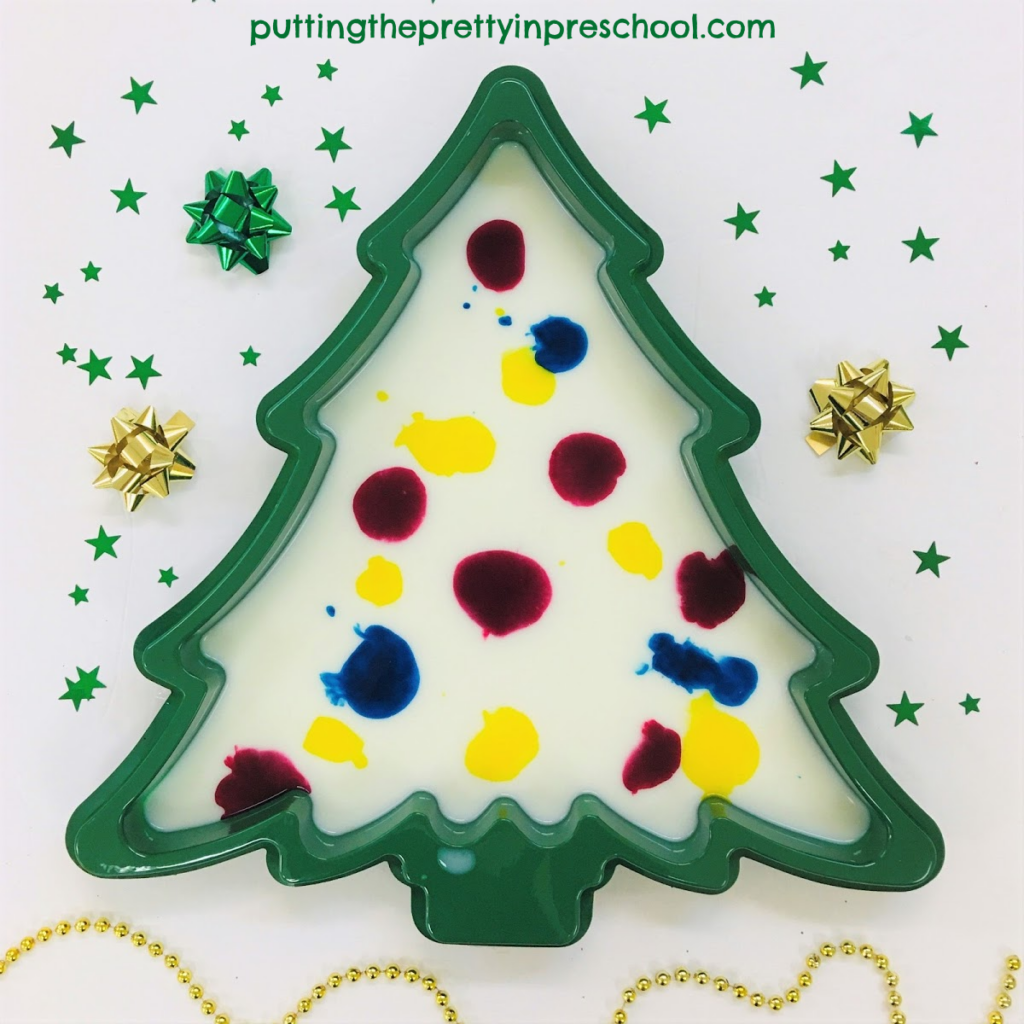
Pour a thin layer of milk into a serving tray placed on a table. I use an inexpensive 12-inch x 12-inch tree-shaped vegetable tray to add interest to the experiment. About three cups of milk will provide a nice layer in a serving tray this size.

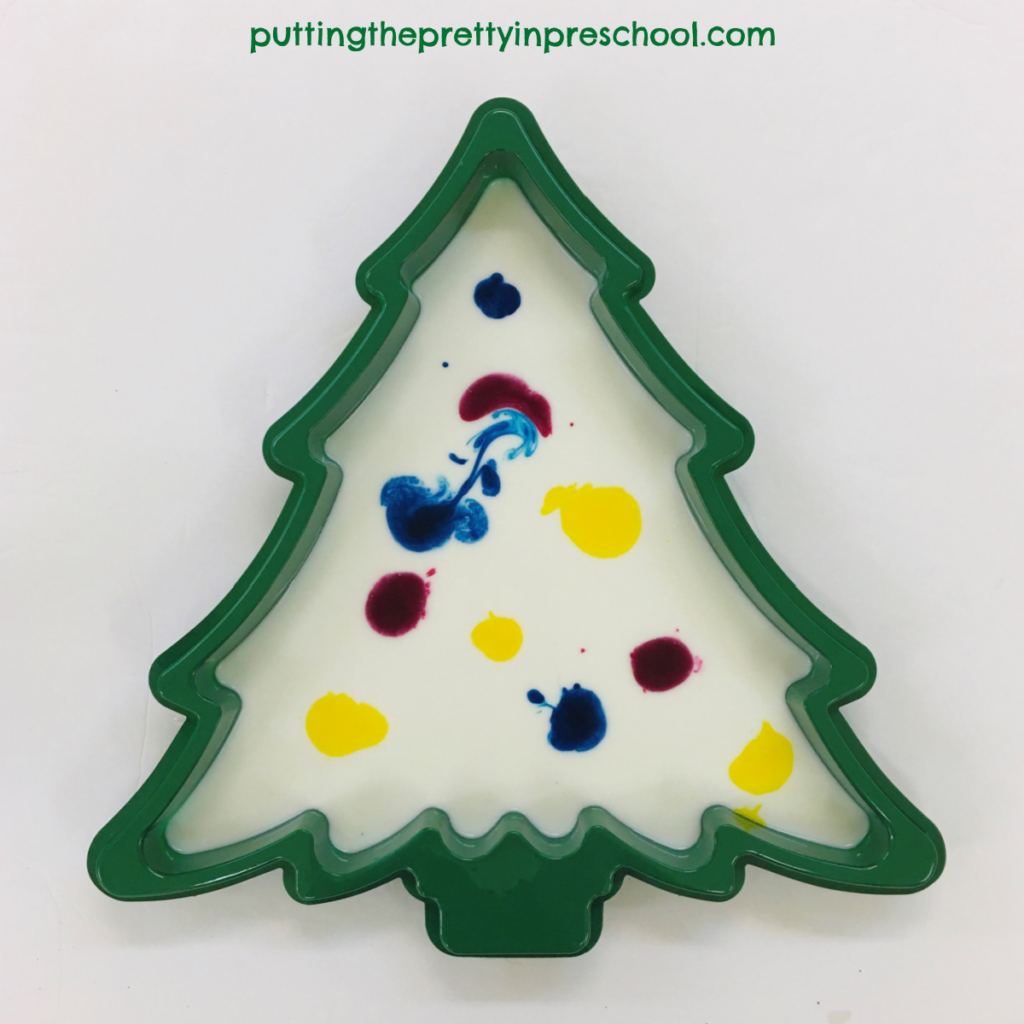
Squeeze drops of food coloring in different parts of the tray. Use one, two, three, or even four colors. Primary colors work well.

Squirt a little dish soap in a few color pools.

_______

Pools of food coloring in the color explosion milk experiment.

_______

The food coloring immediately explodes to the tray edges, blending and making new colors.

Try adding a bit more food coloring, and one more squirt of dish soap. I add a little more blue, red, and yellow to the bottom right section because most of the color has moved to other areas of the tray. I squirt a tad more soap on top. There isn’t a noticeable change right away. In fact, after the initial color burst, nothing much seems to happen.

A second dose of food coloring and dish detergent are added in this color explosion milk experiment.

_______

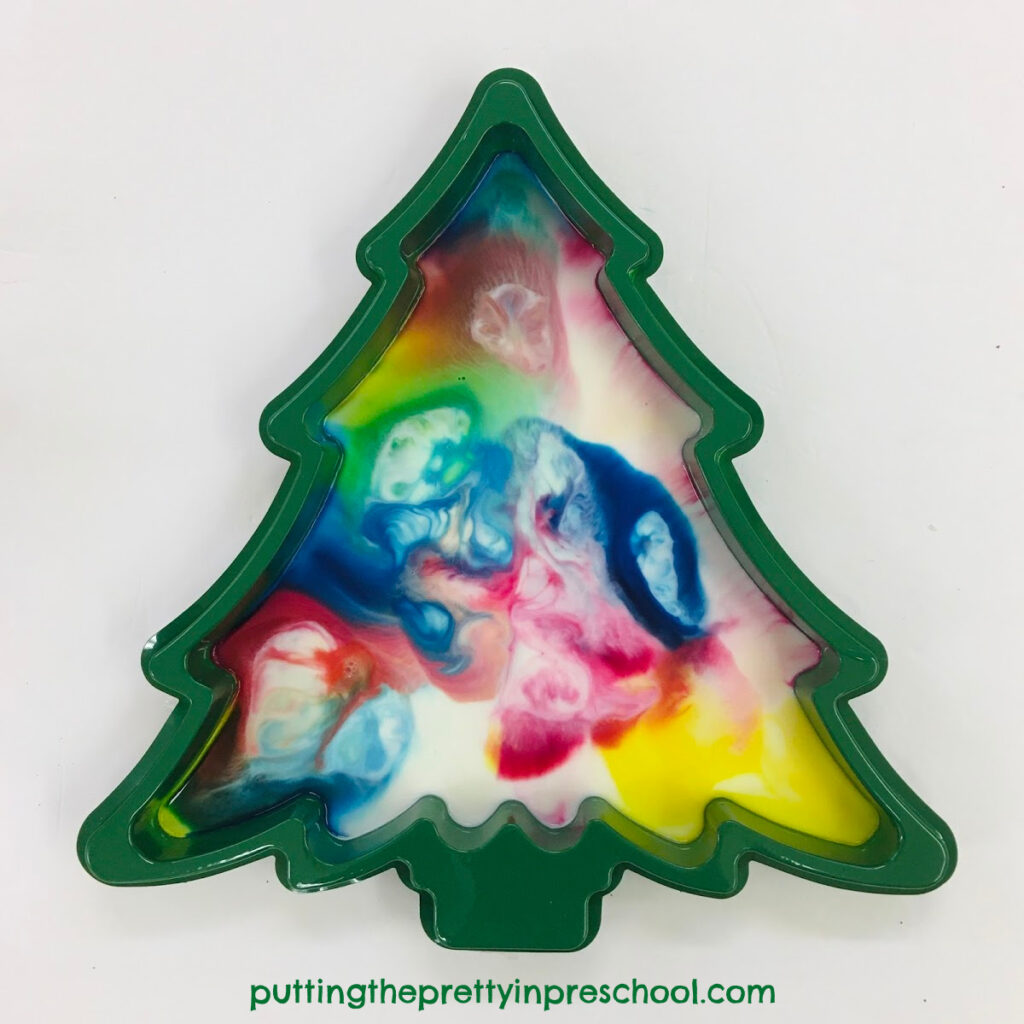
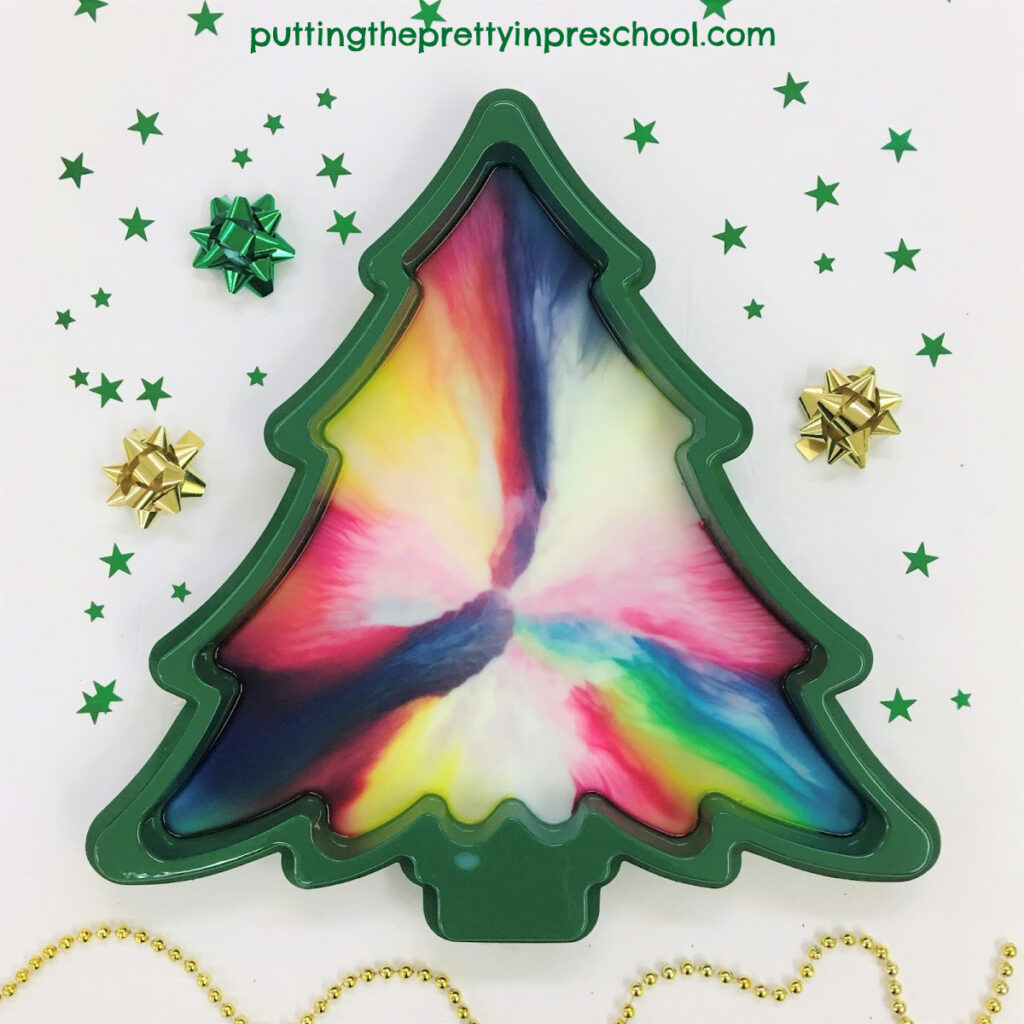
But wait! The experiment doesn’t end here. Leave the tray on the table undisturbed, and check back a few times over the next half-hour. The food coloring slowly moves through the milk and fills the tray.
Each time you look, new color designs are visible on the surface of the milk.

A monster appears in this color explosion milk experiment.

_______

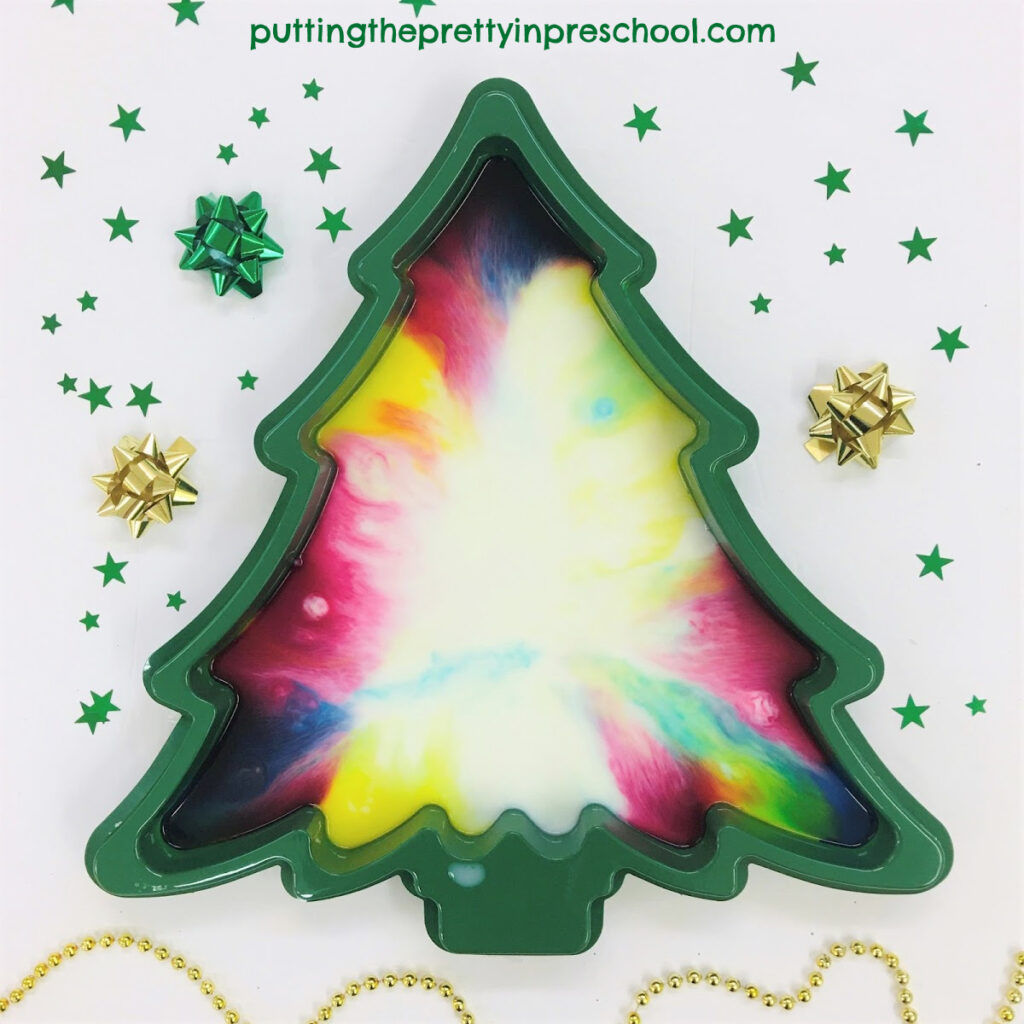
Gradually, the whole tray is color-infused.

Red, blue, yellow, and green colors fill the tray in this color explosion milk experiment.

_______

This color explosion science experiment is perfect for introducing to a group of early learners. At preschool, I like to set it out just before snack time and have students take a second look at what has happened after they are done eating. Then everyone has another look at the tray just before going home.
_______

Related: Pumpkin Color Changing Milk Experiment
_______

Color Explosion Experiment Take Two
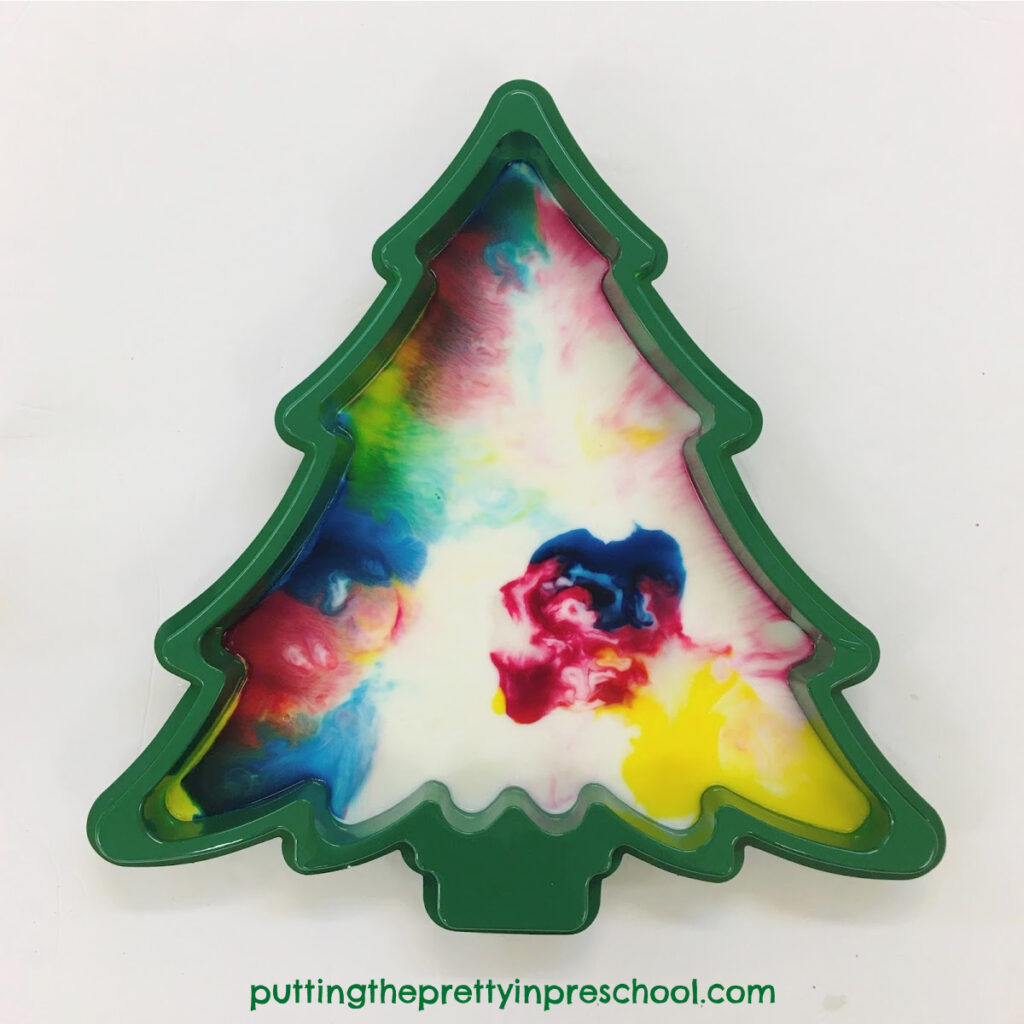
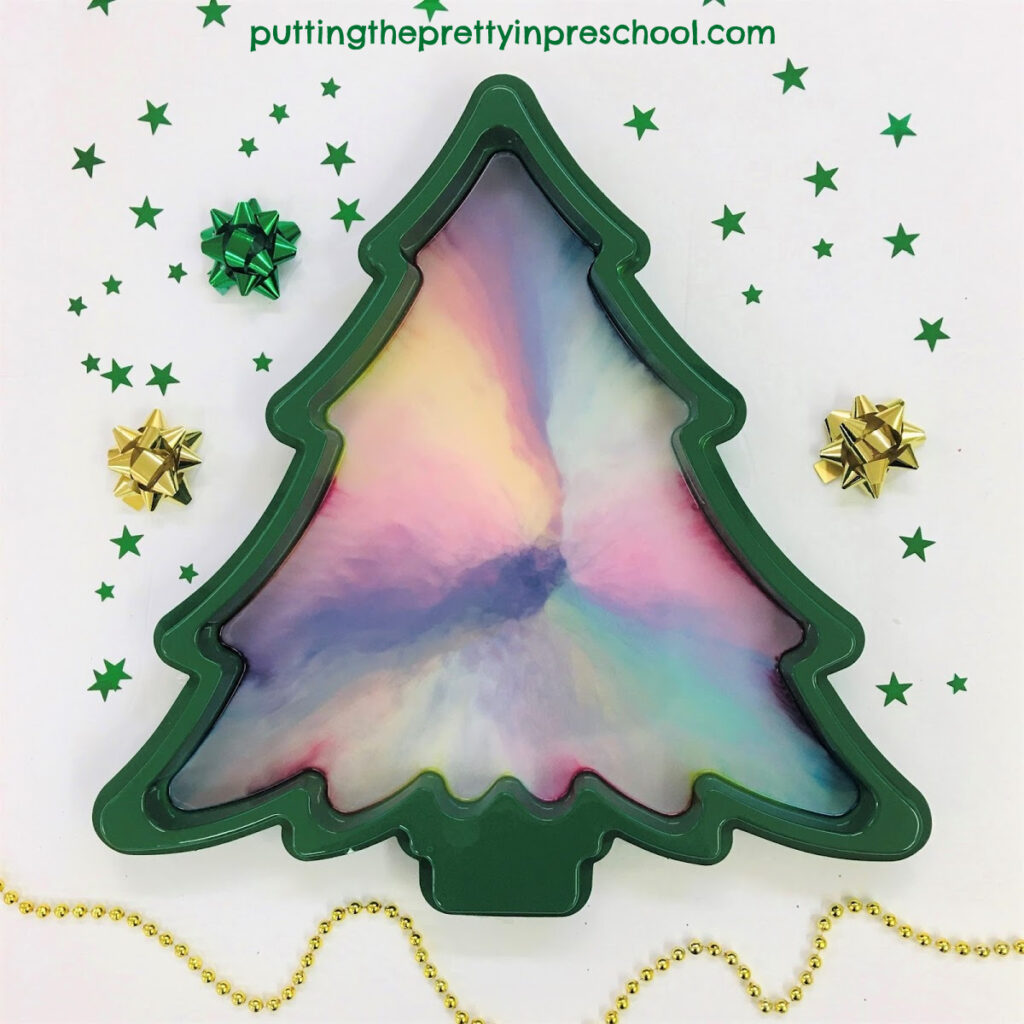
In the above demonstration of the science project, I use 2% milk. Below, I show the results of the same experiment done with 1% milk. This time I add drops of color and a squirt of dish soap only once. The food coloring added is generous.
Food coloring pools in the color explosion milk experiment.

_______

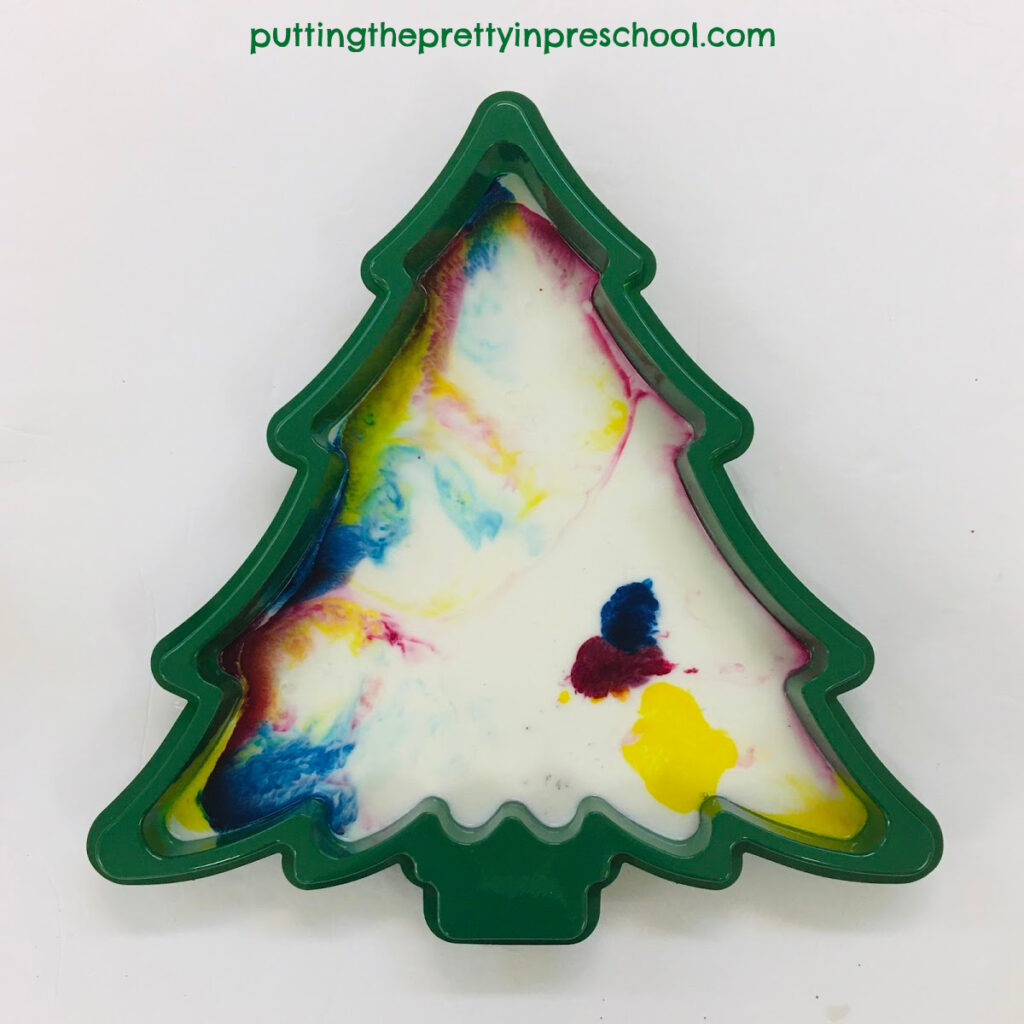
In checking back in ten minutes after the initial explosion, the color has moved away from the edge of the tray towards the center.

Bright colors start to spread from the edges of the tray in this color explosion milk experiment.

_______

In twenty minutes the tray looks like this:

Color spreads on the surface of a milk filled tray after dish detergent and fat molecules bond. The food coloring shows the movement of the molecules.
_______

The colors spread further.

Bright colors take over in this color explosion milk experiment.

_______

Finally, they settle in pastel shades.

Pastel colors settle in this color explosion milk experiment.

_______

Tip: Save milk that has expired for this experiment. I successfully use milk five weeks past the expiration day for this second demo.

_______

The Science Behind The Color Explosion Experiment
Although milk is made of mostly water, it also contains fat and protein. These are both sensitive to changes in the milk. When dish soap is added to the tray, it breaks up the surface tension of the milk and is attracted to the fat molecules. The fat molecules try to scurry away but end up bonded with the soap molecules. The movement of the food coloring makes this process visible. As more and more soap and fat molecules bond, the color movement slows down and eventually stops.
Since fat content in milk is super important in this experiment, homo milk works the best. But as seen above, 2% and 1% milk (which I had handy) also show stunning results.

Color-changing experiment using milk, food coloring, and dish detergent.

_______

[Read more…] about Color Explosion Science Experiment
Tweet
Share
Share
Pin

Filed Under: Christmas, preschool, science, sensory, trees Tagged With: colors, experiment, trees

Pumpkin Color Activities

November 23, 2020 by Annette Kaminsky Leave a Comment

Tweet
Share
Share
Pin
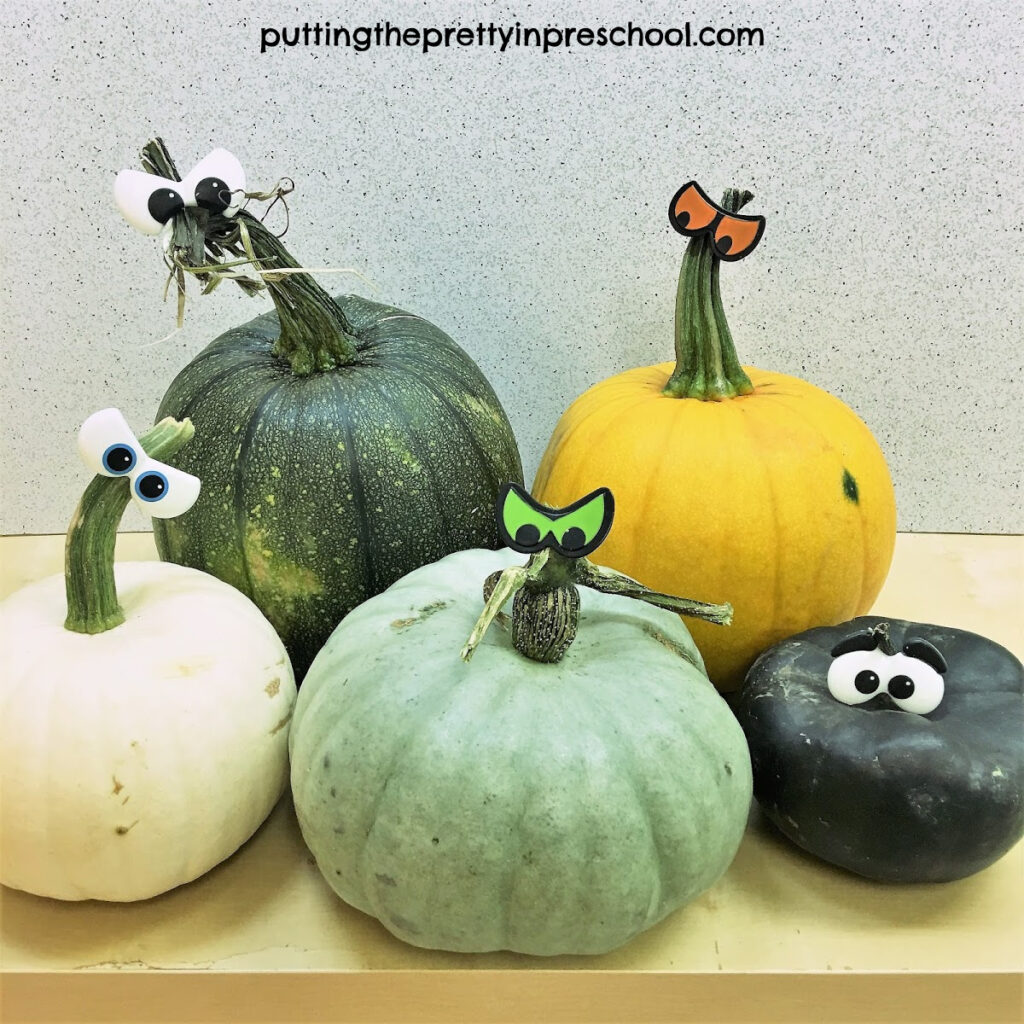
Pumpkin facts and color activities. Anatomy, color matching, and art activities.

_______

Although orange pumpkins are traditional, and most grocery stores focus on selling them, these dramatic fruits come in many other hues. Diversely colored pumpkins can be scouted out at farmer’s markets and garden centers in autumn. They are intriguing in pumpkin color activities for little learners.

_______

Pumpkin Display

First, set out pumpkins on a shelf for little ones to view. The contrasting colors make a striking display. Discuss pumpkin color, size, shape, and texture.

Pumpkins in mint, cream, black, yellow, and green colors.

_______

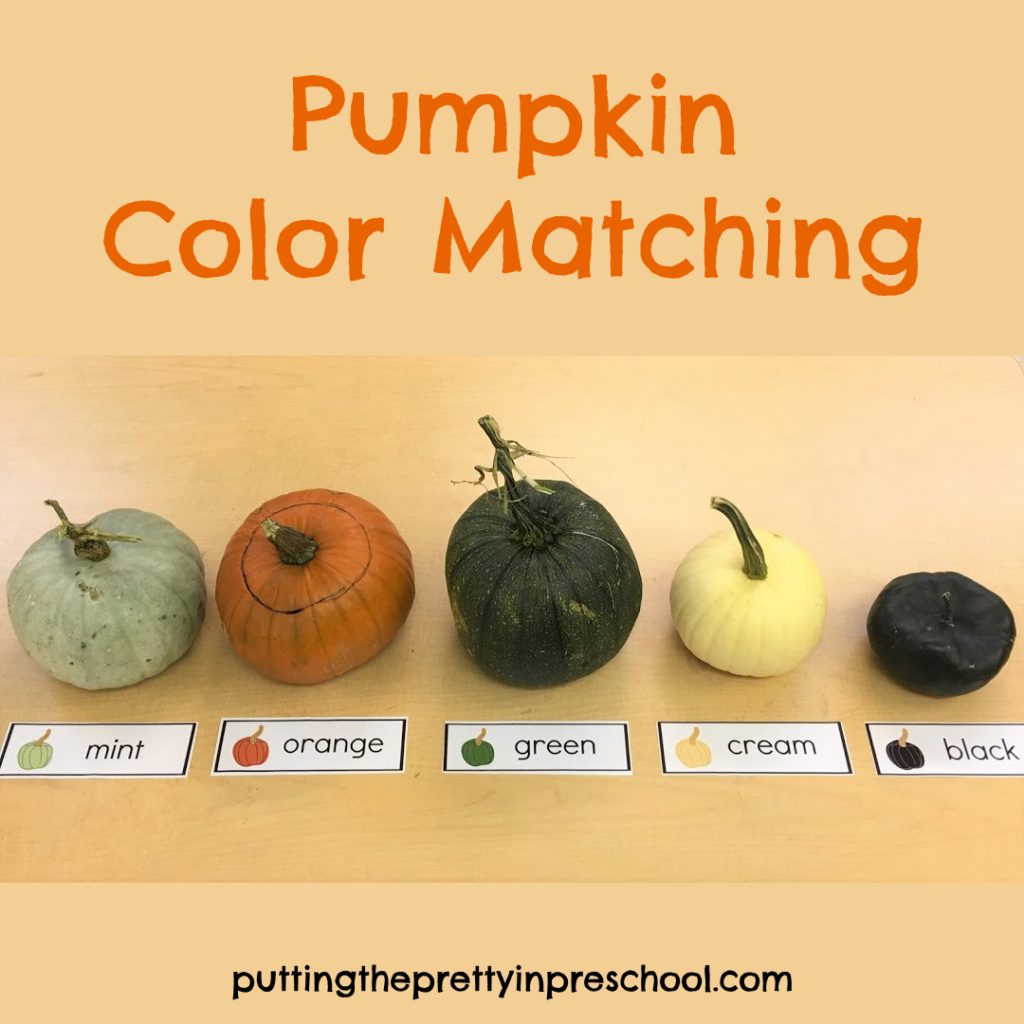
Color Matching

Move the pumpkins to a table and invite early learners to add color words.

Color matching with mint, orange, green, cream, and black pumpkins.

_______

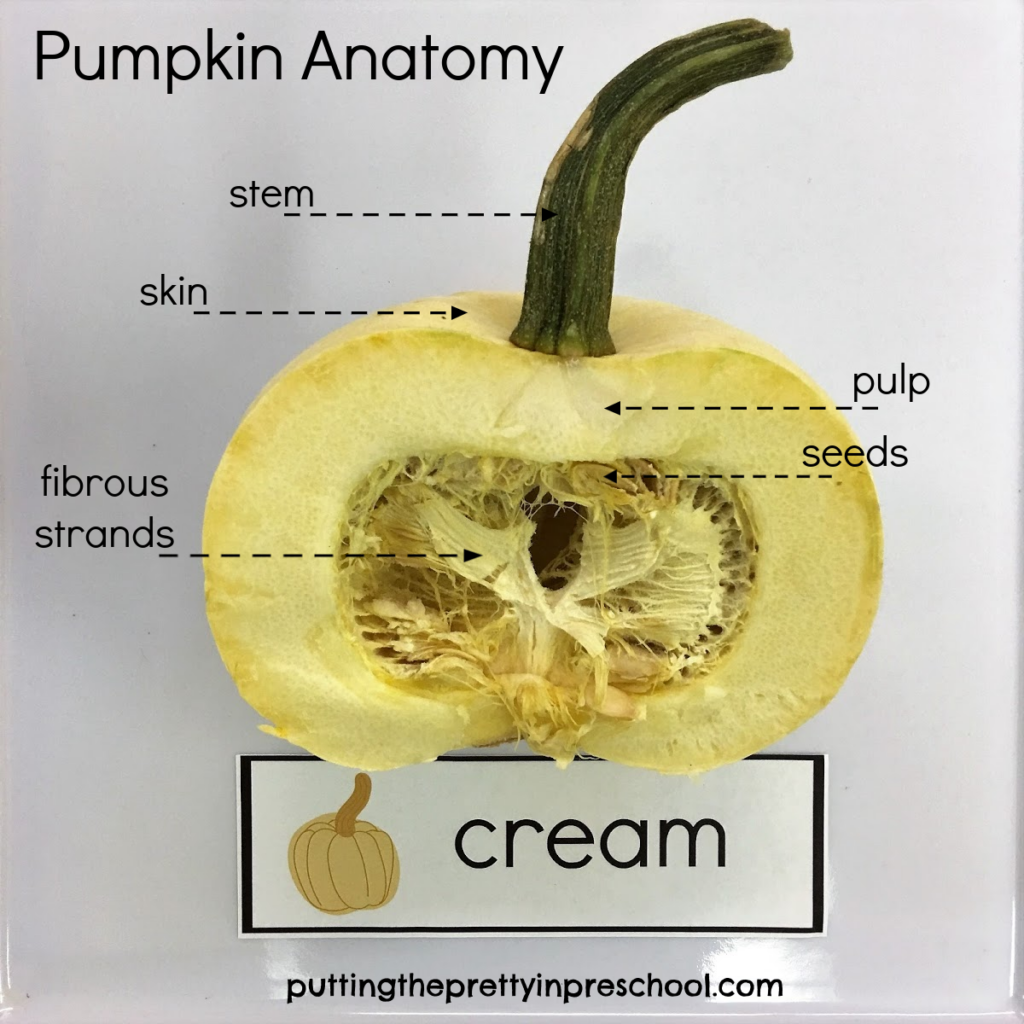
Pumpkin Anatomy

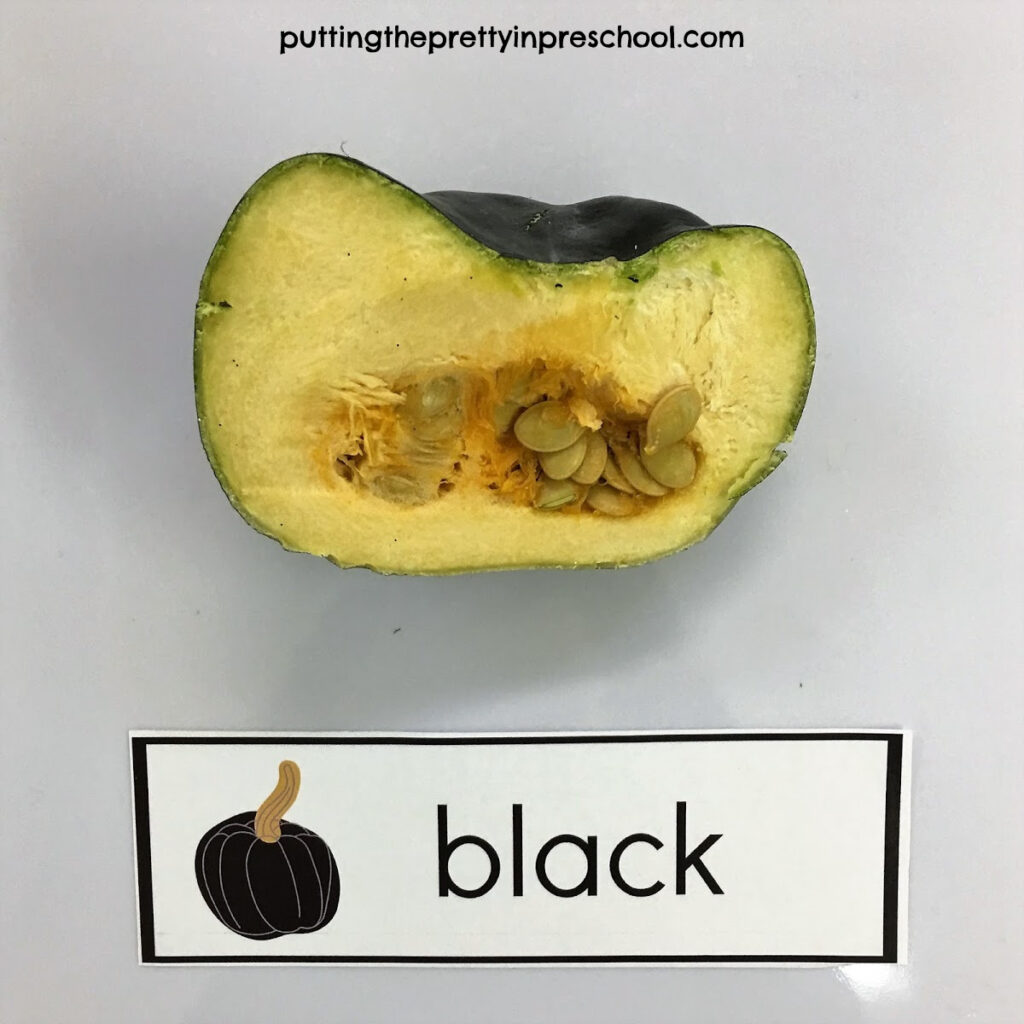
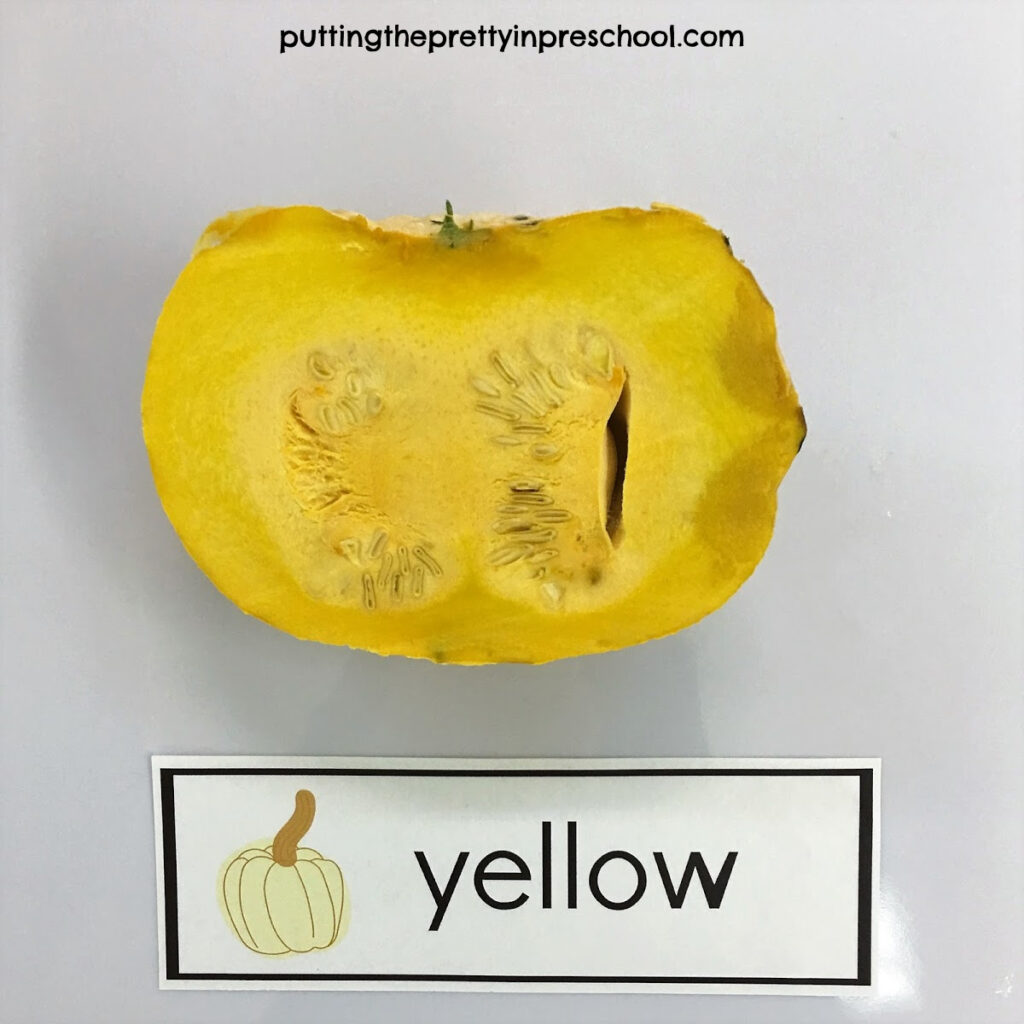
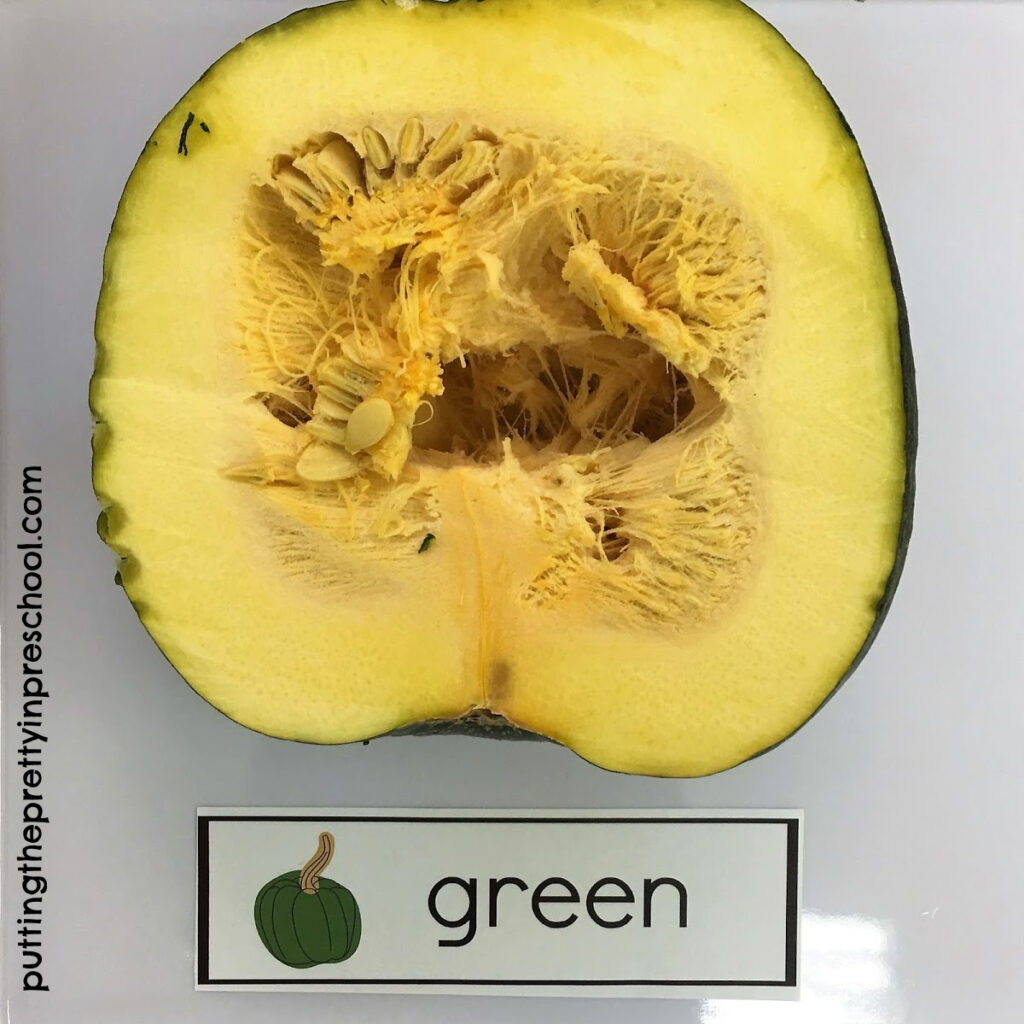
Display a cross-section of each variety collected, and talk about pumpkin anatomy.

Pumpkin anatomy diagram showing the stem, skin, pulp, seeds, and fibrous strands.

_______

Notice that some pumpkins have larger cavities than others, and certain pumpkins contain more seeds. Study flesh colors together, and invite little learners to feel the pumpkin insides.

Black pumpkin cross-section showing pulp and seeds.

_______

Yellow pumpkin showing pulp and seeds.

_______

Green pumpkin showing pulp and seeds.

_______

Spider Web Crayon Rubbings

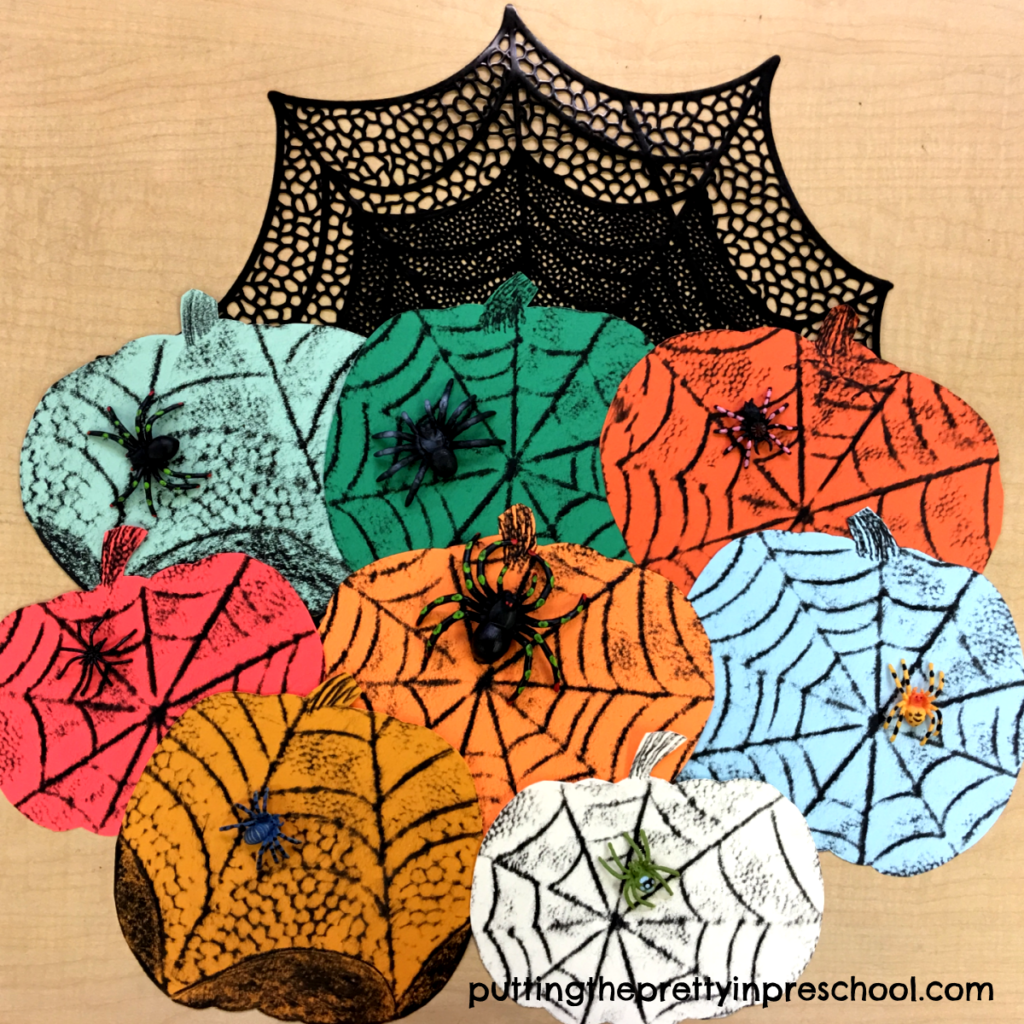
Have children do a spider web crayon rubbing on a uniquely colored paper pumpkin. A few spiders hanging around add excitement to the activity.

Crayon rubbings of spider webs on colored pumpkins. An all-ages art activity.

_______

Pumpkin Painting

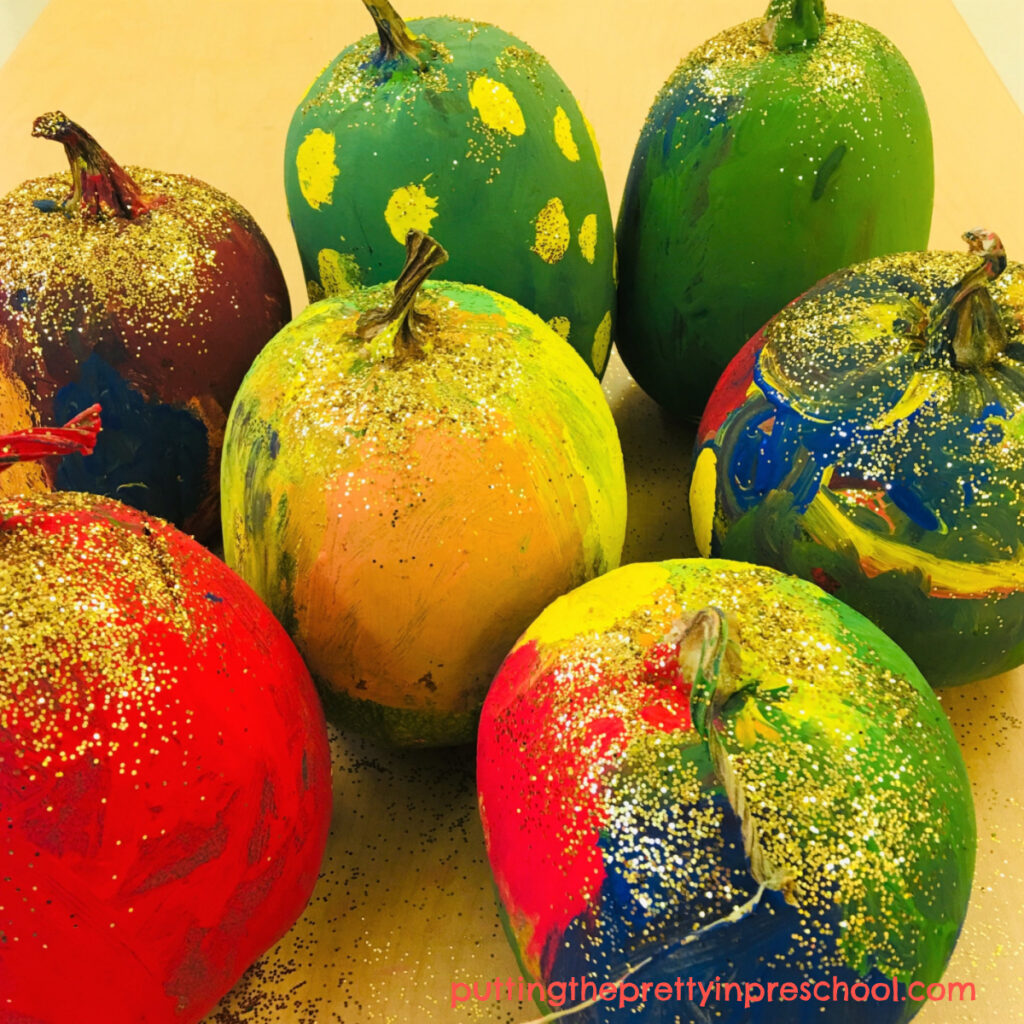
Offer tempera paint for little ones to slather on a small pumpkin. Have everyone generously sprinkle on gold glitter for a finishing touch. The decorated pumpkins make showy take-home art, perfect for displaying on front steps or a porch.

Tempera painted pumpkins sprinkled with gold glitter.

_______

10 Fast Pumpkin Facts

  • Pumpkins are native to Mexico but have been embraced all over the world.
  • Pumpkin harvest season peaks in October.
  • Pumpkins come in various shades of orange, but can also be white, black, deep green, light green, yellow, blue, soft pink, cream, striped, or speckled.
  • Uniquely colored pumpkins have different purposes. White pumpkins are perfect for art projects.
  • Cinderella, Blue Doll, Baby Bear, Crystal Star, and Midnight Black are some of many creative pumpkin names.
  • Some pumpkins are smooth. Others feel rough and may have warts.
  • The world’s heaviest pumpkin weighed 2323 pounds.
  • Water makes up 90% of pumpkins.
  • Pumpkins are treated as a vegetable in many recipes but are actually a fruit.
  • Pumpkins are a source of vitamin A, C, and E, and zinc, folate, potassium, and fiber. They contain antioxidants.

_______

Pumpkin Vocabulary List

Download a list of pumpkin vocabulary words to use with your early learners.

Pumpkin Vocabulary ListDownload

_______

To get more ideas for pumpkin color activities, view a slideshow from Better Homes And Gardens entitled: Types Of Pumpkins.

_______

_______

Thanksgiving Printables

Shop Thanksgiving printables in my Etsy shop “Skills N Smiles“:

_______

_______

More Pumpkin Activities

Eye Dropper Pumpkin Art

Pumpkin Painting Process Art

Pumpkin Tablescape Pretend Play

Edible Playdough Pumpkins

Pumpkin Playdough Activities

Pumpkin Collage Art

_______

[Read more…] about Pumpkin Color Activities
Tweet
Share
Share
Pin

Filed Under: art, autumn, display, fall, literacy, preschool, science, sensory, Thanksgiving Day Tagged With: colors, painting, pumpkins, Thanksgiving Day

Beet Science And Sensory Activities

November 22, 2020 by Annette Kaminsky Leave a Comment

Tweet
Share
Share
Pin
Beet science and sensory activities. Beet washing station, ordering beets by size, and growing new greens and roots. Links to two festive recipes.

_______

This fall at a greenhouse a display of golden beets caught my attention. They weren’t on my list to buy, but I couldn’t stop thinking about them after I got home. So on my next visit to the garden center, I purchased golden beets and a red bunch too. The showy vegetable-inspired beet science and sensory activities can be introduced on the fly.

_______

Beet Washing Station

Set one or both kinds of beets in a tray with water and a vegetable brush. Invite your early learner to scrub the beets to make their color shine.

Beet washing station with red beets.

_______

Red and golden beets in a beet washing station.

_______

Size Ordering With Beets

Encourage your little learner to order golden beets from largest to smallest.

Size ordering golden beets from largest to smallest.

_______

Growing Beet Greens

After removing the greens, set two beets upright in a small, clear bowl of water. In the following days, observe the earthy vegetables with your early learner. You will be amazed to see glossy new beet leaves growing, and a tangle of roots!

Science experiment to see if red beets can grow new greens.

_______

New greens and roots growing on beets placed in a container of water.

_______

Related: Carrot Theme Activities

_______

Beet Recipes

Beets are filled with nutrients such as vitamin C, iron, manganese, folate, and potassium. They are a source of fibre and contain antioxidants that are especially good for the eyes. And… the greens are equally nutritious. After your little one participates in beet science and sensory activities, try the following recipes:

Thanksgiving Beets Recipe

Christmas Beets Recipes

Cooking is science too!

_______

[Read more…] about Beet Science And Sensory Activities
Tweet
Share
Share
Pin

Filed Under: autumn, fall, gardening, preschool, science, sensory, Thanksgiving Day Tagged With: beets, Christmas, measurement, Thanksgiving Day

Fall Scissor Skills Activities

November 12, 2020 by Annette Kaminsky Leave a Comment

Tweet
Share
Share
Pin
Fall scissor skills activities with invitations to cut textured craft supplies for a pumpkin collage or a forest sensory tray.

_______

One of the things preschoolers are most excited about when starting school in the fall is using scissors. It’s an activity many early learners have not yet had exposure to, so they are delighted to have permission to cut. Offering beautiful materials with unique textures enhances fall scissor skills activities.

_______

Fall Scissor Skills Supplies

Collect art supplies in yellow, orange, red, and brown hues, and sort them into a tray with compartments.

Fall scissor skills tray with red, yellow, orange, and brown craft supplies. Invitation to cut materials for collage or a sensory base.

_______

Gathered for this tray are:

  • feathers (yellow, orange, red, and brown)
  • fluffy yarn
  • yellow and orange foam pieces
  • brown tissue paper
  • red straws
  • fade-resistant construction paper in fall colors
  • orange crepe paper
  • red thin ribbon
  • gold thick ribbon
  • orange and yellow pom poms

Round up fall-colored craft supplies you have available for your little learners to cut. Leftover scraps from other crafts are perfect for this activity.

After your charges have had a blissful session of cutting craft supplies into bits, store them in a resealable plastic bag or covered container to use as a base in sensory trays.

Snipped craft supplies for a fall sensory tray base.

_______

Forest Sensory Tray

The cuttings make a rich base for a fall forest-themed sensory tray. Rocks, pine cone trees, and forest animals round out this inviting tray for your little ones to explore.

Forest sensory tray with a craft supply base. Rocks, pine cone trees, and forest animals complete the tray.

_______

Related: Scissor Skill Snow Cutting

_______

Fall Scissor Skills Party Tray

Change things up by arranging supplies to cut in a party tray. Fall craft leaves and card cut-outs are the highlights of the tray below.

Scissor skills party tray with fall-themed craft supplies. Invitation to cut materials for collage.

_______

Pumpkin Collage

Energize the offerings with black and green craft scraps. Encourage your early learners to cut shapes and glue them onto a paper pumpkin. The completed collage projects will be striking.

Scissor skills tray with yellow, orange, green, and black craft supplies. Invitation to cut materials for a pumpkin collage craft.

_______

Craft supplies to cut and glue for a pumpkin collage craft.

_______

Pumpkin collage craft with textured green, yellow, orange, and black supplies.

_______

Note: For tips on teaching children to use scissors, view my post “Santa’s Beard Scissor Activity.”

_______

[Read more…] about Fall Scissor Skills Activities
Tweet
Share
Share
Pin

Filed Under: art, fall, preschool, science, sensory Tagged With: fine motor activity, forest, pumpkins, recycled craft

  • « Go to Previous Page
  • Page 1
  • Interim pages omitted …
  • Page 13
  • Page 14
  • Page 15
  • Page 16
  • Page 17
  • Go to Next Page »

Primary Sidebar

Hi, I'm Annette Kaminsky, a preschool teacher who loves sharing learning through play activities for young children. Thanks for visiting my site. Feel free to stay awhile!

Subscribe Via Email

Recent Posts

  • Snowflake Cafe Dramatic Play Set January 19, 2026
  • Pastel Christmas Letterhead and Envelope December 20, 2025
  • December Kindness Activities November 30, 2025
  • Fall Forest Sensory Bin November 30, 2025
  • DIY Turkey Bowling Game November 25, 2025
  • Fall Leaf Crown Paper Crafts November 23, 2025
  • Colors of Fall Sensory Bin October 13, 2025
  • Apple Theme Sensory Tray October 11, 2025
  • Three Dinosaur Sensory Bins September 7, 2025
  • Castle Theme Pretend Play August 26, 2025

Categories

Topics

apples block play bunnies butterflies Chinese New Year Christmas Christmas craft color colors dramatic play Easter fall flowers hearts holiday leaves leprechauns light table loose parts painting paper crafts playdough pretend play printables printmaking process art pumpkins rice bin scented playdough science experiment scissor skills sensory bin sensory play sensory tray shamrocks skeletons snakes snowflakes spiders spring St. Patrick's Day sunflowers tablescapes Valentine's Day water play

Copyright © 2026 · Lifestyle Pro on Genesis Framework · WordPress · Log in