• Skip to secondary menu
  • Skip to main content
  • Skip to primary sidebar

Putting The Pretty In Preschool

Finding Beauty In Everyday Early Childhood Experiences

  • Home
  • About Me
  • Winter
  • Chinese New Year
  • Blog
  • Contact Me
  • Black History Month
  • SHOP
  • Valentine’s Day

sensory

Felt Marker Chromatography Experiment

October 30, 2021 by Annette Kaminsky Leave a Comment

Tweet
Share
Share
Pin

_______

This felt marker chromatography experiment uses supplies from the kitchen, has quick results, and can be tailored to a variety of topics. Creativity and center play are easily incorporated. And the experiment is super family-friendly.

_______

Basic Felt Marker Chromatography Experiment

See what colors felt pens are really made up of with this felt pen chromatography experiment.

_______

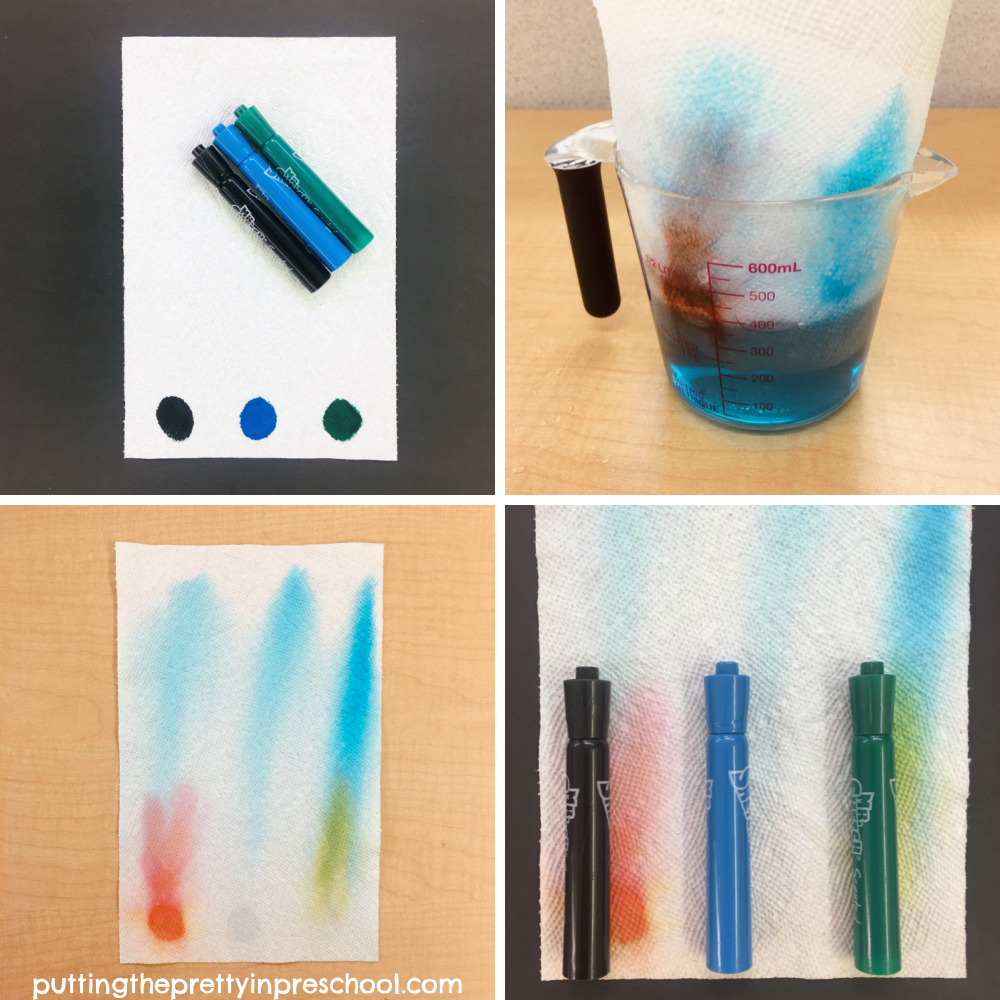
The simplest version of this experiment is to draw three filled-in circles with nonpermanent felt pens near the bottom of a section of paper towel.

Add a thin layer of water with 2.5 ml salt stirred into a measuring cup or jar. Place the towel with the colored side down into the container. The water level should sit just below the felt pen colors.

Simply watch what happens!

After the color movement stops, remove the paper towel from the container and let it dry flat. Discuss the color changes/new color results.

_______

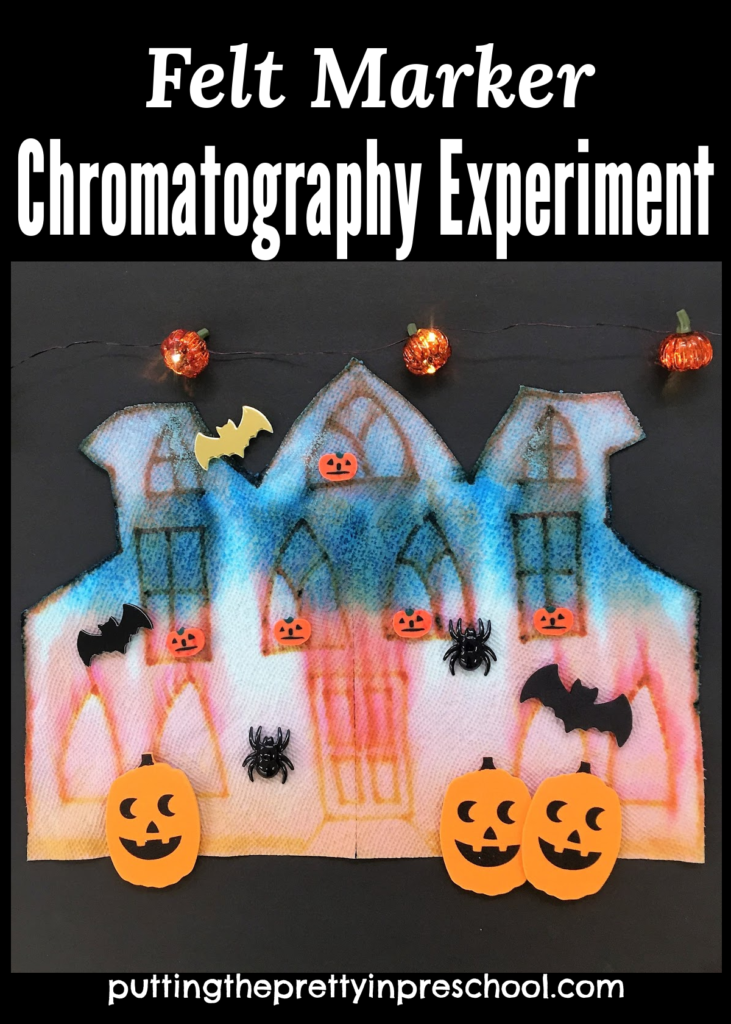
Felt Marker Chromatography Experiment Scary House

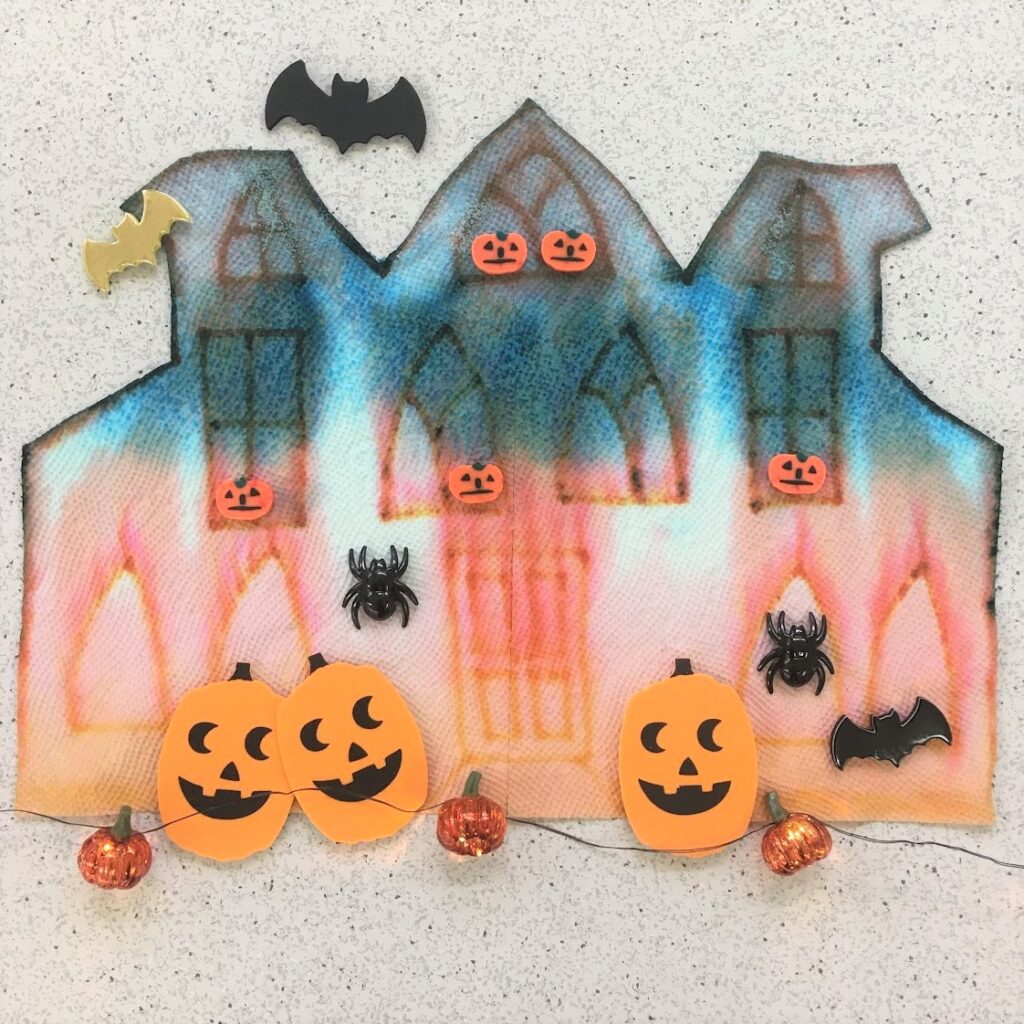
Scary house imaginative play with a felt pen experiment chromatogram.

_______

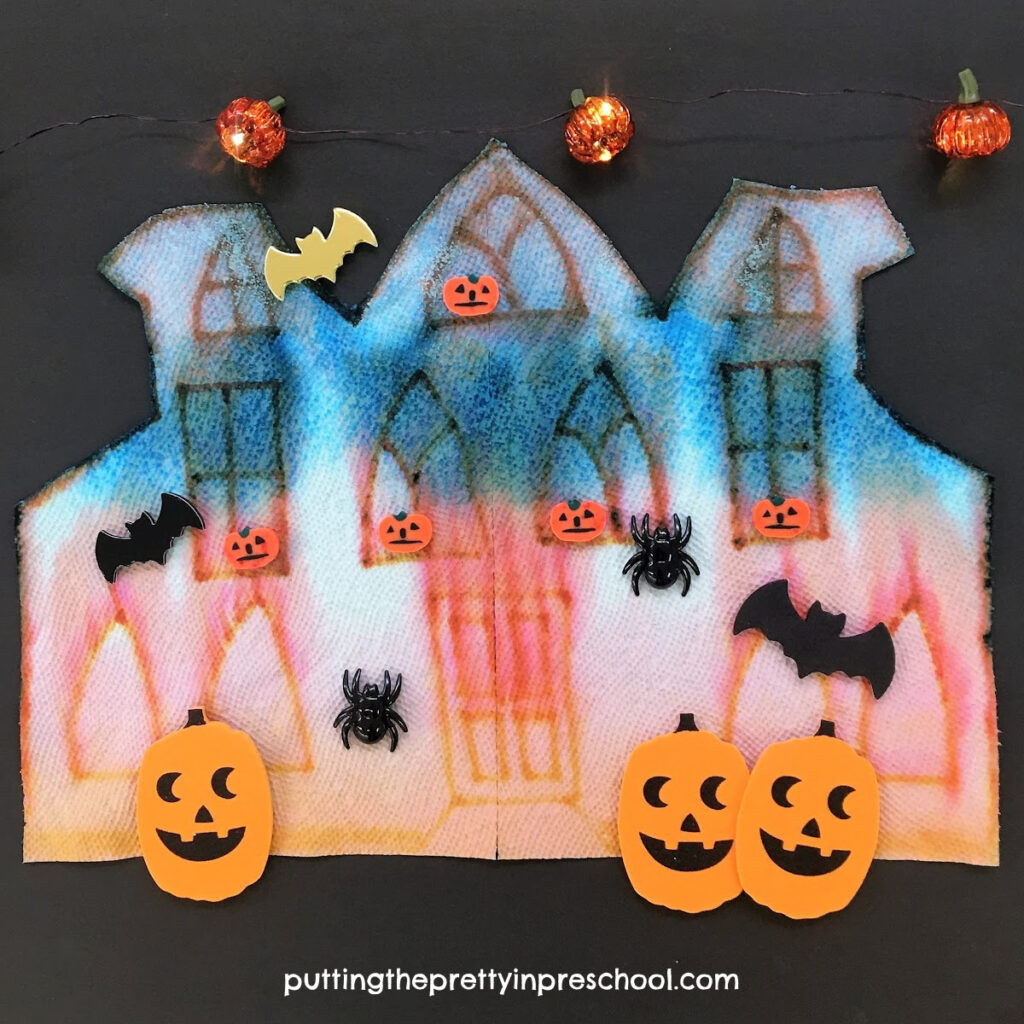
Although I am not into scary things and don’t do much frightening stuff with my preschool students, this version of the experiment produces a house that bats and spiders might like to inhabit. And here’s where the creative element kicks into high gear.

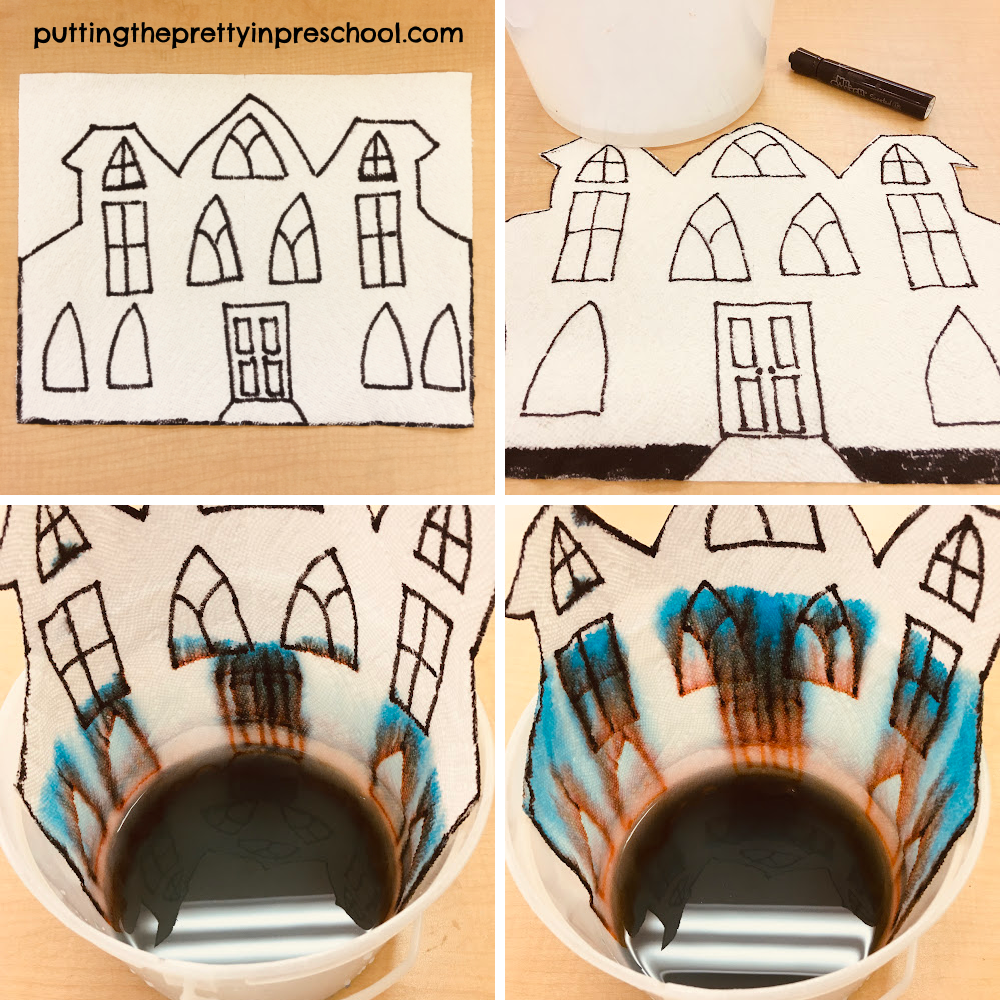
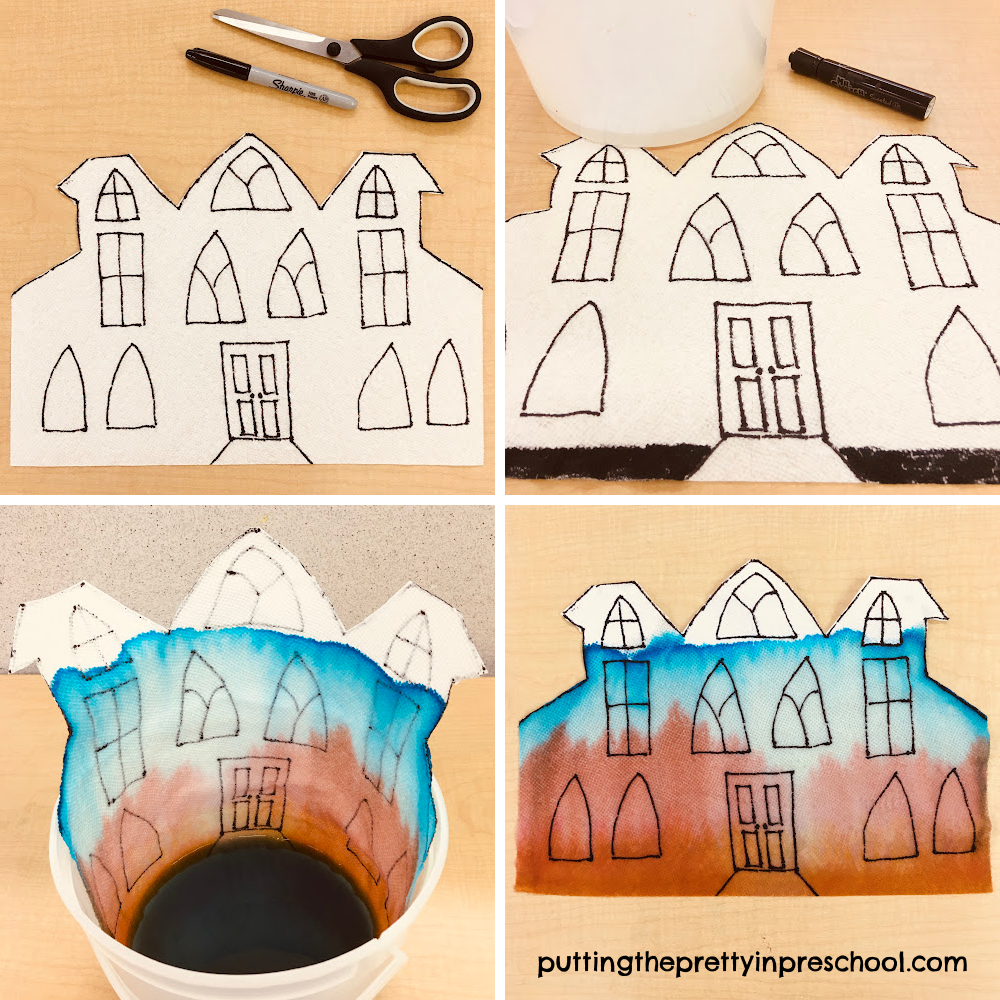
Draw the outline of a house on a paper towel section with a black nonpermanent felt marker. Trim the edges with scissors. Then add a thin line of black to the bottom of the house with the marker. Pour a little water with a bit of salt added into an ice cream pail. Position the paper towel so it reaches the bottom of the pail but does not slide in. Watch the immediate results. Then check back periodically to note more color changes.

This easy-to-do felt pen chromatography experiment has stunning results.

_______

When the colors have finished spreading, take the paper towel out of the pail, and dry it flat.

The color on my paper towel chromatogram stopped just short of the top of the house. I decided to wet the top a bit so the color filled in completely. That made the design ready to be a placemat for pumpkins, bats, and spiders.

Try this easy-to-do felt pen chromatography "scary house" experiment. It has possibilities for art and imaginaive play.

_______

Two Different Marker Chromatography Experiment

Try this easy felt pen chromatography experiment using a permanent and nonpermanent felt pen.

_______

Using both permanent and nonpermanent black felt markers produces nice results too. For this second version, draw the house on the paper towel with a black permanent marker. Then fill in the thin line of color at the bottom with a nonpermanent felt one. Finish the experiment with the same process as above.

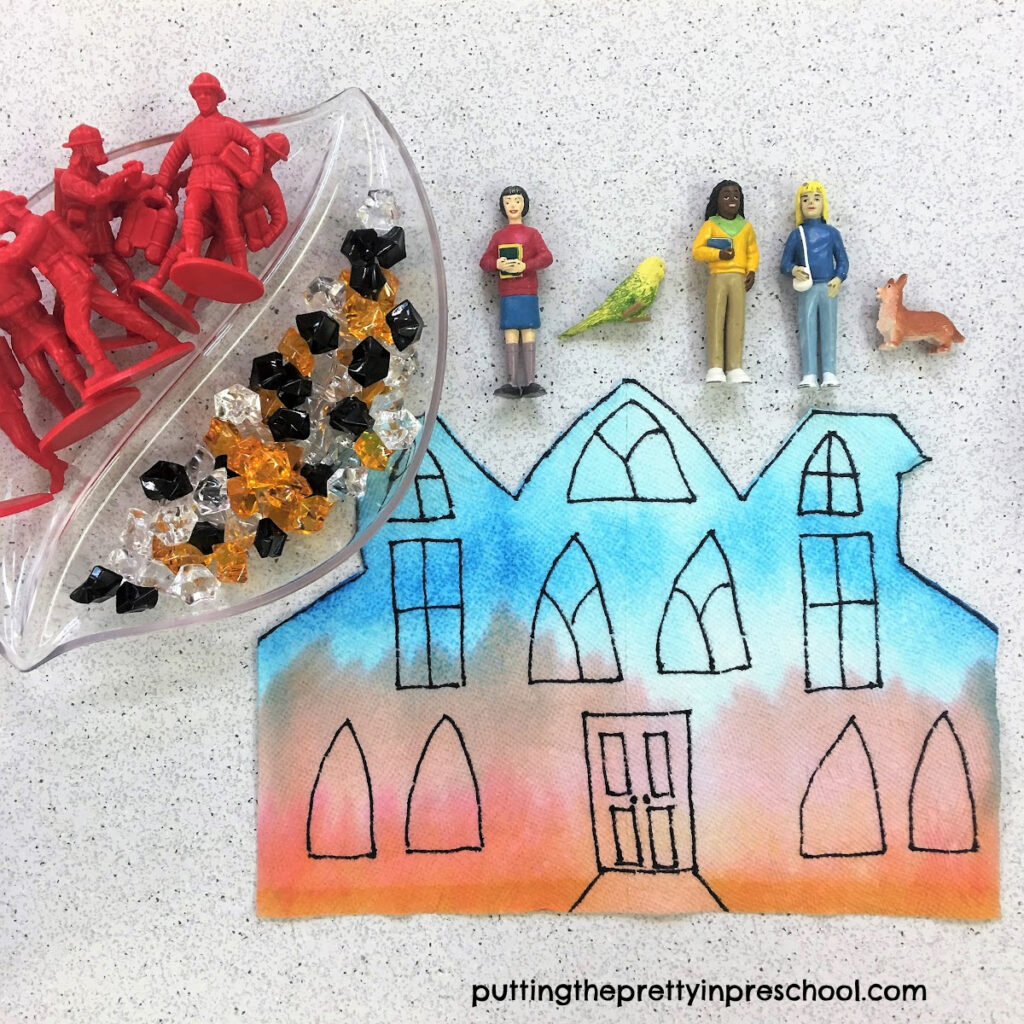
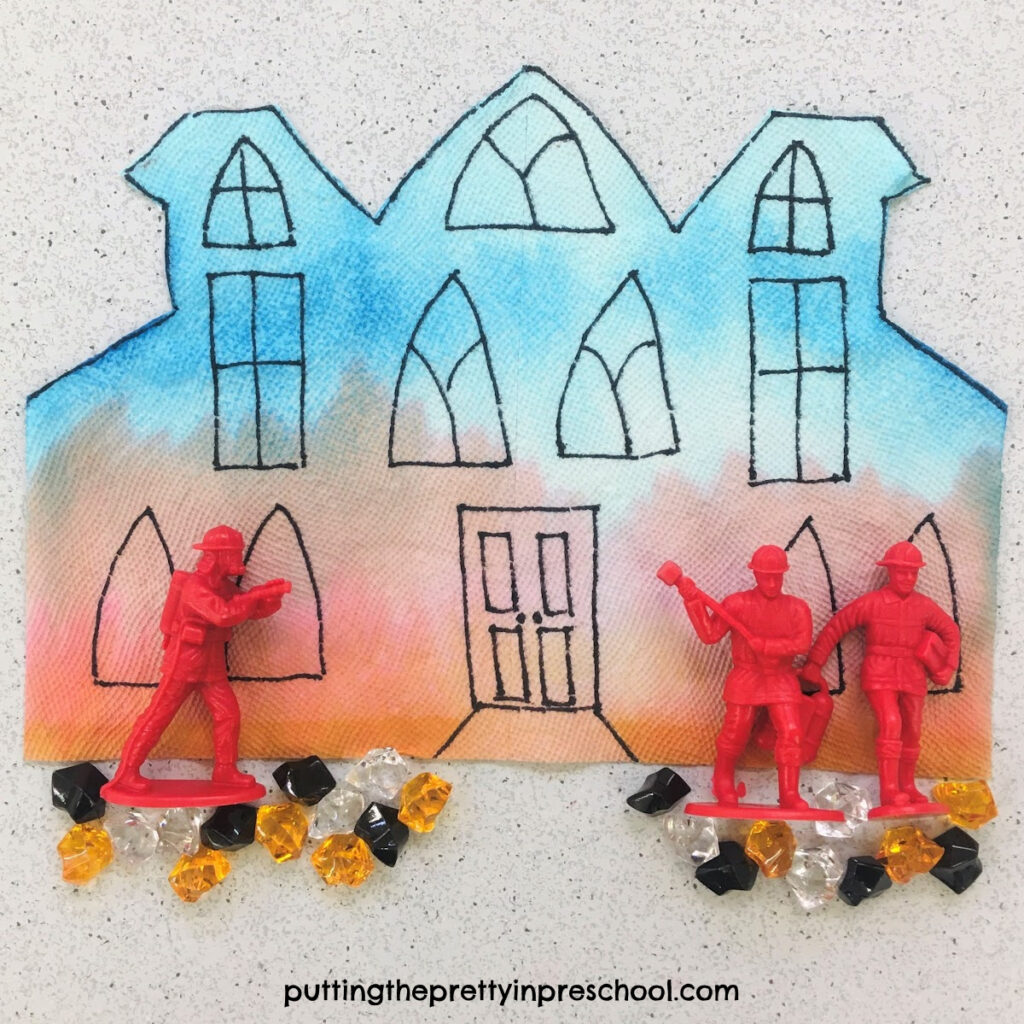
As with the first project, the resulting colors did not spread to the very top of the paper towel house. So I wet the top of this chromatogram too. The color record looks like a house on fire to me, so adding people, pets, firefighters, and orange, black, and clear gems creates another imaginative play invitation.

Sensory and imaginative play with a felt pen experiment chromatogram.

_______

Firefighter diorama created with a felt pen experiment chromatogram.

_______

Interpreting The Felt Marker Chromatography Experiment

The Merriam-Webster dictionary defines chromatography as “a process in which a chemical mixture carried by a liquid or gas is separated into components as a result of differential distribution of the solutes as they flow around or over a stationary liquid or solid phase.”

Although each felt marker appears to be just one color, the hues are actually made up of different chemicals called pigments. As saltwater seeps up stationary paper towels, the pigments move up with it. New colors appear because some pigments travel faster than others, and certain colors are less soluble and/or adhere to the paper towel more.

Each color-infused paper towel is called a chromatogram, a graphic record of the separation of colors into different pigments by chromatography.

_______

[Read more…] about Felt Marker Chromatography Experiment
Tweet
Share
Share
Pin

Filed Under: art, autumn, fall, preschool, pretend play, science, sensory Tagged With: bats, colors, loose parts, pumpkin, science experiment, sensory play, spiders

Green Huntsman Spider Activities

October 23, 2021 by Annette Kaminsky Leave a Comment

Tweet
Share
Share
Pin
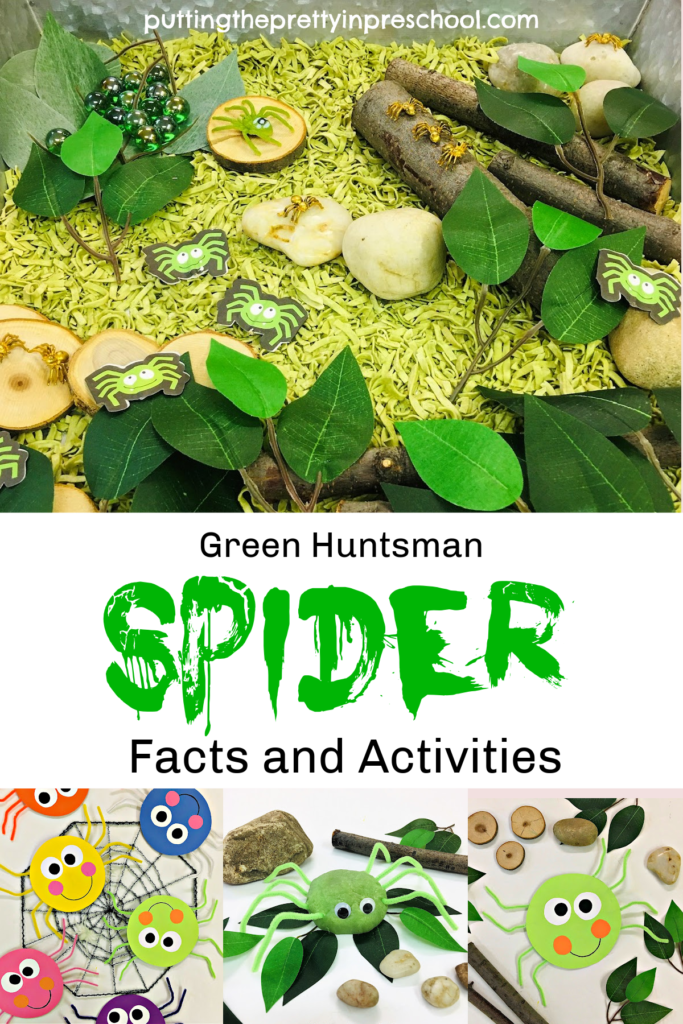
Get to know the webless green huntsman spider through crafts and sensory play activities. Free printable included.

_______

Do all spiders spin webs? And are they all black and brown? Well, the Green Huntsman Spider doesn’t fit this typical mold at all. But its unique look and habits are fascinating and can be readily explored by early learners in spider activities involving sensory and art.

_______

10 Green Huntsman Spider Facts

  1. Indigenous to northern and central parts of Europe, green huntsman spiders live in forest edges and damp woodlands.
  2. A clutch of green huntsman spider eggs is protected in a few leaves stitched together.
  3. 40 – 50 spiderlings hatch in about four weeks after the eggs are laid.
  4. The tiny spiderlings are yellowish-brown, and turn green in 18 months.
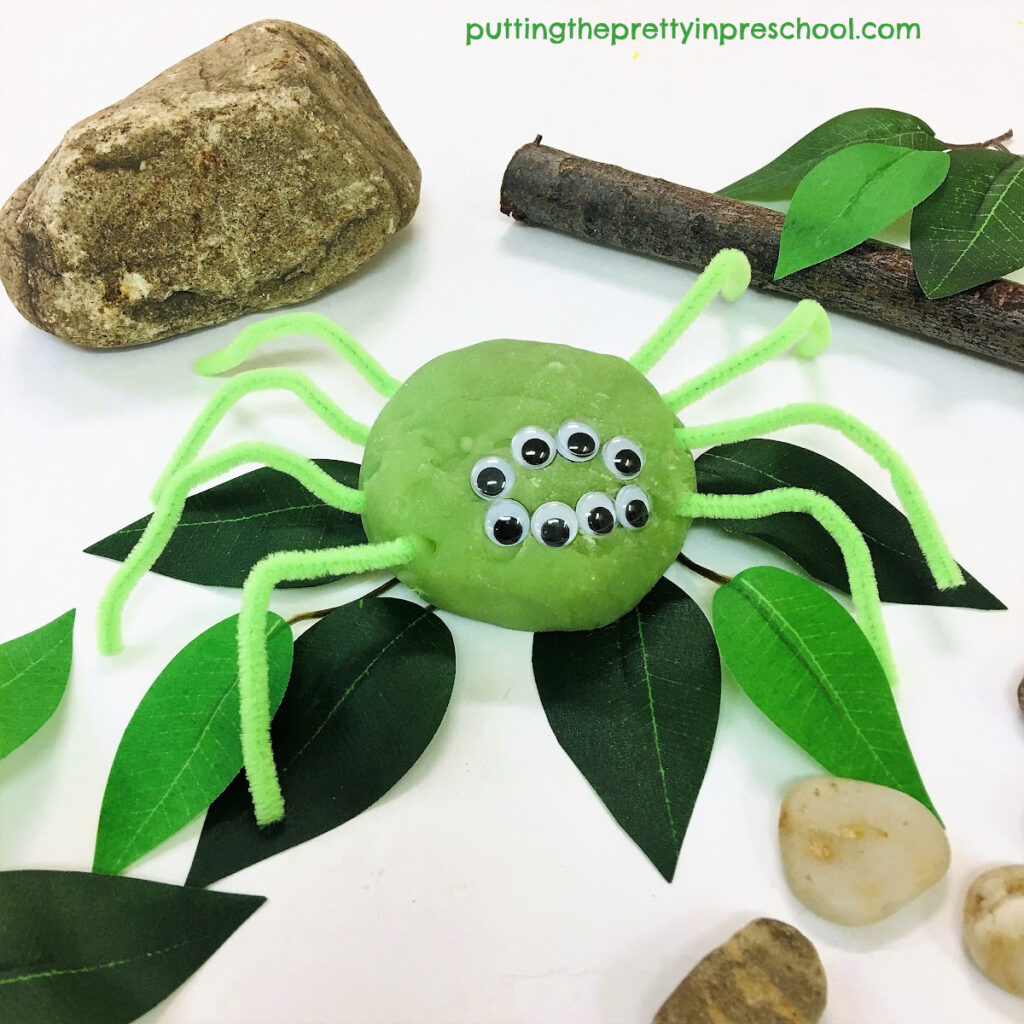
  5. Eight eyes arranged in an oval shape help green huntsman spiders see.
  6. These showy spiders eat small insects and other invertebrates.
  7. To catch their food, they wait for their prey to come by, and then pounce on it!
  8. Predators of this unique spider are geckoes, birds, wasps, flies, and nematode worms.
  9. The green spiders are camouflaged against leaves, so predators and prey cannot see them.
  10. Green huntsman spiders can live up to two years in age.
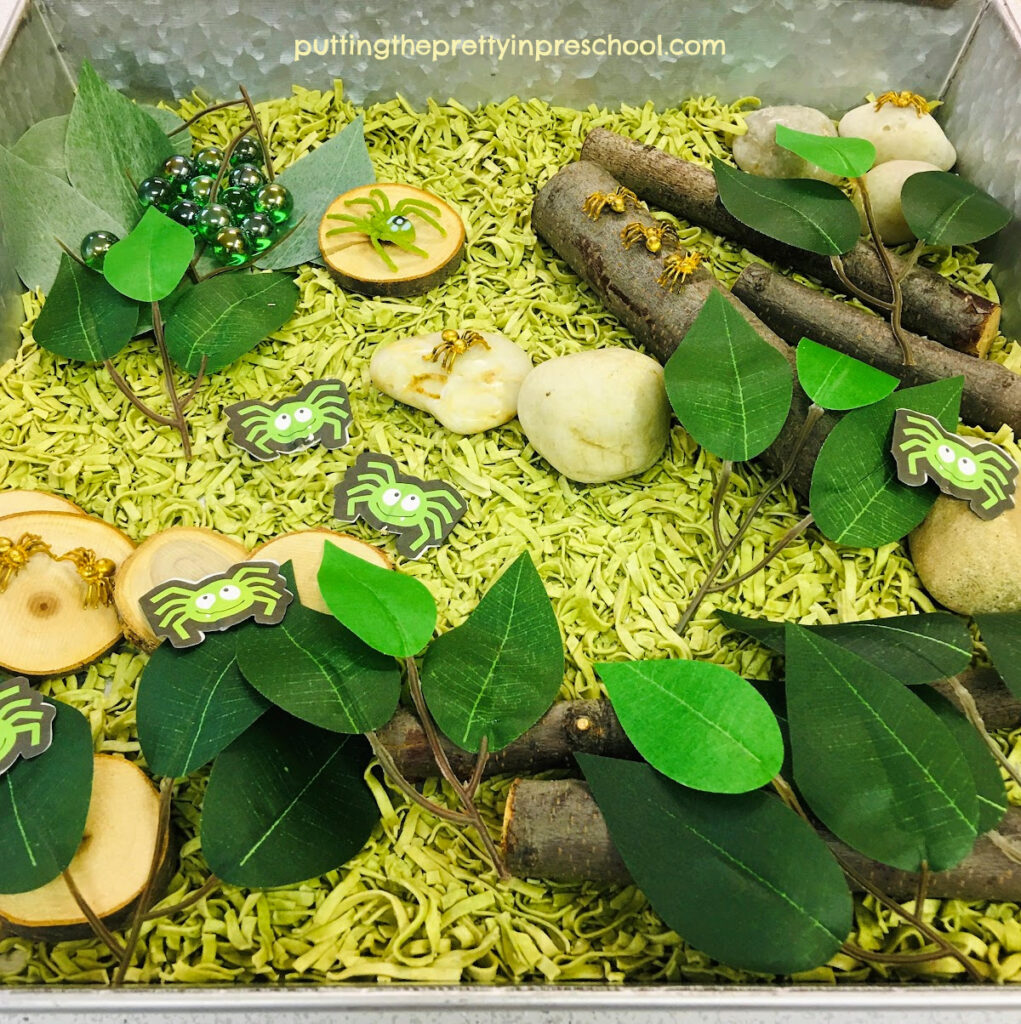
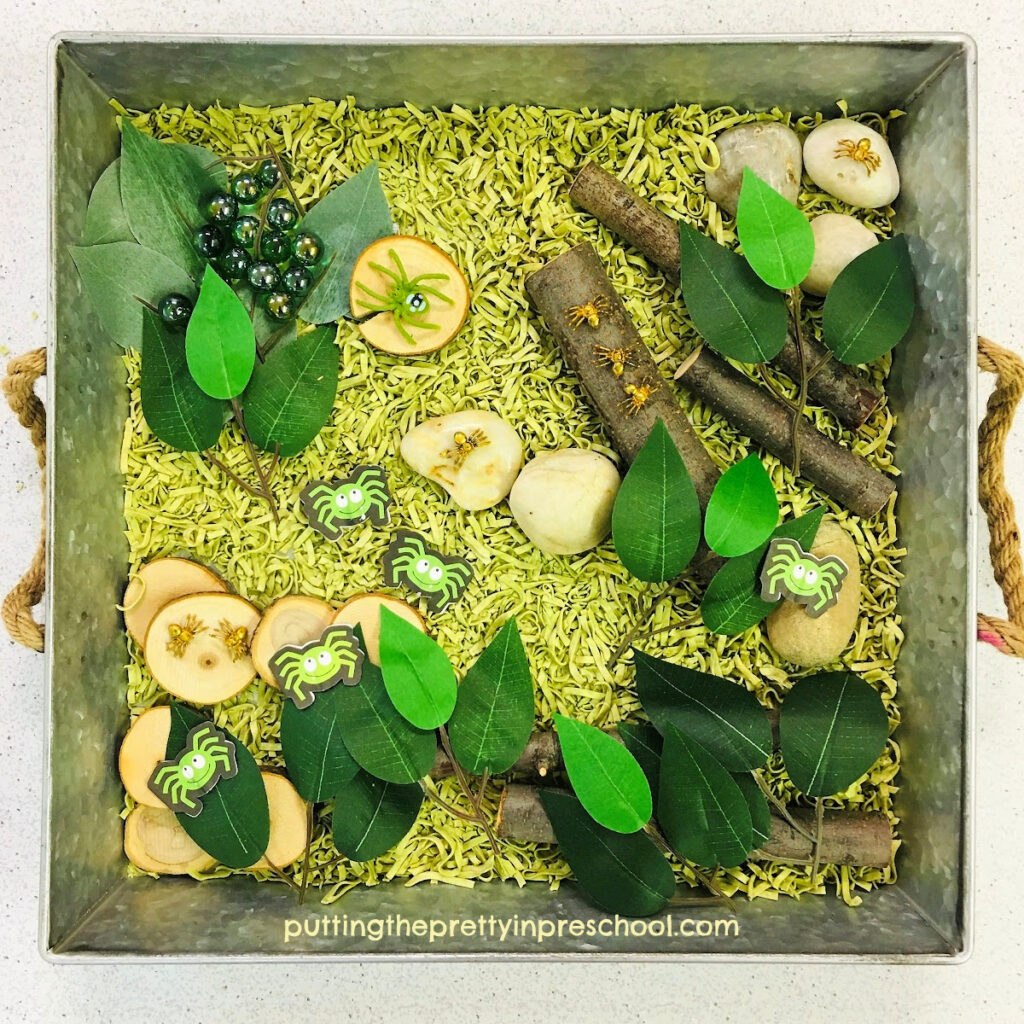
An oh-so-green spider sensory tray featuring green huntsman spiders.

_______

Spider Activities

Green Huntsman Spider Sensory Tray

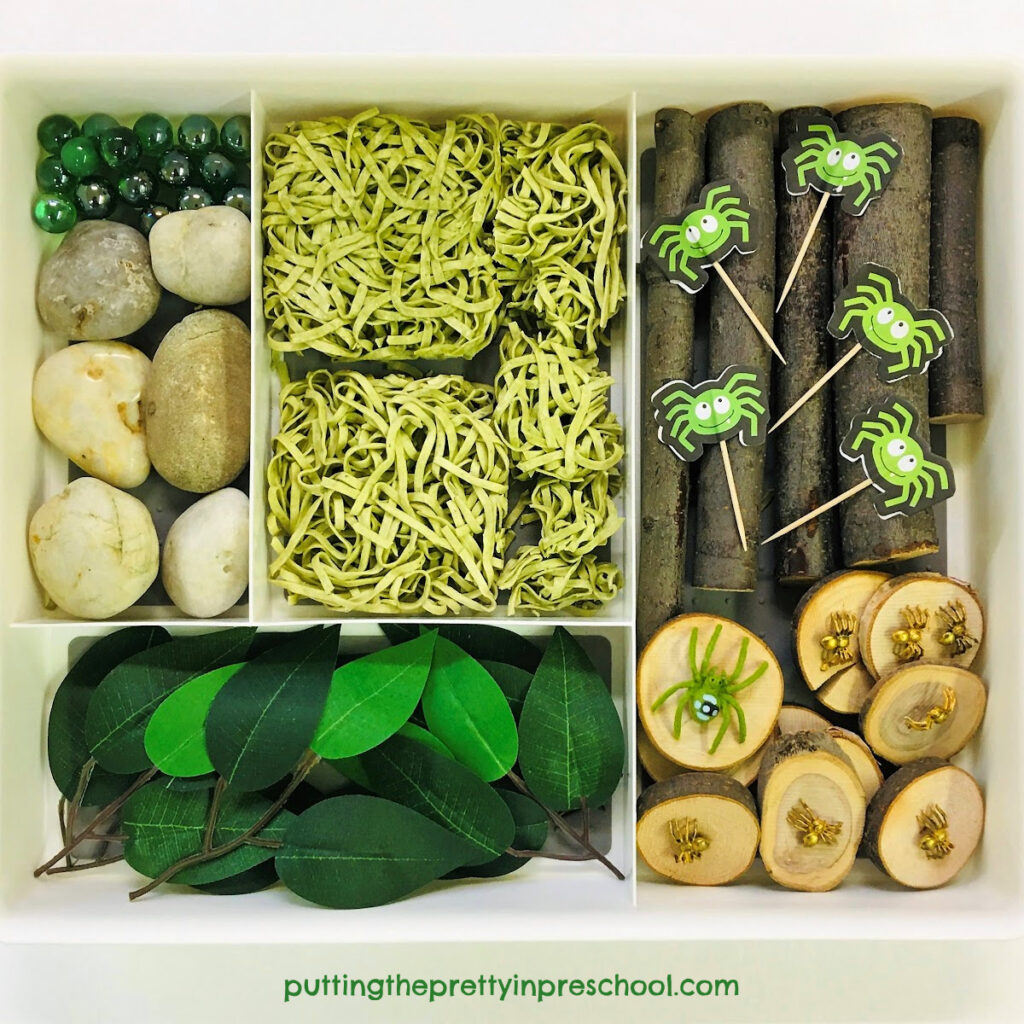
Gather the following supplies for a spidery sensory tray with no web required.

  • green spider
  • green spider cupcake toppers
  • tiny black spiders
  • green leaves
  • small logs
  • wood slices
  • rocks
  • green marbles
  • spinach noodles
  • metal tray or plastic tub
  • gold acrylic paint
Loose parts to collect for a green huntsman spider sensory tray.

_______

Break up spinach noodles into small pieces and spread out on the bottom of the tray or tub. Add leaves, logs, wood slices, and rocks. Pick a spot to set the marble “eggs.” Put in the green spider and/or green spider cupcake toppers. If using cupcake toppers, snap off the toothpicks and make sure there are no sharp edges.

Paint the tiny black spiders with gold acrylic craft paint to represent the spiderlings. The acrylic paint will adhere quickly. When dry, add them to the sensory tray.

Green huntsman spider-inspired sensory tray using spinach noodles as a base.

_______

Tip: Split peas or shredded green paper can be used instead of spinach noodles for the base.

_______

Follow me on Pinterest for more early learning ideas.

_______

Playdough Green Huntsman Spider

Sculpt a green huntsman spider with the best playdough recipe.

________

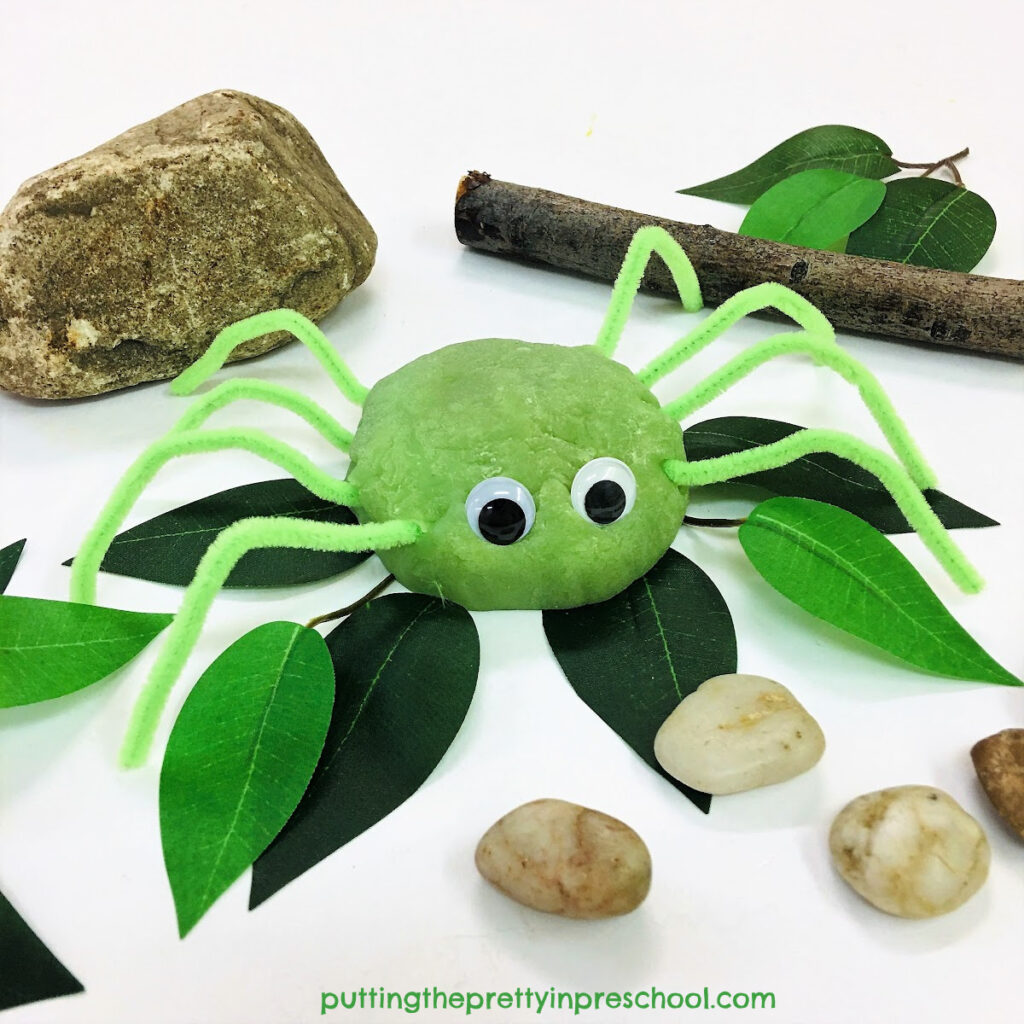
Make a batch of your favorite playdough and color it green. A basic playdough recipe with green food coloring added works well for this activity.

Invite your early learner to mold some dough into a squished circle or oval. Then your little one can add eight googly eyes to the dough.

Cut three green pipe cleaners into thirds. Invite your little learner to add eight pipe cleaner legs to the plump spider.

Sculpt a green huntsman spider including it's eight eyes!

_______

Green Huntsman Spider Craft

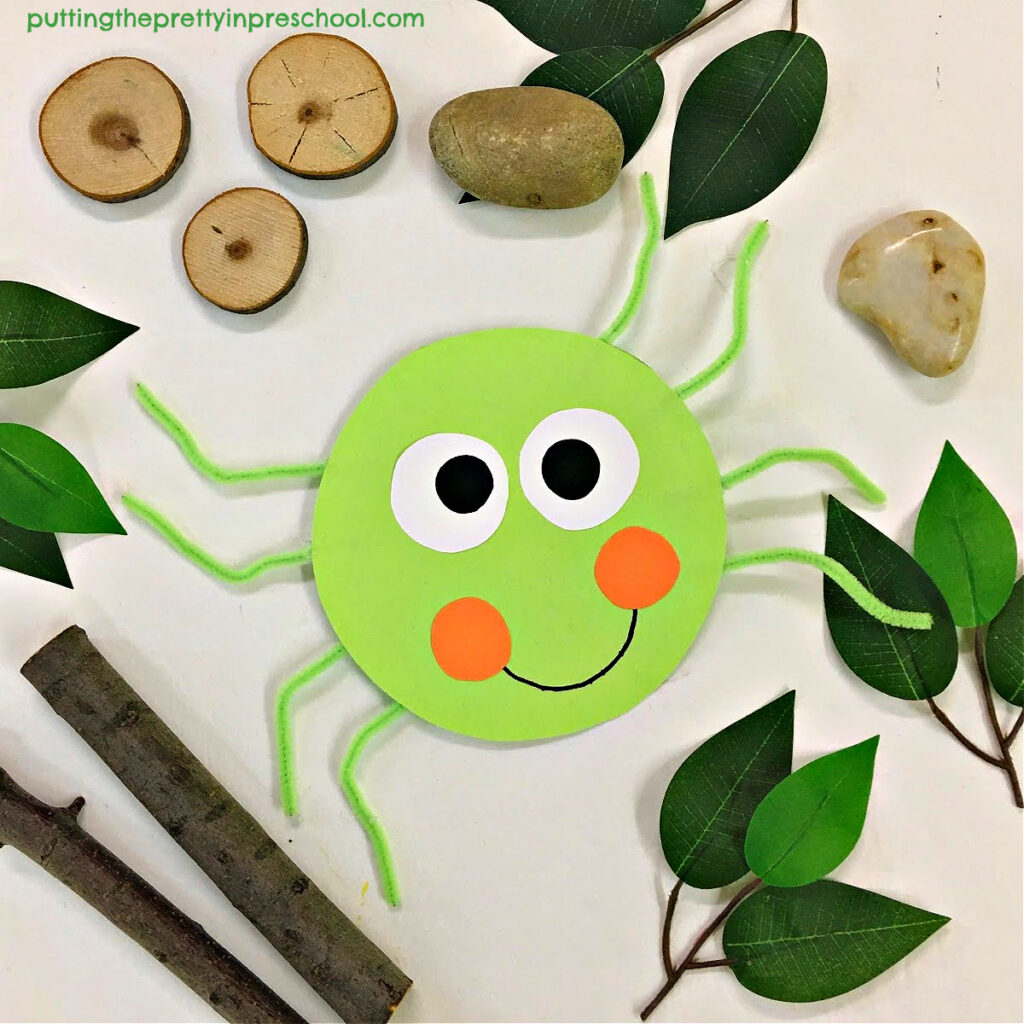
Craft a paper green huntsman spider. The spider won't need a web to be displayed!

_______

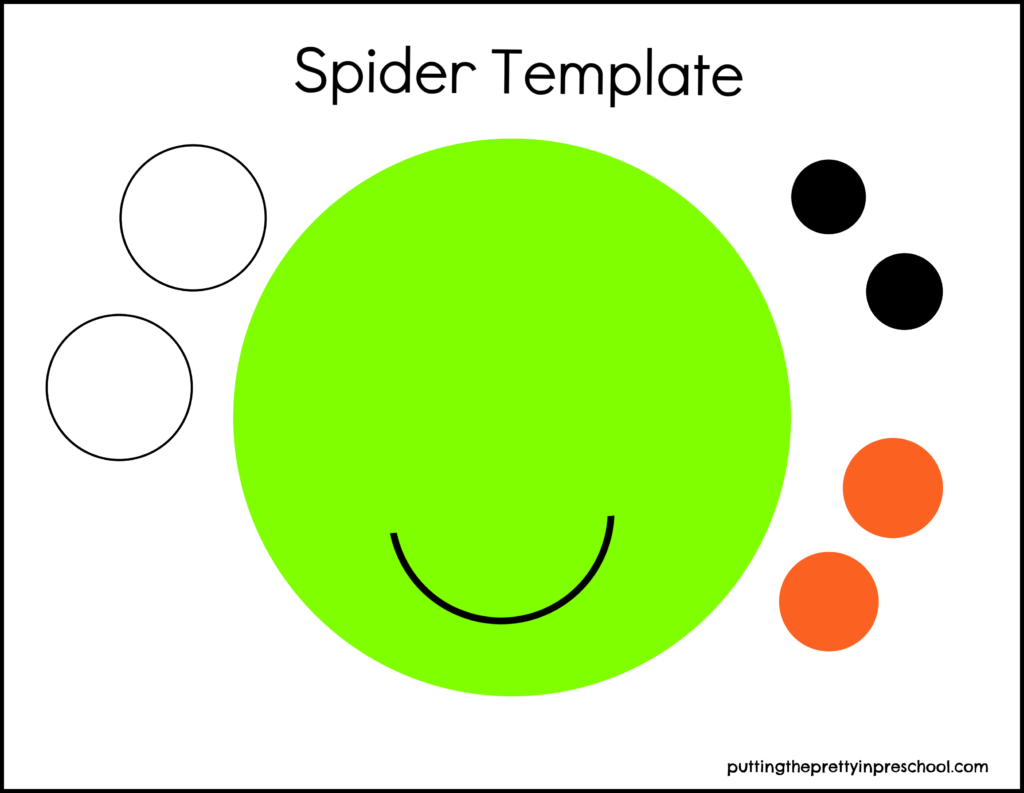
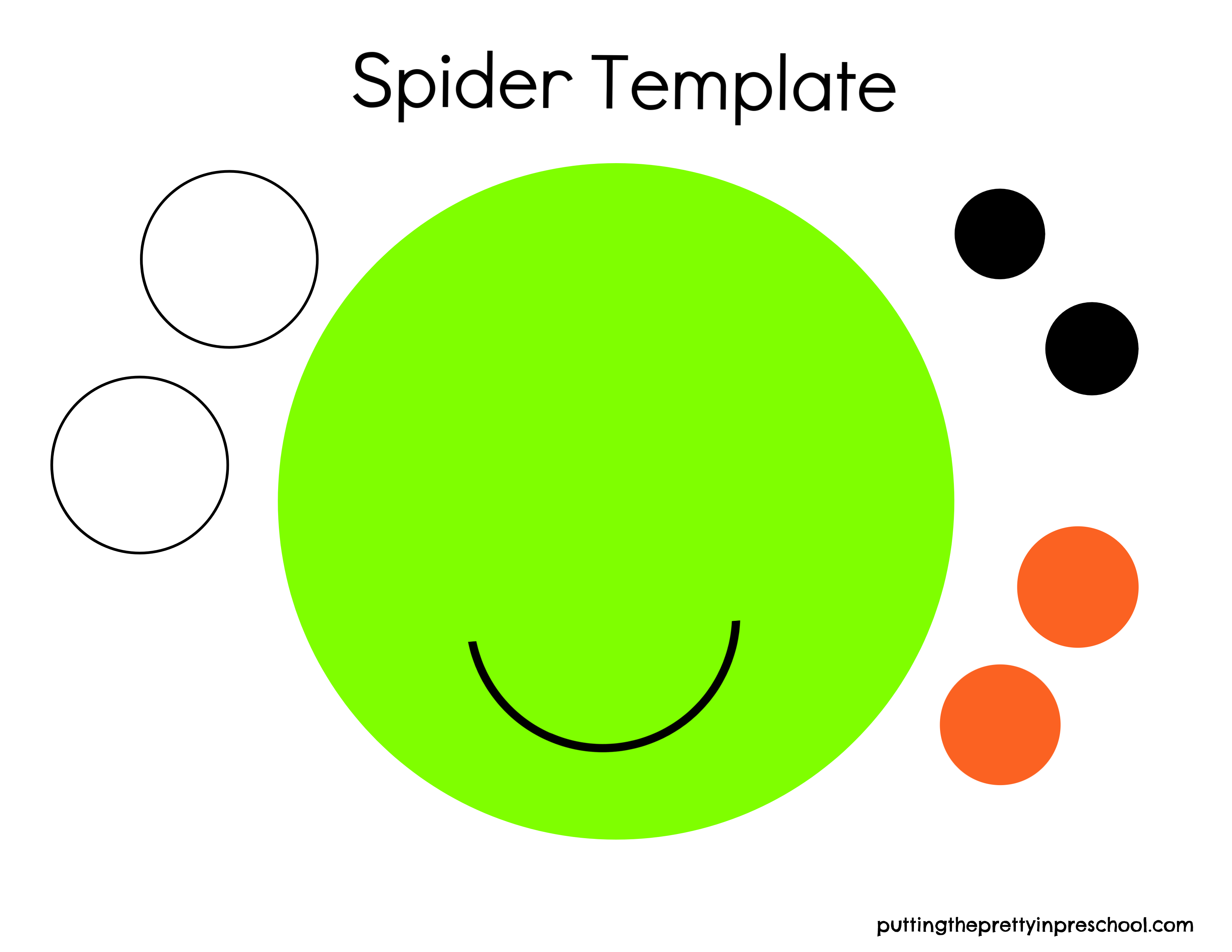
Download this template to make a green paper spider. Printing onto cardstock paper works best, but you can also use regular copy paper.

Spider template to cut out and assemble into a green huntsman spider, or to use as a pattern to craft spiders in colors of choice.

_______

Spider Template PrintableDownload

This printable is for individual or one classroom use only.

_______

Invite your early learner to cut out all the circles. Then have your little one glue the smaller circles to the large green circle to make a cute face. Help your child glue or tape on pipe cleaner legs.

_______

Tip: Cutting pipe cleaners into thirds works well for this spider craft.

_______

Spiders In All Colors

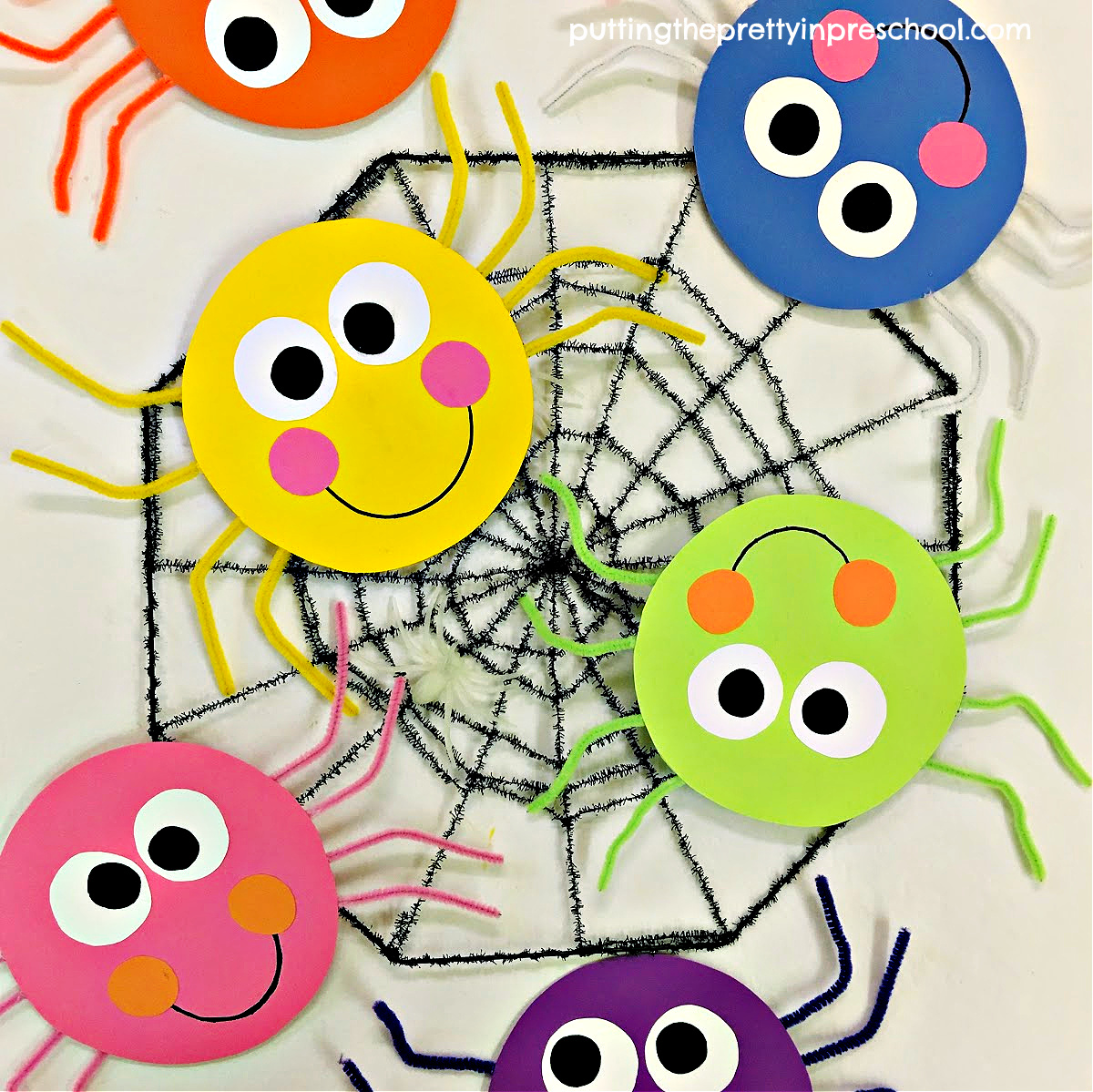
After assembling a green spider, your little learner may have fun creating spiders in other colors. Download the template and use the pieces as a pattern for cutting shapes from cardstock paper shades of choice. Have your early learner cut and assemble the circles into bodies of spiders, and add matching or complementary hued pipe cleaner legs.

Craft cheery spiders in your favorite colors. Grab your free template.

_______

The spiders could be hung from strings to provide colorful room decorations.

_______

And finally, you could invite your little one to craft a black and grey spider. Print the above template in black and white. Use black pipe cleaner legs.

_______

[Read more…] about Green Huntsman Spider Activities
Tweet
Share
Share
Pin

Filed Under: art, playdough, preschool, pretend play, reptiles, science, sensory Tagged With: collage, paper crafts, playdough, sensory tray, spiders

Easter Bunny Sensory Bins

March 28, 2021 by Annette Kaminsky 1 Comment

Tweet
Share
Share
Pin
Fun Easter bunny sensory bins featuring two different brightly colored bases. The simple color change gives early learners variety in sensory play.

________

These simple, no-fuss Easter bunny sensory bins feature the same accessories added to different bases. The result is two unique sensory play experiences your early learners will embrace.

_______

Follow me on Pinterest for more ideas.

_______

Split-Pea Based Easter Bunny Sensory Bin

This naturally colored split-pea-based bunny sensory bin means no dyeing ingredients are needed.

_______

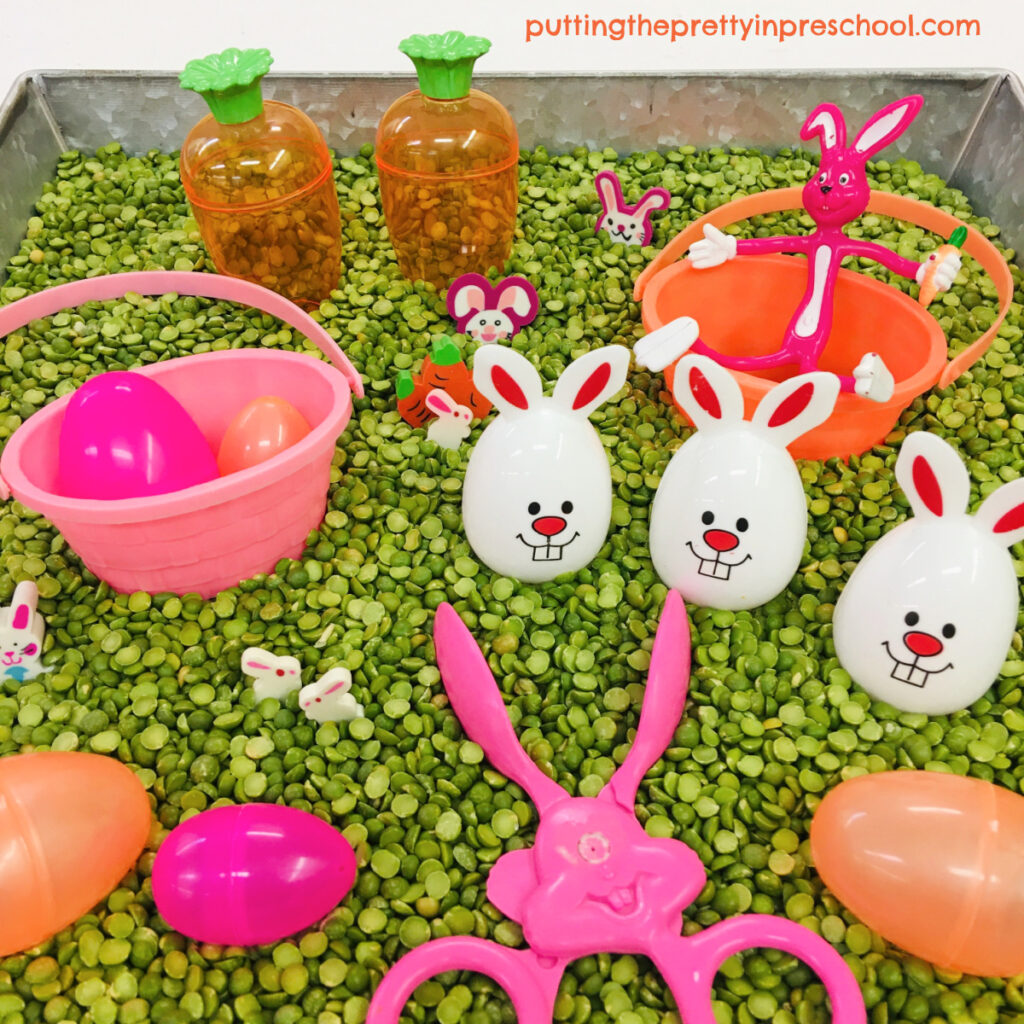
Green split peas are the base for this first bin. Included in the bin are:

  • Easter baskets
  • bendable bunny
  • pink and orange plastic eggs
  • carrot eggs
  • Easter bunny eggs
  • carrot eraser
  • bunny erasers
  • bunny tongs
This naturally colored split-pea-based Easter bunny and egg sensory bin means no dyeing ingredients are needed.

_______

Head to your local Target or dollar store to gather accessories for this bin. Just a few items will give your early learners a delightful sensory play opportunity.

_______

Red Lentil-Based Sensory Bin

This naturally colored split-lentil-based bunny sensory bin means no dyeing ingredients are needed.

_______

One thing about preparing sensory bins is that you can create any color scheme you like.  I wanted to combine pink, orange, and white hues for this one. The accessories in the bin are the same as above. The split red lentils making the base are actually orange-colored.

The split peas and split lentils used for the bases naturally come in rich, vibrant colors. And so a bonus in preparing these activities is that no dyeing ingredients are needed.

This naturally colored split-lentil-based Easter bunny sensory bin means no dyeing ingredients are needed

_______

The two different hues give each of the Easter bunny sensory bins a unique feel. Pick one base to add the accessories to and then set the bin out for play. After a few days, switch the accessories over to a bin with the other base. Your early learners will enjoy the new color scheme.

_______

[Read more…] about Easter Bunny Sensory Bins
Tweet
Share
Share
Pin

Filed Under: Easter, preschool, sensory Tagged With: bunnies, sensory bin, sensory play

Bunny Candy Art

March 20, 2021 by Annette Kaminsky Leave a Comment

Tweet
Share
Share
Pin
Fun bunny candy art activity with assorted sweets. A happy hoppy food collage project the whole family will enjoy participating in.

_______

Along with Christmas and Valentine’s Day, Easter is a prime time for sweet treats. Chocolaty treats are popular, as are fruity and sugary ones. And bunnies in all shapes and sizes (and bunny ears) are frequent subjects.

Bunnies can also be created from a candy mix. Your little learners would enjoy this challenge, so why not make happy hoppy bunny candy art with them?

_______

Follow me on Pinterest for more ideas.

_______

Supplies To Collect

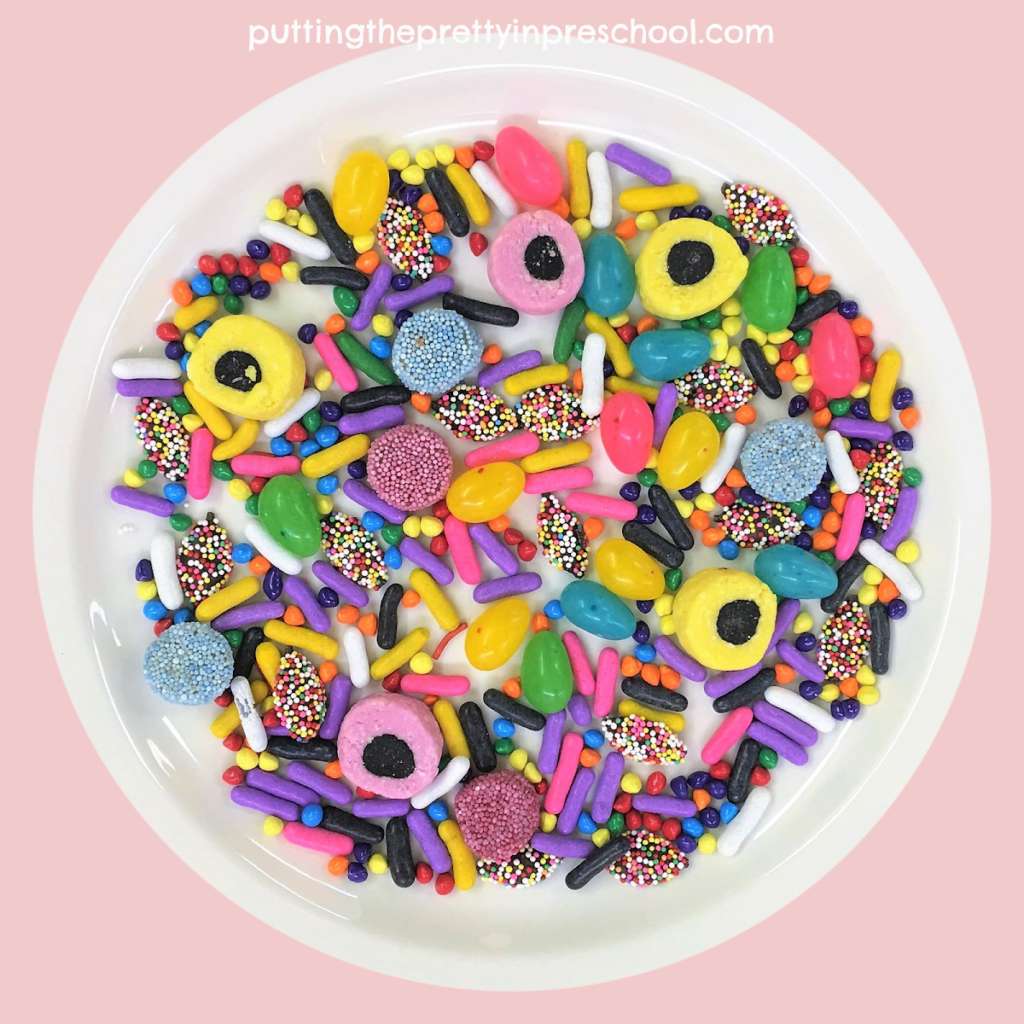
An assortment of candies for a colorful candy art project or a candy tasting activity.

_______

  • licorice in assorted shapes and sizes
  • Easter jelly beans
  • candy or chocolate sprinkle covered bunny ears
  • candy sprinkles
  • 12-inch x 12-inch cardstock paper
  • white glue

_______

Making The Bunny Candy Art

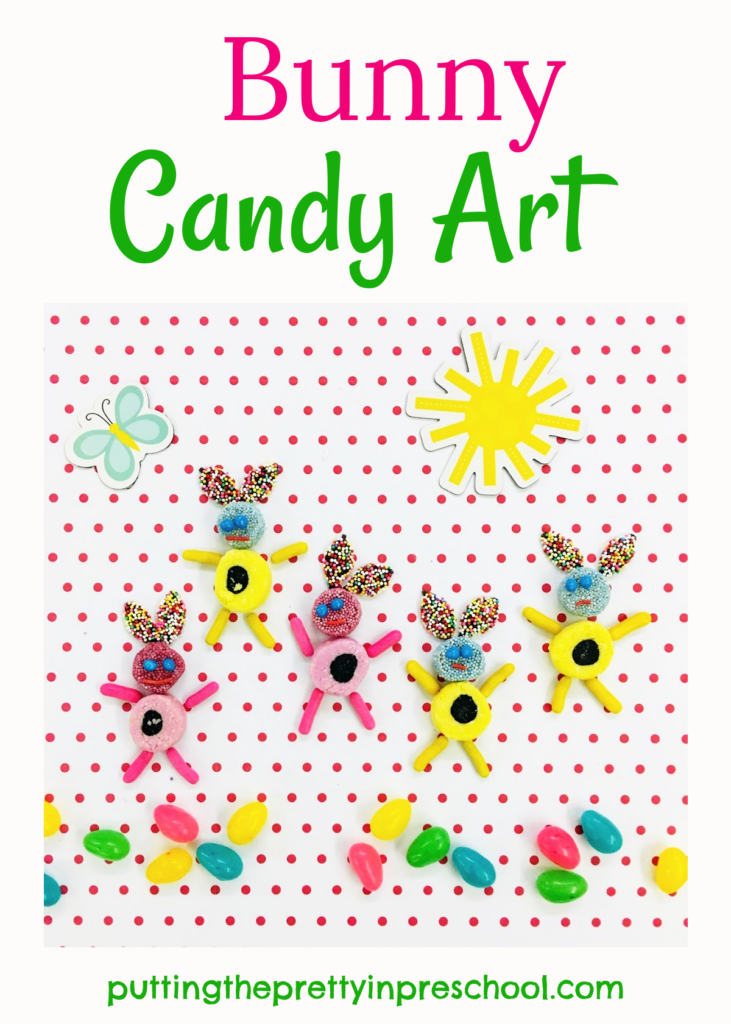
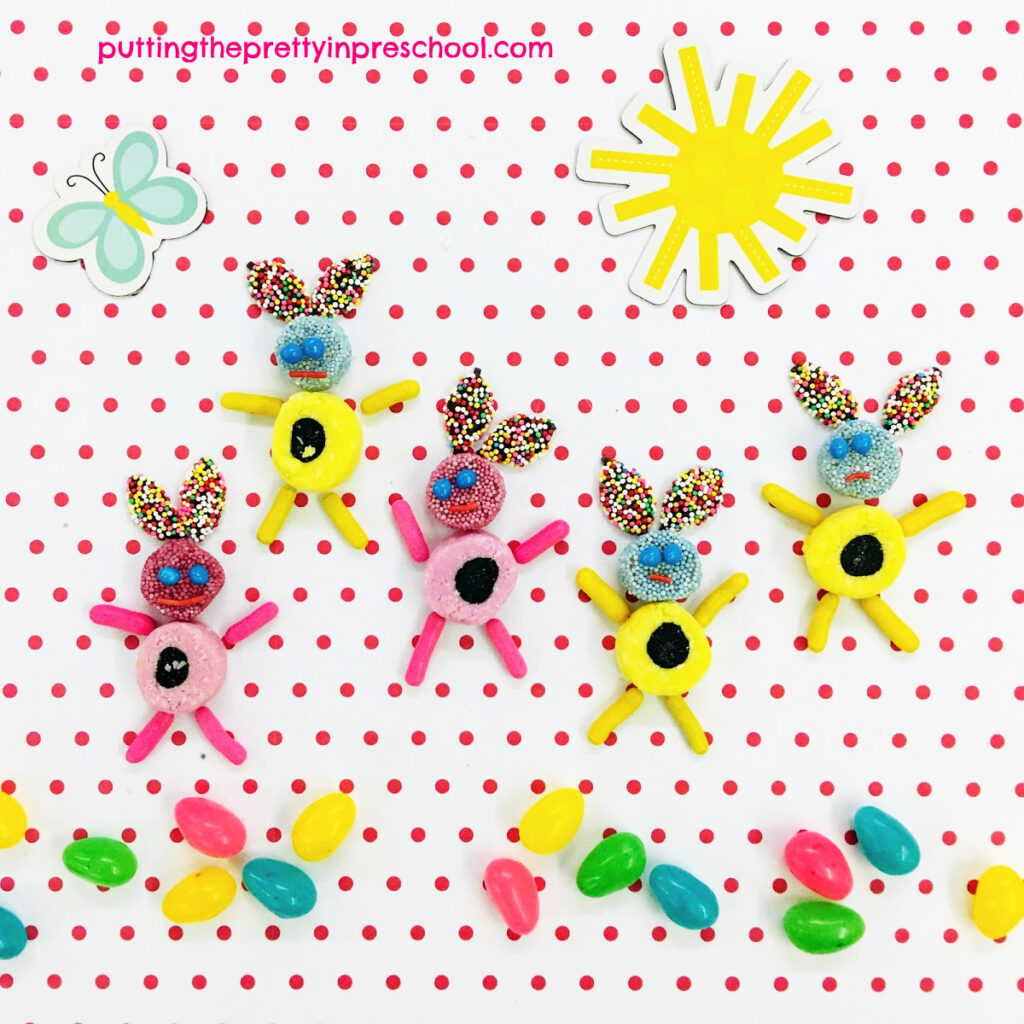
Happy hoppy bunny candy art collage project. An activity the whole family can participate in.

_______

Set out a sheet of 12-inch x 12-inch cardstock paper for each person participating. Give participants a plate of candy to create a bunny-themed collage with. In addition to incorporating the bunny ear treats, candy pieces can be bunny heads, bodies, arms, legs, eyes, and mouths. Jelly beans and sprinkles add color and additional shapes to the pictures.

Have everyone glue the candy designs down to make permanent pictures. Or save the sweet treats for a delectable candy tasting party.

_______

[Read more…] about Bunny Candy Art
Tweet
Share
Share
Pin

Filed Under: art, Easter, party, preschool, sensory, spring Tagged With: bunnies, candies, Easter, spring

Shamrock Rolling Pin Art

March 16, 2021 by Annette Kaminsky Leave a Comment

Tweet
Share
Share
Pin
A fun rolling pin art project with three different looks. A process art painting activity on shamrocks the whole family can enjoy.

_______

This shamrock rolling pin art project is bound to get a little messy, and that means your little learner is sure to looove it! Shamrocks make an eye-pleasing subject for this process art activity.

_______

Check out these two St. Patrick’s Day printable products in my Skills N Smiles Etsy shop:

_______

Supplies to Collect

  • green, yellow, and white tempera paint
  • rolling pins or paper towel rolls
  • large sheets of sturdy paper
  • paint containers and spoons
  • shamrock template

_______

Click here to download a shamrock template.

_______

Shamrock Rolling Pin Art Fun

Set out tempera paints in yellow, white, and shades of green. Invite your little learner to spoon dabs of paint over a paper shamrock.

Invitation to use a rolling pin as a painting tool.

_______

Then ask your little one to roll a rolling pin over the paint.

_______

A paper towel roll works well to move paint around too. On the shamrock below, a pattern of paint was spread vertically. Then a paper towel roll was rolled up and down to give the striped effect. There are diagonal lines left from the paper roll on the shamrock…I kind of like them!

Paper towel roll painting on a shamrock.

_______

The paint can also be splattered on diagonally, with the rolling pin to squish the paint around positioned the same way.

Rolling pin art invitation.

_______

Rolling pin art on shamrock shapes.

_______

Which shamrock art project do you like best? Leave a comment below.

_______

_______

Striped shamrock paper towel roll art.

_______

Rolling pin art with a diagonal stripe design.

_______

Related:

Shamrock Paper Plate Lion

St. Patrick’s Day Sheep Craft

St. Patrick’s Day Painted Shamrock

Crayon Resist Watercolor Shamrock

Scissor Skill Shamrock Collage

St. Patrick’s Day Tablescape

St. Patrick’s Day Sensory Tub

Leprechaun Sensory Jar

St. Patrick’s Day Woodland Sensory Bin

St. Patrick’s Day Jewelry Bin

Leprechaun Sensory Play

St. Patrick’s Day Treasure Blocks

St. Patrick’s Day Light Table Tray

Shamrock Dissolving Candy Experiment

St. Patrick’s Day Activities

_______

[Read more…] about Shamrock Rolling Pin Art
Tweet
Share
Share
Pin

Filed Under: art, preschool, sensory, St. Patrick's Day Tagged With: painting, process art, shamrocks

  • « Go to Previous Page
  • Page 1
  • Interim pages omitted …
  • Page 28
  • Page 29
  • Page 30
  • Page 31
  • Page 32
  • Interim pages omitted …
  • Page 42
  • Go to Next Page »

Primary Sidebar

Hi, I'm Annette Kaminsky, a preschool teacher who loves sharing learning through play activities for young children. Thanks for visiting my site. Feel free to stay awhile!

Subscribe Via Email

Recent Posts

  • Earth Day Spin Painting April 21, 2026
  • Easter Bunny Scavenger Hunt April 4, 2026
  • Celebrate Diversity Coloring Pages March 1, 2026
  • Lunar New Year Lantern Craft February 11, 2026
  • Black History Month Positive Affirmations Art January 29, 2026
  • Snowflake Cafe Dramatic Play Set January 19, 2026
  • Pastel Christmas Letterhead and Envelope December 20, 2025
  • December Kindness Activities November 30, 2025
  • Fall Forest Sensory Bin November 30, 2025
  • DIY Turkey Bowling Game November 25, 2025

Categories

Topics

apples bunnies butterflies Chinese New Year Christmas Christmas craft color colors dramatic play Easter fall flowers hearts holiday jewelry leaves leprechauns light table loose parts painting paper crafts playdough pretend play printables printmaking process art pumpkins rice bin scented playdough science experiment scissor skills sensory bin sensory play sensory tray shamrocks skeletons snakes snowflakes spiders spring St. Patrick's Day sunflowers tablescapes Valentine's Day water play

Copyright © 2026 · Lifestyle Pro on Genesis Framework · WordPress · Log in