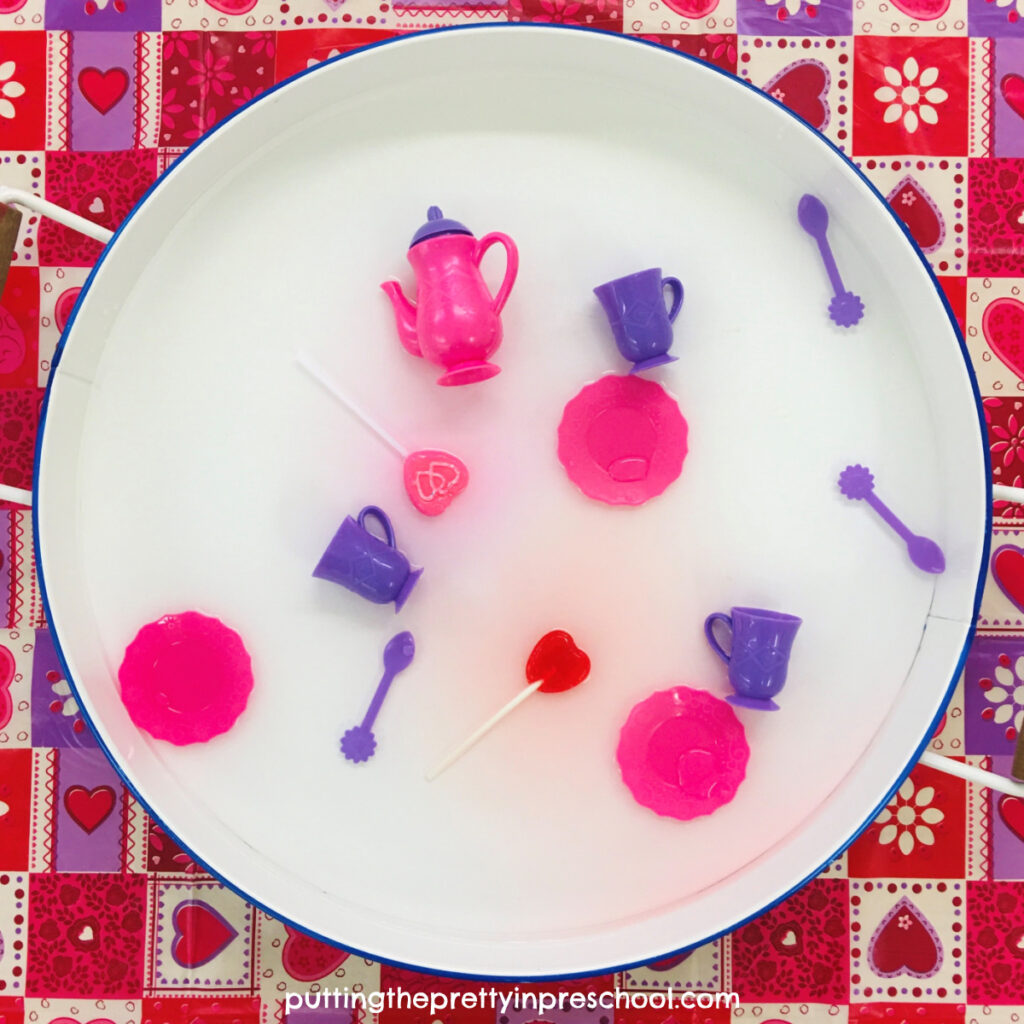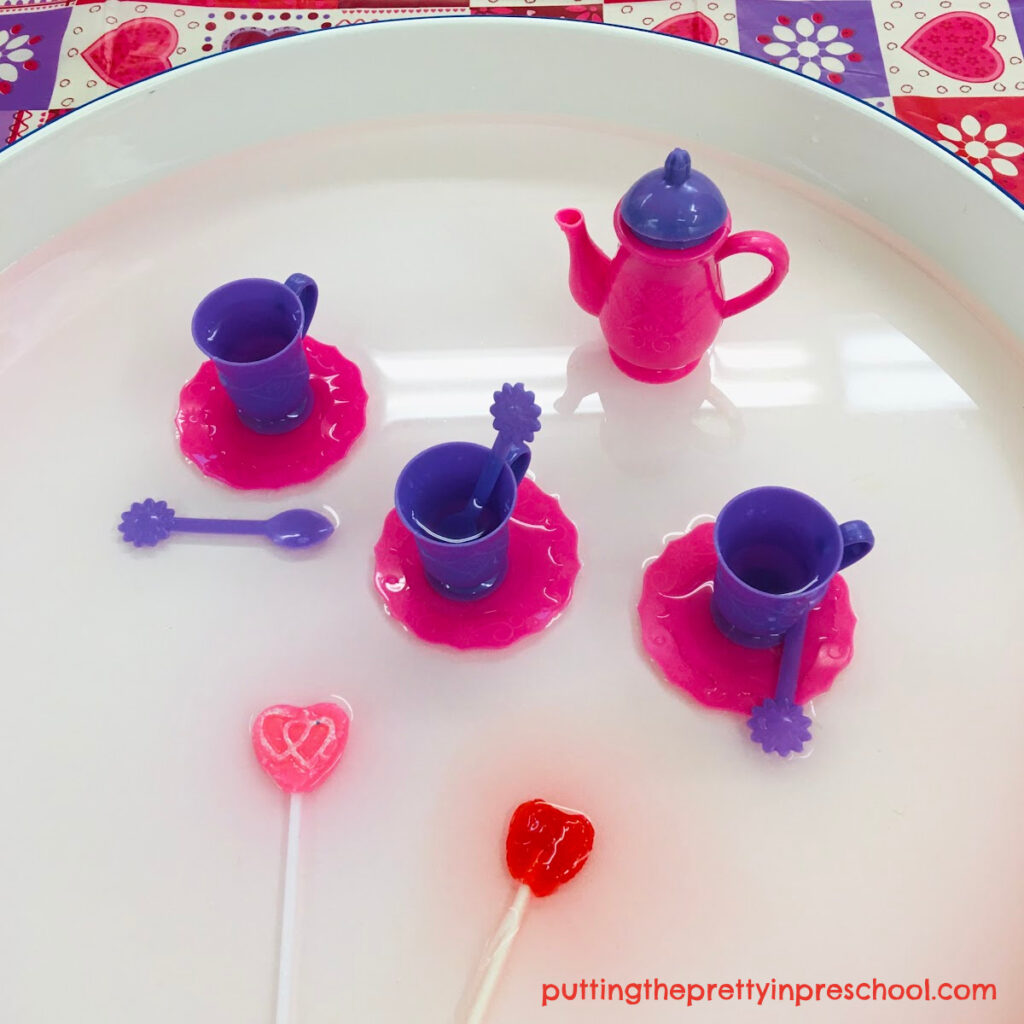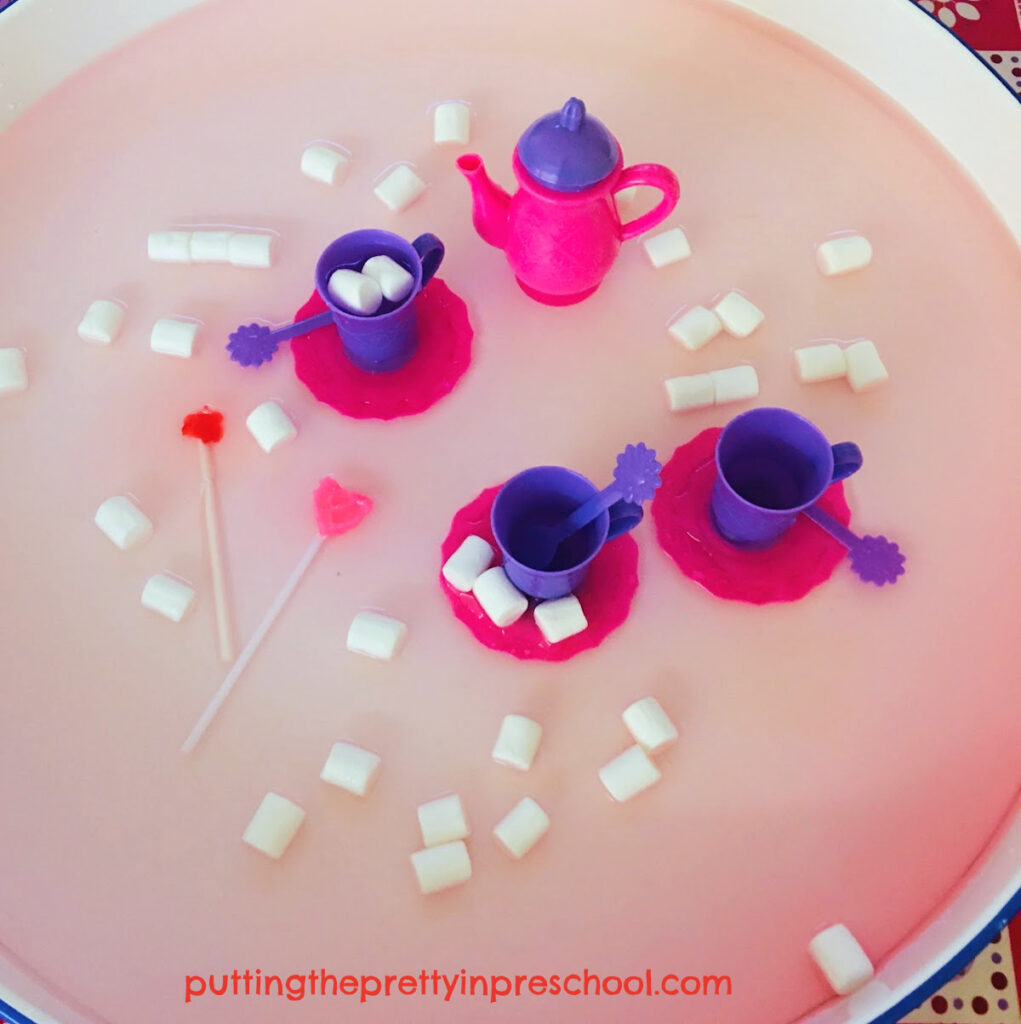
• Skip to secondary menu
  • Skip to main content
  • Skip to primary sidebar

Putting The Pretty In Preschool

Finding Beauty In Everyday Early Childhood Experiences

  • Home
  • About Me
  • Winter
  • Chinese New Year
  • Blog
  • Contact Me
  • Black History Month
  • SHOP
  • Valentine’s Day

sensory

Valentine’s Day Water Play

February 7, 2022 by Annette Kaminsky Leave a Comment

Tweet
Share
Share
Pin
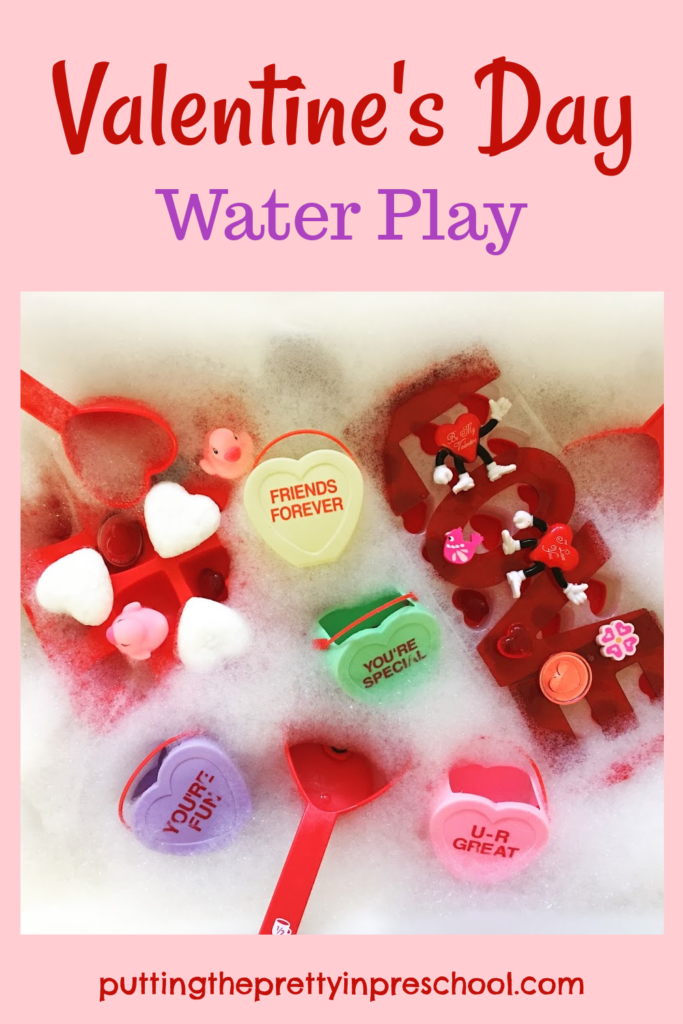
A friendly, bubbly Valentine's Day water play activity your early learners will love to participate in. A quick and easy sensory bin to set up.

_______

A Valentine’s Day water play activity is quick and easy to set up, and supplies are low cost. The activity helps create a festive ambiance on a party day or any day!

The weeks leading up to Valentine’s Day are a good time to visit stores to collect Valentine-themed supplies for all kinds of learning opportunities, including water play. No store is off-limits for gathering hands-on materials.

________

Supplies To Collect

Here’s a list of supplies that work well in a Valentine-themed water table or tub. Pick the ones you have handy, or can easily and economically find in a store.

  • alphabet letters that spell the word “LOVE”
  • heart ice cube trays
  • red and pink buttons
  • heart-shaped gems
  • bendy heart people
  • red and pink ducklings
  • valentine erasers
  • pink and red rainbow erasers
  • styrofoam hearts
  • cut striped red and white straws
  • red coins
  • wiggly eye rings
  • heart-shaped measuring cups
  • treat baskets and boxes

_______

The Valentine’s Day Water Play Activity

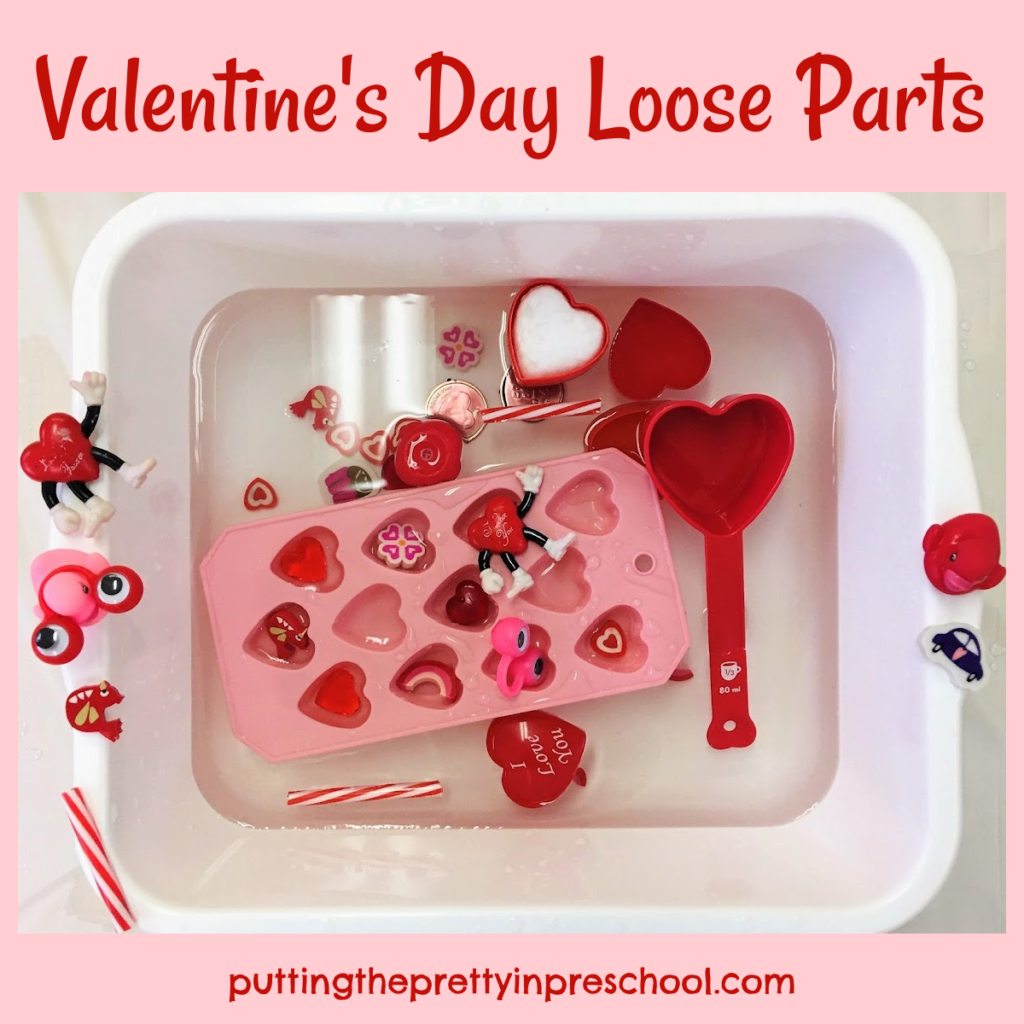
Add warm water to a large water table for group sharing, or set out a small white washtub with water for each child. Throw in Valentine’s Day loose parts that you have available.

The tub below has clear water, and the colors and shapes of the supplies can be easily seen and admired in the white bin.

Valentine's Day loose parts that work well in a water play activity, or a tub with a rice or chickpea base.

_______

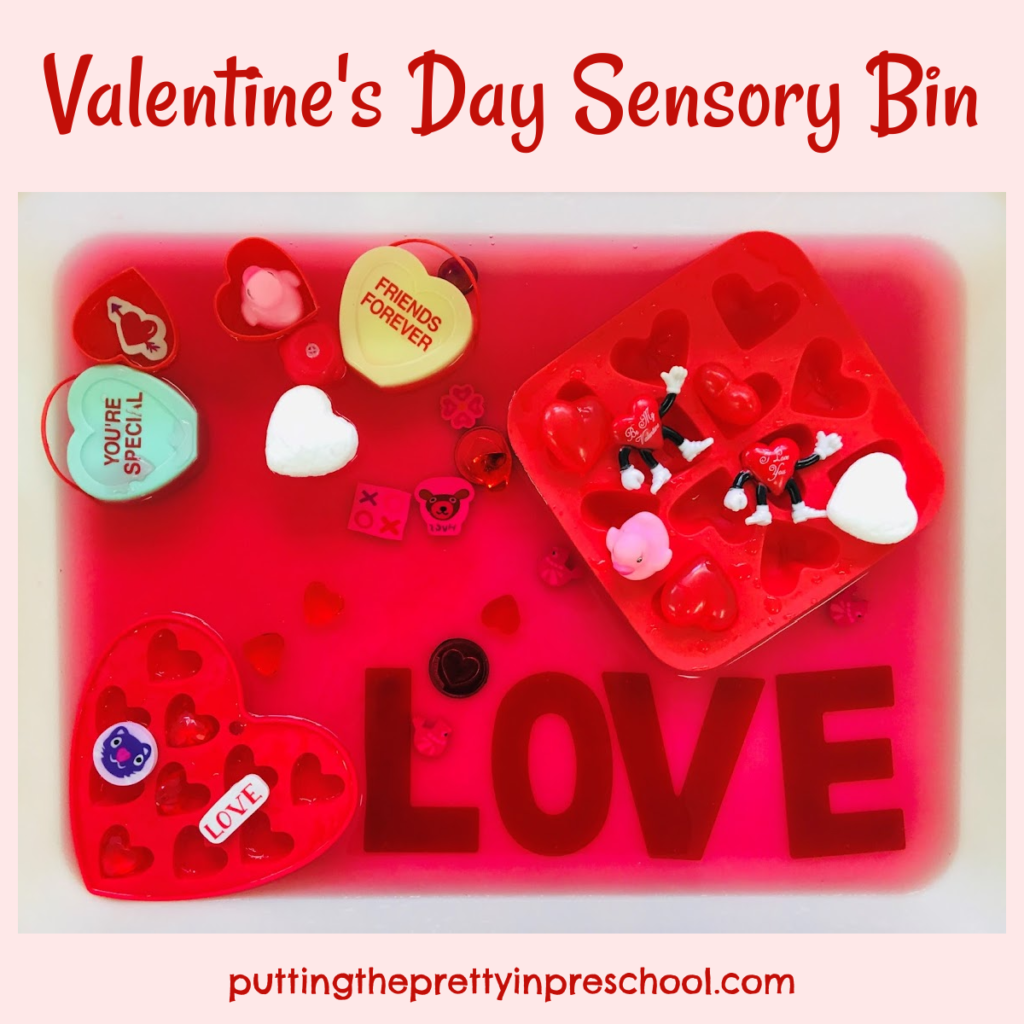
After a little while, you could add red food coloring to the water to extend interest.

A fun and friendly Valentine's Day water play activity your early learners will love to participate in. A quick and easy sensory bin to set up.

_______

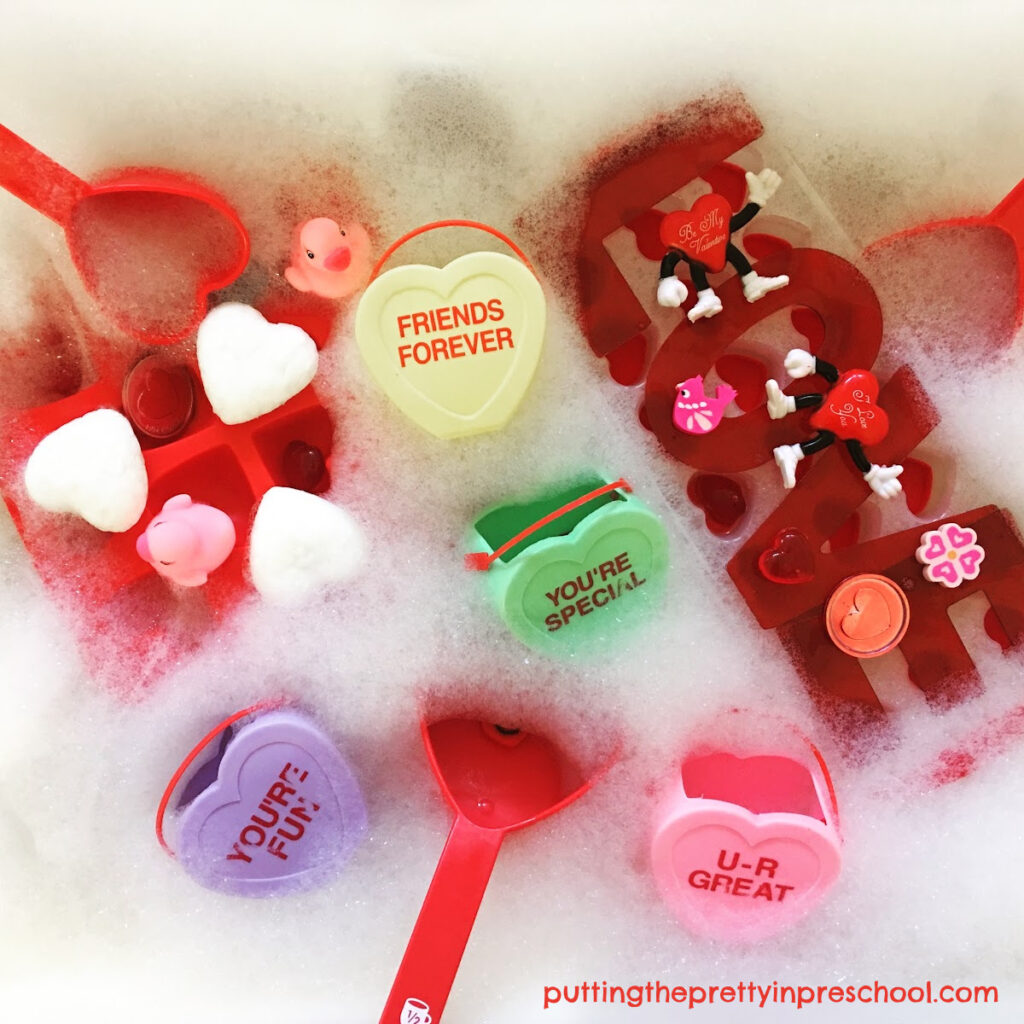
Or you could add dish detergent to create bubbles, so fitting for Valentine’s Day activity.

A friendly, bubbly Valentine's Day water play activity your early learners will love to participate in. A quick and easy sensory bin to set up.

_______

Benefits Of Water Play

Here are some benefits of this water play activity:

  • sorting shapes (math – set making; language development – color recognition)
  • counting shapes (math – counting)
  • comparing shapes to those of other children (language development; paying attention to detail)
  • filling and emptying treat boxes (eye-hand coordination; math/language development – empty/full)
  • noticing how some shapes stick to others (science)
  • recognizing letters of the alphabet (language development – letter recognition)
  • discovering beautiful themed items (creativity)

Water play is an embraced activity any day. For another time, the Valentine-themed supplies could be included in a rice or chickpea sensory tub.

Can you think of supplies to add to my list? Share in a comment below.

_______

Related: St. Patrick’s Day Sensory Tub

_______

[Read more…] about Valentine’s Day Water Play
Tweet
Share
Share
Pin

Filed Under: party, preschool, sensory, Thanksgiving Day, Valentine's Day Tagged With: hearts, loose parts, sensory bin, sensory play, water play

Painting Ice And Snow Activity

January 29, 2022 by Annette Kaminsky 1 Comment

Tweet
Share
Share
Pin
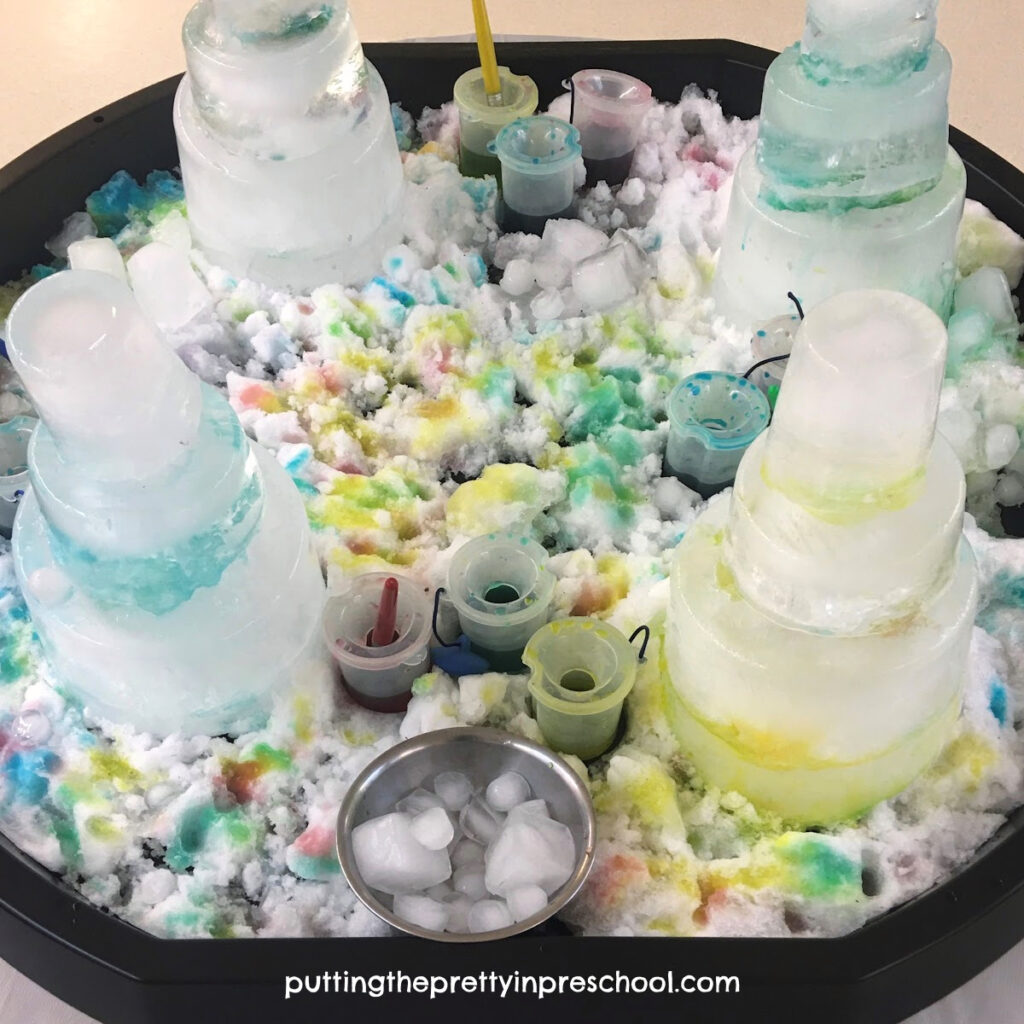
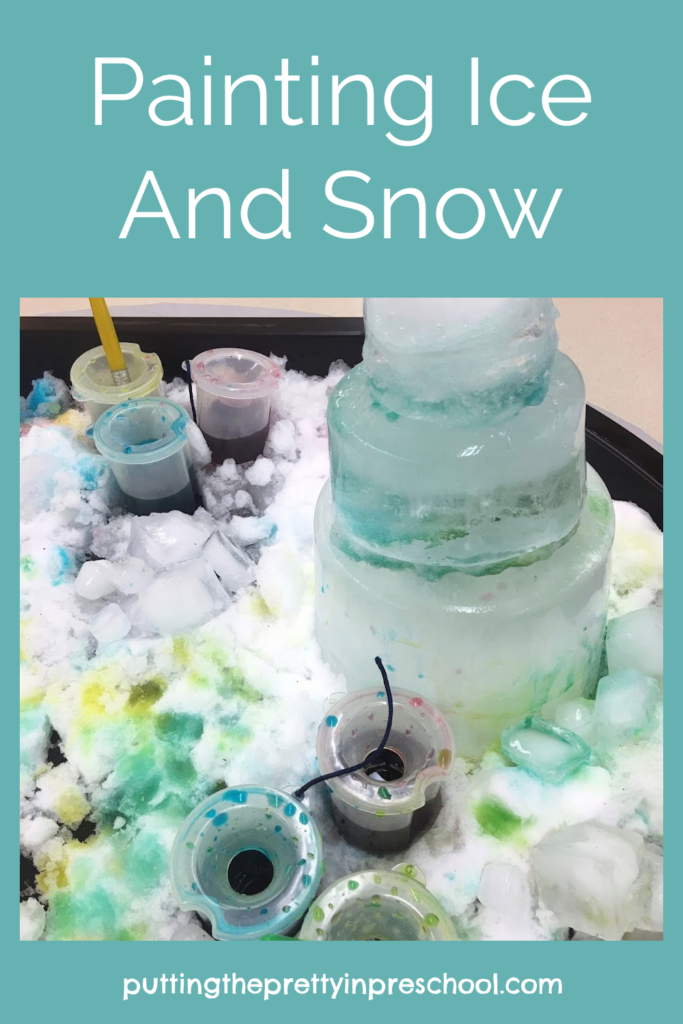
Ice cakes are the highlights of this painting ice and snow sensory table activity little learners are bound to love.

_______

A painting ice and snow center is one of the easiest activities you can set up, and little learners love to participate in it. Stacking the frozen ice into triple-layer cakes will level up the fun factor and visual appeal.

_______

Follow me on Pinterest for more early learning ideas.

_______

Supplies To Collect

For this frozen-themed snow and ice sensory table activity, gather the following:

  • activity tray
  • round plastic food containers in different sizes
  • ice cube trays
  • small metal bowls
  • large pail
  • snow
  • food coloring or liquid watercolors
  • paint containers
  • paintbrushes
  • sturdy tablecloth

_______

Setting Up The Painting Ice And Snow Activity

How to set up a painting snow and ice sensory table activity for early learners.

_______

Freeze water in food containers for several days. Empty yogurt, sour cream, ice cream, and margarine containers work well for the molds.

Set up a large activity tray on a round table covered with a tablecloth.

Scoop up snow in a pail and dump it into the tray.

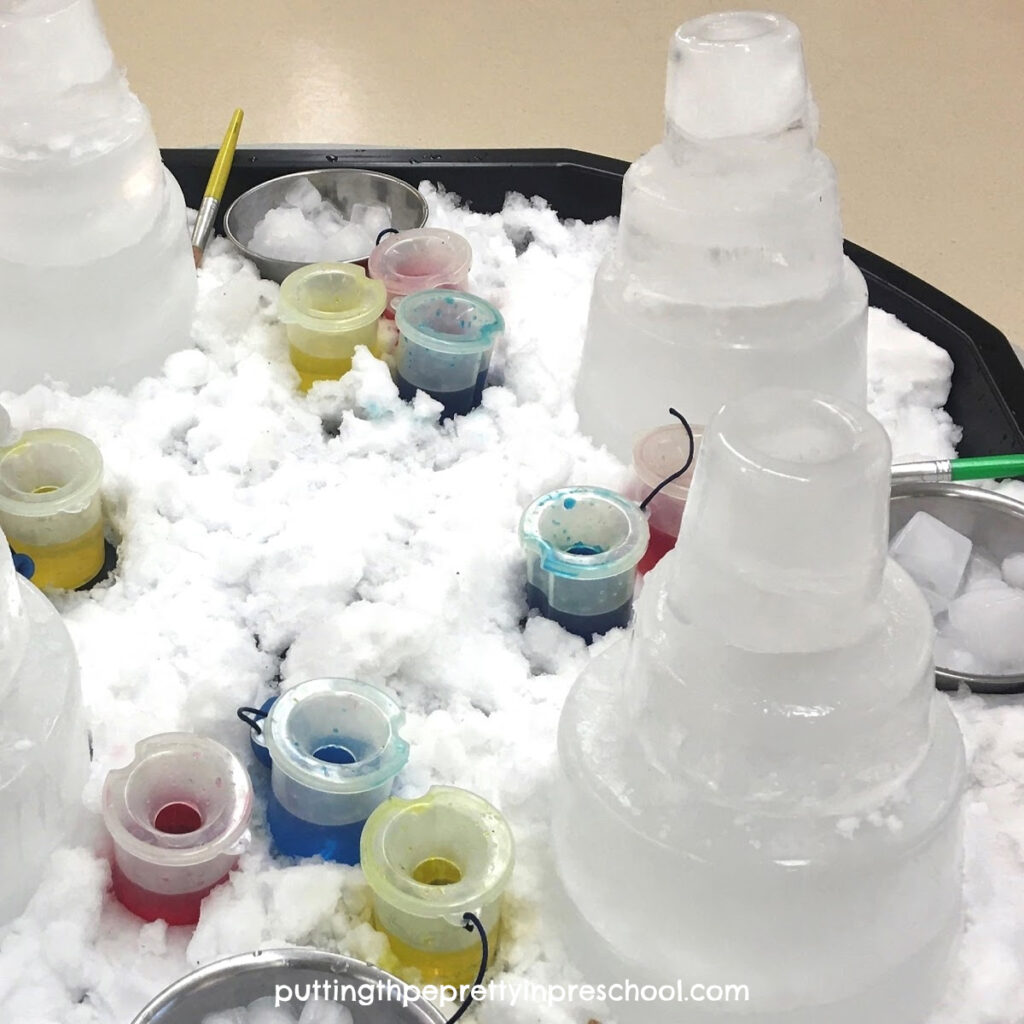
Take out the ice shapes from their molds and drop them on top of the snow. Stack smaller ice chunks on larger ones to make triple-layer cakes.

Set out ice cubes in small metal bowls.

Add liquid food colors to paint containers, or mix a little food coloring into water to make the hues. Featured are paints in primary colors.

Include brushes and invite little learners to paint the ice cakes and snow.

An easy to put together painting ice and snow sensory table activity the whole family can enjoy.

_______

The watercolors in the containers stay quite pure in this activity, without having to ask anyone to rinse their brushes between hues used. And there will be lots of excitement when new colors such as green and purple pop up in the snow.

Little learners will love to participate in this snow and ice sculpture painting activity.

_______

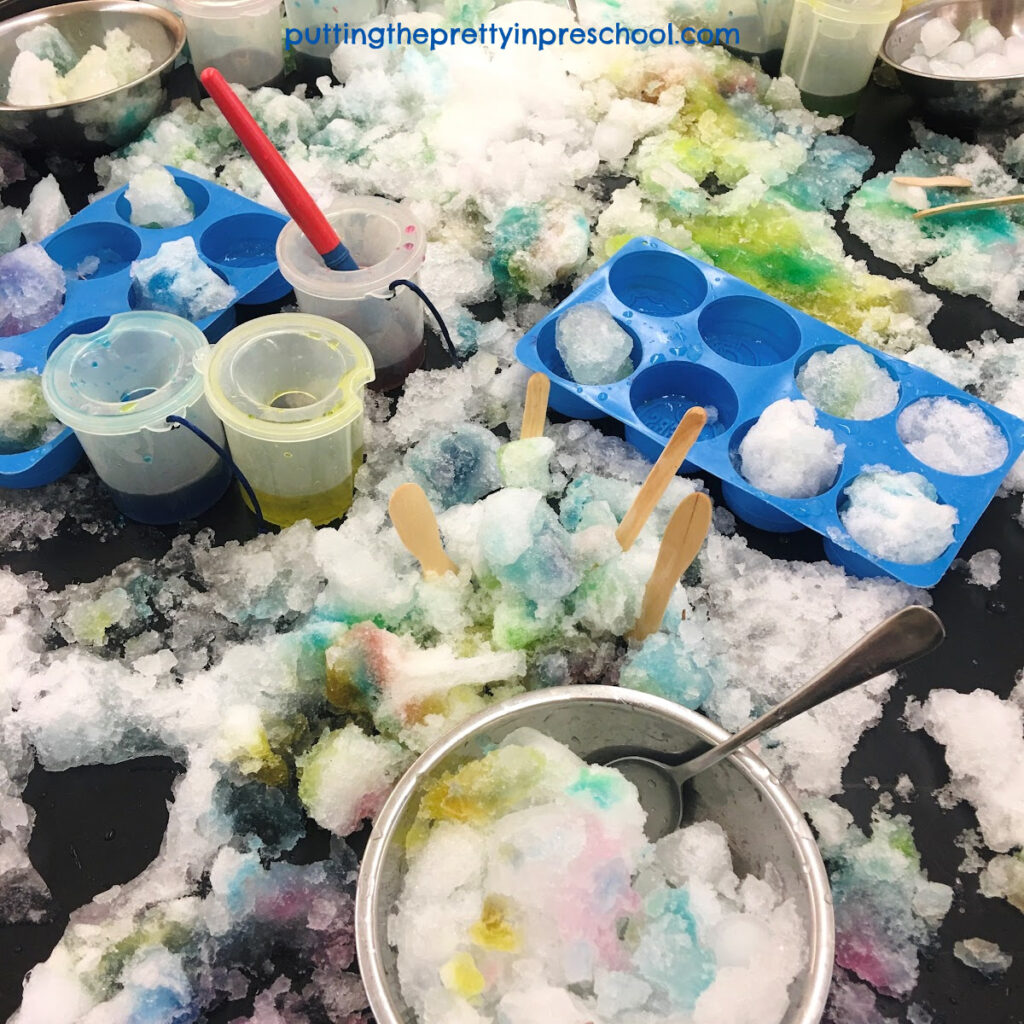
If you are short on preparation time, offer snow, ice cubes, and paints with a variety of kitchen accessories. Think muffin tins, bowls, spoons, pans, and frozen dessert sticks. Your little charges will enjoy painting the snow and ice cubes, and will excitedly use the accessories in snow kitchen activities.

Kitchen accessories add to the play experience in this snow painting sensory table activity.

_______

If snow is not available where you live, the activity will work fine with ice shapes alone. Little learners will be thrilled to focus on painting the ice cakes and can add ice cube embellishments.

_______

Decorating an ice cake is the highlight of this painting ice and snow sensory table activity for little learners.

_______

Related:

Winter Playdough Recipe

Spray Paint Snowflake Silhouette

Igloo Camping Pretend Play

Winter-themed Treasure Blocks

Winter Wreath Craft

Polar Bear Small World

Winter Sensory Trays

Ice Drum Musical Instruments

Frozen-Inspired Shadow Box

Scissor Skill Snow Cutting Activities

Kid’s Winter Wonderland Play Tablescape

_______

[Read more…] about Painting Ice And Snow Activity
Tweet
Share
Share
Pin

Filed Under: art, dramatic play, preschool, pretend play, sensory, winter Tagged With: ice cubes, painting, sculptures, sensory bin, sensory tray, snow

Hockey Game Small World

January 25, 2022 by Annette Kaminsky Leave a Comment

Tweet
Share
Share
Pin
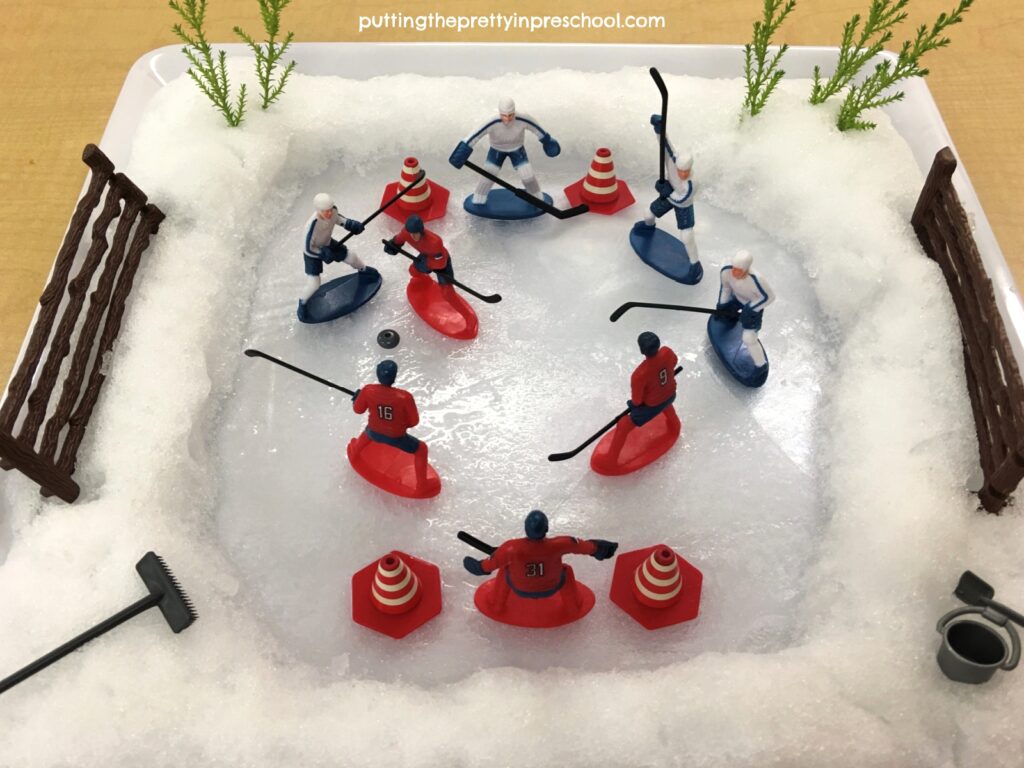
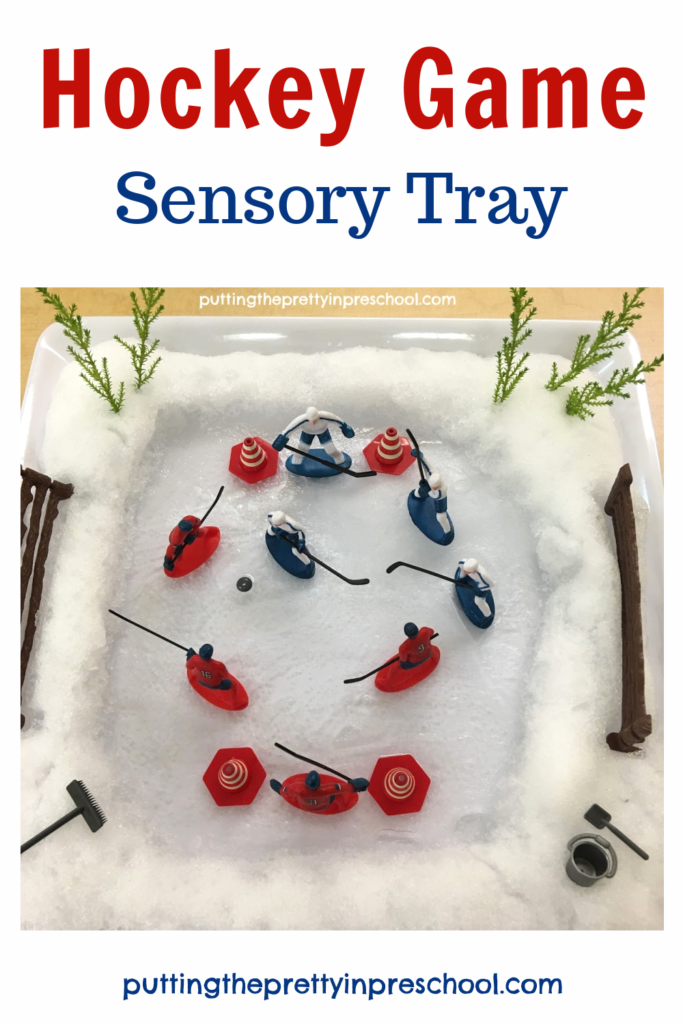
This ice hockey game small world featuring an outdoor skating rink and hockey player figurines has sensory play opportunities.

_______

If you say the word “hockey”, you may think of Canada, and when you say “Canada” you may think of hockey. That’s because in the late 1800s the game of hockey was developed in Canada, and has been a popular game for Canadians to play ever since. Because I live in Canada, I’ve been dying to touch on the sport in a blog post. And this hockey game small world is a fun way to introduce the outdoor winter game to little learners.

Hockey is a lightning-fast team sport played on ice. Players wear skates and helmets, and use sticks and a small rubber disc called a puck in the game. There are usually six players on each team. One of them is the goalie, who guards their net. The other players try to shoot the puck into the opposing team’s net. If they do, their team gets one point.

Although now there are many indoor hockey rinks to play the game on, the sport was traditionally played outdoors. An outdoor backyard or pond rink is featured in this post.

_______

Follow me on Pinterest for more early learning ideas.

_______

Supplies To Collect

Supplies to make a backyard ice skating rink small world.

_______

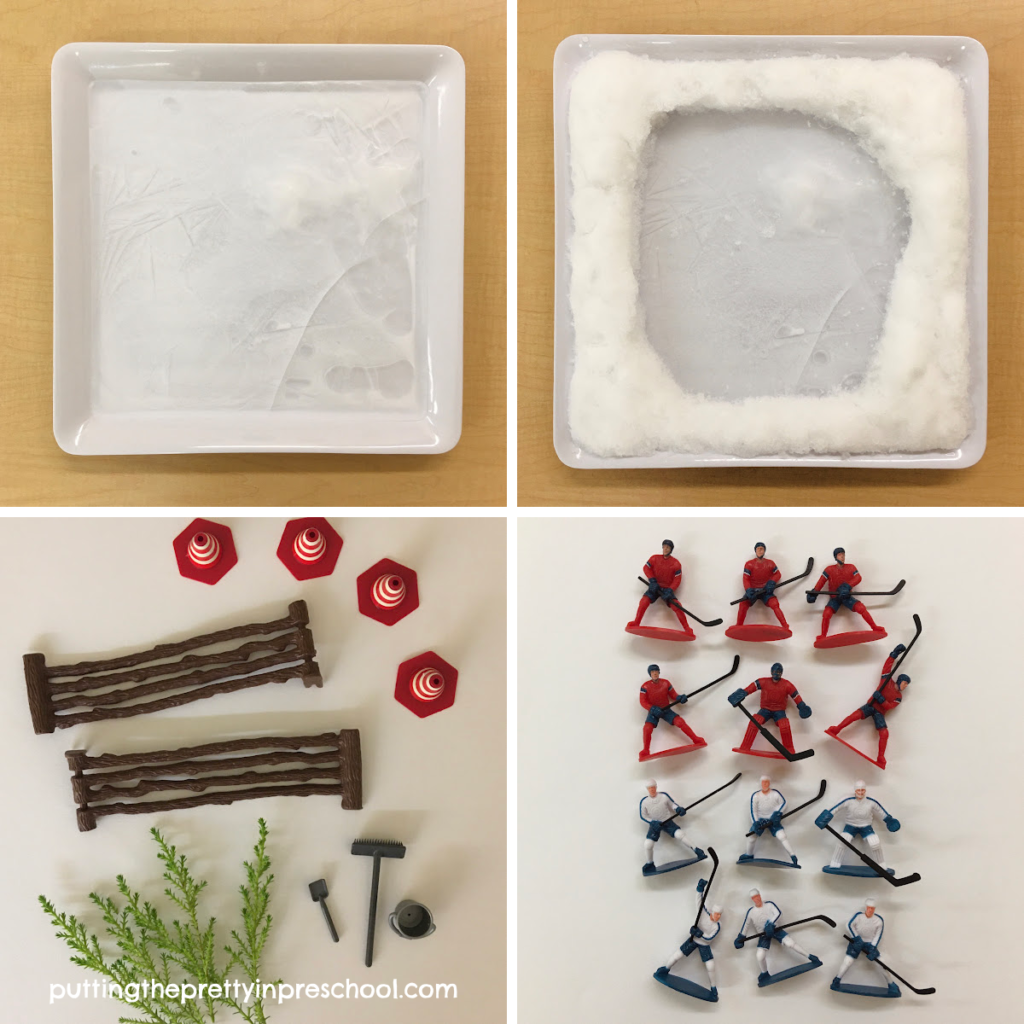
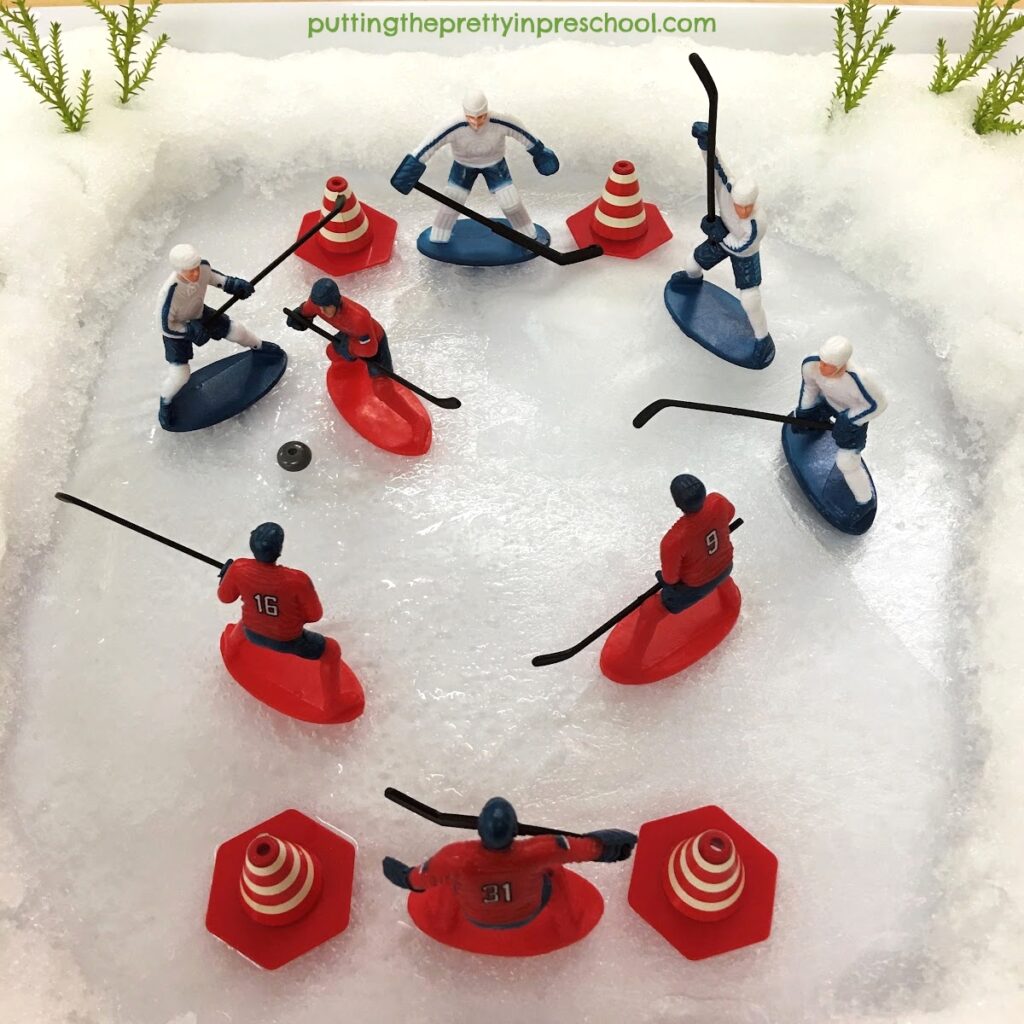
Here are the supplies in the hockey game small world set up:

  • rectangular or square tray
  • snow
  • hockey player figurines
  • four toy pylons
  • small black disc-shaped bead
  • evergreen sprigs
  • fence sections
  • pail, shovel, and broom accessories

_______

Assembling The Hockey Game Small World

A sensory opportunity-filled hockey game small world with real ice and snow.

_______

Freeze a layer of water in a square or rectangular tray. This will be the skating rink.

Pack snow around the edges of the tray to make snowbanks.

Add fence sections and accessories such as a pail, shovel, and broom to the snowy areas.

Stick in evergreen sprigs to serve as trees. My “trees’ are lemon cypress sprigs taken from the plant I used for Christmas Playdough.

Lay two pylons on each end of the ice to be the goalposts. If you have toy goalie nets, such as the ones that come with Playmobil hockey sets, use them instead.

Set the goalies in front of their nets. These players have wider sticks and more protective gear than their teammates, and that’s how you can distinguish them.

Arrange the rest of the players on the ice and add the bead puck. I feature a goalie and three players. If your sensory tray is large enough, add five players to each team in addition to the netminder.

An outdoor hockey game small world play invitiation with real snow and ice.

_______

Invite little learners to investigate the hockey team small world tray.

The ice and snow in the tray offer sensory play opportunities. And little learners get to practice fine motor skills and eye-hand coordination when they give each hockey player a stick.

This hockey game sensory tray features real ice and snow. A link to a blog post with instant snow recipes is included.

_______

Instant Snow Options

Where I live in Alberta, there is plenty of snow for at least four months of the year. So there is little need to try any instant snow options. If you do not have snow where you reside, a blog post by Playing With Rain features six homemade snow recipes to try.

_______

[Read more…] about Hockey Game Small World
Tweet
Share
Share
Pin

Filed Under: preschool, pretend play, sensory, winter Tagged With: hockey, sensory tray, small worlds, snow

Blue Candy Cane Science Experiment

January 23, 2022 by Annette Kaminsky 1 Comment

Tweet
Share
Share
Pin
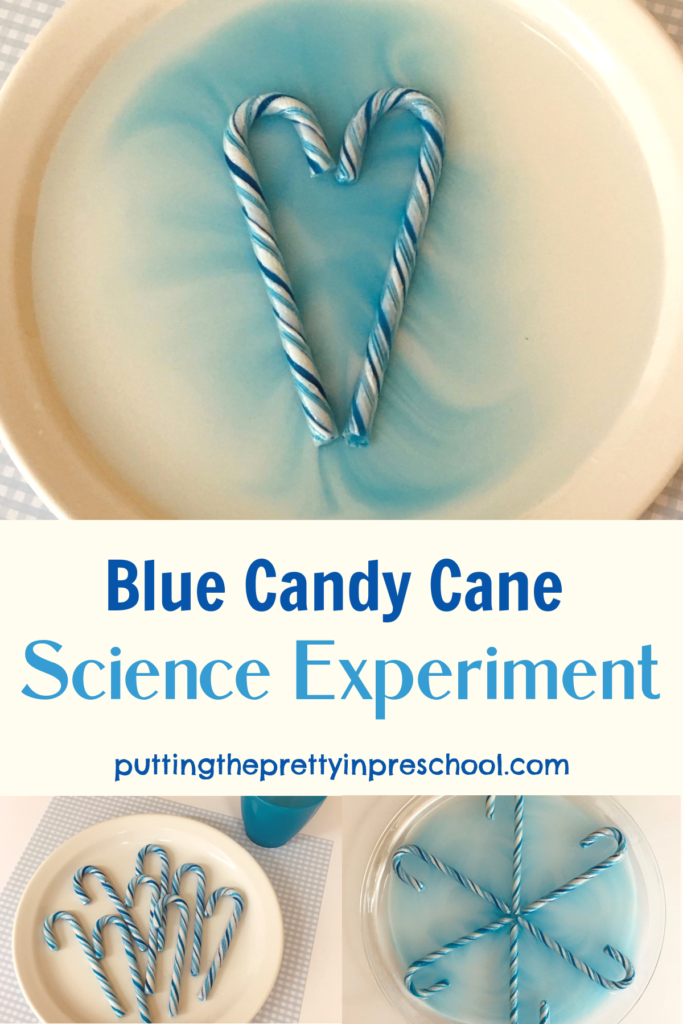
This easy-to-do blue candy cane science experiment is perfect for winter and transitions nicely into Valentine's Day.

_______

This blue candy cane science experiment is an offshoot of an earlier candy cane science post. I purposely saved blue striped candy canes to use in a few winter-themed variations of the easy-to-perform experiment. And yes…I am permanently hooked on candy cane science!

_______

Supplies To Collect

This blue candy cane snowflake experiment will wow little learners. It is easy to set up and shows immediate results.

_______

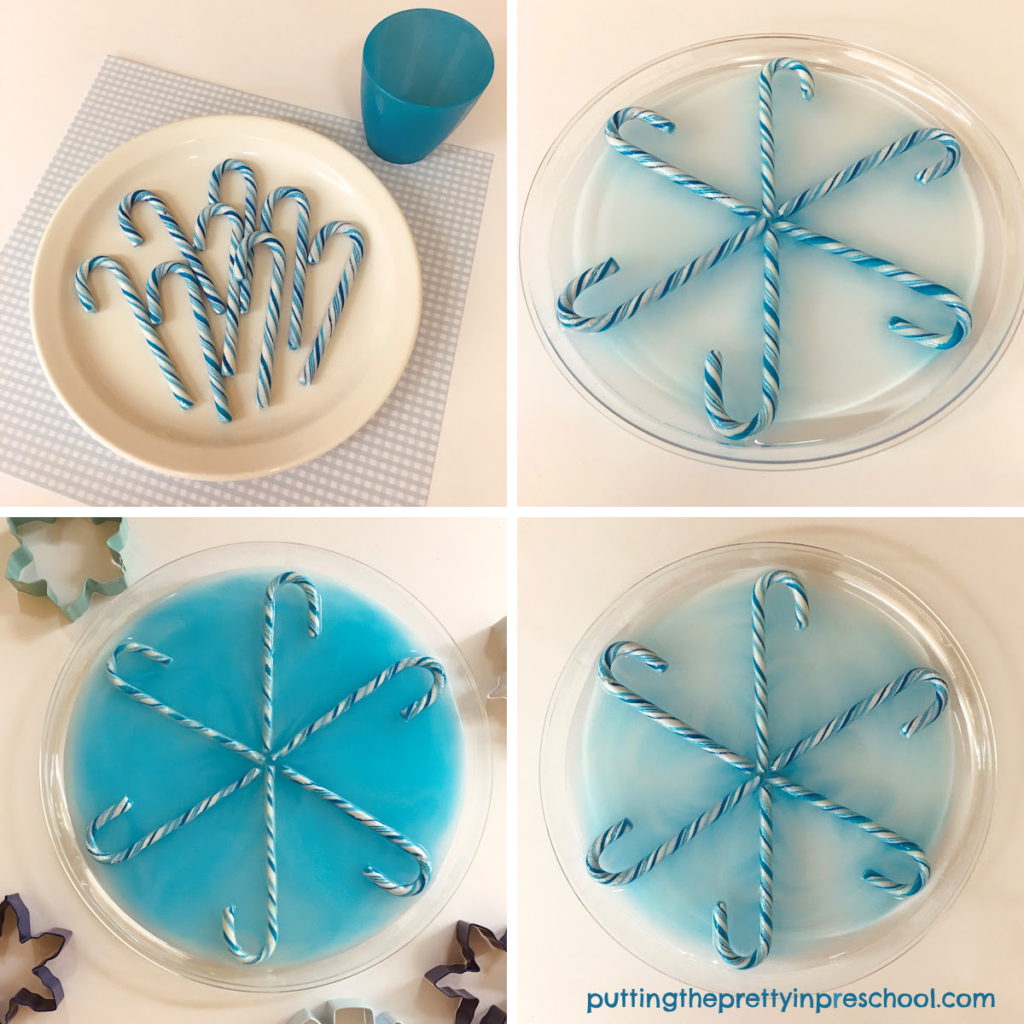
First up is a blue candy cane snowflake version of the experiment. To perform it gather the following three supplies:

  • six blue and white striped candy canes
  • large clear, white, or cream-colored plate with a rim
  • measuring cup (or cup) of warm water

_______

The Candy Cane Snowflake Experiment

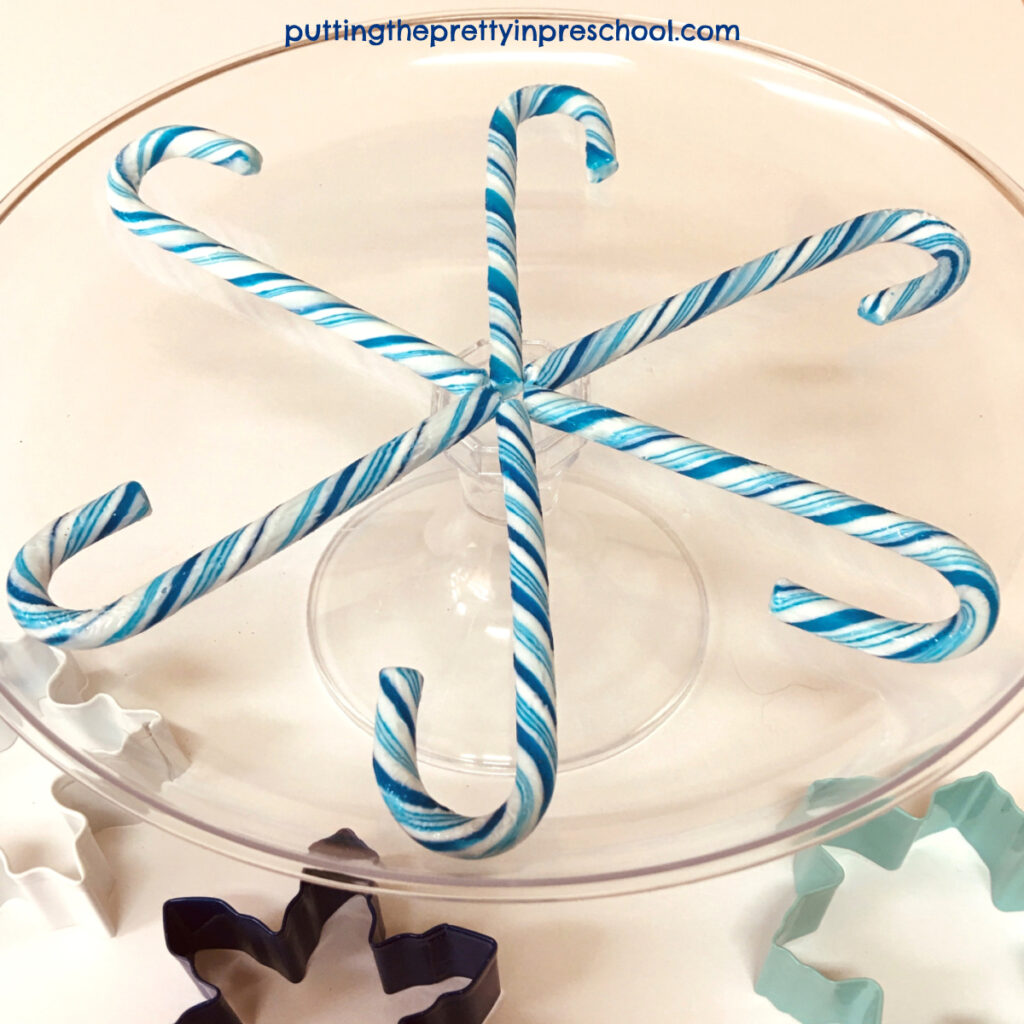
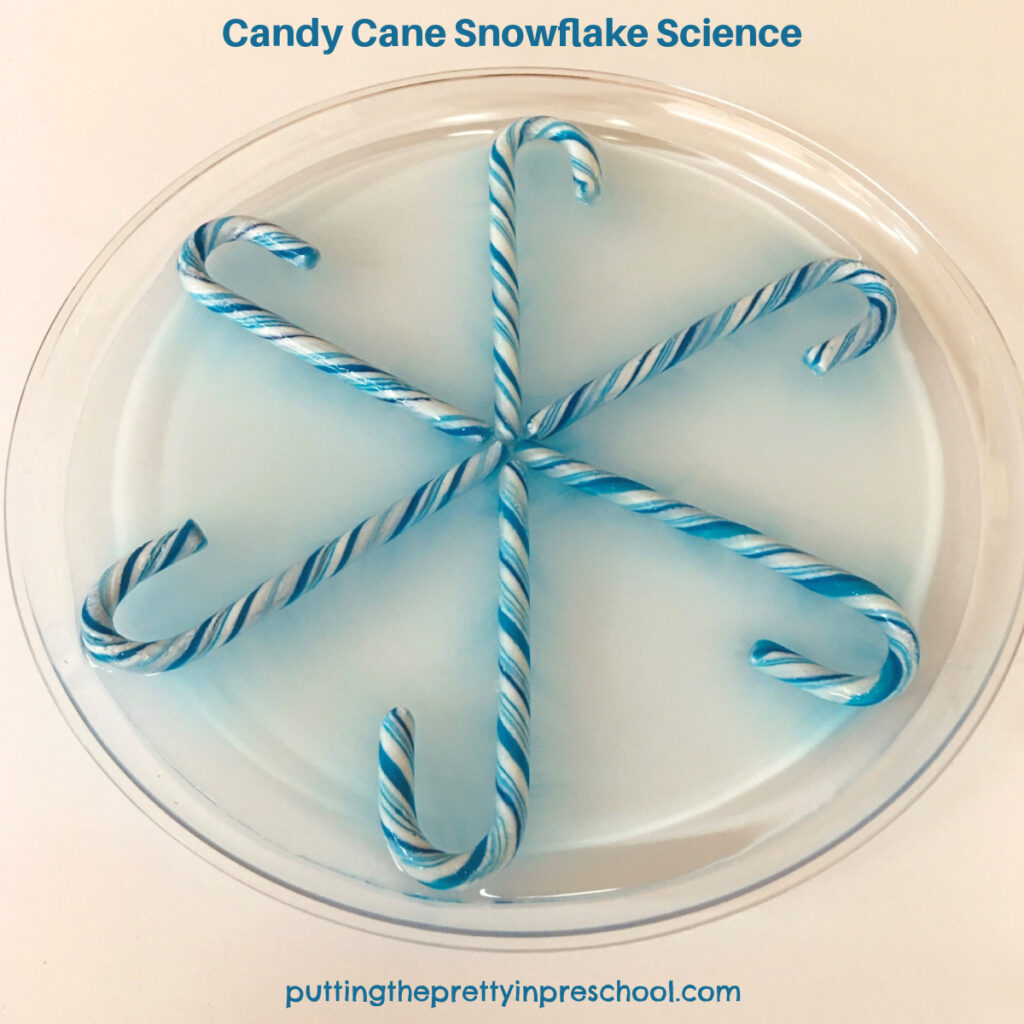
Set the candy canes on a large plate in a six-sided snowflake design.

Let the science experiment begin with this blue candy cane snowflake!

_______

Slowly pour in warm water to partially cover the candy canes.

Invite participants to watch what happens.

An easy-to-do candy cane snowflake science experiment. All you need is water, candy canes, and a plate.

_______

While little learners watch the colors in the water spread during the experiment, slip in a few snowflake facts from the list below.

_______

Ten Fast Facts About Snowflakes

  • Snowflakes are made of many snow crystals that are stuck together.
  • The six-sided flakes come in symmetrical, hexagonal shapes.
  • About 200 ice crystals make up one snowflake.
  • There are six basic types of snowflakes.
  • Combinations of these types make 35 recognizable snowflake designs.
  • A snowflake’s shape is determined by the temperature and amount of moisture in the air when it was formed.
  • Snowflakes range in size, from teeny tiny to penny-sized.
  • Because they reflect light, snowflakes appear white. But they are actually translucent.
  • Every second, billions of snowflakes float down to earth.
  • Snowflakes fall at 3- 4 miles per hour or about 5 – 6.5 km per hour.

_______

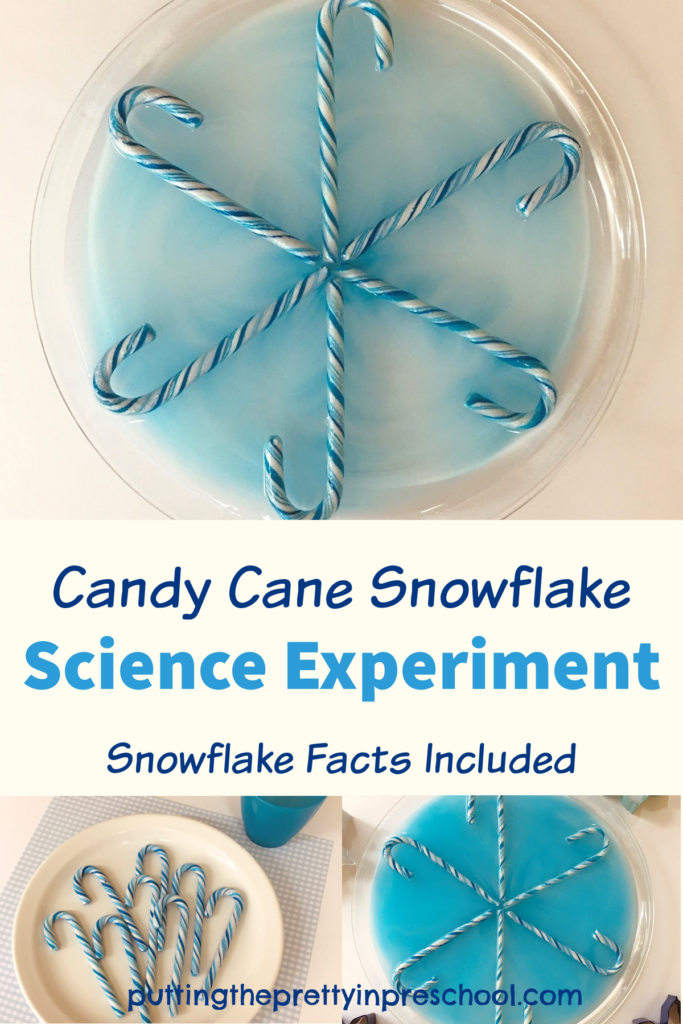
Try this easy-to-do candy cane snowflake experiment today. It uses simple supplies and has immediate results. Snowflake facts are included.

___________

Early learners may wish to have a little taste of the resulting blue liquid. Unlike the strong mint taste of the Christmas candies, the blue water has a pleasant berry flavor.

Tip: If you have other candy cane colors available rather than blue striped ones, use them in the experiment instead. Snowflakes look beautiful in all colors!

_______

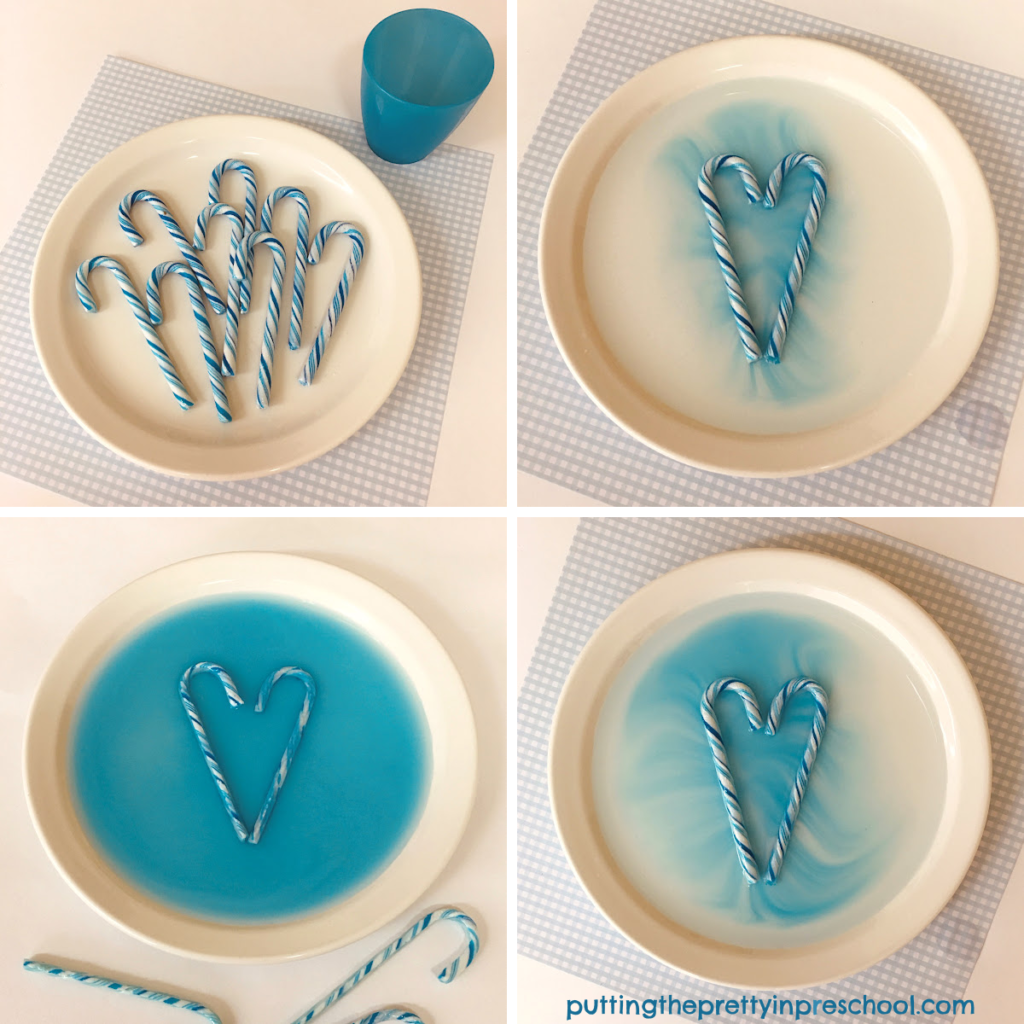
Blue Candy Cane Heart Experiment

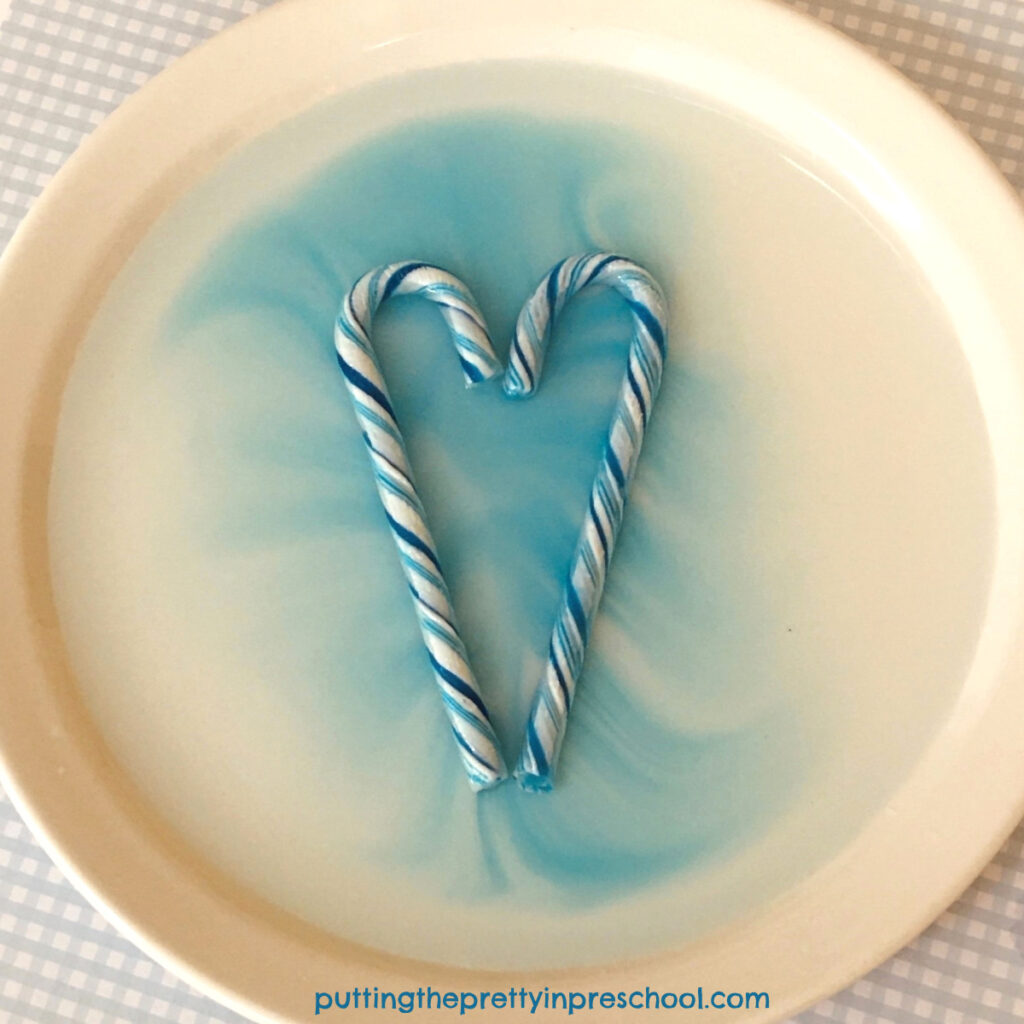
For a simpler but equally striking version, form two candy canes into a heart shape on the plate. When water is slowly added, little learners will notice a different color pattern developing.

This blue candy cane heart science experiment fits into winter and transitions nicely into Valentine's Day.

_______

A pretty blue candy cane science experiment that will wow little learners.

_______

The Science Behind The Color Movement

The candy canes are made of sugar. The water breaks the sugar molecules apart. Then the food colors move through the water away from areas of higher sugar concentration (near the candy) to areas with less sugar. When the sugar concentration is the same in all areas, the colors stop moving.

_______

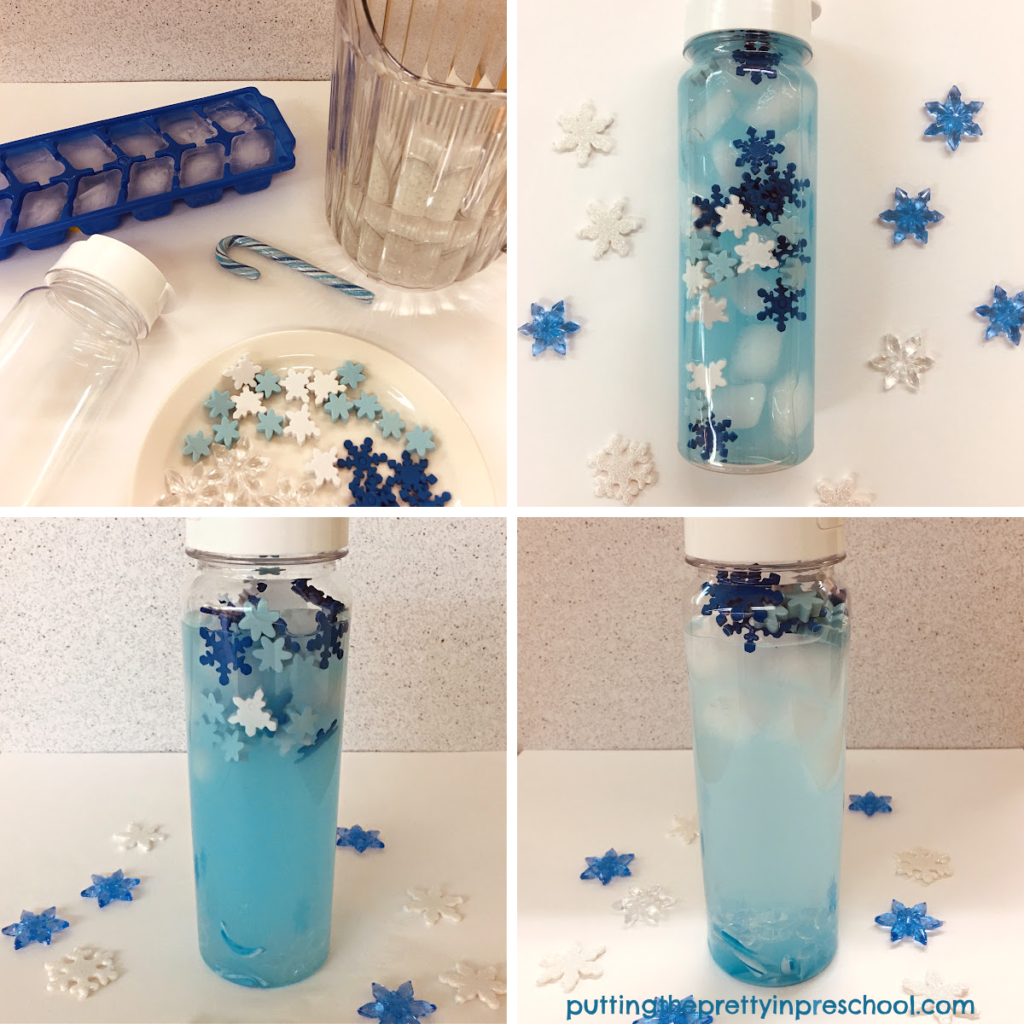
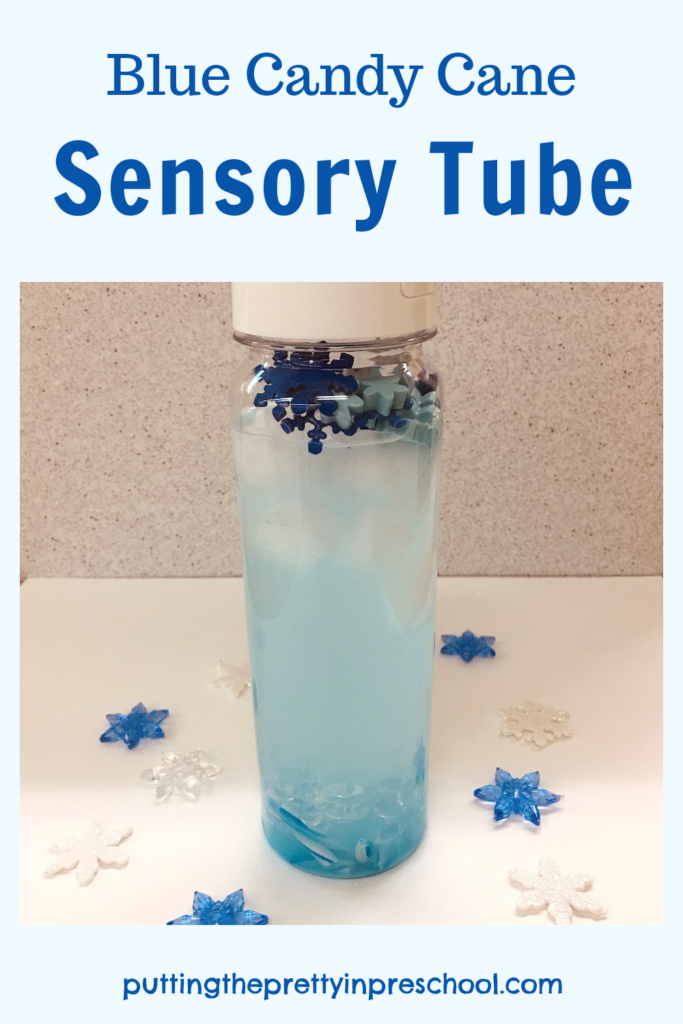
Blue Candy Cane Sensory Tube

If you have broken candy canes saved that weren’t suitable to display or hand out over the holidays, use them in a sensory tube.

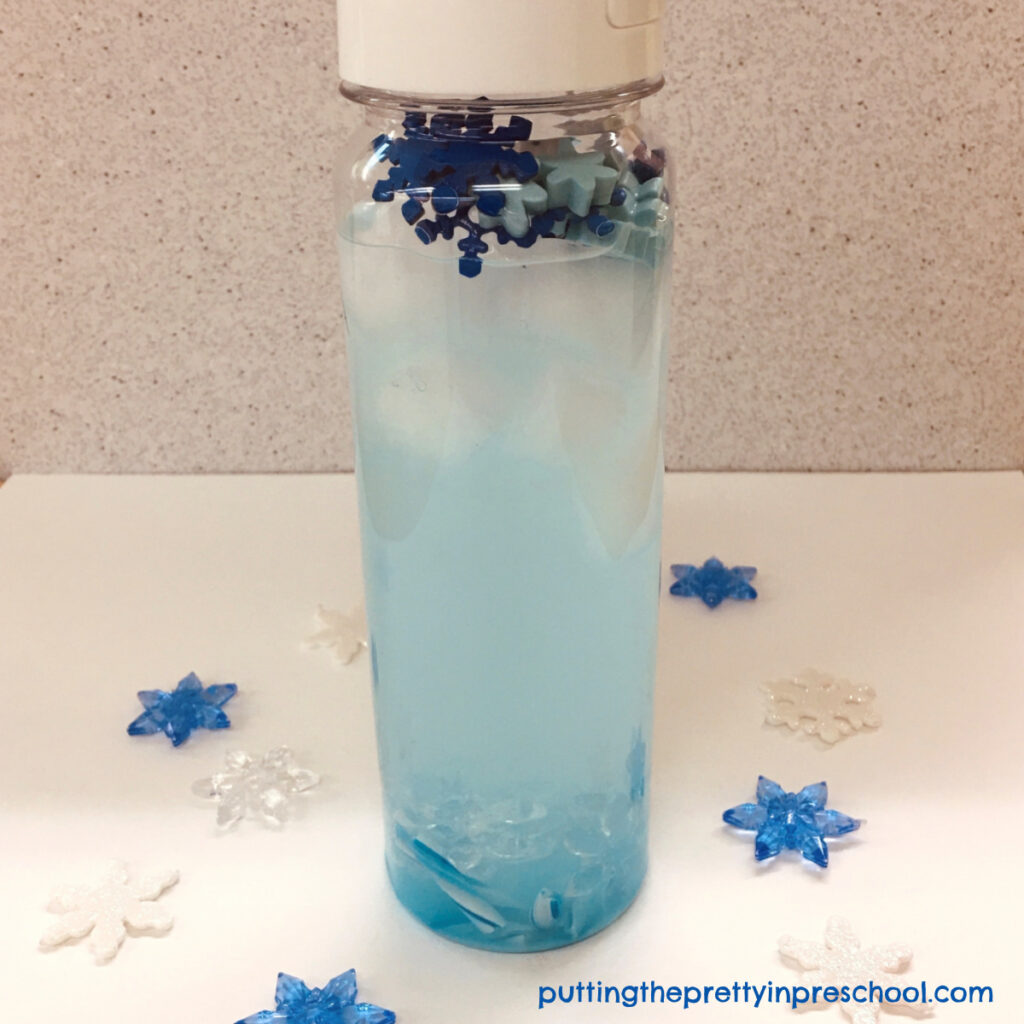
Candy cane winter sensory tube with ice cubes and snowflakes.

_______

To make the winter-themed tube above, freeze ice cubes and add them to a clear tube with a wide mouth.

Next, sprinkle in blue and white foam and gem snowflakes.

Gently drop in blue-striped candy cane pieces.

Then fill the sensory tube with cool water and tightly screw on the lid.

Invite little learners to play with the tube.

An icy blue candy cane winter sensory tube doubling as a float and sink experiment.

_______

Because the water in the tube is cool, it changes color at a slower pace than in the snowflake and heart versions of the experiment.

Float and sink experimentation happens naturally with this candy cane tube. The snowflake gems and candy cane pieces sink to the bottom and hang out there, while the foam shapes congregate at the top.

This eye-appealing blue candy cane sensory tube doubles as a float and sink experiment.

_______

Related: Color Explosion Science Experiment

_______

[Read more…] about Blue Candy Cane Science Experiment
Tweet
Share
Share
Pin

Filed Under: preschool, science, sensory, winter Tagged With: candy canes, colors, science experiment, sensory tubes

Chinese New Year Chickpea Bin

January 16, 2022 by Annette Kaminsky Leave a Comment

Tweet
Share
Share
Pin
The tiger is the star of the stage in this "Year Of The Tiger" Chinese New Year chickpea bin. Tiger facts are included.

_______

Chinese New Year begins is on February 1, 2022, and it will be the Year Of The Tiger. And so the feature creature in this year’s Chinese New Year chickpea bin is a tiger! The no-fuss bin is easy to put together and has a pop of blue in addition to the traditional red and gold hues.

The tiger is the third animal in the Chinese zodiac, and the 2022 big cat is a water tiger. Qualities associated with the water tiger are being sociable, easy-going, goal-oriented, hardworking, brave, smart, musical, artistic, and low maintenance.

_______

Follow me on Pinterest for more early learning ideas.

_______

Chinese New Year Chickpea Bin Supplies

This Chinese New Year chickpea-based sensory bin represents the year of the tiger.

_______

The chosen bin is a round white metal tray with a blue rim.

The base ingredient is dyed dried chickpeas. Aside from chickpeas, the items in the bin are:

  • tiger figurine
  • red bowl and chopsticks
  • tiny red cups
  • metal tin
  • gold garland strands
  • acrylic diamond gems
  • gold buttons and metal stars
  • calligraphy game pieces
  • gold play coins

_______

Year Of The Tiger Chickpea Bin

This chickpea-based sensory bin has a "Year Of The Tiger" Chinese New Year theme.

_______

The majority of chickpeas are dyed in varying amounts of red acrylic craft paint. Some are transformed into turquoise and blue. Instructions to easily dye these chunky legumes are in my post “Chinese New Year Sensory Play.”

The blue chickpeas are formed into a winding river running through the center of the bin, and the red-infused chickpeas are generously sprinkled around it.

 The tiger is positioned on the river.

The rest of the loose parts are spread around the bin.

Little learners are bound to enjoy playing with the tiger. The flashy cat will stand out on the river but be camouflaged in the red-toned chickpeas.

The tiger is center stage in this "Year Of The Tiger" Chinese New sensory bin.

_______

To further their interest in this stunning animal, here are some facts to share with your little charges.

_______

Ten Tiger Facts

  • Tigers are big cats. Siberian tigers are the largest big cats in the world.
  • These solitary animals have red-orange or brown-orange coats with black stripes. Their underbellies are white or cream-colored.
  • Tigers are semiaquatic. Unlike domestic cats, they like water and can swim well. In hot, dry seasons they soak in water to cool off.
  • The long hind legs of tigers help them jump high and long.
  • These powerful animals have sharp claws and teeth, great smell, and excellent night vision.
  • Tigers are carnivorous and can travel hundreds of miles in search of food.
  • These nocturnal animals are top predators and keep the populations of prey under control.
  • Tigers are considered endangered. Globally, there are about 4000 tigers left in the wild, and a greater number in zoos.
  • In China, the Amur tiger, also called the Siberian tiger, lives in a few spots in the northeast.
  • The South China tiger is now extinct in the wild.

_______

Related:

Year Of The Pig Sensory Bin  (Chinese New Year 2019)

Year Of The Rat Noodle Bin (Chinese New Year 2020)

Year Of The Ox Sensory Tray  (Chinese New Year 2021)

Year Of The Rabbit Sensory Bin (Chinese New Year 2023)

_______

[Read more…] about Chinese New Year Chickpea Bin
Tweet
Share
Share
Pin

Filed Under: Chinese New Year, New Year's, preschool, sensory Tagged With: chickpea bin, loose parts, sensory bin, tigers

  • « Go to Previous Page
  • Page 1
  • Interim pages omitted …
  • Page 24
  • Page 25
  • Page 26
  • Page 27
  • Page 28
  • Interim pages omitted …
  • Page 42
  • Go to Next Page »

Primary Sidebar

Hi, I'm Annette Kaminsky, a preschool teacher who loves sharing learning through play activities for young children. Thanks for visiting my site. Feel free to stay awhile!

Subscribe Via Email

Recent Posts

  • Earth Day Spin Painting April 21, 2026
  • Easter Bunny Scavenger Hunt April 4, 2026
  • Celebrate Diversity Coloring Pages March 1, 2026
  • Lunar New Year Lantern Craft February 11, 2026
  • Black History Month Positive Affirmations Art January 29, 2026
  • Snowflake Cafe Dramatic Play Set January 19, 2026
  • Pastel Christmas Letterhead and Envelope December 20, 2025
  • December Kindness Activities November 30, 2025
  • Fall Forest Sensory Bin November 30, 2025
  • DIY Turkey Bowling Game November 25, 2025

Categories

Topics

apples bunnies butterflies Chinese New Year Christmas Christmas craft color colors dramatic play Easter fall flowers hearts holiday jewelry leaves leprechauns light table loose parts painting paper crafts playdough pretend play printables printmaking process art pumpkins rice bin scented playdough science experiment scissor skills sensory bin sensory play sensory tray shamrocks skeletons snakes snowflakes spiders spring St. Patrick's Day sunflowers tablescapes Valentine's Day water play

Copyright © 2026 · Lifestyle Pro on Genesis Framework · WordPress · Log in